

Best Interactive Educational Games 2026






Looking for the best interactive educational games 2026 to keep young minds sharp? These apps and platforms blend fun with learning, helping kids build skills in phonics, numbers, logic, and more. Parents often seek options that turn screen time into something positive, and these stand out for their engaging designs. With a focus on safe, ad-free play, they support growth in empathy, creativity, and daily habits.
Discover the Best Interactive Educational Games 2026 - Fluvsies Academy
Why Interactive Games Help Kids Learn
Kids pick up new ideas faster when play feels like an adventure. The best interactive educational games use stories, puzzles, and rewards to hold attention and teach concepts without drills. Research shows that hands-on activities build stronger memory and problem-solving abilities. For young learners, this means better focus on tasks like sorting shapes or understanding emotions. Parents notice kids gaining confidence as they complete challenges on their own.
Key Skills Built Through Play
From language basics to math foundations, interactive games cover a wide range. They often include real-world themes, such as jobs or healthy habits, to make lessons stick. Kids explore professions like baking or firefighting, which sparks curiosity about the world. This approach helps develop fine motor skills, attention span, and social awareness. Many options are crafted with input from experts to ensure age-appropriate content.
Best Interactive Educational Games 2026
1. Fluvsies Academy - Best Interactive Educational Games
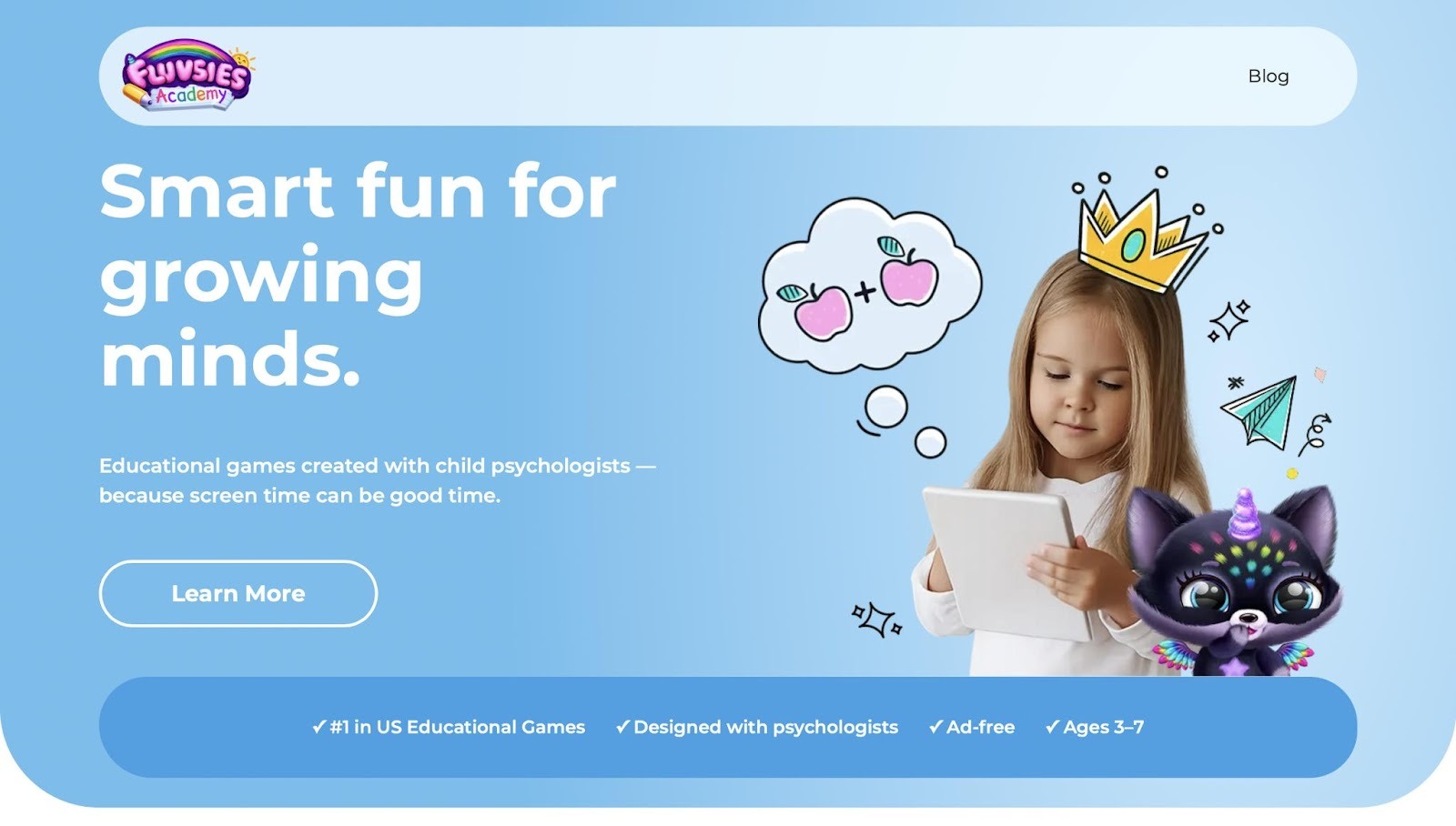
Check out Fluvsies Academy, a top app packed with joyful activities for kids ages three to seven. It turns learning into guided play, covering language, phonics, numbers, logic, attention, sorting, life skills, creativity, professions, empathy, safety, mindfulness, kids yoga, and healthy habits. Designed with child psychologists, it creates a safe space for emotional growth and skill-building.
Kids dive into puzzles, stories, and routines that feel like fun adventures, such as brushing teeth or helping firefighters. The ad-free setup keeps distractions away, letting young ones focus on building confidence and kindness. Parents get progress reports to track growth, making it easy to see how play leads to real gains. With colorful characters and interactive elements, it stands out for blending academics with holistic development. Many families praise how it makes screen time meaningful and balanced.
- Standout features include puzzles that sharpen logic and stories that teach empathy.
- Key positives like ad-free play and expert-backed content support safe learning.
- Facts and information show it helps kids with attention through sorting games and creativity via profession explorations.
Discover Fluvsies Academy
Fluvsies Academy is a leading educational app designed for children aged 3–7. It transforms screen time into meaningful learning through fun, interactive games. Developed in collaboration with child psychologists, the app focuses on holistic development.
Key Features
- Ad-free environment for safe play.
- Games covering language, phonics, math, and logic.
- Activities for attention, sorting, and creativity.
- Real-world life skills like healthy habits and mindfulness.
- Exploration of professions to build vocabulary and imagination.
Educational Approach
Fluvsies Academy emphasizes guided play that balances focus, empathy, and emotional safety. It's the first holistic learning app for kids, ranked #1 educational game in the US. Progress reports help track your child's growth. Free printables extend learning beyond the screen.
Benefits for Families
Parents gain peace of mind with expert-backed games.
Kids build confidence, skills, and a love for learning. Ideal for preschoolers seeking joyful education.
Download Fluvsies Academy today and watch your child thrive!
2. TutoClub
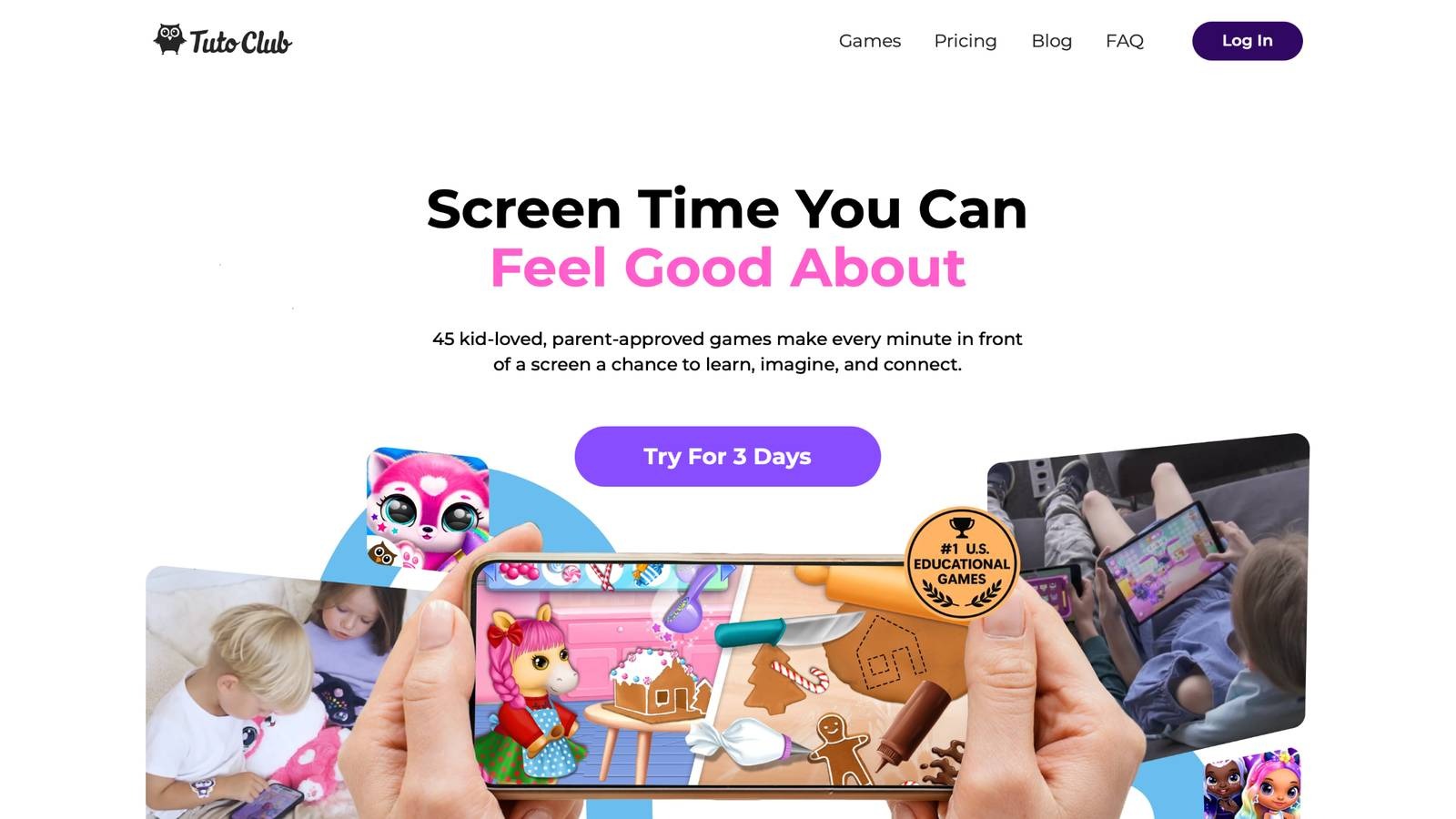
TutoClub stands out as a vibrant platform for kids, blending education with playful adventures in a safe, ad-free space. Aimed at young learners, it features games that nurture creativity, emotional skills, and problem-solving through character care and puzzles. Kids explore themes like responsibility and empathy by tending to virtual pets or completing daily challenges, which mirror real-life routines. The app's design draws from child development principles, ensuring activities build confidence and social awareness.
Strengths include its family-friendly approach, encouraging parents and kids to play together for stronger bonds. It adapts to different ages, offering simple tasks for toddlers and more complex ones for older children. Weaknesses might arise if users seek highly specialized subjects, as it focuses more on holistic growth than deep academics. Overall, it creates joyful learning moments that fit into everyday life, making it a go-to for balanced screen time.
- Key features: Character nurturing for empathy, puzzle-solving for logic, daily habit builders.
- Facts and information: Many parents report enhanced family interactions and skill development through regular use.
3. ABCmouse
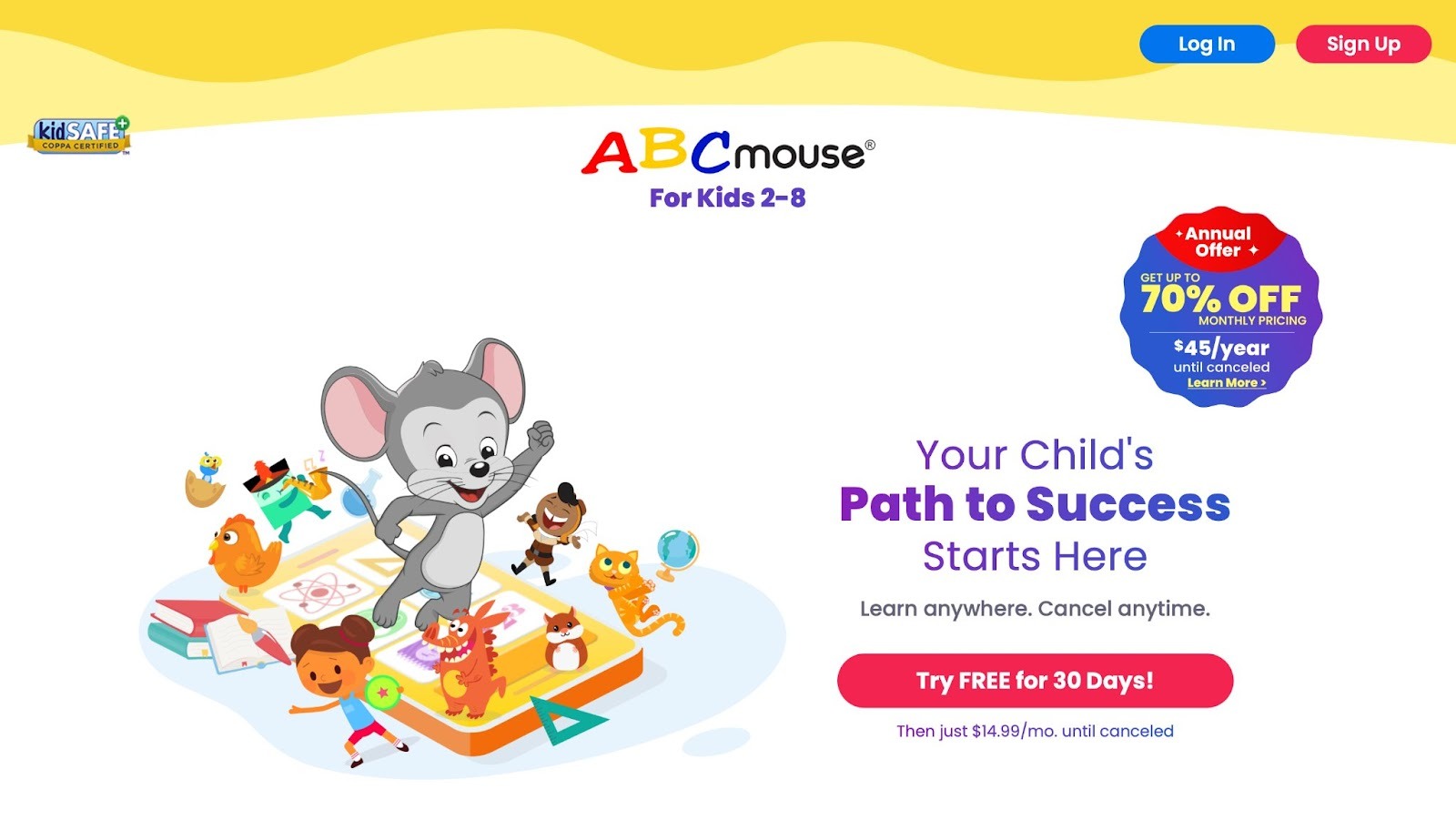
Based in Glendale, California, ABCmouse delivers a comprehensive curriculum for children ages two to eight, encompassing reading, math, science, and art through interactive lessons, games, and books. Kids follow structured paths that adapt to their progress, earning tickets for virtual rewards that motivate continued exploration. The platform brings concepts to life with animations and songs, such as virtual field trips or animal drawings.
Strengths lie in its alignment with educational standards, providing a classroom-like experience at home. Parents value the detailed progress reports to monitor growth. However, the vast content can sometimes overwhelm very young users, and it requires reliable internet for full functionality. It excels in building foundational skills, making it ideal for preschool preparation and early elementary support.
- Key features: Adaptive learning paths, virtual rewards system, multimedia content integration.
- Facts and information: Some families observe improvements in reading and math readiness with consistent engagement.
4. Khan Academy Kids
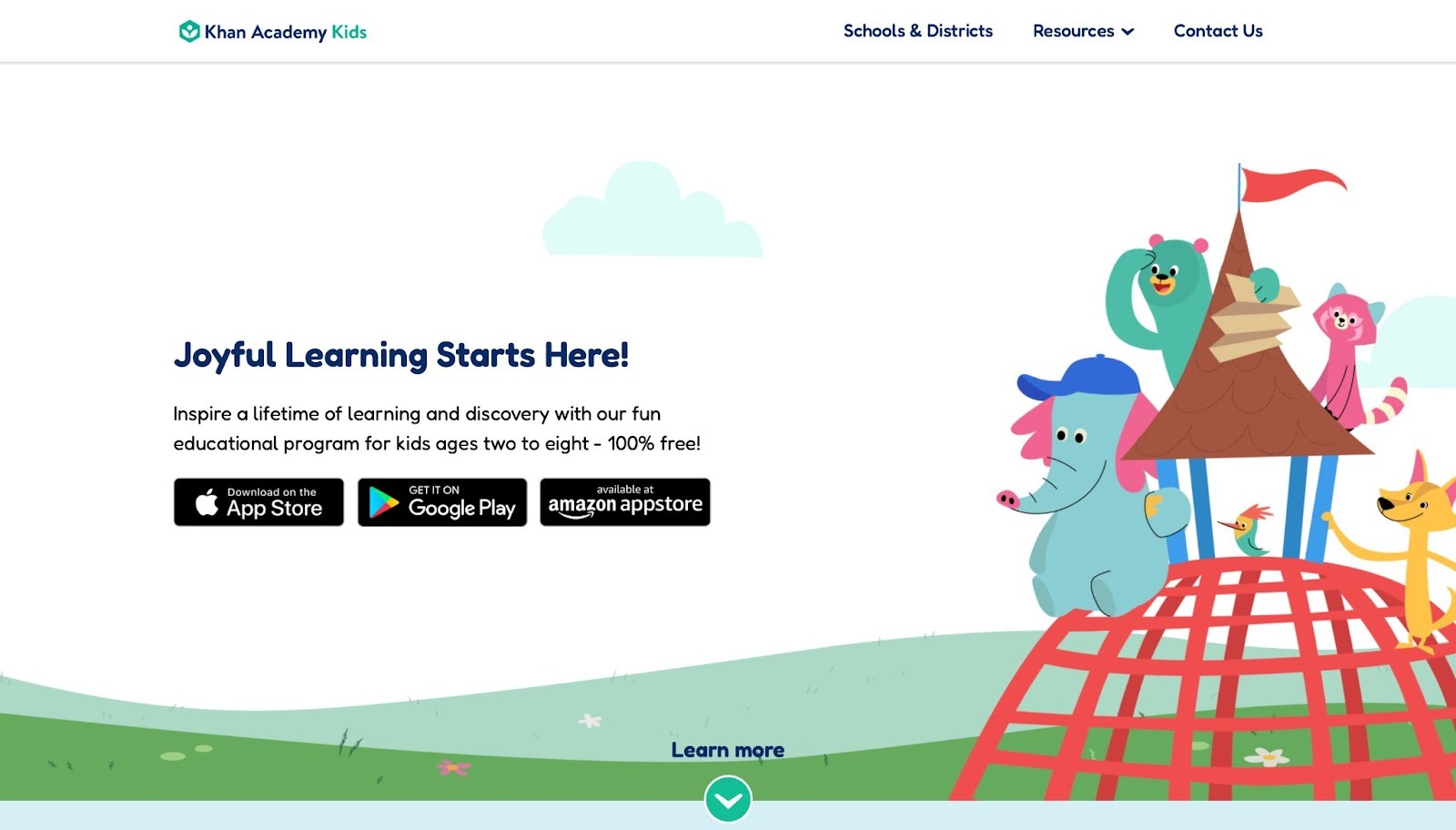
From Mountain View, California, Khan Academy Kids provides free, adaptive activities for ages two to eight, focusing on math, reading, and emotional learning with friendly animal guides. Children embark on adventures like counting treasures or blending sounds in stories, with the app adjusting difficulty based on performance. It includes offline capabilities for some content, ensuring flexibility.
Strengths are in its no-cost access and expert-developed curriculum that promotes independent learning. The creative tools, like drawing prompts, foster expression. Weaknesses include limited depth in artistic areas and potential for uneven progress if activities are skipped. It's perfect for families seeking accessible, quality education without barriers.
- Key features: Personalized challenges, interactive books, creative expression tools.
- Facts and information: Many users note better concentration and foundational skills from daily practice.
5. Prodigy
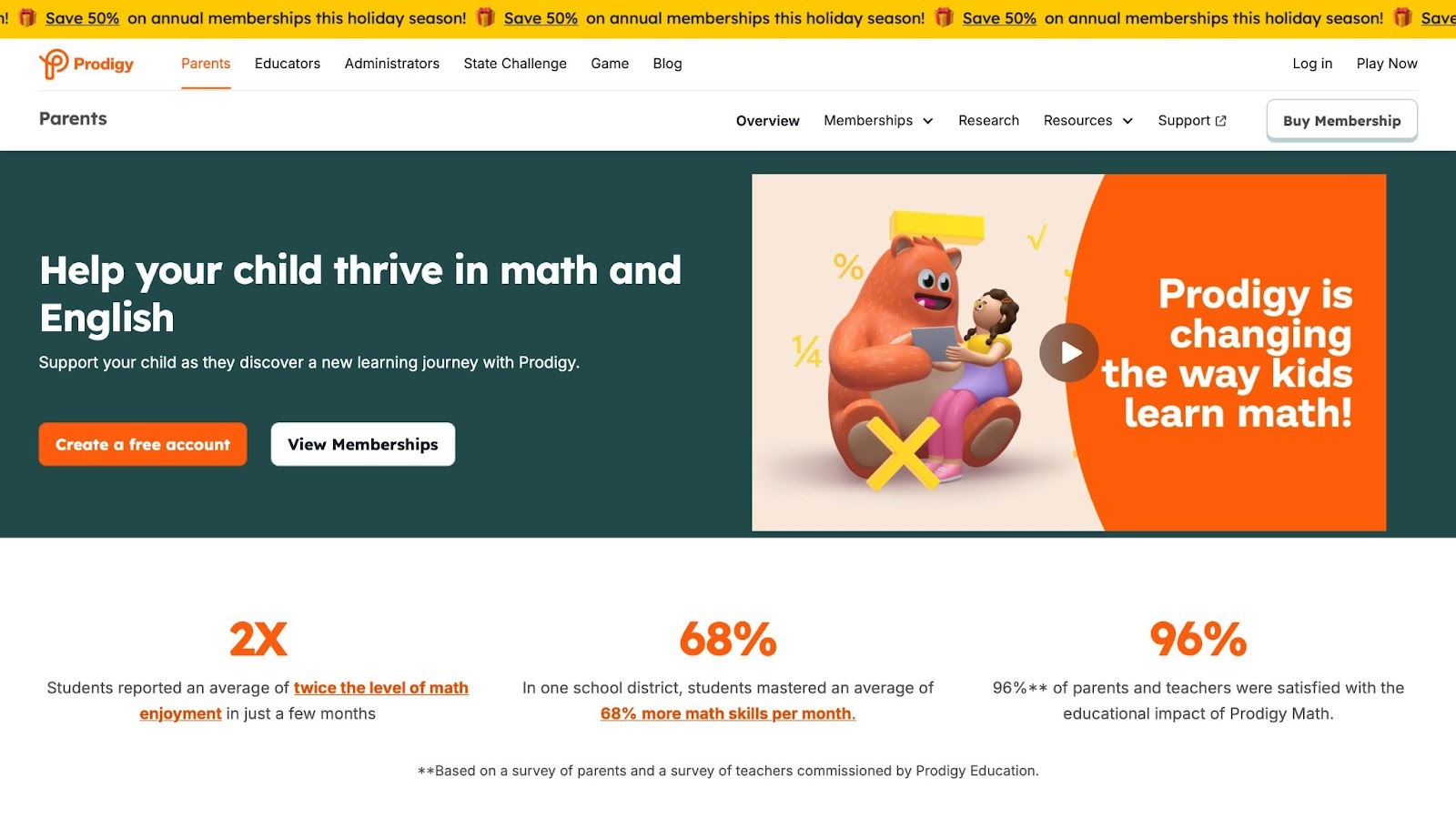
Prodigy transforms math into a role-playing game for grades one to eight, where kids solve problems to cast spells and advance in a fantasy world. Based in Canada, it covers arithmetic to geometry through quests and pet collecting. The adaptive system tailors questions to skill levels, with teacher integration for assignments.
Strengths encompass engaging narratives that boost motivation and real-time feedback for improvement. Multiplayer elements add social fun. Weaknesses involve its math-only focus, which may not appeal to all, and occasional technical issues in gameplay. It suits school-aged children needing enjoyable number practice.
- Key features: Adventure-based math quests, customizable avatars, parent progress tracking.
- Facts and information: Some kids develop positive math perspectives after ongoing sessions.
6. Duolingo ABC
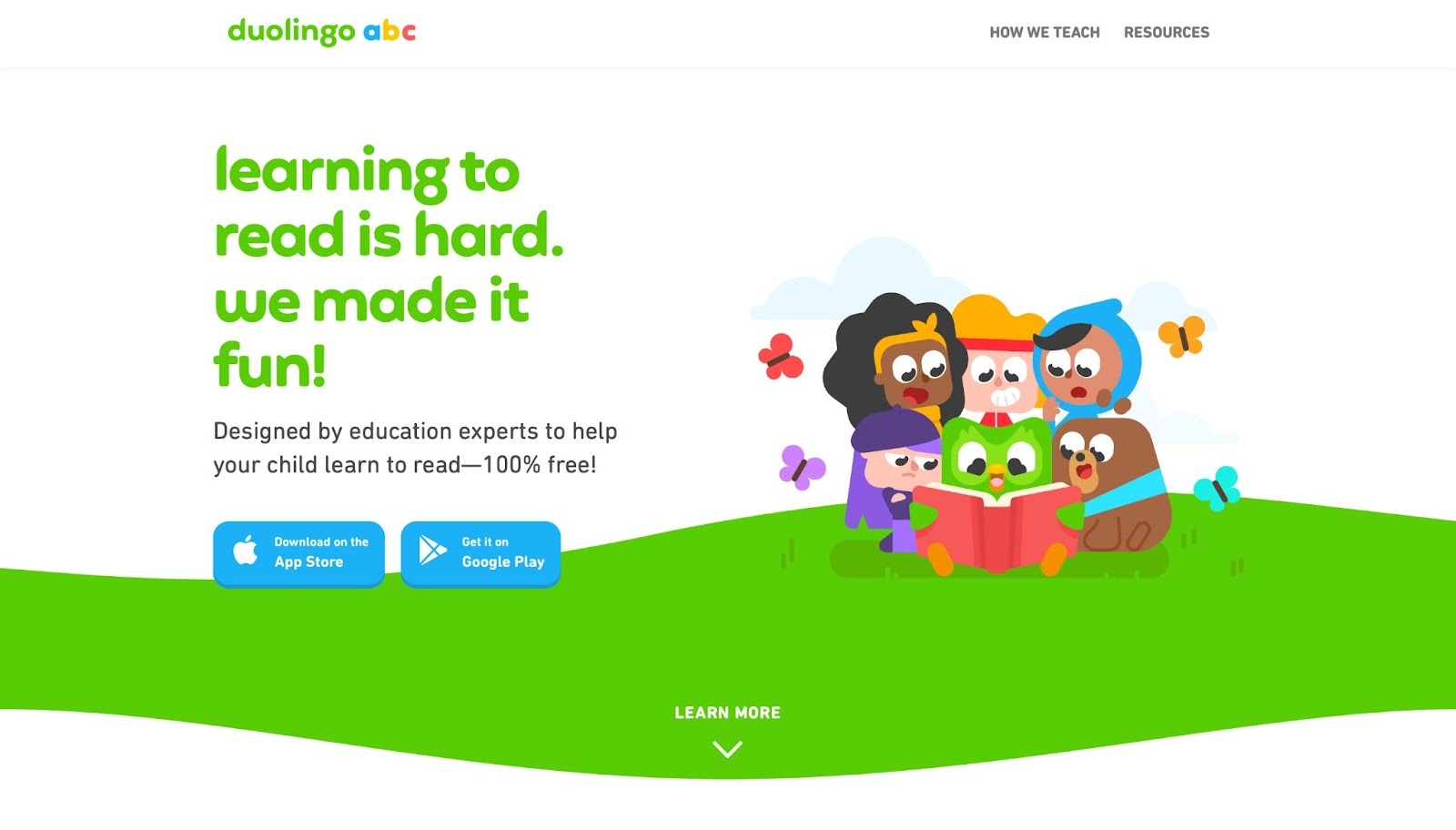
Duolingo ABC introduces literacy to ages three to six via short lessons on letters, phonics, and words, using characters and rewards for guidance. It incorporates voice practice and simple stories to build reading basics. Strengths are in its quick, daily sessions that maintain interest and research-backed methods for skill gains. The app's fun animations make learning feel like play. Weaknesses include a narrow focus on early reading, potentially lacking variety for advanced users, and the need for repetition to reinforce concepts. It's great for beginners establishing strong foundations.
- Key features: Phonics exercises with visuals, word assembly games, streak-based rewards.
- Facts and information: Many parents see faster letter and sound recognition in young players.
7. Lingokids
Lingokids serves ages two to eight with multilingual games in language, math, and science, featuring songs and videos that adapt to abilities. Offline downloads add convenience. Strengths include diverse topics and parent controls for oversight. The app promotes global awareness through language options. Weaknesses might be repetitive tasks over time and limited advanced content. It fits families desiring all-in-one subject coverage.
- Key features: Adaptive song learning, episodic videos, user profile customization.
- Facts and information: Some highlight vocabulary and concept growth from varied activities.
8. PBS Kids Games
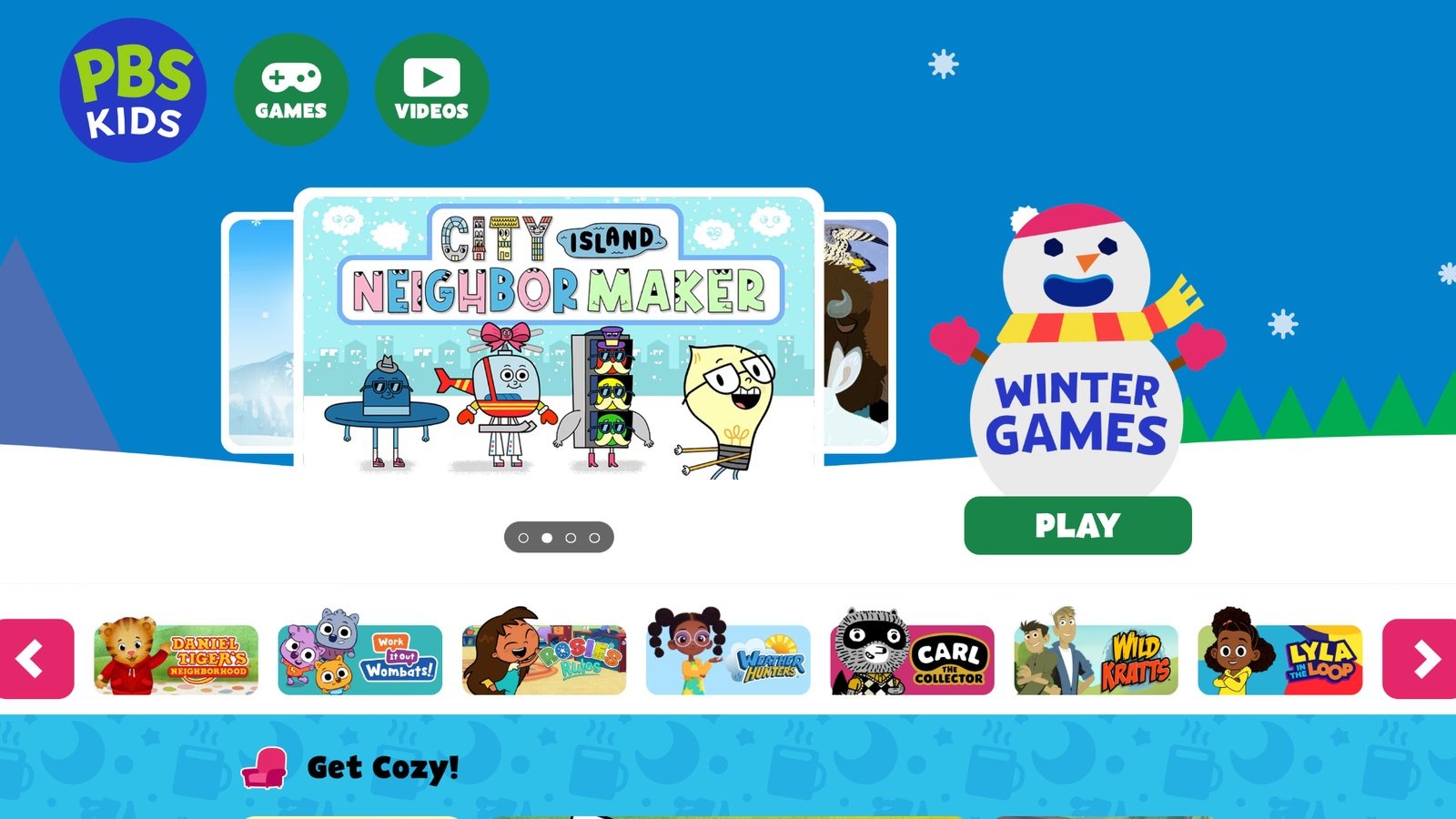
PBS Kids Games ties into beloved shows for ages two to eight, offering puzzles and explorations in shapes, nature, and social skills. Free and ad-free, it supports offline play. Strengths are in trusted, character-driven content that reinforces TV lessons. It encourages creativity and familiarity. Weaknesses encompass simpler visuals and less customization. Ideal for cost-free, show-extended learning.
- Key features: Themed challenges from shows, drawing interfaces, discovery modes.
- Facts and information: Many use it to bridge media and hands-on skill building.
9. Funbrain
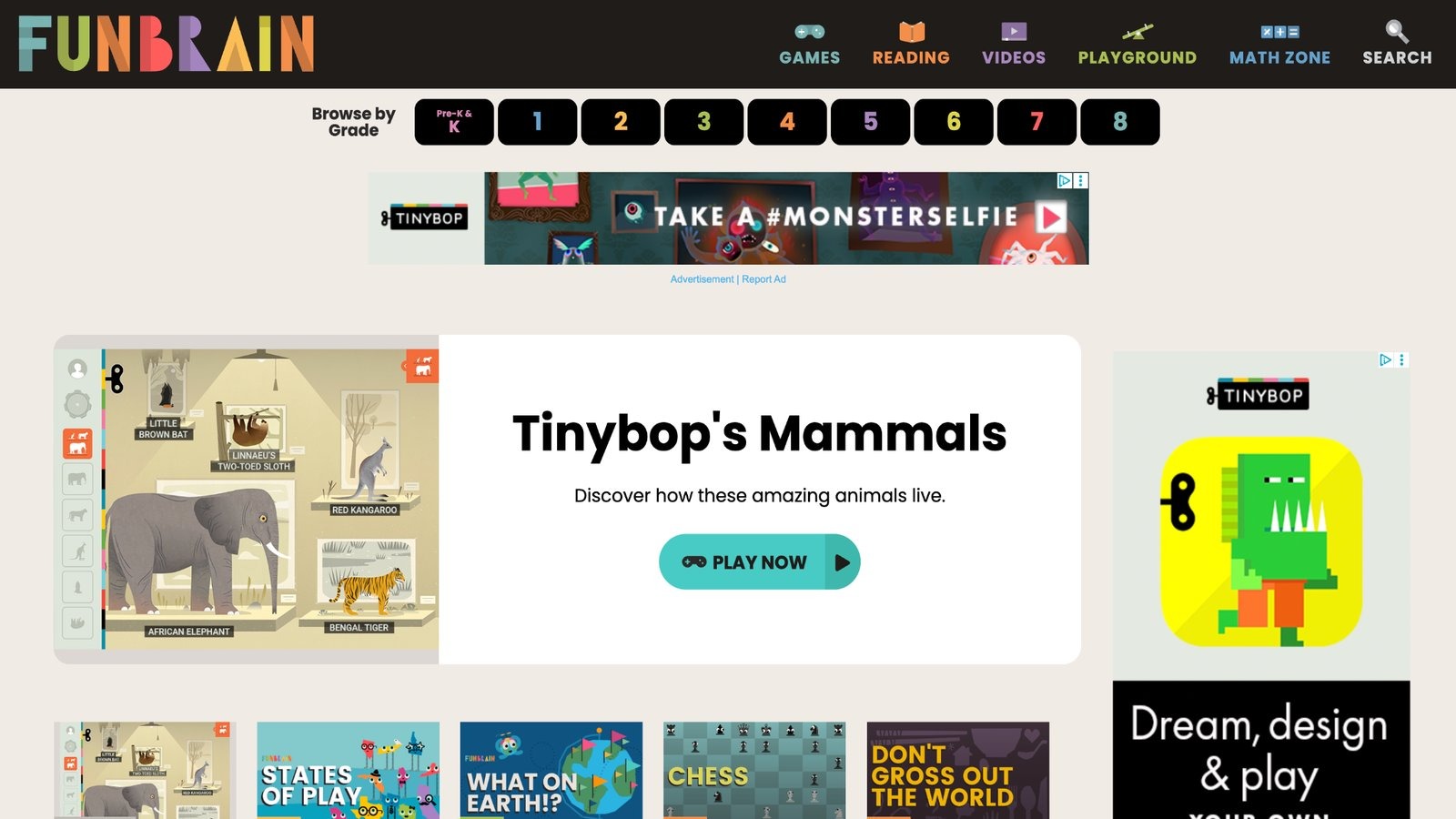
Funbrain offers arcade-style games for various ages, targeting math, grammar, and history with comics and videos interspersed. No registration needed for quick access. Strengths lie in its broad variety and casual approach to core subjects. It mixes entertainment with education seamlessly. Weaknesses include older graphics and occasional ads. Suits brief, subject-focused sessions.
- Key features: Math arcades, language quizzes, historical interactions.
- Facts and information: Some kids appreciate the blend of games and facts for engagement.
10. SplashLearn
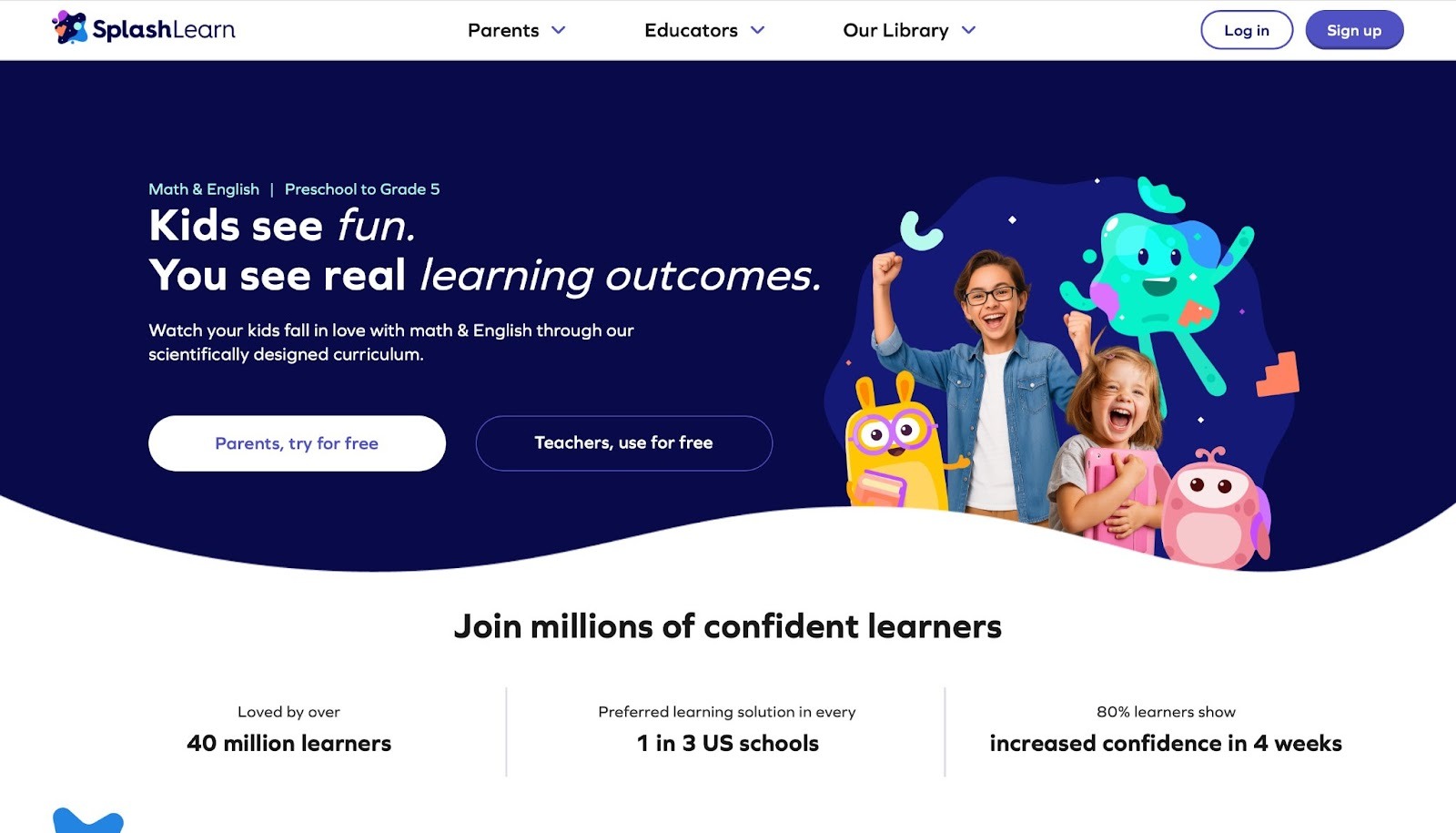
SplashLearn targets pre-K to grade five with adaptive math and reading games, like number pursuits or comprehension puzzles. It provides reports for tracking. Strengths include gamified incentives and curriculum alignment. The app builds essentials through stories. Weaknesses may involve drill-like feels and restricted free access. Good for specific skill reinforcement.
- Key features: Personalized math trails, reading games, incentive structures.
- Facts and information: Many report school performance uplifts from targeted play.
11. Minecraft Education Edition
Minecraft Education Edition enables kids to construct worlds for learning history, science, and coding in collaborative settings. For ages six and up, it uses blocks for simulations like building ancient structures or ecosystems. Strengths are in fostering creativity and teamwork, with lesson plans available. It makes abstract topics concrete. Weaknesses include setup complexity and device requirements. Perfect for project-oriented education.
- Key features: Block-based building, multiplayer collaborations, educational simulations.
- Facts and information: Some educators see enhanced critical thinking through group projects.
12. Starfall
Starfall focuses on phonics and math for early learners with songs, games, and books that teach letter sounds and basic equations. For ages two to five, it uses multisensory methods. Strengths include effective fluency building and printable extensions. It aids diverse learners. Weaknesses might be basic for advanced kids. Suits kindergarten readiness.
- Key features: Animated phonics, interactive songs, seasonal activities.
- Facts and information: Many note literacy gains in beginners from repeated exposure.
13. ABCya
ABCya provides grade-specific games for pre-K to sixth grade, covering language, math, art, and more, with weekly updates featuring themes like holidays. Kids engage in puzzles and printables that build skills in core subjects, such as typing or geography. Based on educational standards, it offers multiplayer options and seasonal content to keep learning fresh. Strengths include a wide variety of subjects and regular new games, making it versatile for different ages.
Weaknesses could involve some overlap in grade levels, which might not perfectly match every child's needs. It focuses on fun logic games alongside academics, helping kids stay motivated through interactive play. The platform includes tools like band games for music and robot challenges for tech skills. Parents and teachers appreciate how it turns screen time into productive learning. Overall, ABCya creates an accessible space for young learners to explore topics through engaging activities, fostering creativity and knowledge in a balanced way.
- Key features: Graded challenges, word games, creative tools, holiday content, printables.
- Facts and information: Some families value the fresh updates for sustained interest.
14. Epic
Epic offers access to thousands of books and audiobooks for ages four to twelve, with personalized recommendations based on interests. It helps kids fall in love with reading, from reluctant readers to bookworms, through a vast library that sparks curiosity. The app includes tools to track reading and explore new genres, supporting growth in literacy and critical thinking. Strengths are in its diverse collection and features that build confidence, making it ideal for developing readers.
Weaknesses might include potential overload from too many choices without extra guidance. It covers topics kids love, helping them learn about the world and themselves. Families can sign up to start exploring, with options for educators too. The platform boosts classroom success by encouraging exploration and personal growth. Overall, Epic turns reading into an adventure, providing unlimited potential for lifelong learning through engaging digital content.
- Key features: Audiobook options, recommendation engine, progress monitors.
- Facts and information: Many users explore new genres leading to broader knowledge.
15. CodeSpark Academy
CodeSpark Academy teaches coding to ages three to ten using drag-and-drop puzzles for sequencing and loops, where kids create games and stories. It's a wordless design for beginners, with over 1000 activities and monthly new content in a whimsical Fooniverse. The app builds logic and computer science skills through adventures like making superheroes. Strengths include its research-backed curriculum that works for both girls and boys, plus progress tracking for parents.
Weaknesses may involve needing help for tougher levels. Used in thousands of classrooms worldwide, it lets users share projects and enter contests. The platform fosters independent learning and has reached millions of kids. Families see real results in coding abilities from the gamified approach. Overall, it provides a fun intro to STEM, making complex ideas accessible and enjoyable for young minds.
- Key features: Puzzle-based coding, project sharing, contest entries.
- Facts and information: Some see rapid logic skill development in young coders.
16. Reading Eggs
Reading Eggs builds phonics and comprehension for ages two to thirteen with animated lessons, songs, and rewards like golden eggs. It aligns with school standards, reinforcing sight words through motivational collectibles. Kids progress through structured paths that make reading fun and effective. Strengths include engaging games and quick skill gains, as parents report kids advancing ahead of peers. Weaknesses could involve some routine repetition in activities.
The app offers interactive elements that boost confidence and enjoyment in learning. Users have banked billions of golden eggs, showing widespread engagement. It fits as a home supplement to school, with trials to try features. Overall, Reading Eggs turns reading into an adventure, helping children master basics through play and positive reinforcement.
- Key features: Phonics animations, egg rewards, song reinforcements.
- Facts and information: Many report confidence boosts in reading from structured paths.
17. BrainPOP
BrainPOP offers animated videos and quizzes for K-8 in science, math, and history, with a Jr. version for younger kids. It builds knowledge, vocabulary, and comprehension through engaging content that complements teaching. The platform includes tools for projects and supports English learners. Strengths are in making complex topics approachable and providing memorable experiences.
Weaknesses include less hands-on interactivity after videos. It sparks curiosity and boosts achievement across subjects. Used by millions of educators, it offers samples and integrations for classrooms. Families extend learning at home, fostering self-directed skills. Overall, BrainPOP empowers kids with research-based tools for lifelong impact, turning lessons into exciting adventures.
- Key features: Themed animations, vocabulary builders, comprehension quizzes.
- Facts and information: Some students gain achievement across subjects from engaging content.
18. DragonBox
DragonBox series introduces math like numbers and algebra for ages four to nine using characters for arithmetic and operations. Kids trade resources and solve equations in adventures, with over 4000 tasks to unlock worlds. The method engages through discovery and reflection for deep understanding.
Strengths are in concrete tools and progression that builds intuition without drills. It includes times tables mini-games and geometry proofs. Families observe kids mastering concepts joyfully. Overall, DragonBox creates shared learning moments, making math accessible and fun for young users.
- Key features: Noom adventures, resource trading, equation solving.
- Facts and information: Many families observe conceptual understanding without drills.
19. Lightbot
Lightbot teaches coding basics like loops for ages nine to eleven by guiding a robot through puzzles. It covers sequencing, procedures, and conditionals in a beginner-friendly way. Strengths include logic intro and accessibility for new coders, promoting critical thinking. Weaknesses are limited to puzzle focus. Played by millions, it's used by thousands of teachers. Users build reasoning via trial and error. Overall, Lightbot offers engaging puzzles that secretly teach programming, suitable for starters.
- Key features: Command sequencing, conditional statements, puzzle progression.
- Facts and information: Some kids build reasoning skills through trial and error.
20. ScratchJr
ScratchJr lets ages five to seven create animations with blocks, using symbols for actions in a sandbox. It teaches coding with minimal reading, encouraging storytelling. Strengths are in experimentation and project design for problem-solving. Weaknesses may need initial guidance. Available in many languages, it pairs with books and cards for activities. Users experiment freely for creations. Overall, ScratchJr fosters creativity and logic as new literacy.
- Key features: Block snapping, character movements, sample projects.
- Facts and information: Many young users experiment freely leading to original creations.
21. Osmo
Osmo uses physical pieces with apps for coding and puzzles, ages five to twelve. Kids arrange commands for mazes, blending tangibles with digital. It covers math, science, and reading through hands-on play. Strengths combine feedback for collaboration and thinking. Weaknesses involve device compatibility. Headquartered in Freehold, NJ. Users enhance problem-solving in groups. Overall, Osmo makes learning magical with play.
- Key features: Physical coding blocks, mirror setup, group challenges.
- Facts and information: Some groups enhance problem-solving through shared play.
22. Toca Boca
Toca Boca offers open-ended play for ages two to six, like building nature for ecosystems. Kids shape terrains and observe animals in creative worlds. Strengths in interactions and unique experiences for imagination. Weaknesses lack structured goals. Recent packs add styles and homes. Users discover environmental concepts. Overall, Toca Boca sparks creativity in safe spaces.
- Key features: Terrain shaping, resource gathering, animal observations.
- Facts and information: Many children discover environmental concepts through wandering.
23. Daniel Tiger’s Grr-ific Feelings
Daniel Tiger’s app explores emotions for ages two to five with games, songs, and exercises. Kids identify feelings and practice calming techniques using familiar characters. Strengths in simple cues and self-care teaching. Weaknesses geared to very young. It includes mini-games and photo booths. Parents see better emotion handling. Overall, it builds social-emotional skills through play.
- Key features: Feeling identifications, art expressions, breathing techniques.
- Facts and information: Some parents see better emotion handling in daily situations.
24. Endless Alphabet
Endless Alphabet builds vocabulary for ages three up with monsters and puzzles. Kids reassemble letters for definitions in animations. Strengths in playful phonics and engaging skits. Weaknesses focus on basics. Winner of awards, it teaches without stress. Toddlers gain recognition from repetitions. Overall, it sets reading success with fun.
- Key features: Letter scattering, definition skits, monster interactions.
- Facts and information: Many toddlers gain word recognition from fun repetitions.
25. CodeMonkey
CodeMonkey teaches coding for ages five up via game creation in Python-like languages. It supports classrooms with puzzles for problem-solving. Strengths in hands-on building and logical thinking. Weaknesses limited free access. Millions of students learn real languages enjoyably. Users develop thinking through solutions. Overall, it's engaging for schools and home.
- Key features: Coding challenges, game building, step-by-step guidance.
- Facts and information: Some users develop logical thinking through puzzle solutions.
26. ClassDojo
ClassDojo connects teachers, students, and parents for tracking and sharing in younger learners. Kids build portfolios with monster incentives. Strengths in communication and interactive learning. Weaknesses classroom-oriented. It translates messages and shares updates. Classrooms foster behaviors with tools. Overall, it builds community through engagement.
- Key features: Performance updates, photo sharing, monster avatars.
- Facts and information: Many classrooms foster positive behaviors with its tools.
27. Monster Math
Monster Math builds arithmetic for ages five to nine through stories and puzzles, neuroinclusive for diverse needs. It uses visuals and no timers for calm learning. Strengths in inclusive design and playful worlds. Weaknesses specific to math. Aligned with standards, it adapts for ADHD. Children show enjoyment from worlds. Overall, it fosters fluency without pressure.
- Key features: Story adventures, visual puzzles, calming interfaces.
- Facts and information: Some children show math enjoyment from playful worlds.
28. Thinkrolls
Thinkrolls develops logic for ages four up with physics puzzles and characters. It offers over 2000 games for math and science, adapting difficulty. Strengths in intuitive design and community sharing. Weaknesses puzzle-limited. Award-winning, it's ad-free and offline. Players sharpen solving with difficulties. Overall, it empowers learning through play.
- Key features: Physics platforms, level progressions, character guides.
- Facts and information: Many players sharpen problem-solving with escalating difficulties.
Benefits of Daily Play for Young Minds
Regular interactive play strengthens brain connections, helping kids process information better. It boosts motivation by linking tasks to rewards, leading to longer attention spans. Families often combine these with free printables for offline fun, extending lessons beyond screens. This mix supports overall growth in a balanced way.
Skill Area | Common Games | Kid Benefits |
| Phonics | Sound matching | Better reading start |
| Numbers | Counting puzzles | Strong math base |
| Logic | Sorting challenges | Sharp thinking |
| Empathy | Character care | Kind interactions |
| Creativity | Story building | Fresh ideas |
Trends in Kids Learning Tools for 2026
New designs focus on emotional wellness, with more games including yoga and mindfulness. Tech like voice interaction makes play feel natural. Parents look for apps that work across devices, ensuring smooth switches.
How to Pick Games That Fit Your Family
- Match games to your child's age and interests for best results.
- Look for ad-free options to avoid distractions.
- Test trials to see engagement levels.
FAQ
What makes interactive educational games effective for preschoolers?
Interactive educational games work well for preschoolers by mixing play with simple challenges that match their short attention spans. They often use bright colors and sounds to draw kids in, helping them grasp ideas like colors or patterns without feeling like work. Phonics activities introduce letter sounds through songs and stories, building early language skills in a gentle way.
How do educational games support emotional development?
Educational games aid emotional development by letting kids practice responses in safe scenarios, such as sharing with virtual friends. They include elements like mindfulness exercises that teach calm breathing during tricky parts. Kids yoga sessions woven into gameplay encourage awareness of feelings, fostering better self-control over time.
Are there free options among the best interactive educational games 2026?
Free interactive educational games provide access to core features like basic puzzles and stories without any cost. They often include offline modes for play anywhere, covering topics from numbers to daily habits. Free printables can pair with these games to add hands-on elements, extending the fun beyond the screen.
Can these games help with school readiness?
Interactive games prepare kids for school by reinforcing routines like following steps in a task. They build logic through sorting and matching, which ties into classroom activities. Parenting tips discuss how such play strengthens focus and social skills needed for group settings.
Discover the Best Interactive Educational Games 2026 - Fluvsies Academy