

Best Educational Fun Games 2026






Kids today need ways to learn that feel like play. The best educational fun games 2026 mix excitement with real skill growth. Options cover topics from numbers to creativity, helping children build confidence. For a top choice, check out Fluvsies Academy, an app full of activities tailored for young learners. These games support focus and emotional health too.
Discover the Best Educational Fun Games 2026 - Fluvsies Academy
Why Choose Educational Games for Kids

Games that teach go beyond basic fun. They help children grasp ideas through hands-on play. Young ones pick up skills like sorting and problem-solving without feeling like work. Some games even tie into daily habits, like healthy routines or simple jobs. This approach builds a strong base for school success. Parents often see kids get more curious about the world around them.
Key Features to Look for in Fun Learning Games
Good games offer variety in subjects. Look for ones with progress tracking so parents stay in the loop. Age-appropriate levels keep things just right, not too easy or hard. Interactive elements, like stories or challenges, hold attention. Safety matters too, with no ads to interrupt play. In 2026, games that blend real-world skills with imagination win big. For instance, activities that teach professions or mindfulness add value.
Best Educational Fun Games 2026
1. Fluvsies Academy - Best Educational Fun Game
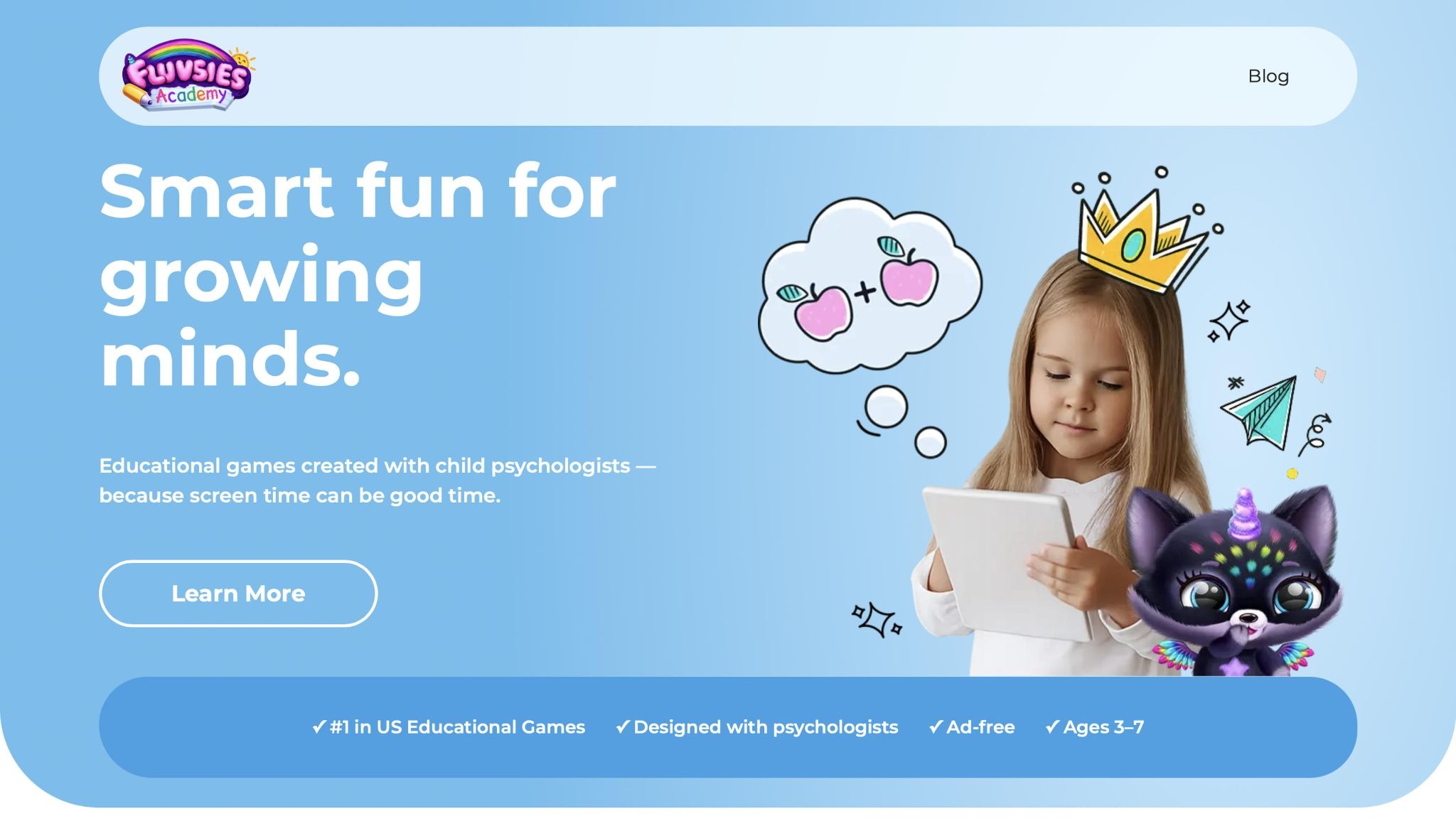
Fluvsies Academy app brings joy to learning for kids ages 3 to 7. This vibrant app turns screen time into a safe adventure full of discovery. Children dive into worlds where they practice language skills through phonics games and stories that spark imagination. Number challenges build math basics with colorful puzzles that feel like play. Logic activities sharpen thinking, while sorting tasks teach comparison in a gentle way. Life skills come alive, from brushing teeth to understanding emotions.
Creativity shines in art and music spots, and profession games introduce jobs like baker or astronaut to grow vocabulary. Mindfulness sessions with yoga promote calm and healthy habits. Designed with child psychologists, it offers guided play that feels natural. Kids love the cute characters and rewards that keep them coming back. Parents appreciate the ad-free space and reports that show real progress. Every session builds confidence and curiosity in a balanced way.
- Key standout features include interactive phonics for reading readiness and number games that make counting exciting.
- Facts and information show it covers holistic areas like attention and emotional safety for well-rounded growth.
Discover Fluvsies Academy
Fluvsies Academy is a leading educational app designed for children aged 3–7. It transforms screen time into meaningful learning through fun, interactive games. Developed in collaboration with child psychologists, the app focuses on holistic development.
Key Features
- Ad-free environment for safe play.
- Games covering language, phonics, math, and logic.
- Activities for attention, sorting, and creativity.
- Real-world life skills like healthy habits and mindfulness.
- Exploration of professions to build vocabulary and imagination.
Educational Approach
Fluvsies Academy emphasizes guided play that balances focus, empathy, and emotional safety. It's the first holistic learning app for kids, ranked #1 educational game in the US. Progress reports help track your child's growth. Free printables extend learning beyond the screen.
Benefits for Families
Parents gain peace of mind with expert-backed games.
Kids build confidence, skills, and a love for learning. Ideal for preschoolers seeking joyful education.
Download Fluvsies Academy today and watch your child thrive!
2. TutoClub
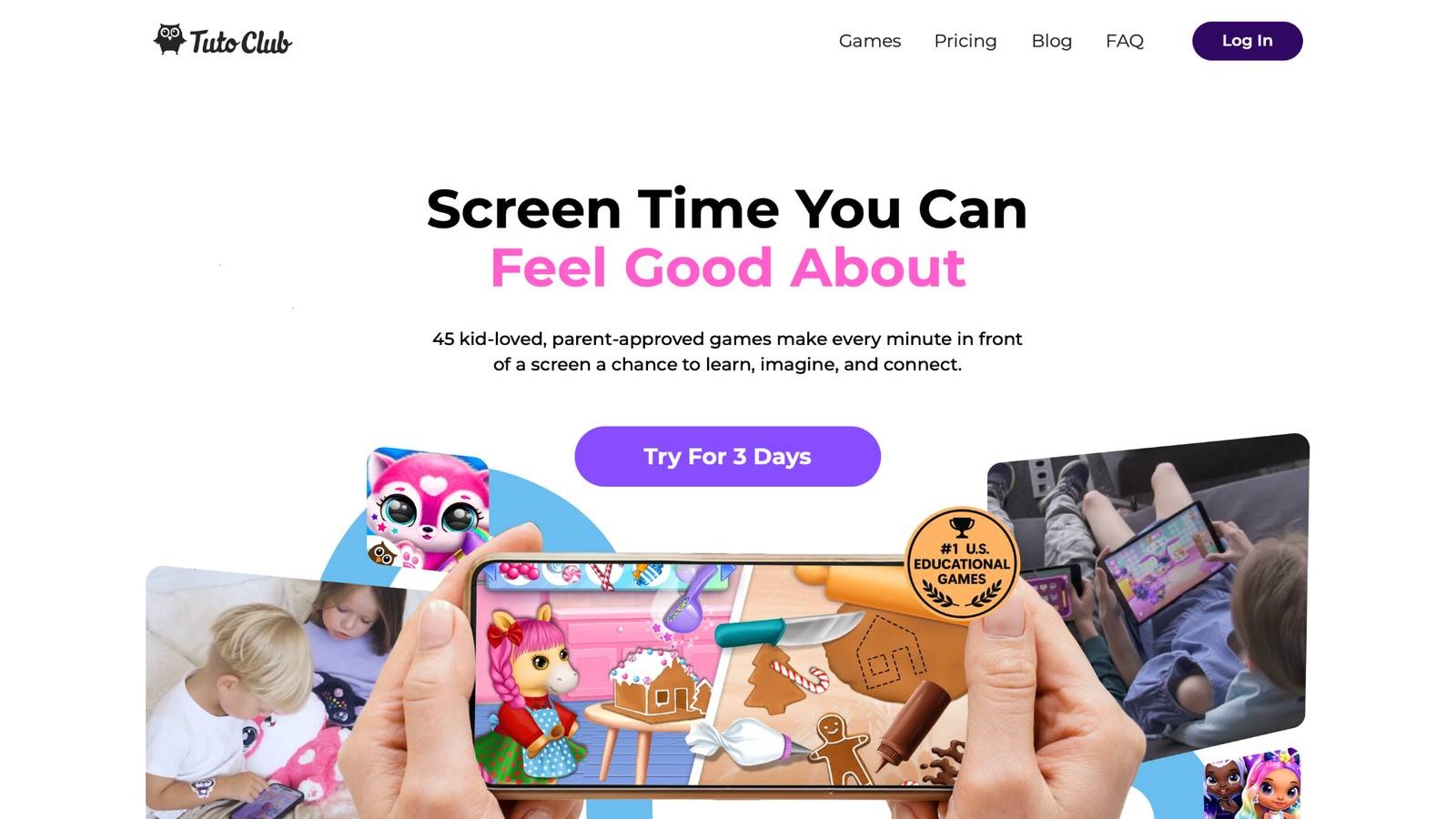
TutoClub stands out as a vibrant platform offering a collection of over 45 ad-free games designed specifically for young children, transforming everyday play into meaningful skill development. Kids can explore creative outlets like designing clothes or tending to virtual pets, which encourage imagination and a sense of responsibility. The games incorporate thoughtful puzzles that promote critical thinking in relaxed environments, drawing inspiration from child development experts to foster empathy and personal expression. With offline capabilities, it allows seamless play on mobile devices or tablets, making it ideal for travel or quiet moments at home.
Families appreciate the balanced approach to screen time, avoiding overwhelming stimuli while keeping engagement high. Strengths include its focus on holistic growth, blending fun with emotional and social learning. However, it might not delve as deeply into strict academic subjects like advanced math, serving better as a complement to more focused educational tools. Some parents find the subscription model necessary for full access, though a trial period lets users evaluate its fit before committing. Overall, TutoClub creates a nurturing space where curiosity thrives through interactive adventures.
- Key features encompass creative design challenges, pet care simulations, and gentle puzzles that build focus and problem-solving abilities.
- Facts and information reveal many families turn to it for its safe, expert-guided content that strengthens family connections via shared experiences.
3. ABCmouse
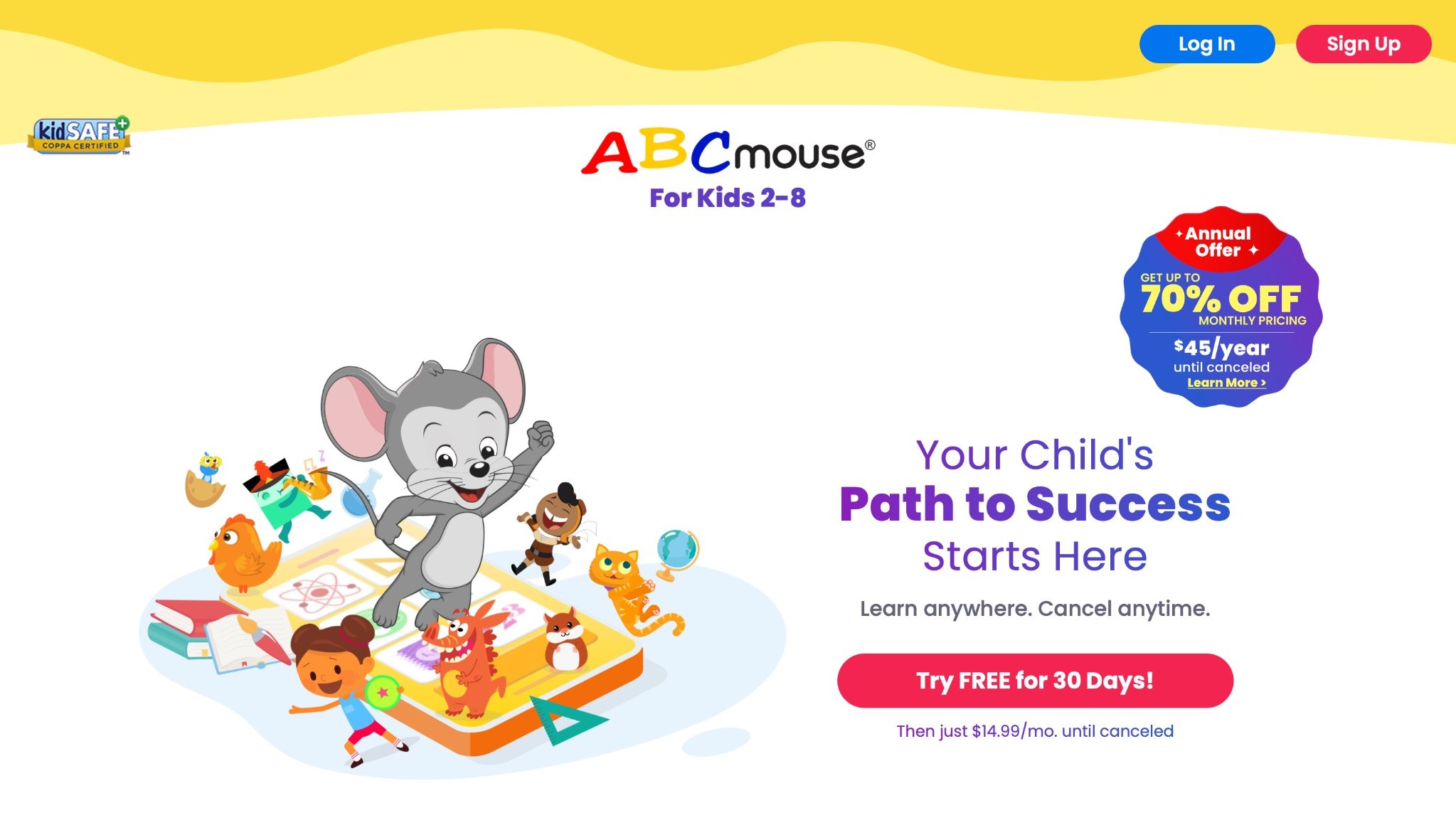
ABCmouse acts as a comprehensive early learning hub for kids aged 2 to 8, featuring an extensive curriculum that spans reading, math, science, art, and beyond. Interactive books, engaging puzzles, catchy songs, and artistic activities form the core, with personalized learning paths that adapt to each child's progress. Rewards such as virtual tickets motivate continued exploration, while themed areas like pet parks or wildlife adventures add layers of excitement. The platform emphasizes phonics for literacy, basic counting for numeracy, and introductory social skills through narrative-driven content.
Its strengths shine in providing a well-rounded foundation that accelerates early academic achievements. On the downside, children who progress rapidly might find some sections less challenging, requiring additional resources for sustained interest. Consistent engagement yields the best results, making it suitable for structured daily routines. Parents value the detailed progress reports that highlight strengths and areas for growth. ABCmouse turns potential screen time into productive, joyful learning sessions that prepare young minds for school.
- Key features include adaptive lessons, virtual rewards, and multimedia tools like videos and games for immersive education.
- Facts and information indicate some users experience notable improvements in core skills through its evidence-based curriculum.
4. Duolingo ABC
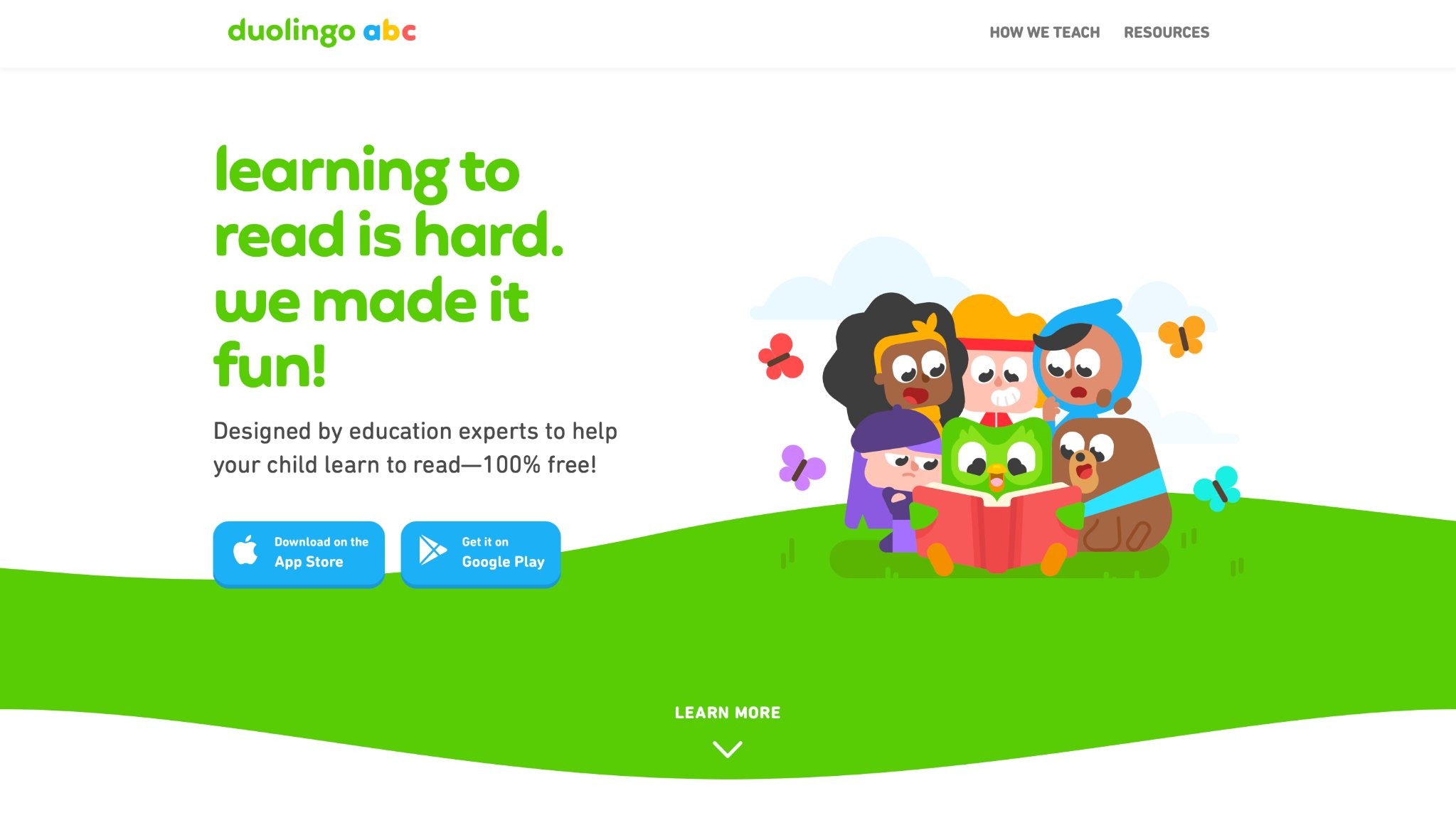
Duolingo ABC specializes in foundational reading and writing for children aged 3 to 8, delivering phonics-based lessons via playful, game-like interactions. A friendly owl character leads bite-sized activities that earn points and unlock levels, building letter recognition, sounds, and basic vocabulary. Fun challenges reinforce skills without pressure, using visuals and audio for multisensory learning. Strengths lie in its accessible, no-cost entry point and AI-driven personalization that adjusts to individual paces.
This makes it an excellent starter for emerging readers. Weaknesses could include its narrow focus on language arts, lacking coverage in other subjects like science or math, so it works best alongside broader programs. For very young users, the interface might require initial adult guidance to navigate effectively. Many families integrate it into short daily sessions for consistent practice. Duolingo ABC fosters confidence in literacy through rewarding, repetitive play that feels more like entertainment than study.
- Key features offer interactive stories, daily reminders, and adaptive exercises that enhance retention.
- Facts and information show some children develop strong reading foundations quickly with its supportive audio-visual elements.
5. Prodigy
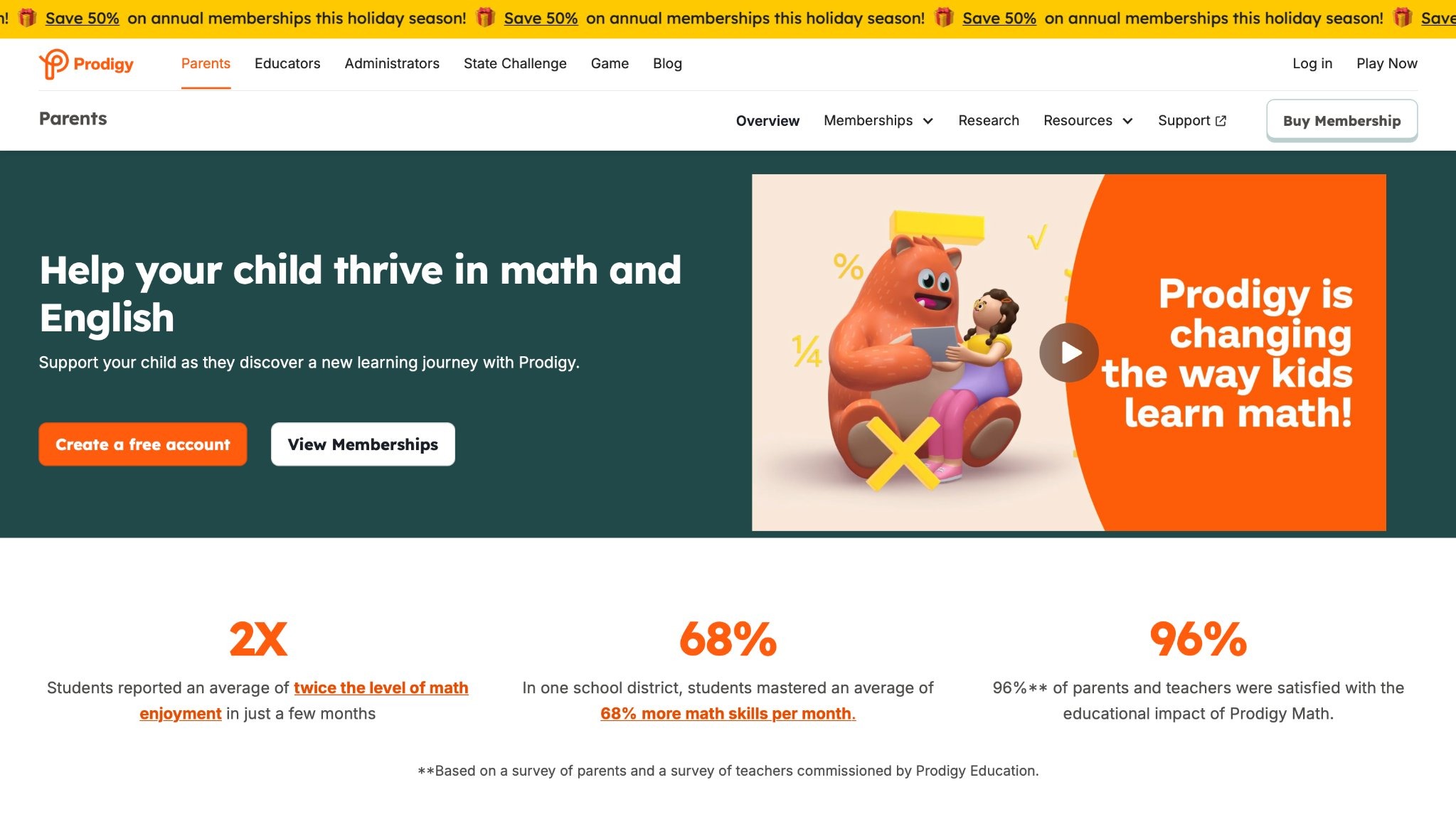
Prodigy transforms math and English practice into adventurous quests for school-aged children, where correct answers power spells and battles in a fantasy world. It aligns with educational standards, adjusting difficulty based on performance for tailored challenges. Teachers can customize assignments, and parents monitor advancement through dashboards. Strengths include its high motivational factor, making routine drills exciting and encouraging repeated play.
The narrative elements keep kids immersed longer than traditional worksheets. Weaknesses may arise from the combat-themed format, which doesn't appeal to every child, potentially needing supervision to ensure balanced use. It excels in group settings like classrooms but might feel repetitive without variety in subjects. Families often report increased enthusiasm for learning topics that once seemed dull. Prodigy bridges entertainment and education seamlessly.
- Key features provide dynamic questions, in-game rewards, and integration options for educational environments.
- Facts and information highlight how some users gain greater subject enjoyment via its story-driven mechanics.
6. Khan Academy Kids
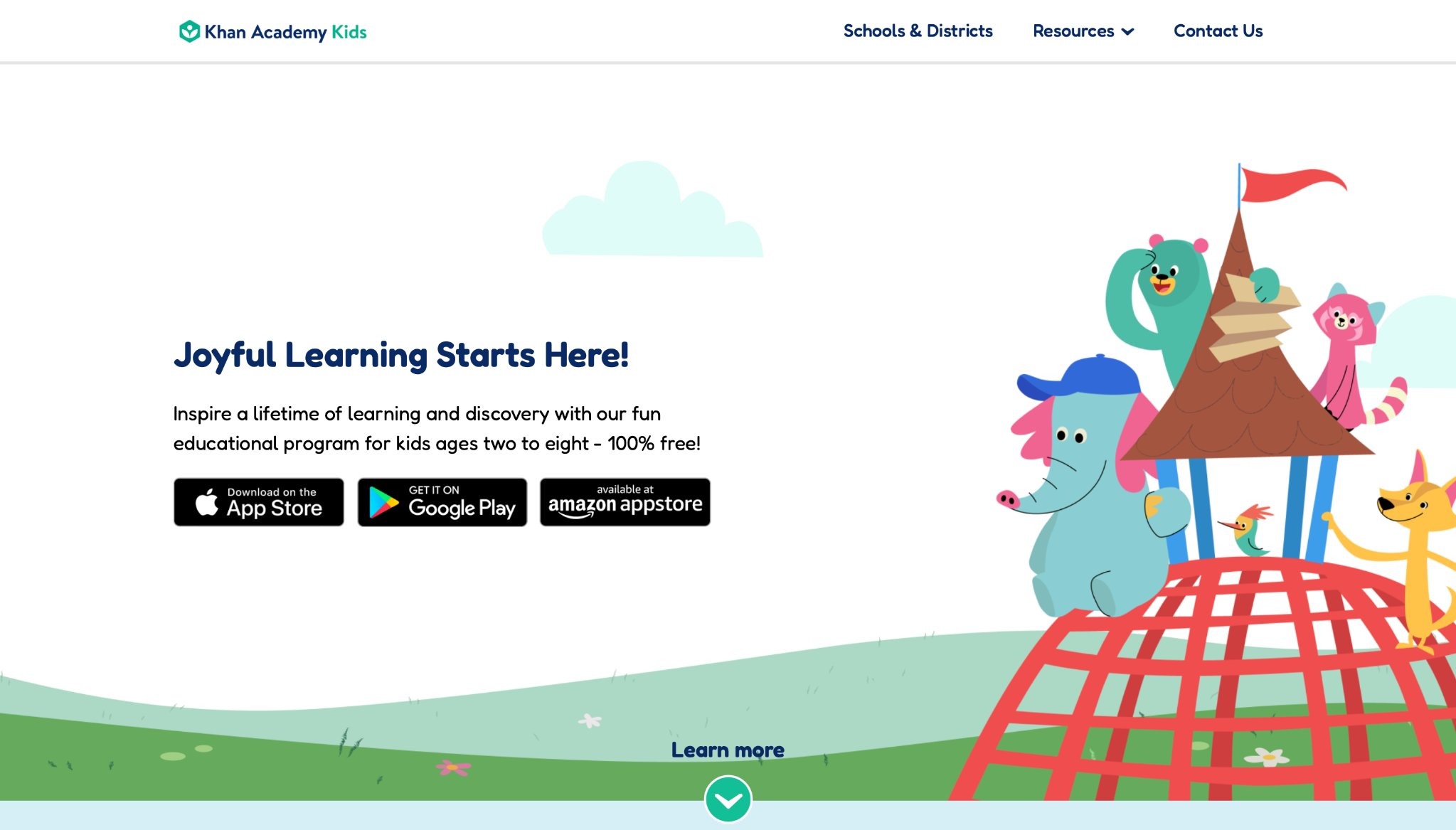
Khan Academy Kids supplies free, interactive content for ages 2 to 8, encompassing literacy, mathematics, and socio-emotional development. Adorable characters guide personalized journeys through games, stories, and videos that adapt to skill levels. Creative outlets like drawing promote expression alongside academic basics.
Strengths encompass its cost-free accessibility and research-supported methods that build independence. The ad-free environment ensures focused play. Weaknesses might involve limited advanced content, better suiting beginners and necessitating extras for older kids. It thrives in self-paced scenarios but benefits from parental involvement for deeper discussions. Many appreciate its holistic approach to early education.
- Key features deliver narrative lessons and tracking tools for caregivers.
- Facts and information note some kids foster self-reliance with its encouraging, distraction-free design.
7. PBS Kids Games
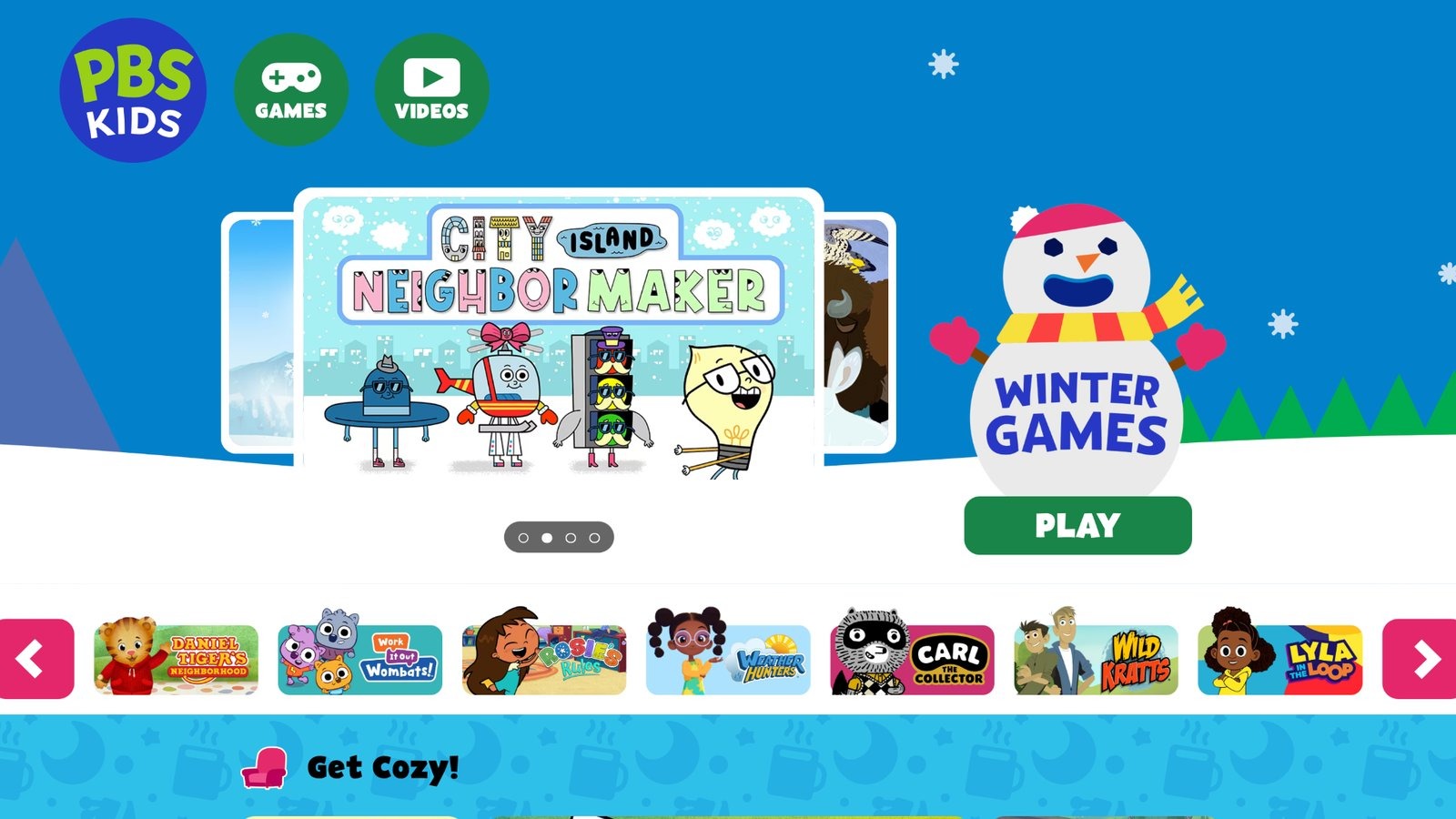
PBS Kids Games leverages beloved TV shows to deliver free, web-based activities for young learners, incorporating puzzles, explorations, and creativity tied to figures like Daniel Tiger or Curious George. It addresses social-emotional learning, basic science, and literacy in concise sessions. Strengths are rooted in recognizable content that sparks voluntary participation without high pressure.
The public media backing ensures trustworthy material. Weaknesses include dependency on internet connectivity and varying depth across games, making it more for supplemental fun than core curricula. It fits well for casual reinforcement of show themes. Headquarters in Arlington, Virginia, USA.
- Key features merge character-driven challenges with skill-building for emotional and cognitive growth.
- Facts and information suggest some children apply real-life concepts from its reliable media foundation.
8. Starfall
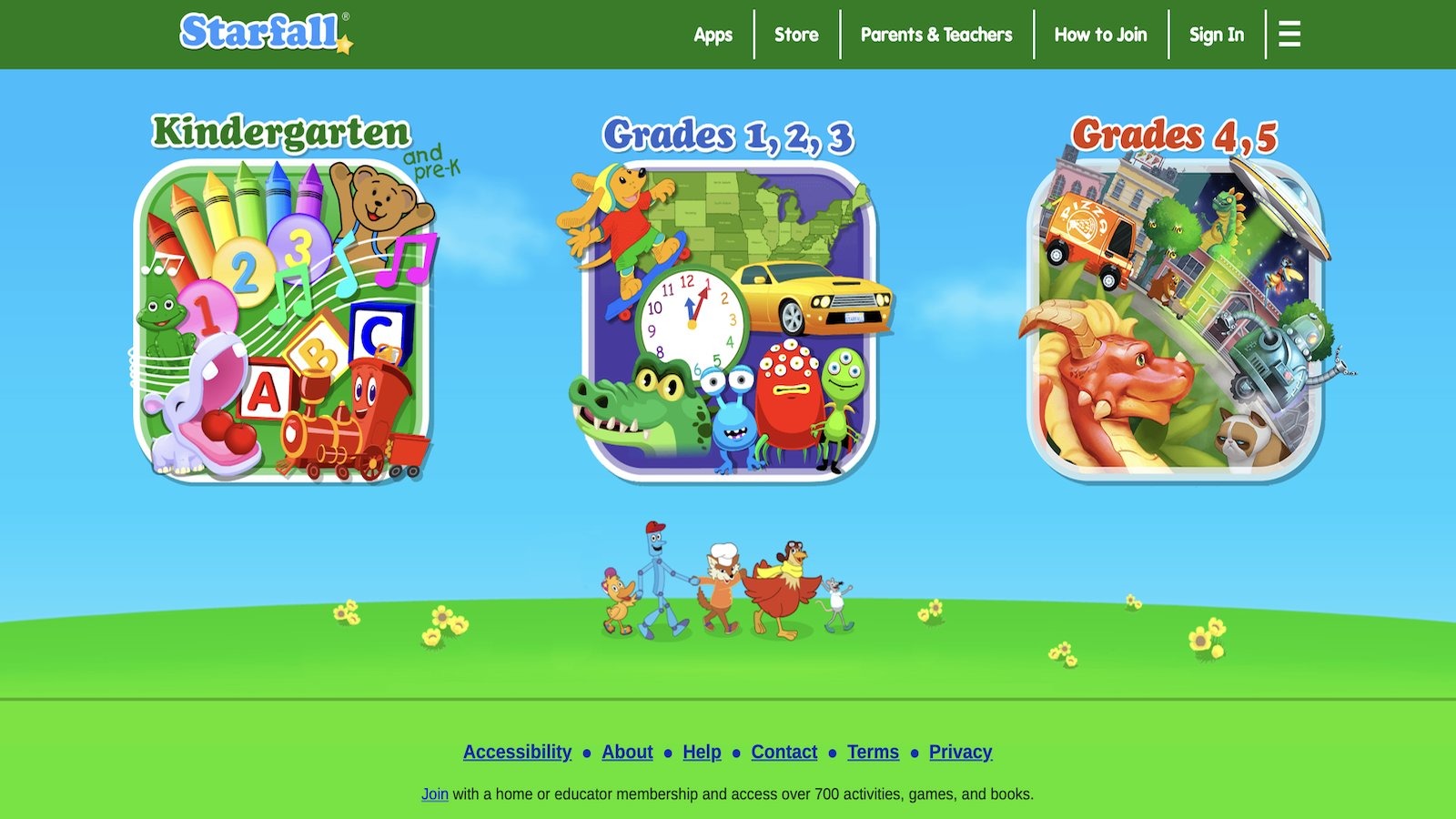
Starfall facilitates phonics and math learning for preschool through fifth grade via untimed, interactive games and books with audio support. It accommodates diverse needs, including English learners, through positive feedback. Strengths feature its gentle pacing that boosts motivation and accessibility for special education. Weaknesses could stem from premium access requirements for complete content, though free basics are robust. It concentrates on essentials rather than expansive creativity.
- Key features integrate music, literature, and word practice for progressive mastery.
- Facts and information point to its school adoption for solid early reading aid.
9. Funbrain
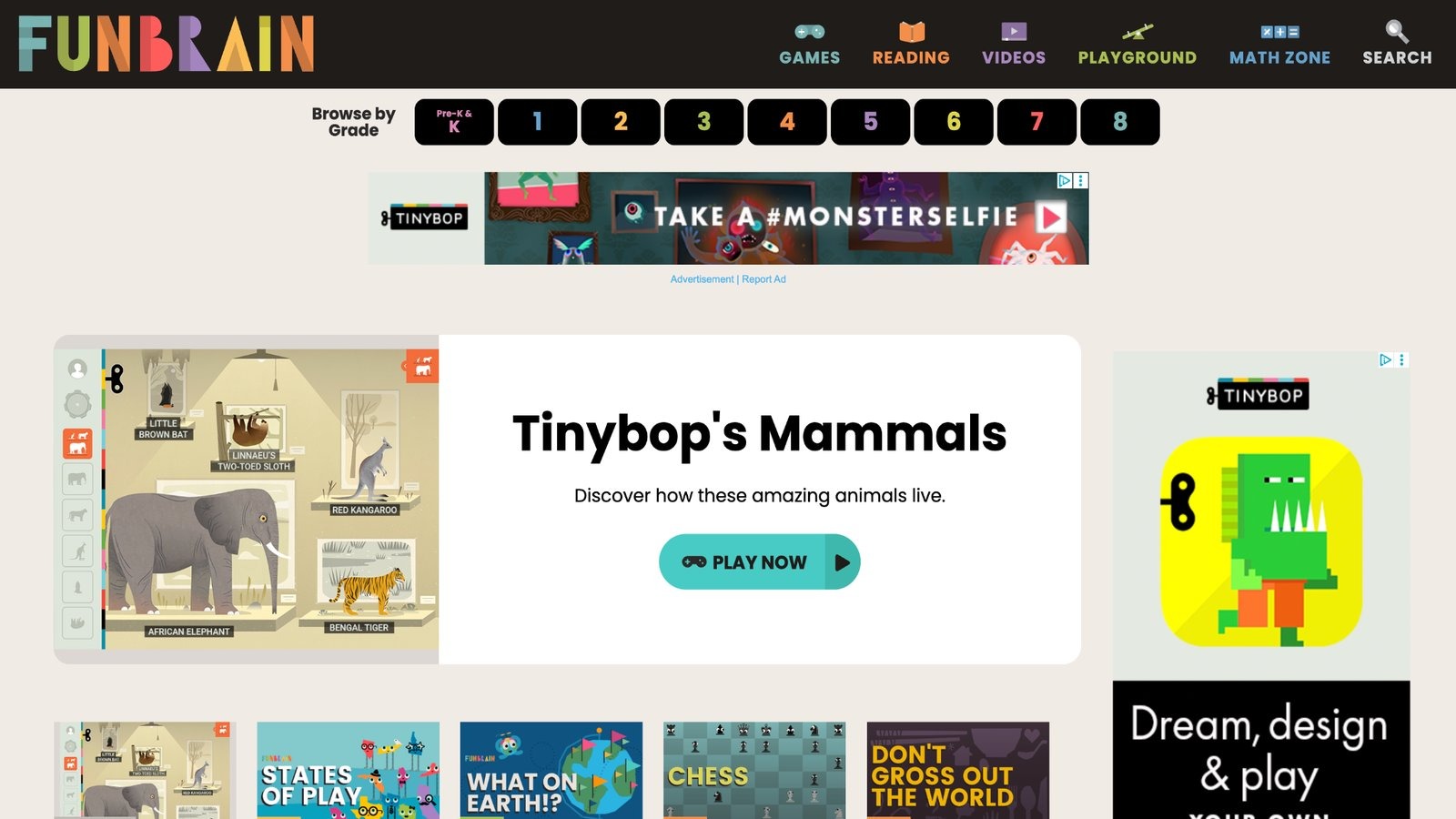
Funbrain presents a mix of games, readings, and videos for ages 2 to 8, touching on math, language, and science with whimsical elements like animal quests or diary entries. Strengths include diverse free offerings that ignite interest in various topics. Weaknesses may lie in less organized structure, ideal for relaxed exploration but not intensive study, with some content appearing older.
- Key features combine adventures with instructional layers for wide-ranging practice.
- Facts and information show some enjoy its casual take on subjects like spelling.
10. Lingokids
Lingokids combines games, songs, and podcasts for young kids, teaching ABCs, science, and life skills like yoga. Over 3000 activities promote playlearning for academics and emotions. Strengths are its award-winning method that engages through adventure. Weaknesses might be the need for a device and potential overload of choices for very young users.
- Key features include brain puzzles and social classes for holistic development.
- Facts and information indicate many parents value its blend of fun and real-world prep.
11. SplashLearn
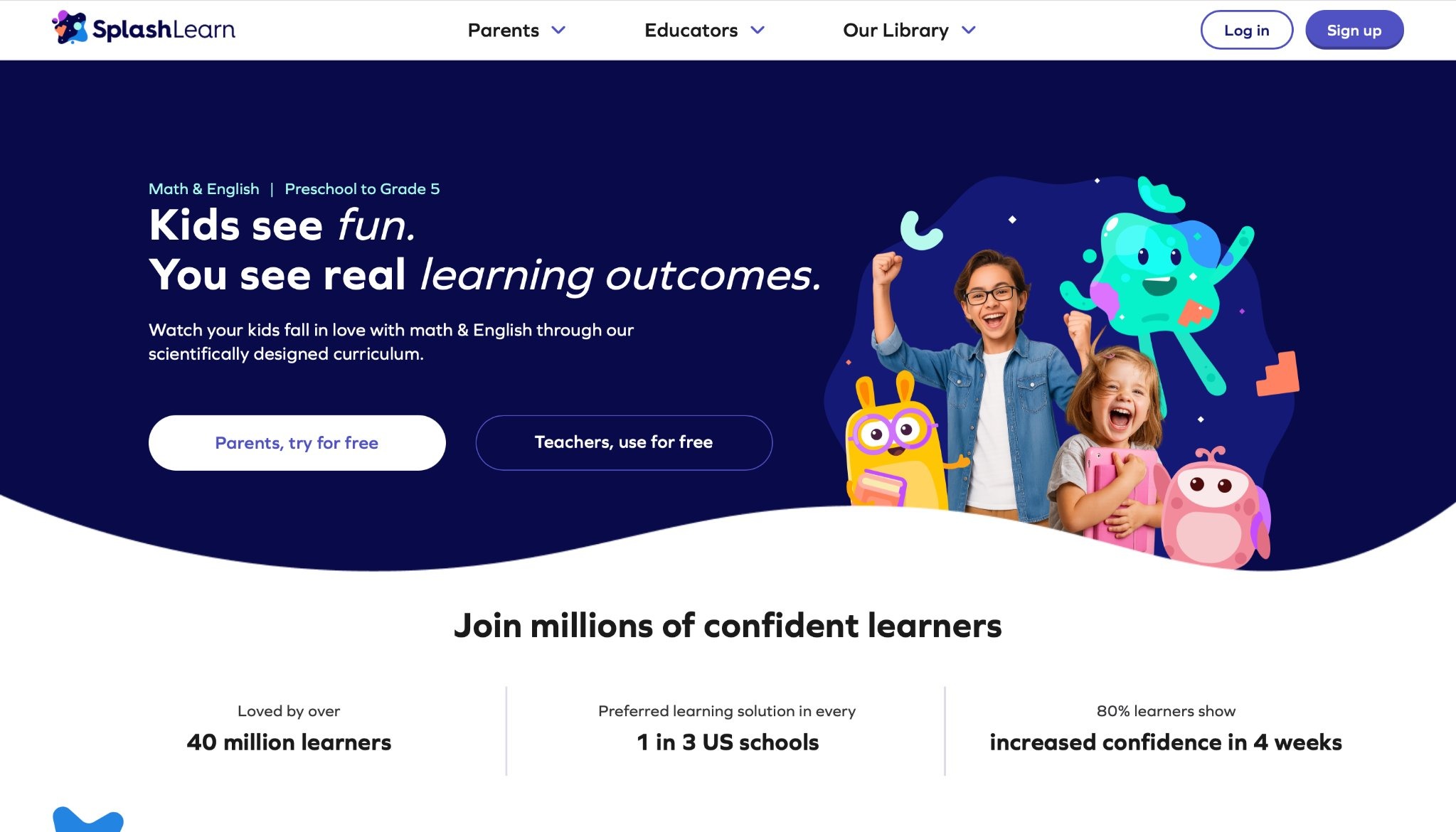
SplashLearn engages pre-K to grade 5 kids with math and English through vibrant games and lessons aligned to standards. This game-based platform offers over 8,000 activities, including 4,413 games and 4,567 worksheets, plus immersive experiences in Splashverse, playsheets, decodable books, and bedtime stories. It covers 1,900 English and 2,000 math tasks based on Common Core, promoting confidence where 80% of learners show gains in four weeks and over 77% improve with regular sessions. Personalized paths adapt to each child, with detailed progress reports by subject and skill.
No timed challenges ensure safe exploration. Compatible with various devices like iPads and laptops. Strengths include scientifically designed curriculum that boosts engagement and mastery without pressure. Weaknesses might involve the need for consistent use to see full benefits, and it serves best as a supplement rather than a complete standalone program. Families enjoy the free teacher access and trial, making it flexible for home or school. Overall, SplashLearn turns learning into unlimited fun while building core skills.
- Key features: Adaptive learning paths, multimedia activities, and parent/teacher reports for tracking growth.
- Facts and information: Many users report increased confidence and better performance in math and reading through its evidence-based approach.
12. Endless Alphabet
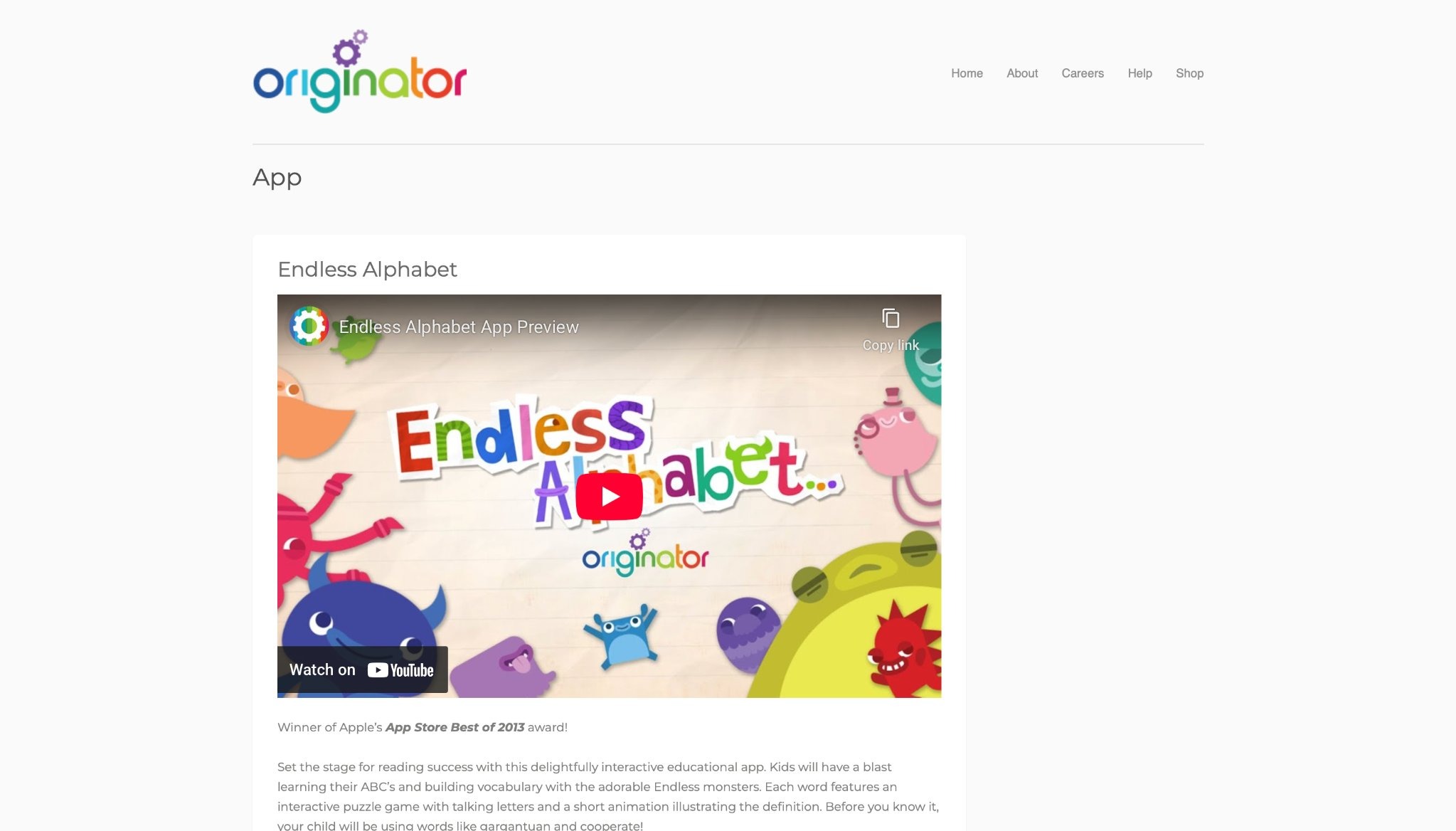
Endless Alphabet introduces vocabulary and ABCs to young kids via interactive play with cute monsters. It features over 70 words, with puzzles where letters scatter and kids drag them to form words, hearing phonetic sounds. Delightful animations then illustrate definitions in fun ways, like gargantuan or cooperate. No high scores or failures allow stress-free exploration at their own pace. Award-winning as Apple's App Store Best of 2013, it sets the stage for reading success.
Age range suits preschoolers, though appealing broadly. Strengths: Engaging visuals and audio build letter recognition, sounds, and vivid words without pressure, making learning joyful. Weaknesses: Limited to about 100 words, so it may not offer depth for advanced users, and lacks checks for understanding beyond play. Users benefit from expanded lexicons through humorous antics, fostering curiosity. No specific 2026 updates noted, but its simple, effective design endures.
- Key features: Interactive letter puzzles, talking letters, and short definition animations for multisensory learning.
- Facts and information: Many young learners quickly expand vocabulary, with the app praised for motivating early reading without errors or syntax issues.
13. Minecraft Education Edition
Minecraft Education Edition immerses students in creative worlds for learning across subjects, licensed via Microsoft 365 for secure school access. It targets ages 11-14 and older, with hundreds of standards-aligned lessons, customizable content, group projects, and esports. Lessons cover online safety, history, coding, and more through building and simulations.
Used in over 40,000 systems in 140 countries. Strengths: Motivates with inclusive, fun play that improves attendance, critical thinking, and collaboration. Weaknesses: Requires devices and guidance to stay educational, potentially blending into recreation without structure. Benefits include enhanced digital skills and agency. As of 2026, updates like Copper Update add multiplayer servers and AI Lesson Crafter tool.
- Key features: Lesson library, build challenges, and collaborative modes for immersive projects.
- Facts and information: Many classrooms leverage it for innovative explorations in various curricula.
14. Osmo
Osmo blends physical pieces with digital apps for hands-on learning in math, reading, coding, and more via camera detection. Starter kits like Little Genius (ages 3-5) include ABCs, shapes, and stories; Genius (6-10) focuses on math, spelling, puzzles; Coding (5-10) teaches programming. Over 7 activities in expansive kits.
Strengths: Tangible interaction bridges real and virtual, enhancing spatial, logical, and creative skills. Award-winning for engaging reluctant learners. Weaknesses: Needs compatible hardware and setup time, plus adult supervision for younger kids to maximize educational value. Users appreciate cooperative play and STEAM topics. Headquarters in Palo Alto, California.
- Key features: Manipulative games, immediate feedback, and adaptable levels for problem-solving.
- Facts and information: Many families note improved fine motor skills and enthusiasm for subjects through its innovative tactile approach.
15. Code.org
Code.org provides free K-12 curriculum in computer science and AI, serving 107 million students and 3 million teachers in 190 countries, with 1.94 billion hours of activities. Features AI lessons like decision-making for grades 3-5, coding ethics for 6-12, and foundations for 9-12, plus cross-subject units on oceans or humanities. Professional training supports educators. Strengths: Standards-aligned, nonprofit model promotes critical thinking and global AI literacy. Weaknesses: Web-based, requiring stable internet; potential lack of depth in non-CS areas. Benefits empower ethical creation and problem-solving.
- Key features: Block coding, themed challenges, and ethical AI integrations.
- Facts and information: Many users discover tech passions through its accessible, evidence-based entry.
16. Scratch
Scratch enables kids to create stories, games, and animations using drag-and-drop blocks from MIT. Aimed at ages 8-16 but used by all, it fosters computational thinking, creativity, and collaboration in an online community. Features sharing, remixing, and problem-solving through coding concepts like loops and events. Strengths: Free, empowers user-generated content, building logic and storytelling. Weaknesses: Learning curve for complex projects, moderation issues with community, potential inappropriate content. Benefits include skill growth in programming and social interaction.
- Key features: Visual programming, community platform for remixes.
- Facts and information: Many develop proficiency in STEM alongside creative expression.
17. Tynker
Tynker teaches coding for ages 5-18 with over 5,000 lessons, from blocks to JavaScript/Python, covering Minecraft modding, AI, data science, web development. Aligned to standards like CSTA, ISTE. Features gamified tutorials, quizzes, safe community. Strengths: Varied paths build confidence, problem-solving, no prior math needed. Weaknesses: Premium for depth, device-specific. Benefits prepare for tech futures.
- Key features: Visual to text coding, real-world applications.
- Facts and information: Many gain STEM skills through hands-on modules.
18. Epic!
Epic! delivers a digital library with over 40,000 books, audiobooks, videos for ages 2-12. Personalized recommendations, quizzes, badges motivate reading. Multilingual in English, Spanish, French, Chinese. Strengths: Vast selection sparks habits, progress tracking for parents. Weaknesses: Subscription for unlimited, potential screen fatigue. Benefits foster love for reading.
- Key features: Genre searches, post-story quizzes, reports.
- Facts and information: Many families see improved enthusiasm for literacy.
19. Reading Eggs
Reading Eggs offers structured reading for ages 2-13, with Junior (2-4), core (3-7), Fast Phonics (5-10), Eggspress (7-13). Over 3,500 ebooks, lessons on phonics, comprehension, rewards. Strengths: Engaging games build fluency, noticeable improvements per parents. Weaknesses: Repetitive for fast learners, needs consistency. Benefits make reading fun.
- Key features: Animated rewards, dashboards.
- Facts and information: Many report literacy gains from sequential paths.
20. Mathletics
Mathletics offers children a fun way to master mathematics through competitive games and curriculum based activities suitable for a wide range of ages. Users participate in live math battles, complete adaptive exercises, and explore different topics in an online setting that feels dynamic and rewarding. The interface includes a student dashboard with customizable avatars, achievement badges, and certificates that celebrate successes big and small. Live events connect participants globally, creating a community feel that adds thrill to learning. Many parents select this platform because it transforms potentially dry practice into something kids look forward to, helping reduce common fears associated with the subject.
Strengths include its alignment with international curricula and the insightful analytics that allow caregivers to see exact areas of strength and growth. Weaknesses might involve the requirement for steady online access and how the competitive spirit could create unnecessary stress for certain personalities, making occasional breaks important. The exercises range from quick mental calculations to multi step problems that build logical thinking. Immediate feedback helps kids learn from mistakes right away. Teachers can assign specific content for class use, extending its value beyond home. In essence, Mathletics supports the development of strong math habits and a love for numbers in an interactive, modern format that keeps pace with changing educational needs.
- Key features: Live competitions with peers, adaptive learning paths that adjust difficulty, and comprehensive reporting tools.
- Facts and information: Many kids gain improved accuracy and enjoyment in math through the platform's engaging event style.
21. Adventure Academy
Adventure Academy transports children aged eight to thirteen into a colorful virtual world filled with quests that teach core subjects like reading, math, science, and history. Kids create unique avatars, explore different zones dedicated to each academic area, and complete missions that require applying knowledge in practical scenarios. Safe multiplayer options let them team up with friends or meet new ones in moderated spaces. Many families like how the game-like structure maintains high interest levels and makes learning feel like an epic journey. Strengths center on the integrated curriculum that connects subjects naturally and the creative freedom in character development. Weaknesses may include a broader rather than specialized focus on any one topic and the ongoing subscription for complete access to all areas.
The platform features mini games and challenges that reinforce lessons through repetition and reward. Progress saves automatically, allowing kids to pick up where they left off easily. It works well for independent learners who enjoy discovery based education. The vibrant visuals and sound effects enhance the immersive experience. Parents can review activity summaries to stay involved. Quests might involve reading clues for language or measuring for science experiments in the virtual setting. Adventure Academy helps bridge the gap between play and education by making academic growth an exciting part of daily adventures.
- Key features: Customizable avatars, subject specific quest zones, and safe social interaction features.
- Facts and information: Many children show greater enthusiasm for school topics after engaging with its story driven activities.
22. Noggin
Noggin brings familiar Nickelodeon characters into educational games, videos, and activities designed for preschoolers and young kindergartners. The content focuses on foundational skills such as shapes, colors, letters, numbers, and emotional awareness through short episodes and interactive play. Kids can watch clips from favorite shows and then participate in related games that extend the learning. Many caregivers appreciate the trusted brand that makes screen time feel productive and comforting for little ones. Strengths include the use of beloved characters to capture attention and the simple interface suitable for non readers. Weaknesses might be the narrower age suitability and heavy reliance on video content, which could limit hands on interaction for some.
The activities encourage basic skill practice in a gentle, repetitive way that builds confidence. Offline options allow use during travel or without wifi. It serves as an entry point for structured play that prepares for school. The colorful design and familiar voices create a welcoming atmosphere. Parents often use it for short sessions to introduce concepts like sharing or counting. Additional games involve matching, sorting, and simple puzzles tied to show themes. Noggin supports early development by combining entertainment with subtle lessons that feel natural rather than forced.
- Key features: Character based interactive episodes, skill focused mini games, and offline viewing capabilities.
- Facts and information: Many toddlers develop basic concepts through the engaging, familiar content.
23. Homer
Homer delivers personalized learning experiences for young children, emphasizing reading, math, creativity, and social emotional skills through stories and activities. The app assesses a child's interests and abilities to tailor content, making each session relevant and motivating. Features like voice recognition help with pronunciation practice, while progress stories celebrate milestones. Many parents value the data driven approach that adapts in real time to support optimal growth. Strengths include the comprehensive coverage beyond just literacy and the engaging narratives that hold young attention spans. Weaknesses could involve the primary focus on early years and the need for parental setup to maximize benefits.
The platform includes games, books, and creative tasks that promote independent thinking. It encourages a love for learning by linking activities to what kids already enjoy. Regular use helps build a strong foundation for school readiness. The interface remains simple and child friendly. The stories adjust based on performance, offering challenges that are just right. Caregivers receive insights on advancement without overwhelming detail. It integrates well with daily routines for consistent exposure. Homer stands out for its holistic method that nurtures multiple aspects of development simultaneously.
- Key features: Interest based personalization, voice assisted activities, and milestone tracking stories.
- Facts and information: Many young learners build confidence and skills with its customized paths.
24. Busy Shapes
Busy Shapes introduces spatial awareness and problem solving to toddlers through simple yet challenging object manipulation puzzles. Children move, rotate, and fit shapes and tools to complete levels that gradually increase in complexity. No reading or numbers are required, making it accessible for the youngest users. Many families choose it for its quiet, focused play that develops thinking skills without distractions. Strengths lie in the intuitive controls and progressive difficulty that builds success gradually. Weaknesses might include the single subject concentration and relatively short overall playtime before completion for quick learners.
The clean design keeps attention on the task at hand. It helps with fine motor coordination as kids drag and place items precisely. Parents like how it occupies time productively during quiet moments. The app promotes logical reasoning in a visual way that prepares for more advanced concepts. Each puzzle presents unique obstacles that require planning ahead, fostering patience and strategy. Different themes keep the experience fresh across sessions. Busy Shapes offers a screen based activity that feels like pure play while secretly teaching important cognitive abilities.
- Key features: Object moving and rotating mechanics, increasing level challenges, and visual only interface.
- Facts and information: Many young kids improve spatial reasoning and focus through its hands on style puzzles.
25. Sago Mini
Sago Mini provides open ended digital play spaces for toddlers and preschoolers, where kids interact with adorable characters in whimsical worlds. Activities involve exploration, creation, and gentle problem solving without strict goals or timers. The apps feature characters like the Sago Mini friends in scenarios such as building, caring for pets, or simple adventures. Many parents appreciate the calm, imaginative nature that encourages creativity over competition. Strengths include the lack of rules that lets children direct their own fun and the high quality animations that spark joy.
Weaknesses could be the limited structured learning and the collection of separate apps for different experiences. The content promotes social emotional growth through caring interactions and self expression. It works offline, ideal for various situations. Families use it for relaxed screen time that feels enriching. The designs are bright and inviting for little hands. Kids can discover hidden elements or create stories with the characters, developing narrative skills naturally. Regular updates add new content to maintain interest. Sago Mini nurtures curiosity and independence in a safe, pressure free environment that complements other educational tools.
- Key features: Free form character interactions, creative mini scenarios, and ad free peaceful gameplay.
- Facts and information: Many toddlers enhance imagination and emotional understanding via its open play worlds.
26. DragonBox
DragonBox turns mathematical concepts into engaging puzzle adventures that hide the learning within gameplay. Different versions cover topics from basic counting to algebra and geometry using visual symbols and logic challenges. Children solve levels by manipulating elements that represent equations without realizing they are doing math. Many educators recommend it for demystifying abstract ideas in a fun format. Strengths encompass the clever design that builds intuition before formal notation and the sense of achievement from progressing through difficulties.
Weaknesses might involve the focus on specific math areas rather than all subjects and the potential for quick completion by advanced players. The puzzles encourage strategic thinking and pattern recognition. It suits various ages with appropriate versions available. The smooth interface and satisfying animations keep sessions enjoyable. Players experiment with different approaches, learning from trial without penalty. This builds resilience and deeper comprehension over time. DragonBox helps bridge to traditional math by making foundational understanding enjoyable and memorable.
- Key features: Visual equation manipulation, progressive puzzle levels, and intuitive math concept introduction.
- Facts and information: Many children grasp complex math ideas more easily through the disguised puzzle format.
27. Lightbot
Lightbot teaches basic programming principles through puzzle solving where kids guide a robot to light up tiles using command sequences. The challenges introduce concepts like loops, conditionals, and procedures in a visual, grid based world. No prior experience is needed, as the interface uses simple icons for instructions. Many parents like how it develops logical sequencing skills that apply beyond coding. Strengths include the clear progression from easy to advanced levels and the satisfaction of seeing the robot succeed.
Weaknesses could be the abstract nature for very young children and the limited variety in puzzle themes. The game promotes systematic thinking and debugging skills when solutions fail initially. It works well on multiple devices for flexible use. The robot responds immediately to commands, providing instant feedback on the sequence. This helps kids iterate quickly on their ideas. Different versions cater to various skill levels, with more complex commands unlocking as proficiency grows. Lightbot offers a gentle entry into computational thinking that prepares for future tech learning. The minimalist design focuses attention on problem solving.
- Key features: Command based robot control, puzzle grids with increasing complexity, and visual programming introduction.
- Facts and information: Many develop strong problem solving and sequencing abilities through the robot navigation tasks.
28. BrainPOP
BrainPOP presents educational topics through short animated videos featuring characters that explain concepts in science, history, health, and more. Each movie comes with follow up quizzes and activities to check understanding and extend learning. Versions like BrainPOP Jr cater to younger audiences with simpler explanations. Many teachers incorporate it into lessons because the engaging format makes complex ideas accessible. Strengths include the clear, humorous delivery that holds interest and the variety of subjects available for broad knowledge building.
Weaknesses might involve its role as a supplementary resource rather than a full curriculum and the need for discussion to deepen comprehension. The platform supports different learning styles with visual storytelling. Quizzes provide immediate results to reinforce key points. It fits into short class periods or home review sessions effectively. Topics update regularly to stay relevant with current events and standards. Related games and experiments encourage hands on follow up. BrainPOP sparks curiosity about the world by presenting facts in relatable, fun ways. The characters add personality that makes watching educational rather than passive.
- Key features: Animated explanatory movies, interactive quizzes, and topic based activity extensions.
- Facts and information: Many students reinforce and expand their knowledge with its clear, character driven presentations.
Benefits of Daily Educational Game Play
Regular game time sharpens focus and sparks curiosity. Kids often show better retention when lessons feel interactive. In 2026, such play supports mental health by adding calm moments like breathing exercises. Parents note smoother routines when games teach habits early.
FAQ
What makes educational fun games effective for young kids?
Educational fun games captivate attention through dynamic challenges that evolve as skills improve, promoting sustained interest. They integrate real-life themes to connect abstract concepts with familiar experiences, enhancing comprehension. Visual and auditory feedback reinforces positive actions, building a sense of accomplishment in young learners.
How do I pick the right educational game for my child's age?
Assess the game's complexity against your child's attention span and coordination abilities to avoid frustration or boredom. Seek options with scalable difficulty that grow with development stages for long-term use. Games like educational apps for kids align with standard milestones outlined by child experts.
Can educational games help with emotional skills?
Such games present situations requiring patience and decision-making, aiding in self-control development. They feature character interactions that model kindness and conflict resolution, fostering awareness of others' perspectives. This playful method encourages emotional expression in a low-pressure environment.
Are there free options among the best educational fun games 2026?
Basic versions of these games provide access to foundational activities in subjects like patterns or sounds. They serve as entry points to gauge interest before expanding to fuller content. Insights on selections appear in posts about best educational games online.
Read Also:
- Best Interactive Educational Games 2026
- Best Educational Games Online 2026
- Best Top-Rated Educational Games 2026
Discover the Best Educational Fun Games 2026 - Fluvsies Academy