

Best Educational Games for Children 2026






Parents often seek ways to make learning feel like play for their kids. The best educational games for children turn screen time into a chance to grow skills in math, language, logic, and daily habits. These games fit busy family routines and help young minds stay sharp. Kids gain confidence through simple puzzles and stories that teach real-world ideas.
A wide range of the best educational games online supports skill-building through play, while the best interactive educational games promote active participation and creativity. Many families also look for the best top rated educational games to ensure quality learning value, along with the best educational fun games that balance entertainment and development. Access to the best educational games app further supports consistent learning across devices.
Discover the Best Educational Games for Children 2026 - Fluvsies Academy
Why Educational Games Matter for Child Development

The best educational games for children help kids build focus and problem-solving in short bursts. They mix fun with lessons on numbers or words, so children practice without feeling pressure. Safe designs let parents relax while kids explore. Some games teach empathy through stories about friends or jobs. This approach fits how young brains work best, with quick wins that boost self-belief. Parents see kids eager to try again after small challenges.
How to Choose the Right Educational Game for Your Child
- Pick games that match your child's age and interests.
- Look for ad-free options to keep play calm.
- Features like progress reports show what skills improve.
- Games with cute characters draw kids in fast.
- Balance screen time with real activities for full benefits.
- Test a few to see what holds attention.
- Parent reviews help spot reliable choices.
Best Educational Games for Children 2026
1. Fluvsies Academy - Best Educational Game for Children
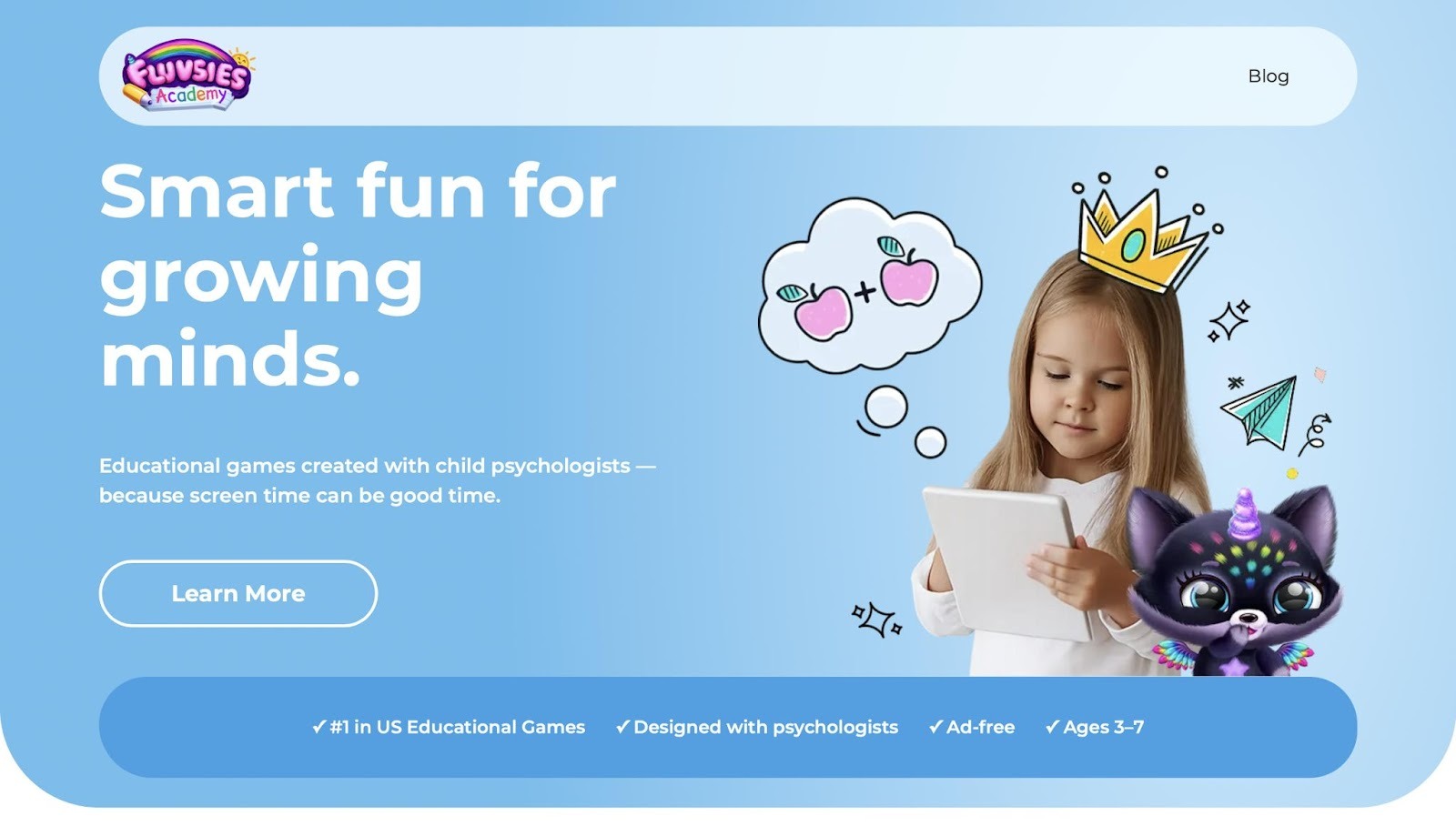
Fluvsies Academy brings joyful play to preschoolers with cute characters in a safe world. Kids join puzzles and stories that teach language, numbers, logic, and life skills like brushing teeth or sharing. Bright colors and simple tasks make every moment fun. Children explore jobs like baker or astronaut, growing words and ideas. The app grows with them, adding mindfulness and yoga soon. Parents love the calm feel that turns screen time into proud growth.
Kids build focus through sorting games and gain confidence in math basics. Empathy shines in friend stories, helping emotional skills. This holistic setup feels like play, not work, with expert input for balance. Many families note kids asking to play more, showing real interest. The ad-free space keeps distractions away, letting pure learning happen. Unique touches like profession adventures spark questions about the real world. Progress reports track wins, so parents see clear steps forward. Overall, it nurtures hearts and minds in one spot.
- Key features: Language phonics, number confidence builders, logic puzzles, sorting for focus, creativity in life skills, profession explorations for vocabulary.
- Facts and information: Designed with child psychologists for emotional safety, ad-free for uninterrupted play, progress reports for kids, free printables extend fun offline, supports ages 3-7 with age-appropriate content.
Discover Fluvsies Academy
Fluvsies Academy is a leading educational app designed for children aged 3–7. It transforms screen time into meaningful learning through fun, interactive games. Developed in collaboration with child psychologists, the app focuses on holistic development.
Key Features
- Ad-free environment for safe play.
- Games covering language, phonics, math, and logic.
- Activities for attention, sorting, and creativity.
- Real-world life skills like healthy habits and mindfulness.
- Exploration of professions to build vocabulary and imagination.
Educational Approach
Fluvsies Academy emphasizes guided play that balances focus, empathy, and emotional safety. It's the first holistic learning app for kids, ranked #1 educational game in the US. Progress reports help track your child's growth. Free printables extend learning beyond the screen.
Benefits for Families
Parents gain peace of mind with expert-backed games.
Kids build confidence, skills, and a love for learning. Ideal for preschoolers seeking joyful education.
Download Fluvsies Academy today and watch your child thrive!
2. TutoClub
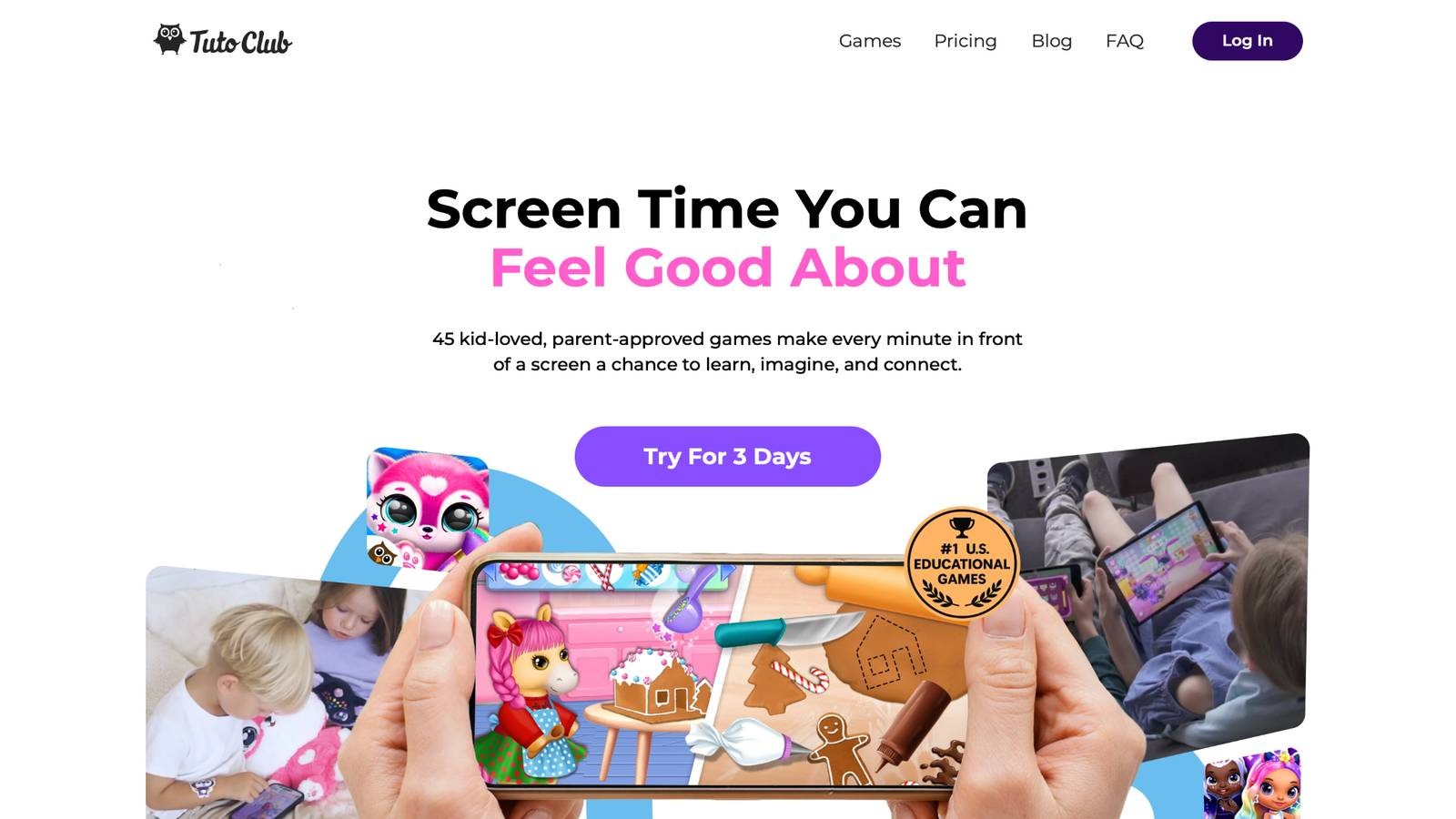
TutoClub offers a bundle of games that turn screen time into skill-building fun for kids around 4-9. With calm designs, it avoids overstimulation and focuses on creativity, focus, and emotional growth. Children tackle puzzles that encourage problem-solving and self-expression. Family play modes add connection, while offline access fits any spot.
Parents appreciate the expert-backed approach that promotes kindness and responsibility. Strengths include a wide variety that keeps interest high, with themes on feelings and exploration. Weaknesses show in limited depth for older kids, as some games repeat basics without advanced levels. Still, it builds healthy habits through simple stories and tasks. Many users share how it reduces guilt over device use.
- Key features: Creativity boosters, emotional awareness activities, problem-solving puzzles, open-ended storytelling, family co-play options.
- Facts and information: 50 million downloads worldwide, research-backed for growth through play, no ads for safe use, supports curiosity and confidence.
3. ABCmouse
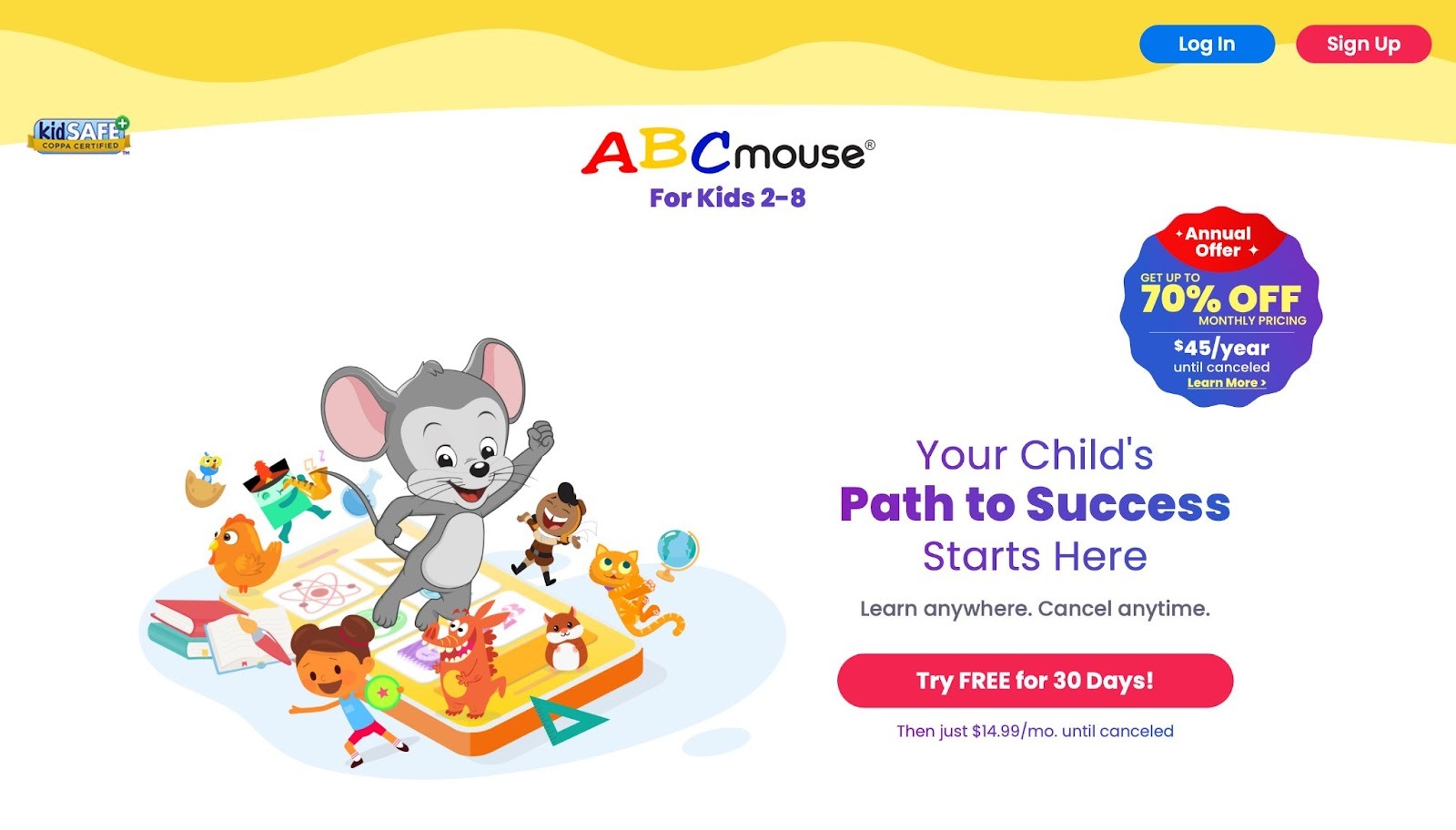
ABCmouse serves as a full online spot for early learners aged 2-8, with paths that guide through reading, math, science, and art. Kids follow step-by-step lessons mixed with songs and books. The library covers basics like letters and shapes in colorful ways. Strengths lie in structured progress that feels rewarding, helping build routines. Weaknesses appear in heavy reliance on repetition, which can bore some active children. Yet, it fosters independence as kids unlock new areas. Parents value the range that grows with age.
- Key features: Reading paths, math challenges, science explorations, art projects, interactive books.
- Facts and information: Covers pre-K to grade 2 curriculum, adaptive to skill levels, includes rewards system for motivation.
4. Khan Academy Kids
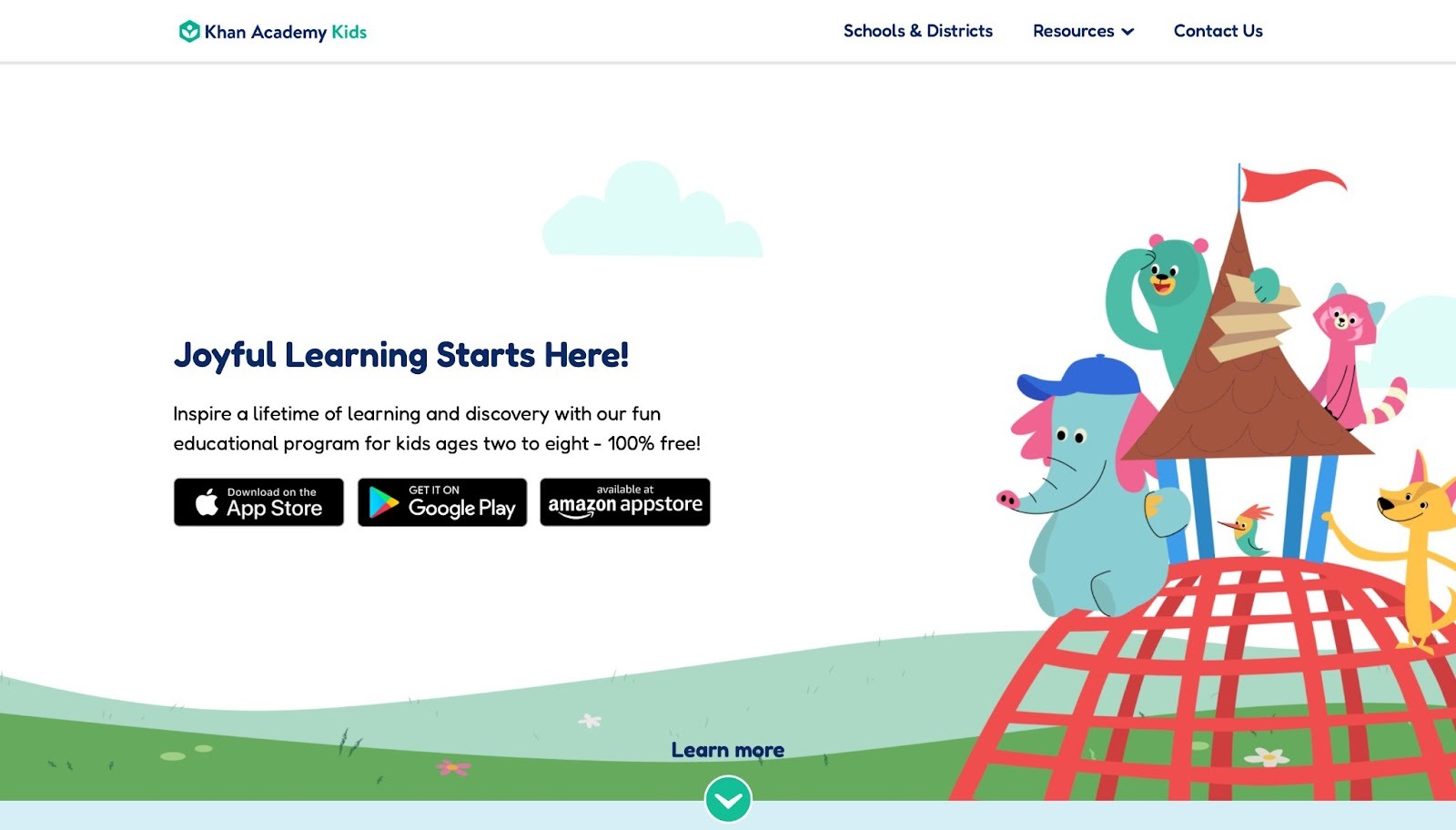
Khan Academy Kids provides free activities for ages 2-8, with lessons on literacy, math, and logic. Adaptive tech adjusts to each child's pace, using videos and games. Strengths include no cost and strong safety, with content that builds core skills gently. Weaknesses involve less variety in themes, making it feel plain at times. It promotes thinking through open questions and creative tasks. Families use it for quick daily boosts.
- Key features: Literacy games, math exercises, problem-solving activities, creative drawing, video lessons.
- Facts and information: Aligns with standards, adaptive learning for personalization, no ads or purchases.
5. Starfall
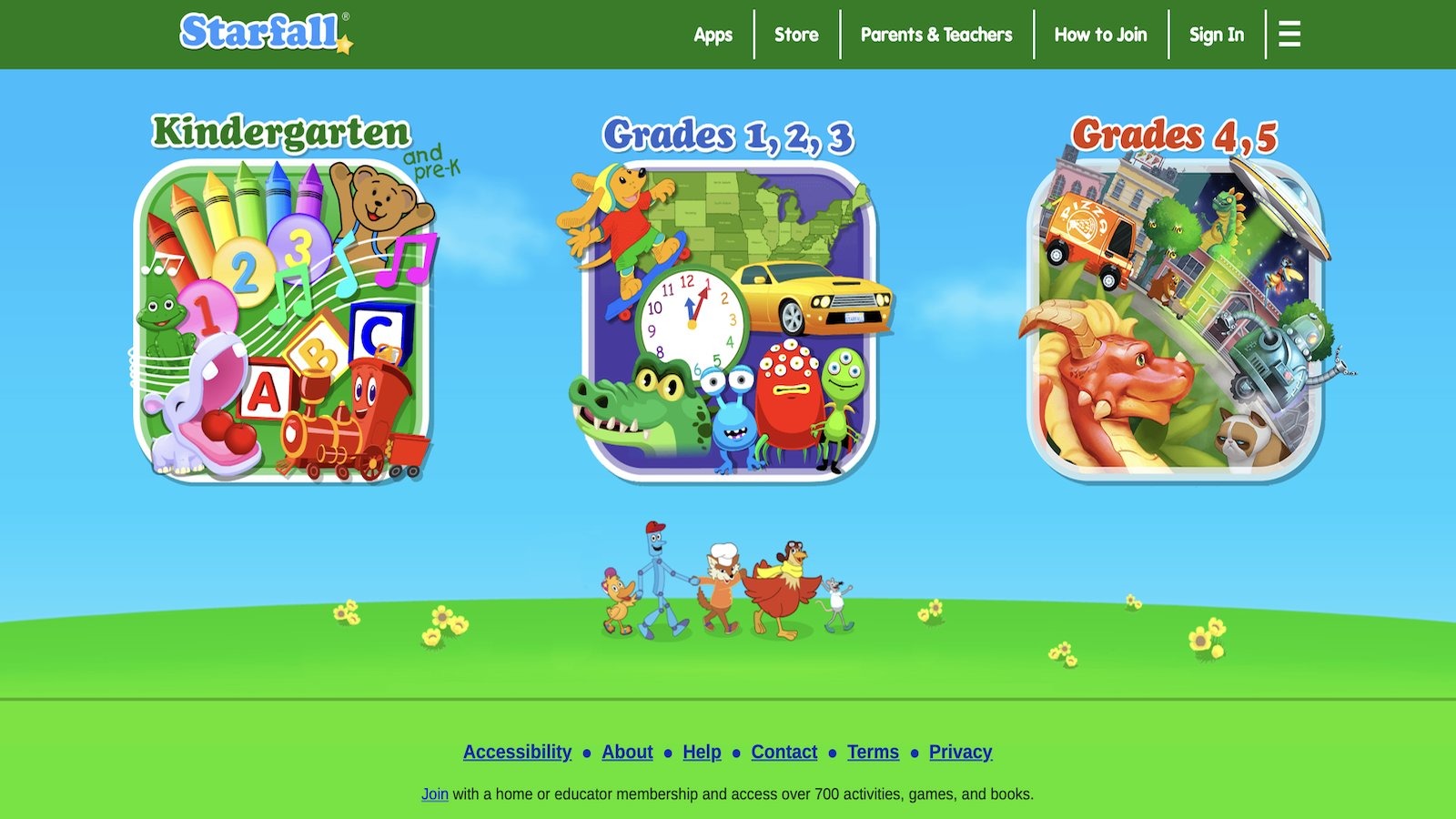
Starfall focuses on reading and math for pre-K to grade 5, with interactive stories and songs. Kids practice phonics and numbers in a simple setup. Strengths show in clear phonics buildup, aiding early readers well. Weaknesses include basic graphics that might not hold older kids' interest. It encourages recall through fun repetition. Many teachers pair it with class work.
- Key features: Phonics activities, math games, story reading, music integration, sight word practice.
- Facts and information: Research-based for emergent readers, multisensory for special needs, aligns with state standards.
6. Duolingo for Kids
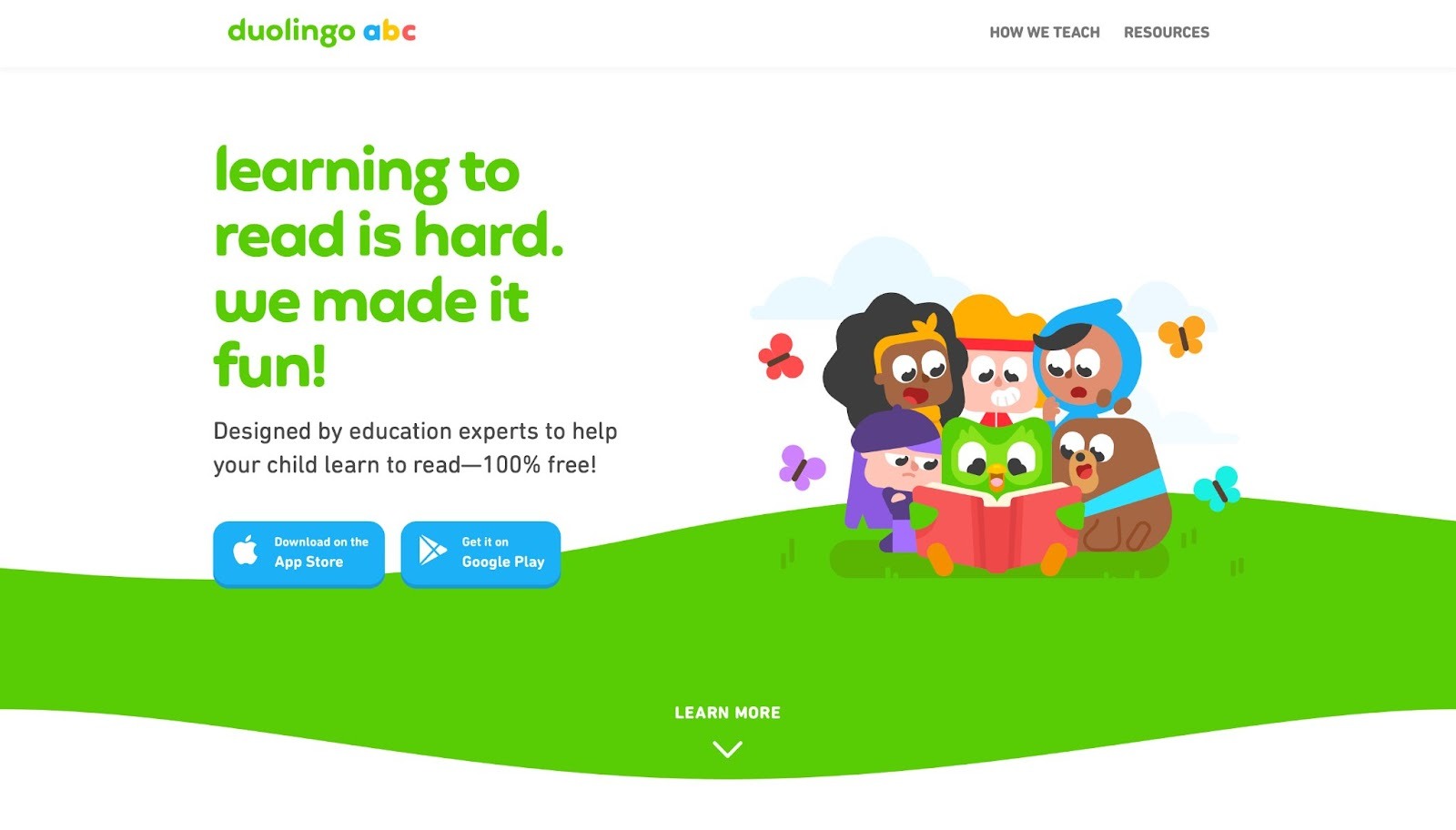
Duolingo adapts language learning for young users, with short lessons on words and phrases through games. It uses streaks and rewards to keep going. Strengths are in bite-sized sessions that fit busy days, building basics fast. Weaknesses come from focus on one language at a time, limiting broad use. It sparks interest in cultures. Parents see kids picking up phrases quickly.
- Key features: Vocabulary builders, phrase practice, listening exercises, reward system, daily goals.
- Facts and information: Bite-sized for attention spans, gamified for engagement, supports multiple languages.
7. Funbrain
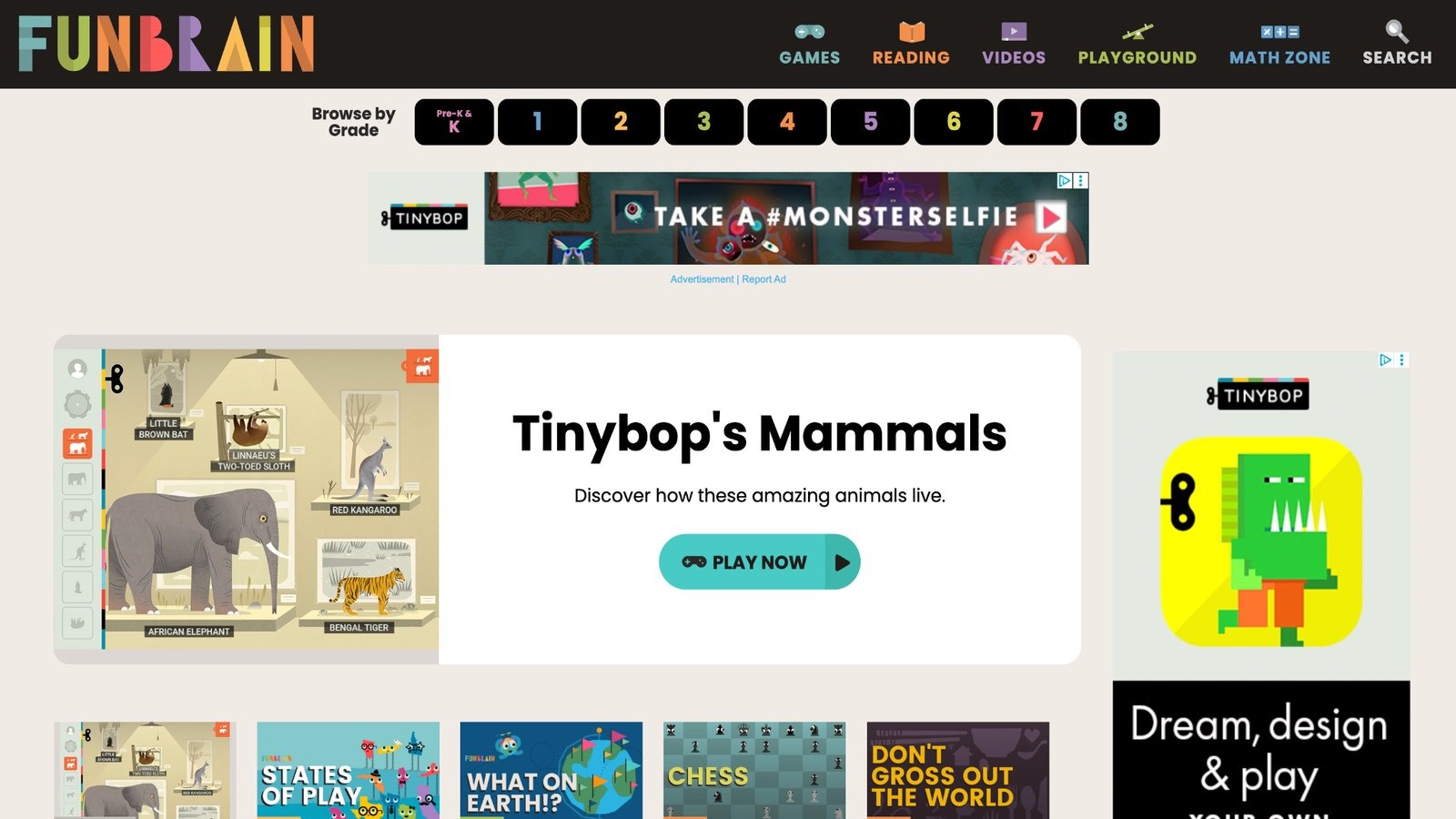
Funbrain hosts a mix of games, videos, and books aimed at kids from preschool to grade 8. Children dive into math challenges like number puzzles or reading adventures with diary-style stories. The site keeps things light with quick activities that fit short attention spans. Strengths shine in its free access and variety, letting kids pick what grabs them, from animal facts to logic riddles. Weaknesses crop up in older graphics that might not wow tech-savvy users, though it still builds basics well.
Parents like how it ties into school topics without pressure. Videos add fun clips on heroes or space, sparking talks at home. Books encourage reading with popular series that grow vocabulary. Overall, it turns downtime into skill boosts, helping with recall and quick thinking. Many schools use it for extra practice, as content aligns with grades. The ad-supported model keeps it open to all, but focused play avoids distractions. Kids often return for favorites, showing steady engagement.
- Key features: Math puzzles, reading games, video clips, book series, grade-based sorting, logic challenges.
- Facts and information: Covers pre-K to grade 8, free with ads, includes teacher and parent sections, owned by Funbrain Holdings in the US.
8. Endless Alphabet
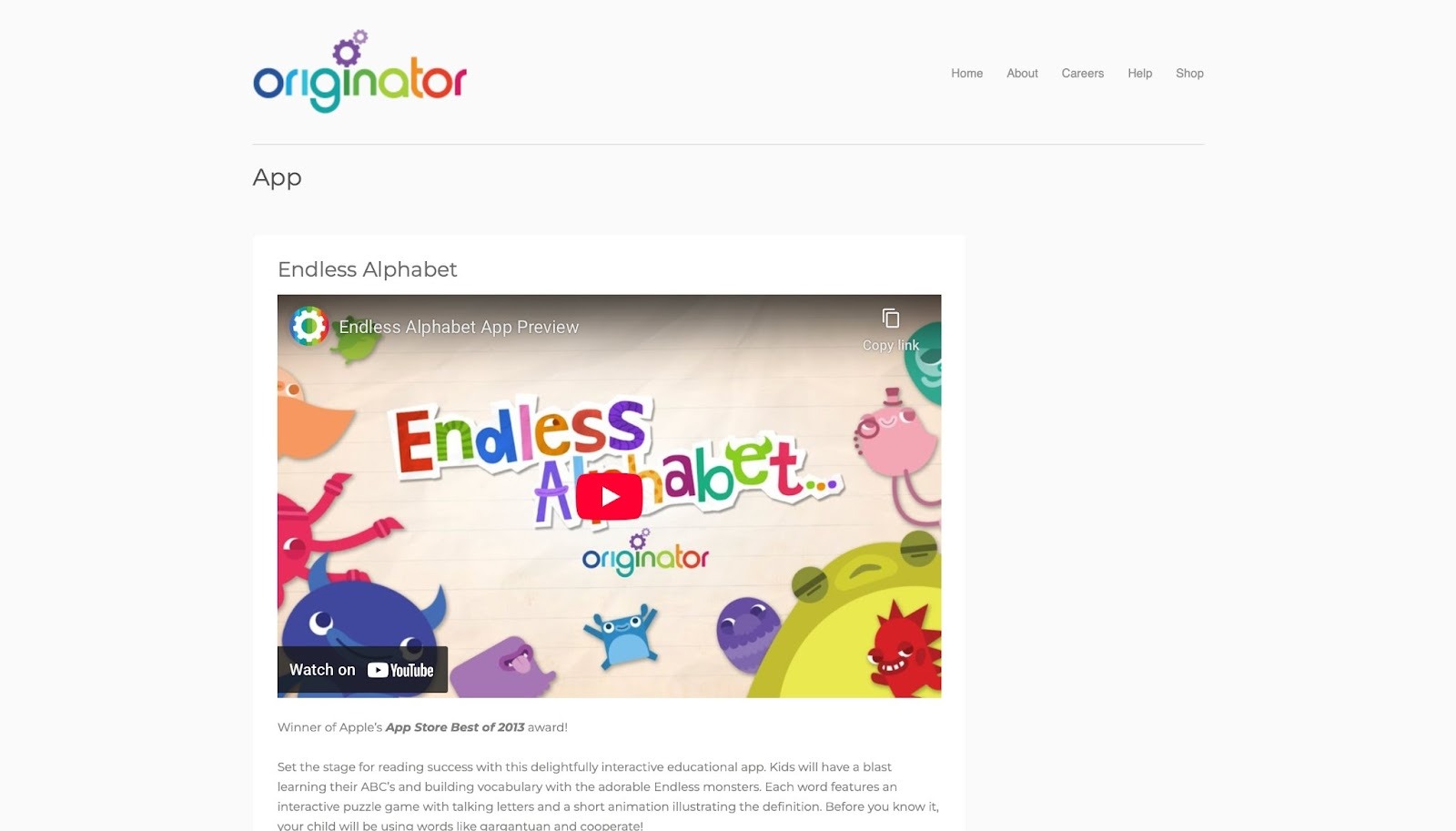
Endless Alphabet delights young learners with animated monsters that bring words to life for ages 3 and up. Kids drag letters to form terms, watching funny scenes unfold as definitions appear. The app focuses on vocabulary and phonics in a playful way. Strengths include vibrant visuals that hold interest, making letter sounds stick through repetition without drills. Weaknesses involve a narrow focus on basics, so it suits starters more than advanced readers.
No ads interrupt the flow, keeping sessions calm. Children build word banks through over 100 puzzles, each with unique animations. It encourages exploration, as kids replay favorites to hear silly sounds. Parents note quick gains in spelling confidence. The offline mode fits travel, extending play anywhere. Designed with input from educators, it aligns with early learning goals. Many families pair it with reading time for reinforcement. The simple interface lets even toddlers navigate easily.
- Key features: Letter dragging mechanics, animated word stories, phonics emphasis, puzzle-based learning, offline access.
- Facts and information: Over 100 words, ad-free, supports vocabulary growth, created by Originator in the US, suits preschoolers.
9. Prodigy
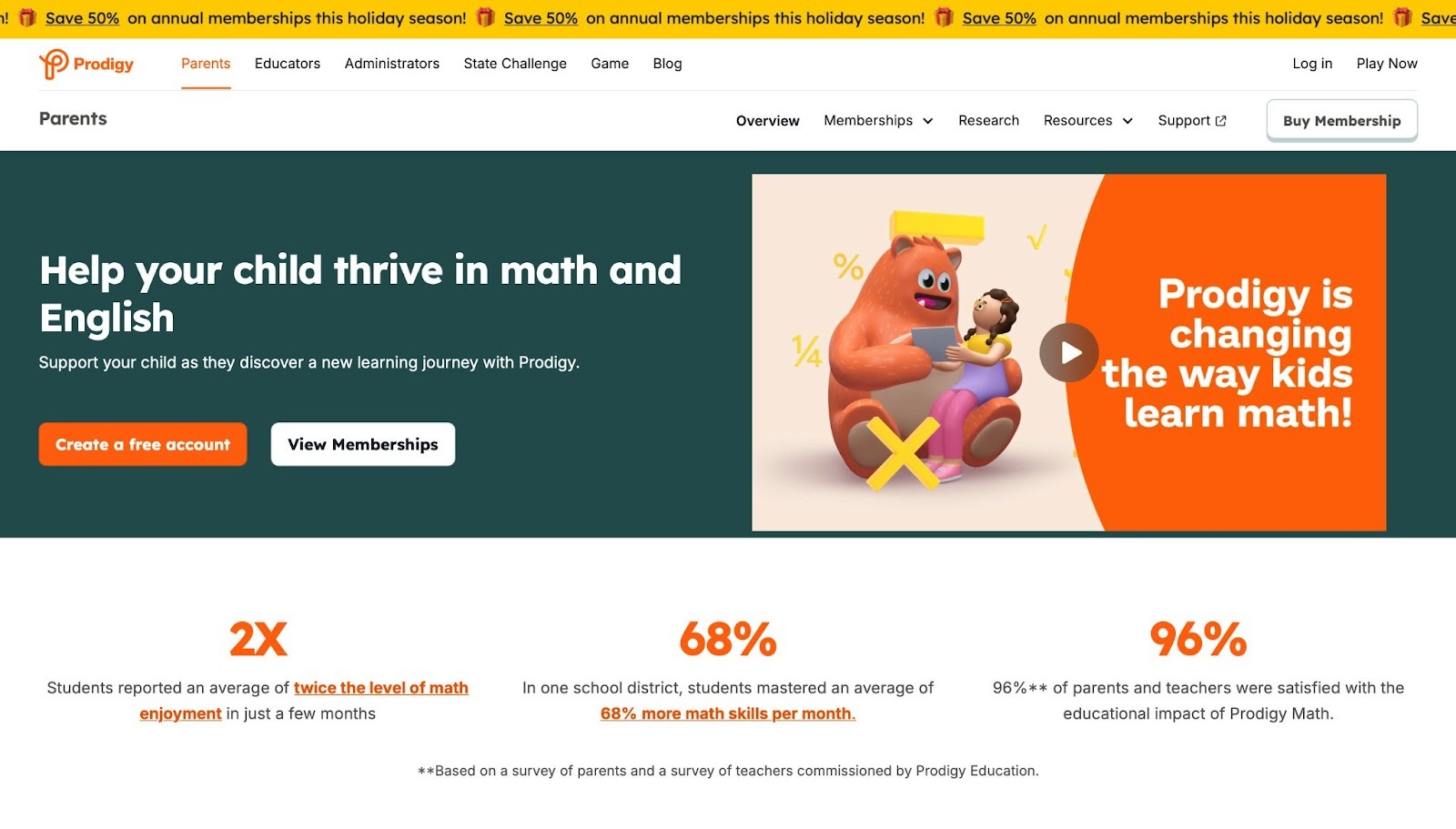
Prodigy turns math into fantasy battles for grades 1-8, where kids answer questions to cast spells and win quests. The adaptive system adjusts difficulty to match skills, covering topics like addition or geometry. Strengths lie in its game-like feel that motivates practice, with rewards building virtual worlds. Weaknesses appear in occasional tough spots that need parent help, but it fosters independence overall.
English content adds reading twists. Teachers use free tools to track class progress and set goals. Parents link accounts for home insights. The safe space limits chat, focusing on learning. Many students master more skills monthly through play. It aligns with standards across regions, making it versatile for schools. Kids enjoy competing with friends safely. The free core keeps it accessible, with options for extras.
- Key features: Adaptive math questions, fantasy RPG elements, teacher dashboards, parent reports, English integration.
- Facts and information: Used by millions of teachers, boosts math enjoyment, headquartered in Canada, free for schools.
10. Osmo
Osmo blends physical pieces with tablet apps for hands-on learning in math, coding, and drawing for ages 3-12. Kids arrange tangibles like numbers or letters, seeing instant digital feedback. Strengths include tactile play that boosts retention, mixing real and virtual for deeper understanding. Weaknesses stem from needing specific kits, which add setup time.
Games cover puzzles to art, encouraging creativity. The system works with iPads or Fire tablets, expanding access. Parents see kids collaborate in group modes. It promotes problem-solving through trial and error. Many classrooms use it for interactive lessons. The award-winning design draws from child development experts. Offline options keep fun going without Wi-Fi. Families appreciate the screen-time balance it offers.
- Key features: Tangible-digital interactions, coding blocks, math manipulatives, drawing tools, multi-subject games.
- Facts and information: Award-winning, supports core skills, headquartered in the US, suits home and school use.
11. Epic!
Epic! opens a vast library of over 40,000 books, audiobooks, and videos for ages 2-12. Kids explore reads on animals, history, or fiction, with personalized picks based on interests. Strengths show in fostering a love for reading through variety, helping build habits early. Weaknesses include limited offline downloads in free tiers, but it still offers rich content.
Quizzes and badges motivate progress. Parents track reading time and levels. The safe, ad-free space suits family use. Many teachers assign books for class. It covers subjects like science alongside stories. Audiobooks aid emerging readers. The app adapts to skill levels, growing with children. Families note increased voluntary reading.
- Key features: E-books, audiobooks, quizzes, personalized recommendations, progress tracking.
- Facts and information: Massive library, free trial, headquartered in the US, aligns with school curricula.
12. Lingokids
Lingokids delivers ad-free games and videos for language, math, and science to ages 2-8. Kids join interactive lessons with songs and puzzles that build basics. Strengths lie in safe, fun content from experts like Oxford, sparking curiosity without overwhelm. Weaknesses involve English focus, limiting non-native users slightly. Parent dashboards show growth. Modes include structured paths and free play. It teaches emotional skills through stories. Many kids gain words fast via repetition. The app fits short sessions, ideal for busy days. Offline access extends learning. Families praise the calm vibe.
- Key features: Games, videos, songs, parent tools, multi-subject coverage.
- Facts and information: KidSAFE certified, partners with NASA, headquartered in Spain.
13. SplashLearn
SplashLearn engages pre-K to grade 5 kids with math and reading games that adapt to levels. Children solve problems in colorful worlds, earning rewards. Strengths include personalized paths that boost confidence, aligning with standards. Weaknesses appear in needing steady internet for full features. Reports help parents see wins. It covers addition to comprehension. Many students show skill jumps. The game format hides learning in fun. Teachers use it for homework. Offline modes add flexibility.
- Key features: Adaptive lessons, rewards system, progress reports, math and ELA focus.
- Facts and information: Common Core aligned, millions of users, headquartered in India.
14. CodeMonkey
CodeMonkey teaches coding through game-building for ages 5+. Kids write real code to solve puzzles, learning Python basics. Strengths shine in playful progression that builds logic without frustration. Weaknesses include limited languages, but it focuses well on essentials. Class modes aid schools. Parents note problem-solving gains. It grows from simple to complex tasks. Many complete courses independently. The platform tracks advancement.
- Key features: Coding challenges, game creation, classroom tools, step-by-step guides.
- Facts and information: Real code use, headquartered in Israel, supports individual learning.
15. ABCya
ABCya offers grade-sorted games for math, reading, and typing to ages 4-12. Kids practice skills through short, fun activities. Strengths lie in easy access and variety, suiting quick breaks. Weaknesses show in ads on free versions, though premium removes them. It builds basics like letters or equations. Teachers integrate it into lessons. Many games encourage strategy. The site updates content regularly.
- Key features: Grade filters, subject games, typing practice, strategy puzzles.
- Facts and information: Hundreds of games, ad-supported free tier, US-based.
16. Scratch
Scratch lets ages 8-16 create games and stories with block coding from MIT. Kids remix projects in a community. Strengths include creativity boost and sharing, teaching computation. Weaknesses involve moderation needs for young users. Tutorials guide beginners. It fosters collaboration. Many schools teach with it. Projects range from simple to advanced.
- Key features: Block-based coding, project sharing, animations, community remixes.
- Facts and information: Free from MIT, millions of projects, headquartered in US.
17. Monster Math
Monster Math builds fluency in addition and multiplication for ages 5-9 via stories and puzzles. Kids help characters with math quests. Strengths are in neuroinclusive design for diverse learners, calming play. Weaknesses include focus on basics, less for advanced. It aids ADHD kids with no timers. Aligns with grades K-3.
- Key features: Story-driven games, visual puzzles, no distractions, adaptive strategies.
- Facts and information: For neurodivergent children, US-based, standards-aligned.
18. BBC Bitesize
BBC Bitesize delivers curriculum-aligned games and quizzes for kids aged 3-16, blending fun with subjects like math, English, science, history, geography, and computing. Children engage in titles such as Planet Planners on Roblox for exploring global challenges, Operation Ouch! Billy Bones and the Snot Zombies for science basics, Guardians: Defenders of Mathematica for math skills, Karate Cats for English and math practice, Horrible Histories: Raid and Trade for historical adventures, Numberblocks: See the Amount for early number recognition, and Dance Mat Typing for computing fundamentals. These activities promote active learning through puzzles, crosswords, word searches, and topical challenges on topics like fake news or AI.
The platform supports progress tracking via My Bitesize, making it easy for parents and teachers to monitor growth. With branded content from shows like Operation Ouch! and Numberblocks, it keeps sessions exciting and relevant to schoolwork. Strengths include broad subject coverage and interactive formats that encourage real-life problem-solving, such as sequencing and counting. Weaknesses involve dependency on internet access, which might restrict offline play, and some games needing specific platforms like Roblox. In 2026, updates feature GCSE and SQA exam timetables for better revision planning, ensuring content stays current. Headquartered in the UK, it serves as a trusted resource for millions, fostering skills from early years to secondary levels without overwhelming young users.
- Key features: Interactive quizzes, math games like Guardians: Defenders of Mathematica, science activities such as Operation Ouch!, history simulations like Horrible Histories, computing tools including Dance Mat Typing, revision podcasts.
- Facts and information: Covers Early Years to GCSE, aligns with UK curriculum, includes times tables for ages 5-11, supports progress tracking, no specific 2026 game additions but exam date resources updated.
19. Oxford Owl
Oxford Owl, from Oxford University Press, provides free eBooks, activities, and games for children aged 3-11 to support primary learning at home and school. Kids access a library tailored for early readers, with resources that build reading and phonics skills through interactive tasks. The platform offers expert advice for parents, including tips on fostering literacy, alongside teaching tools for educators. Content emphasizes foundational education, with eBooks featuring engaging stories and illustrations to spark interest in words. Activities include simple games that reinforce spelling, comprehension, and basic math concepts in a calm setting.
Strengths highlight free, high-quality materials backed by publishing experts, helping build habits like daily reading without cost barriers. Weaknesses may stem from a narrower focus on literacy over diverse subjects, potentially requiring supplements for full curriculum coverage. Subscriptions unlock more for schools, but home users benefit from core freebies. No major recent updates noted, but the site maintains timeless resources like phonics guides. Headquartered in the UK, it aids millions in developing confidence in language arts. Families use it for bedtime stories that double as lessons, turning screen time into meaningful growth. Overall, it creates a bridge between home play and classroom goals, with printables extending digital fun.
- Key features: Free eBook library, phonics activities, spelling games, parent advice sections, school subscription options.
- Facts and information: Targets 3-11 year olds, from Oxford University Press, emphasizes literacy, includes expert-supported materials, no ads for focused play.
20. National Geographic Kids
National Geographic Kids engages children aged 6-12 with quizzes, games, and factual content on animals, geography, science, and exploration. Kids dive into puzzles that test knowledge on wildlife, planets, and cultures, such as animal fact matchups or map challenges. The platform sparks curiosity through real-world insights, like videos on ocean life or historical events, blended with interactive elements. Strengths excel in authentic, visually rich materials that inspire awe and learning, drawing from National Geographic's expertise to make facts memorable.
Weaknesses could include lighter depth for advanced topics, suiting casual rather than intensive study, and some ad presence on the site. Activities promote recall and critical thinking, with trivia on flags or animal traits building global awareness. No specific recent updates mentioned, but ongoing content refreshes keep it vibrant. Headquartered in the US, it reaches young explorers worldwide, encouraging questions about the environment. Families appreciate how games tie into documentaries, extending play into discussions. Quizzes like "Name That Animal" or geography hunts foster quick thinking without pressure. Overall, it turns discovery into play, helping kids connect classroom ideas to the real world in short, exciting bursts.
- Key features: Animal quizzes, geography games, science puzzles, factual videos, trivia challenges.
- Facts and information: Editorially controlled for accuracy, free access, supports environmental awareness, suits 6-12 ages, ad-light for safe browsing.
21. Sumdog
Sumdog adapts math games for ages 5-11, aligning with national curricula to build fluency through play. Children tackle 39 curriculum-linked activities, like quests that adjust difficulty in real time for personalized challenges. The anti-rush system rewards accuracy over speed, reducing anxiety especially for boys and SEN pupils. Strengths stand out in boosting engagement for reluctant learners, with homework completion jumping significantly and attainment gains for lower performers. An ImpactEd study showed SEN students doubling expected standards in three terms. Weaknesses focus solely on math, missing broader subjects, and require digital access for full benefits.
Competitive leaderboards and contests motivate voluntary practice at home or school. Reports offer instant insights for teachers, saving time on marking. Recent 2025-2026 reviews praise confidence building and data value. Headquartered in the UK, it serves over 2,700 schools with a 4.8/5 rating. Kids enjoy low-pressure environments that make numbers fun, like coin-counting or shape puzzles. Multiplayer modes add social elements safely. The platform scales for large groups with central dashboards, ideal for trusts. Overall, it transforms math dread into eagerness, with evidence-backed progress for diverse needs.
- Key features: Adaptive questions, 39 games, accuracy rewards, diagnostic testing, teacher dashboards.
- Facts and information: Evidence-based for SEN gains, aligns with White Rose Maths, boosts participation, child-safe environment, free core access.
22. Topmarks
Topmarks curates free interactive games and worksheets for ages 3-11, sorted by subject and age for easy access. Kids play math-focused titles like Chinese Dragon Game for counting, Bead Numbers for place value, Today's Number for recognition, and cultural jigsaws tied to events like Chinese New Year. Activities reinforce basics in numbers, shapes, and ordering through quick, engaging tasks. Strengths include teacher-vetted resources that fit classroom or home use, promoting foundational skills without setup hassles.
Weaknesses lie in navigation to external links, potentially disrupting flow, and limited to featured content without deep personalization. No recent updates specified, but seasonal themes keep it fresh. Headquartered in the UK, it aids early learning with ad-free play. Parents value the variety for short breaks, like puzzles that build logic. Games encourage repetition for mastery, such as sequencing beads or solving daily number challenges. It covers early years to primary, aligning with curricula for seamless integration. Families use printables to extend digital fun offline. Overall, it simplifies finding quality activities, turning screen time into productive exploration for young minds.
- Key features: Subject and age filters, math games like Bead Numbers, cultural jigsaws, number recognition activities.
- Facts and information: Free directory, teacher-recommended, covers 3-11 ages, ad-free, supports place value and counting.
23. ICT Games
ICT Games offers free, teacher-created activities for ages 5-10, aligned with UK Key Stages 1 and 2 in math and English. Kids explore sections like Early Years for basic counting, Place Value for number understanding, Addition & Subtraction for calculations, Multiplication & Division for operations, Time & Measure for practical skills, Money for real-life applications, Fractions for parts, Shape for geometry, and Statistics for data. Games use simple interfaces to reinforce literacy and numeracy through play. Strengths emphasize focused, curriculum-tied tasks that build muscle memory without distractions.
Weaknesses may include basic designs that appeal less to older kids, and no multiplayer options. Help videos guide users, and teaching tools support educators. No recent updates noted, but donations sustain the site. Headquartered in the UK, created by an experienced teacher, it reaches young learners globally. Parents appreciate offline-friendly access for quick sessions. Activities like coin sorting or shape matching promote problem-solving. The platform fosters independence, with topics encouraging repetition for confidence. Overall, it provides reliable, no-fuss resources that bridge home and school learning effectively.
- Key features: Subject-specific games, counting activities, fraction puzzles, shape tools, statistics charts.
- Facts and information: Aligns with UK curriculum, free access, teacher-made, supports 5-10 ages, includes help videos.
24. Twinkl Go
Twinkl Go delivers interactive animations, games, and audiobooks for ages 3-11, accessible via PIN for group or individual play. Kids engage in curriculum-aligned content covering history, science, math, and literacy through short, captivating tasks. Activities include story-based challenges that build comprehension and critical thinking. Strengths shine in teacher-created materials that suit classroom dynamics, with options for whole-class participation. Weaknesses involve limited free selections, often requiring subscriptions for full access.
Recent additions feature new resources like seasonal themes or subject expansions. Headquartered in the UK, it supports educators worldwide. Parents find it useful for homework reinforcement, with audiobooks aiding reading fluency. Games encourage collaboration, such as quiz-style history hunts or science experiments. The platform adapts to varied needs, including SEN with visual aids. Printables extend learning offline. Overall, it makes abstract concepts tangible, fostering enthusiasm for school topics in a safe, ad-free space. Families note improved engagement during remote sessions. It integrates with broader Twinkl tools for comprehensive planning.
- Key features: PIN-access games, audiobooks, interactive animations, curriculum ties, group modes.
- Facts and information: Teacher-designed, free options available, covers 3-11 ages, ad-free, supports multiple subjects.
25. Education.com
Education.com hosts over 38,000 resources for Pre-K to 8th grade, including games like Flipping Pancakes Fractions for math and Irregular Nouns Ski Race for language. Kids build skills in reading, writing, typing, science, and more through adventures. Guided lessons in premium plans offer playlists, progress tracking, and assignments. Strengths include standards-aligned, teacher-curated materials that celebrate milestones and suit homeschool or class use.
Weaknesses not detailed, but free access limits some features. It serves 44 million users across 20 countries. No recent updates specified, but the library grows with immersive activities. Headquartered in the US, it emphasizes fun over drills. Parents track growth easily. Games promote fluency, like fraction visuals or noun races. Hands-on projects spark creativity. Overall, it turns learning into exploration, with printables for offline extension. Families value the variety for daily practice.
- Key features: Worksheets, games like Fractions Pancakes, guided lessons, progress insights, subject filters.
- Facts and information: Covers Pre-K-8, 38,000+ resources, global reach, ad-free premium, individualized paths.
26. Coolmath Games
Coolmath Games features over 2,500 titles for ages 6+ , building logic, math, and creativity. Kids play Applied Math like Lemonade Stand, Logic puzzles such as Cut the Rope, Number merges in 2048, Coding challenges, Science experiments, and Physics riddles. Series include Papa's cooking, Fireboy and Watergirl co-op, and Run endless adventures.
Strengths focus on educational fun with daily updates, WCAG compliance, and minimal data collection. Weaknesses include ads in free play. Recent 2025-2026 additions like Pixel Quest and guides for TRACE or Cookie Clicker keep it fresh. Headquartered in the US since 1997, it promotes problem-solving. Parents see mental boosts from strategy games. Multiplayer like Chess adds competition. Overall, it makes abstract skills engaging, with categories for targeted practice.
- Key features: Math applications, logic puzzles, coding games, multiplayer options, daily releases.
- Facts and information: 2,500+ games, free access, privacy-focused, suits families, updates through 2026.
27. Minecraft Education
Minecraft Education immerses ages 9+ in building worlds for subjects like history or coding. Kids collaborate on lessons, build challenges, and projects using hundreds of ready resources. Features include multiplayer servers, esports, and AI Lesson Crafter in preview. Strengths lie in inclusive, fun learning that boosts attendance across 40,000 systems in 140 countries.
Weaknesses involve device setup needs. Recent copper update adds servers and museum ties like "Portals to the Past." Headquartered in the US via Microsoft, it secures school use. Parents note agency growth. Activities foster critical thinking safely. Overall, it transforms education into adventure, aligning with goals worldwide.
- Key features: Lesson library, build tools, collaboration modes, subject integrations, secure servers.
- Facts and information: Standards-aligned, global adoption, recent AI tools, ages 11-14 safety focus, device-compatible.
28. Typing Club
Typing Club teaches touch typing for ages 7+ with games, lessons, and stories like Going Solo or Ava & the Rabbit. Kids earn stars, use playback for review, and practice posture. Multilingual in Spanish, French, German, with Jungle Junior for young hands. Strengths include gamified progress, accessibility, and no required accounts. Weaknesses may limit saving without profiles. Recent spelling series for grades 3-8 added. Headquartered in the US, a Google Partner, it reaches 23 million students. Parents see speed gains. Overall, it builds keyboard confidence through fun narratives.
- Key features: Levels with badges, voice overs, typing playback, story series, multilingual lessons.
- Facts and information: Free online, 50,000+ schools, muscle memory focus, recent vocabulary updates, browser-based.
Benefits of Educational Games Beyond the Screen
- Games extend learning to daily life, where kids apply ideas from play.
- Many children show better focus after regular sessions.
- Some gain social skills through shared stories.
- Offline extensions like printables keep momentum.
- Parents find games can ease talks on habits.
- This bridges home and school smoothly.
FAQ
What makes educational games suitable for young children?
Educational games fit young children through interactive elements that spark curiosity and allow choices in play, creating a sense of agency that keeps them engaged. They often include role-playing scenarios that build understanding of different views, while providing just the right level of challenge to encourage persistence without frustration. Designs focus on meaningful tasks connected to real-life situations, making learning feel natural and enjoyable. Sensory features like colors and sounds support varied learning styles, helping kids who learn through movement or visuals.
How do educational games support emotional skills?
Educational games aid emotional skills by offering safe spaces for kids to try out feelings and responses, fostering resilience and self-awareness. Through narratives and minigames, they teach coping strategies like reframing thoughts and building relationships, which help in managing impulses. Activities promote empathy by encouraging perspective-taking and prosocial actions in group settings. Some games include calm exercises that guide self-control during challenges.
Can educational games replace traditional learning?
Educational games enhance traditional methods by adding interactive layers that boost motivation and deepen understanding, but they work best alongside books and discussions. They provide personalized paths that adapt to individual paces, complementing structured lessons with hands-on practice. While effective for building non-cognitive traits like collaboration, they pair well with real-world tasks for complete growth. In Fluvsies Academy, such games reinforce core ideas through play.
What age range works best for most educational games?
Educational games often suit children from preschool through early school years, with adjustable levels that match growing abilities and keep challenges appropriate. Simple versions work for toddlers focusing on basics like shapes, while more complex ones add depth for those in kindergarten and beyond. Picking based on developmental stages ensures relevance, such as sensory focus for the youngest. Themes grow with interests, supporting transitions to school skills.
Read Also:
- Best Interactive Educational Games 2026
- Best Educational Games Online 2026
- Best Top-Rated Educational Games 2026
- Best Educational Fun Games 2026
- Best Educational Games App 2026
Discover the Best Educational Games for Children 2026 - Fluvsies Academy