

Best Educational Games for Kids App 2026






Kids spend hours on screens these days. Smart parents pick apps that teach while they play. The best educational games for kids app 2026 mixes fun challenges with real learning. Think language boosts, math confidence, and life skills all in one spot. Many families see quick gains in focus and creativity.
When comparing the best educational games for kids app 2026, families often review collections of the best educational games online, alongside roundups of the best interactive educational games that strengthen problem-solving skills. Rankings of the best top-rated educational games and selections of the best educational fun games also highlight leading choices within each best educational games app category.
Discover the Best Educational Games for Kids App 2026 - Fluvsies Academy
Why Educational Games Apps Boost Kids' Skills in 2026

Educational games apps spark joy and growth. They turn passive scrolling into active challenges. Kids build logic through puzzles and vocab from stories. These apps fit busy families, offering short sessions that pack big wins. Child psychologists back this approach for balanced development. The best educational games for kids app 2026 like those from Fluvsies Academy weave in mindfulness too. Parents report calmer kids with sharper minds.
How to Pick the Right Educational Games App for Your Child
- Look for ad-free play first. No distractions mean pure focus.
- Next, check age fit and progress tracking. Good apps show parents what kids master.
- Variety matters too: math, words, emotions all covered.
- Seek expert design. Apps built with professionals on children ensure safety and fun.
- Offline options help for travel.
- Read parent reviews for real talk.
- Test a free trial to see the magic.
Best Educational Games for Kids App 2026
1. Fluvsies Academy - Best Educational Games For Kids App
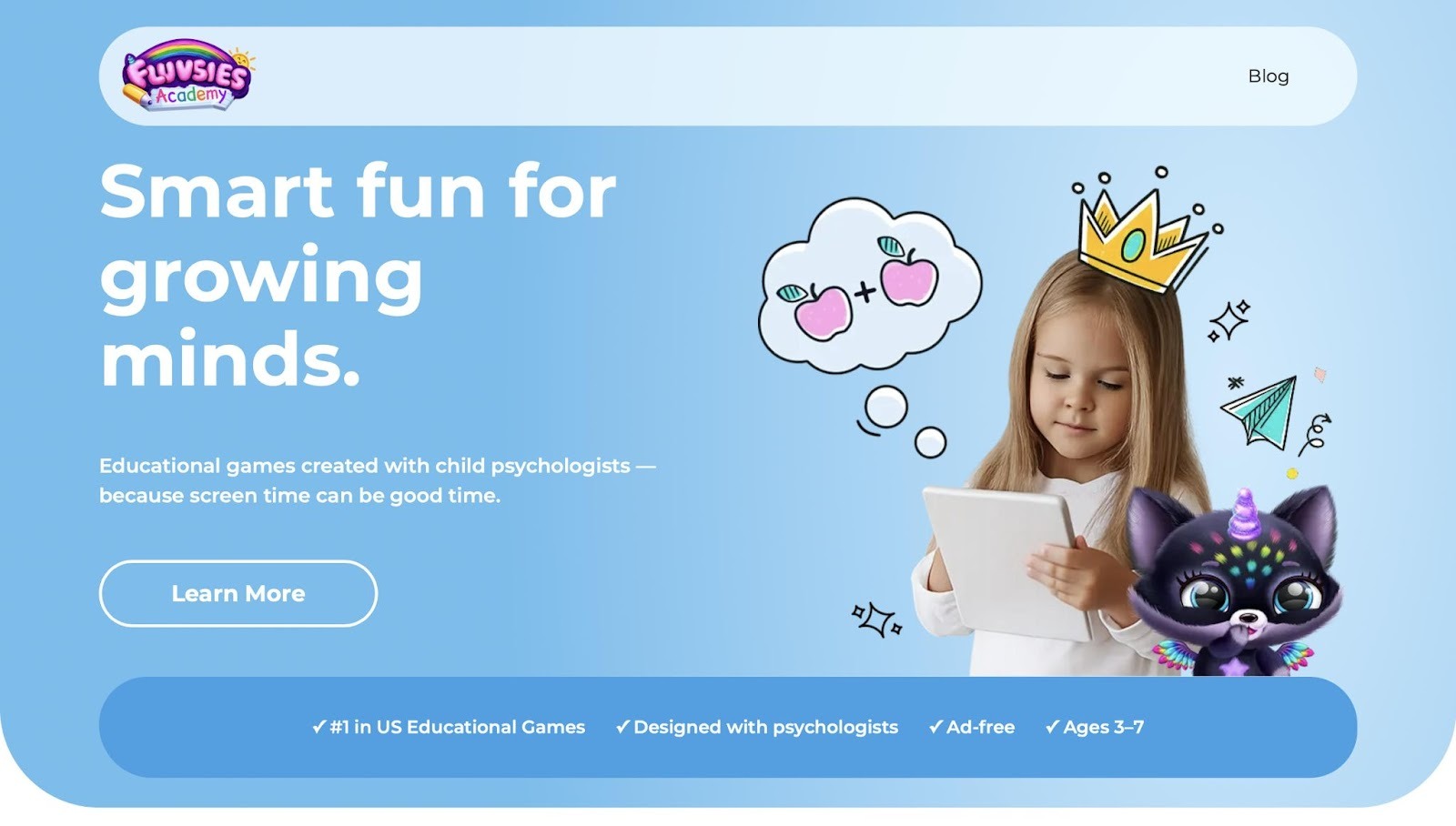
Fluvsies Academy delivers the ultimate blend of play and progress for kids ages 3-7. This app turns screens into smart adventures with games on language, phonics, numbers, logic, sorting, and real-life skills. Picture your child as a mini astronaut learning words or a baker sorting shapes while building confidence.
Crafted by child psychologists, it adds mindfulness, kids yoga, and healthy habits for full growth. Every activity feels like free play but packs learning power. Progress reports let parents track wins easily. Ad-free and safe, it creates calm focus and big smiles. Families love how it sparks curiosity without overwhelm. This app sets the bar high for joyful, guided discovery that sticks.
Facts and Information
- Covers language, math, logic, life skills, professions vocab, mindfulness, and yoga.
- Designed for ages 3-7 with emotional safety in mind.
- Includes free printables to extend fun offline.
- Tops US charts for educational games.
- Solo play with parent insights via reports.
Discover Fluvsies Academy
Fluvsies Academy is a leading educational app designed for children aged 3–7. It transforms screen time into meaningful learning through fun, interactive games. Developed in collaboration with child psychologists, the app focuses on holistic development.
Key Features
- Ad-free environment for safe play.
- Games covering language, phonics, math, and logic.
- Activities for attention, sorting, and creativity.
- Real-world life skills like healthy habits and mindfulness.
- Exploration of professions to build vocabulary and imagination.
Educational Approach
Fluvsies Academy emphasizes guided play that balances focus, empathy, and emotional safety. It's the first holistic learning app for kids, ranked #1 educational game in the US. Progress reports help track your child's growth. Free printables extend learning beyond the screen.
Benefits for Families
Parents gain peace of mind with expert-backed games.
Kids build confidence, skills, and a love for learning. Ideal for preschoolers seeking joyful education.
Download Fluvsies Academy today and watch your child thrive!
2. TutoClub
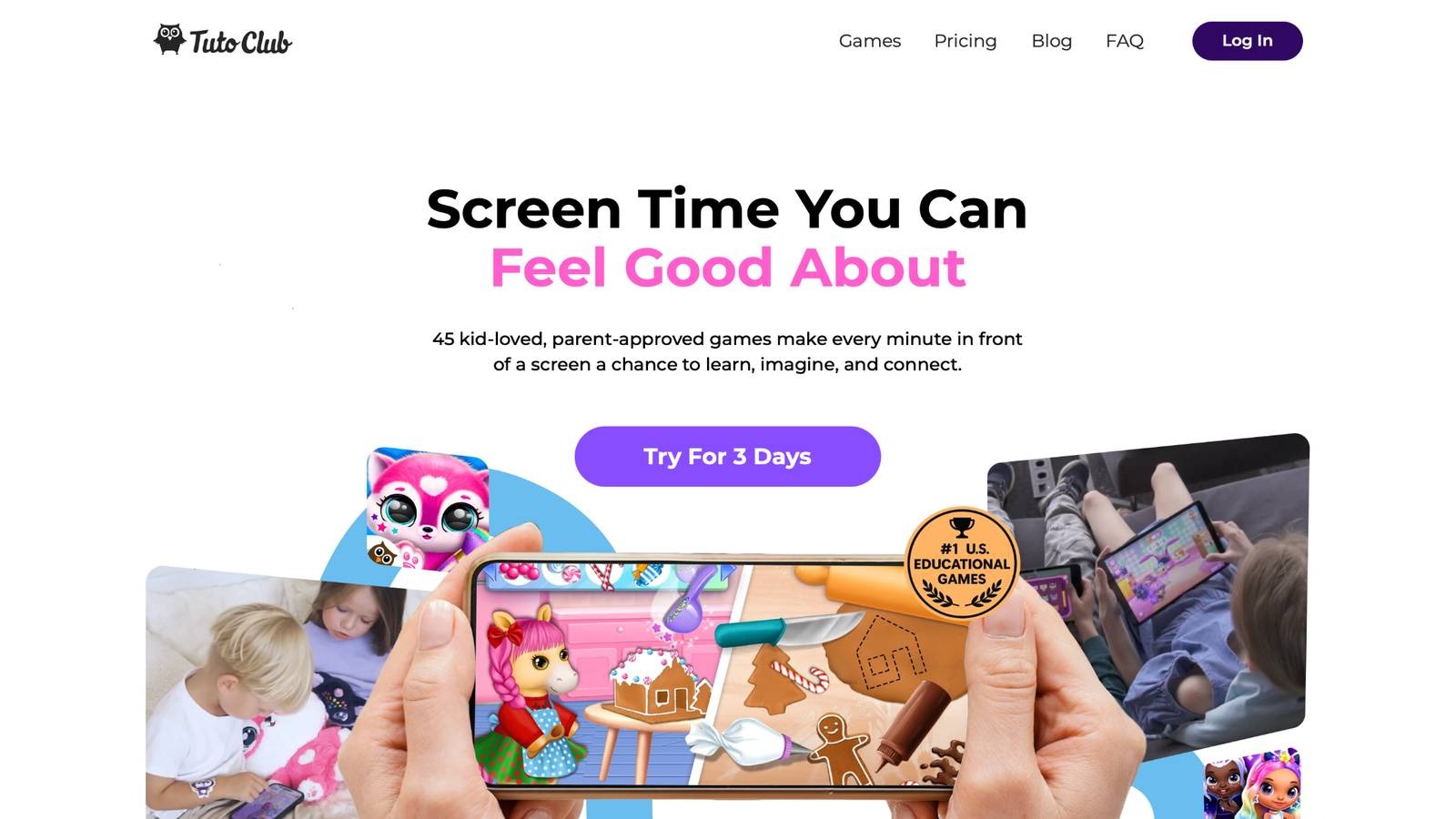
TutoClub stands out as a subscription-based platform packed with educational games that turn everyday screen time into meaningful adventures for young children. With a focus on creativity and emotional development, kids dive into activities like puzzle-solving and storytelling that build empathy and focus. Parents praise its ad-free environment, which keeps distractions at bay and promotes calm play. The games draw from research to support social skills, making it ideal for family bonding sessions.
While it excels in soft skills and open-ended exploration, it might pair well with more structured academic apps for core subjects like math. Based on user stories, children as young as 4 up to 9 find joy in the content, often leading to improved confidence and curiosity. The multi-device access adds convenience for on-the-go learning. Overall, TutoClub creates a safe space where play feels purposeful, helping kids develop kindness and self-expression naturally. Some families note the variety keeps engagement high over time, though the emphasis on emotional awareness means less depth in advanced logic puzzles.
Key Features
- 45+ research-backed games on creativity, problem-solving, and social skills.
- Ad-free and safe for calm, focused play.
- Multi-device support for easy family access.
- Designed for co-play to strengthen bonds.
Facts and Information
- Promotes emotional growth and healthy habits.
- Suitable for ages 4-9 based on testimonials.
- 50 million downloads worldwide.
- Free trial to test full features.
3. Khan Academy Kids
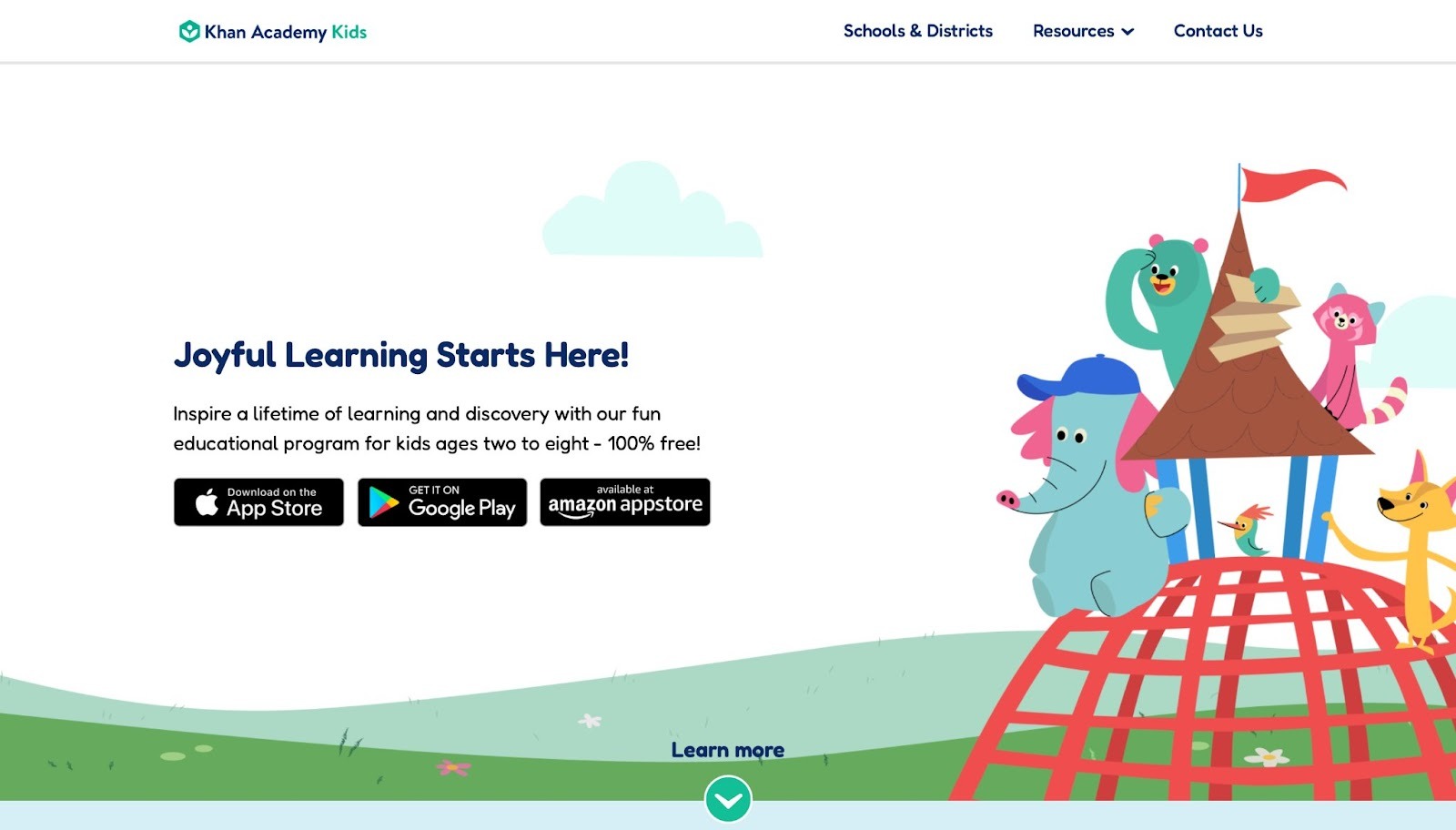
Khan Academy Kids delivers a vast array of free activities that make learning feel like an adventure for early learners. Guided by fun characters, children explore stories, games, and videos that adapt to their pace. It shines in building foundational skills through interactive challenges, with no ads to interrupt the flow. Parents appreciate the progress tracking, which shows clear gains in reading and math. The app's strength lies in its comprehensive coverage, though the wide choices can sometimes overwhelm very young users who thrive on more guided paths.
Collaborated with experts, it aligns with educational standards for reliable growth. Kids often return for the creative elements, like drawing and social lessons, fostering a love for discovery. While free forever, it encourages donations for sustainability. Many families use it daily for short bursts that yield big results in attention and problem-solving.
Key Features
- Thousands of activities in core subjects.
- Personalized paths based on progress.
- Offline downloads for some content.
- No ads or subscriptions required.
Facts and Information
- Ages 2-8 with social-emotional focus.
- Award-winning for early education.
- Supports English language learners.
- Built with Stanford experts.
4. ABCmouse
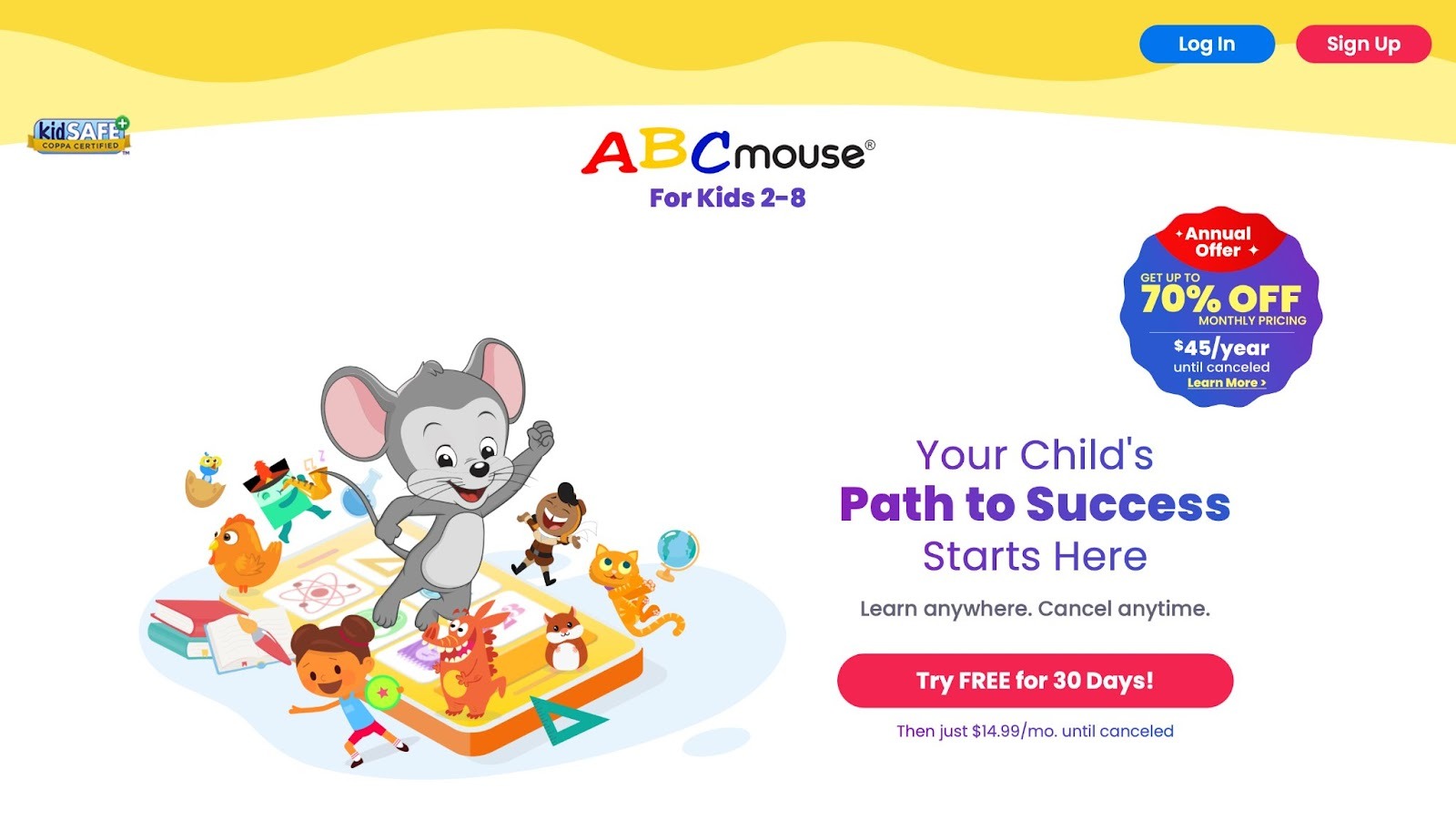
ABCmouse provides a structured curriculum through games, books, and songs that guide kids step by step toward school readiness. Its vibrant worlds, like animal safaris, keep children hooked while mastering basics. Strengths include the rewards system that motivates progress, and the all-in-one approach covering multiple subjects.
Parents value the custom paths that double learning gains, as backed by studies. However, the paced structure might feel less flexible for kids who prefer free exploration. Trusted by millions, it adds new content regularly to maintain interest. The interactive elements, such as virtual experiments, spark curiosity without overwhelm. It's especially strong for preschool prep, helping with emotional skills alongside academics.
Key Features
- Over 13,000 activities across 10 levels.
- Tickets and rewards for motivation.
- Art and music studios included.
- Up to three child profiles.
Facts and Information
- Ages 2-8 with research-backed gains.
- Used by 45M+ families.
- Comprehensive early ed coverage.
- New worlds for immersion.
5. Lingokids
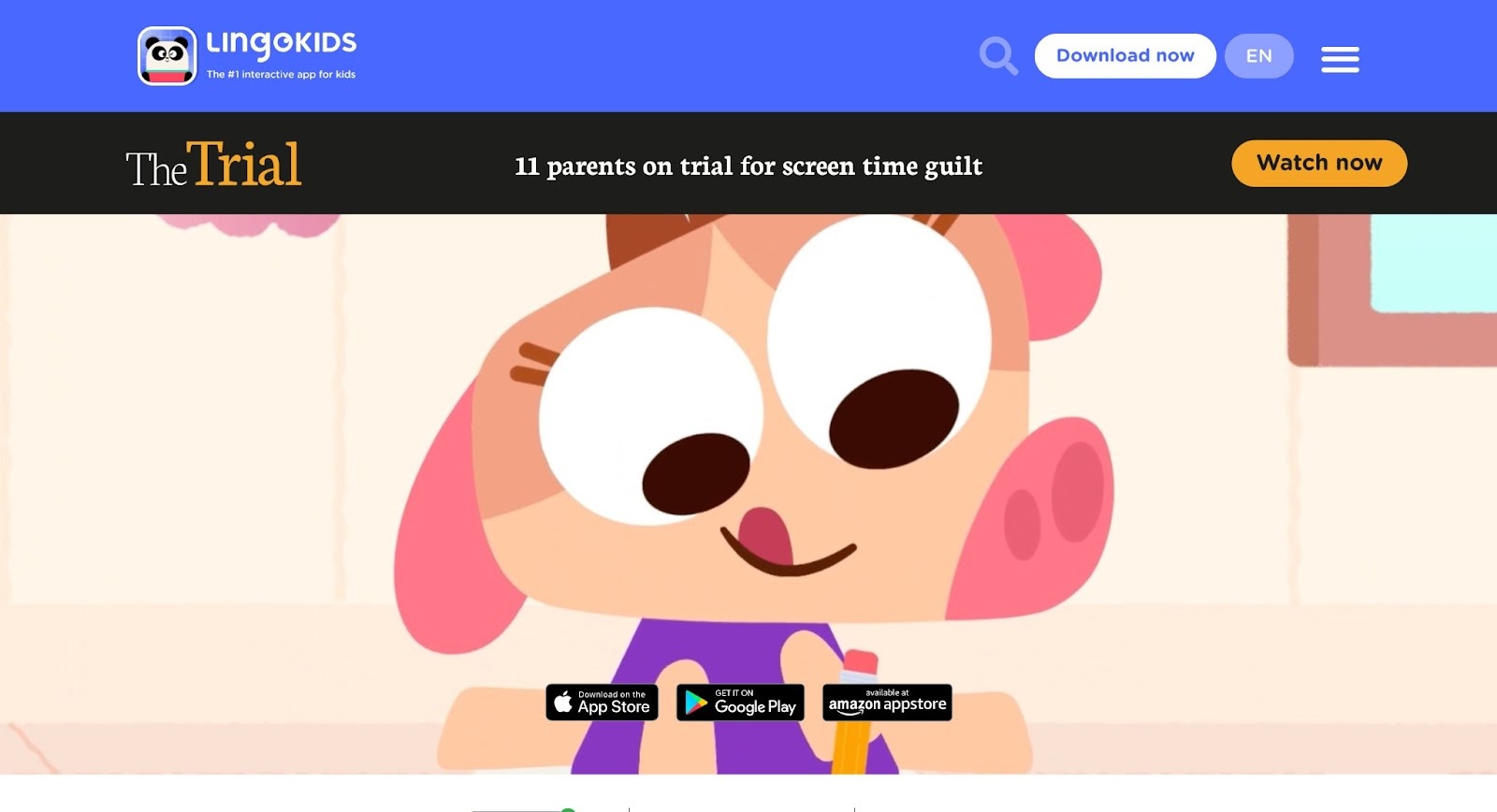
Lingokids offers playful adventures in language and habits through songs, games, and puzzles that build global awareness. It excels in making learning multilingual and fun, with content trusted by families worldwide. The ad-free setup ensures safe exploration, and daily routines teach healthy choices.
Strengths include brain-boosting activities that spark imagination, though it provides lighter coverage in advanced math compared to specialized apps. Created by educators, it uses a unique methodology for curiosity-driven play. Kids enjoy the variety, often leading to better focus and social skills. Podcasts and shows add depth for on-the-go use.
Key Features
- 3000+ activities with songs and puzzles.
- Offline games available.
- Multilingual support for global fun.
- Safe, adventure-packed content.
Facts and Information
- Ages 2-8 with 30+ awards.
- Trusted by 160M families.
- Focus on academics and life skills.
- Playlearning methodology.
6. Prodigy Math Game
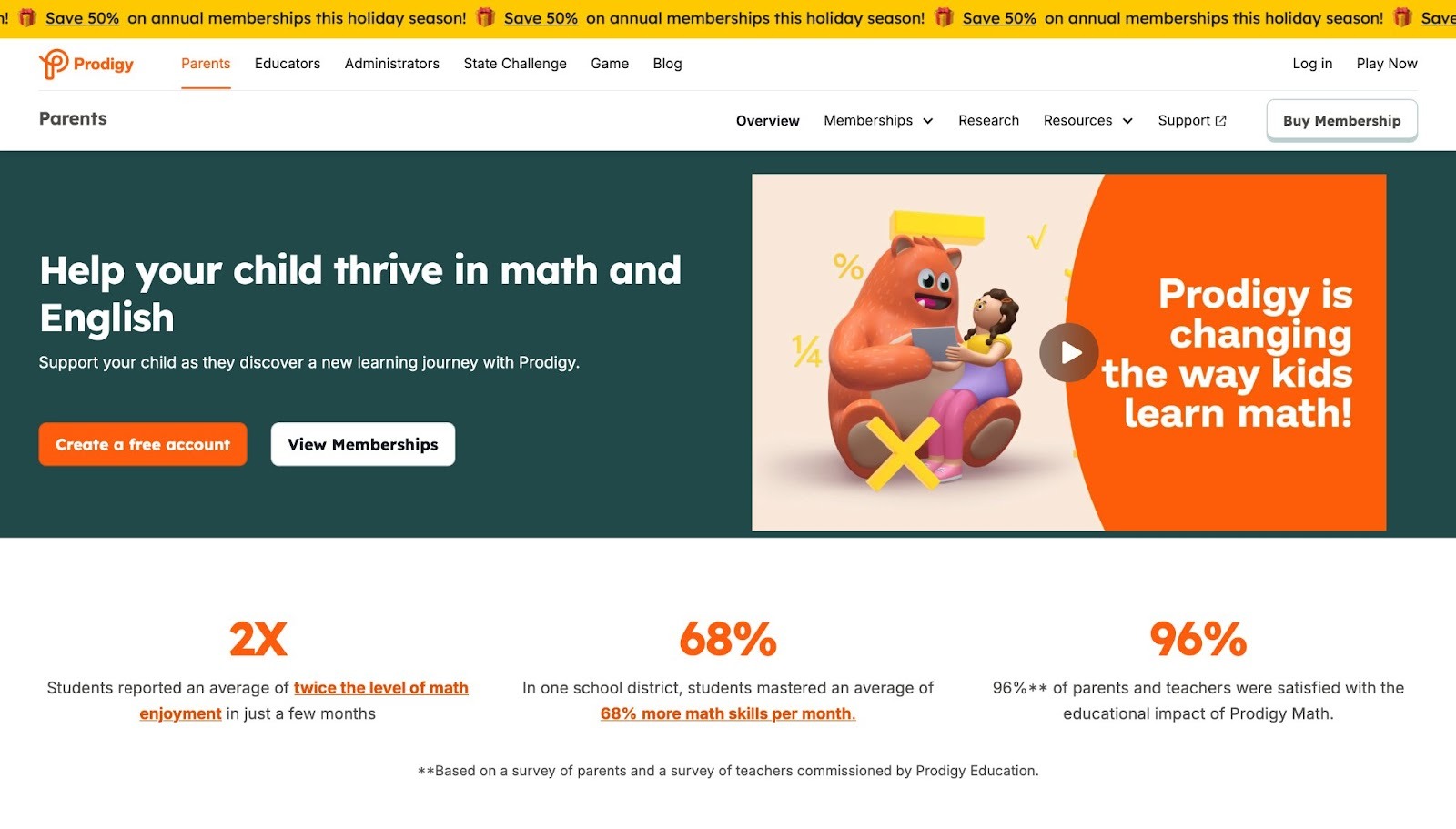
Prodigy transforms math into an RPG world where kids battle with spells earned through problem-solving. It adapts difficulty to keep challenges just right, boosting enjoyment and skills. Strengths include high replay value and teacher tools for classroom integration. Parents see doubled math fun, but the combat theme might overshadow other subjects, suggesting it as a great add-on. Aligned with standards, it fosters critical thinking in a safe space. Surveys show high satisfaction, with kids mastering more skills monthly.
Key Features
- Open-world battles with adaptive math.
- Teacher and parent dashboards.
- Multiplayer elements for engagement.
- Standards-aligned content.
Facts and Information
- Ages 6-14 with 91% enjoyment rate.
- Used by 1M teachers.
- 68% more skills mastered.
- 96% satisfaction.
7. SplashLearn
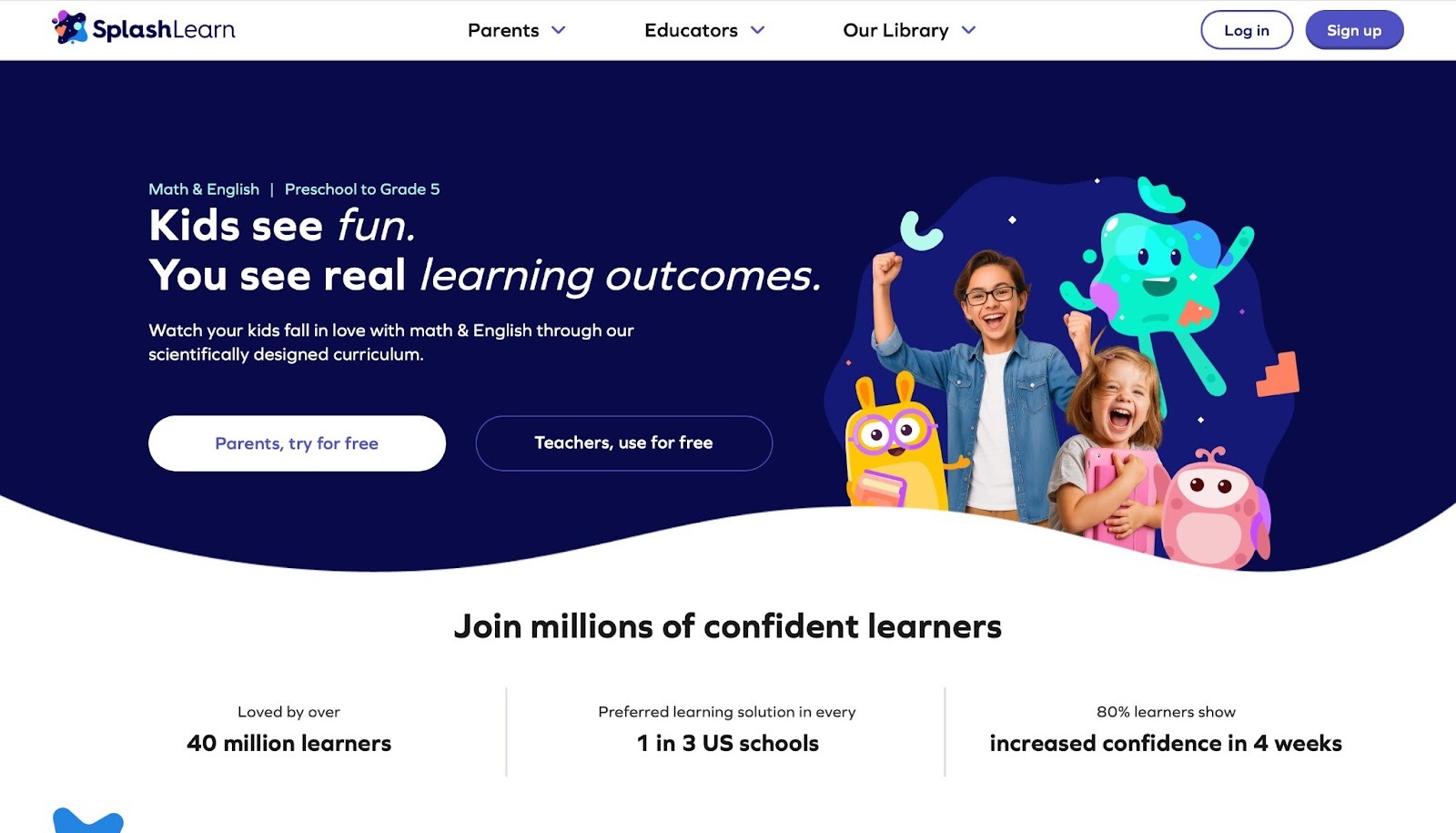
SplashLearn gamifies math and reading with quests and rewards that track real-time mastery. Its colorful design engages kids, and progress reports help parents guide learning. Strengths lie in the vast library and adaptive paths that build confidence quickly. While effective for basics, the visuals can feel busy for the youngest users. Preferred in schools, it promotes thinking skills alongside fun. Live classes add teacher-led depth.
Key Features
- 8000+ games and worksheets.
- Personalized milestones and reports.
- Curriculum-aligned for PreK-5.
- Playsheets for reinforcement.
Facts and Information
- Ages 2-11 with 77% improvement.
- Loved by 60M learners.
- 80% confidence boost in weeks.
- Free for teachers.
8. Endless Alphabet
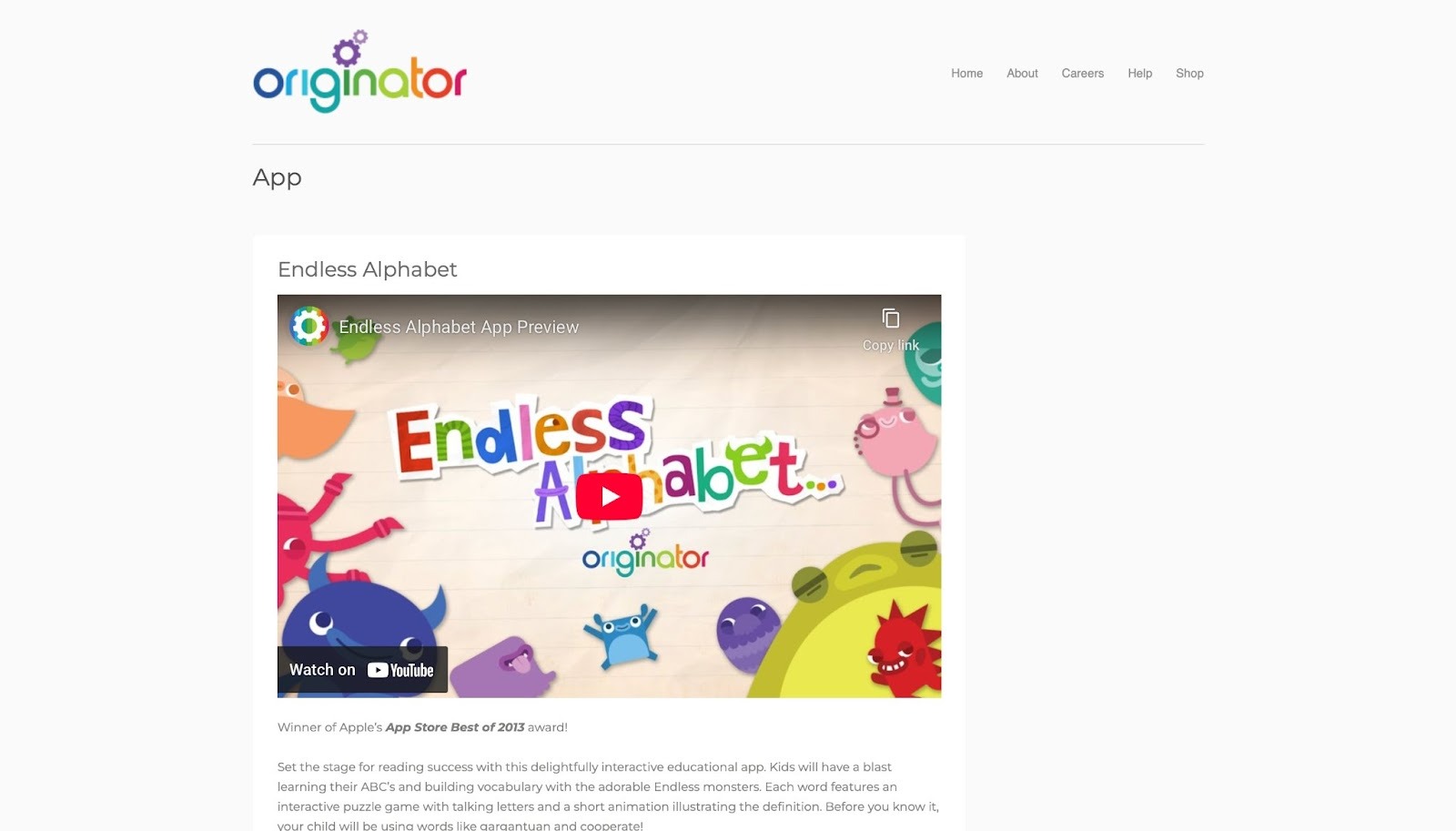
Endless Alphabet uses animated monsters to teach letters and words in a simple, joyful way. Kids trace and interact with puzzles that build phonics basics. It shines for preschoolers with its touch-based fun, encouraging repeat play. Strengths include the cute design that makes learning addictive, though limited to alphabet means combining with broader apps for full development. No ads keep it pure, and the word variety expands vocab gently.
Key Features
- Animated word puzzles with 100+ words.
- Touch interactions for tracing.
- Phonics emphasis through monsters.
- Simple, engaging format.
Facts and Information
- Ages 2+ for early literacy.
- Kid favorite for basics.
- Award-winning series.
- High replay for fun.
9. Duolingo ABC
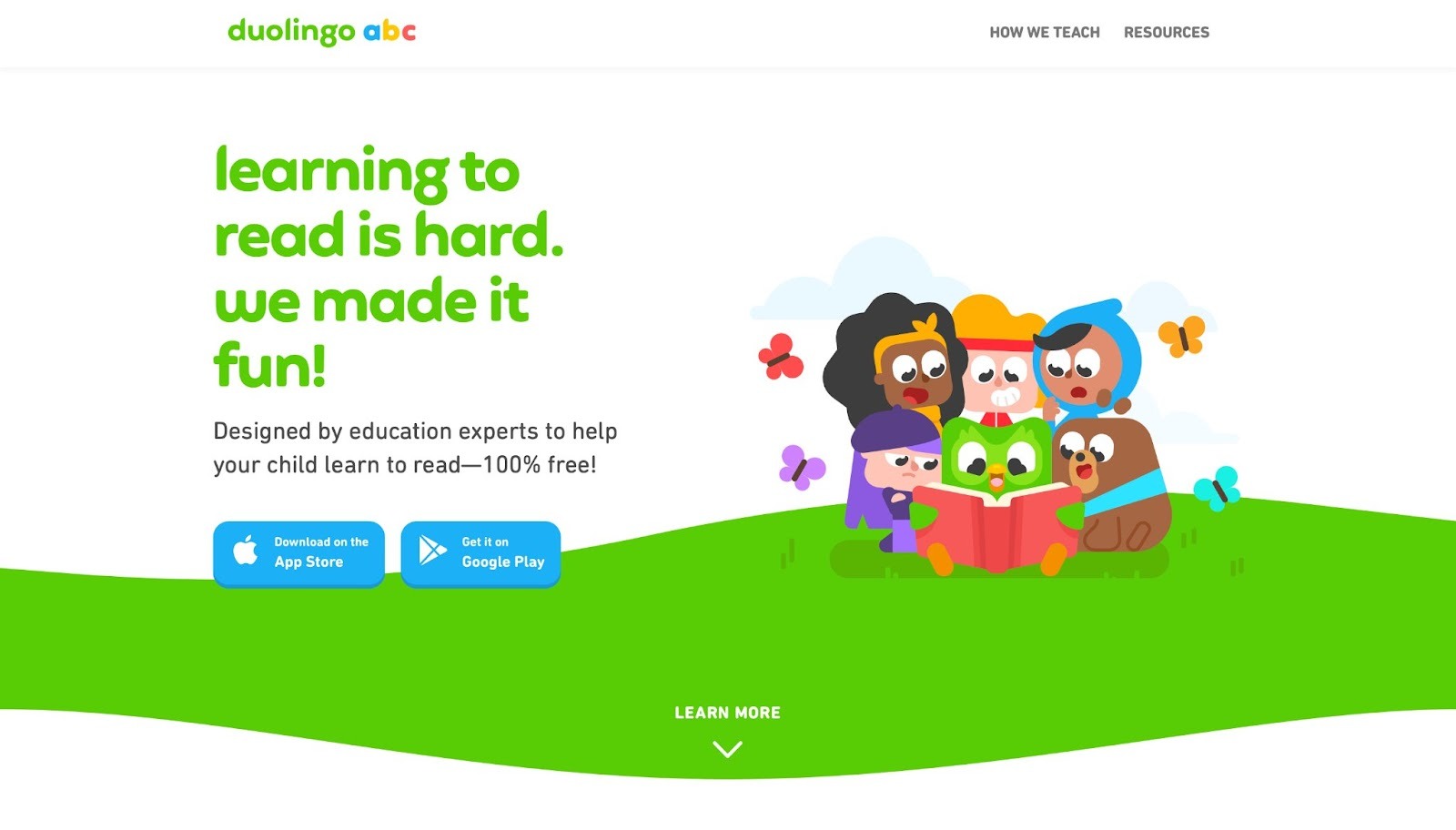
Duolingo ABC teaches reading with short lessons, stories, and handwriting practice that feel like games. It focuses on phonics and sight words for strong foundations. Strengths include the streak system that motivates daily use, leading to literacy gains. Research shows score improvements, but less variety in non-reading areas. Developed by experts, it's free and ad-free for easy access.
Key Features
- Bite-sized phonics and stories.
- Handwriting for letters.
- Interactive books with audio.
- Progress tracking.
Facts and Information
- Ages 3-6 with 28% score boost.
- 2021 Webby Winner.
- Free with no ads.
- Research-based curriculum.
10. Homer Learn & Grow
Homer offers daily sessions personalized to kids' interests, blending reading and math with creativity. It builds skills through joyful, ad-free play. Strengths include the gentle pacing for beginners and parent tools for involvement. While effective, quicker learners might seek more advanced challenges. Stages cater to growth, with themes like dinosaurs sparking engagement.
Key Features
- Custom paths for ages 2-8.
- 15-minute daily routines.
- Offline mode available.
- Parent involvement features.
Facts and Information
- Research-based for all stages.
- Builds empathy and thinking.
- Kid-powered personalization.
- Proven with testimonials.
11. PBS Kids Games
PBS Kids Games features characters from shows in activities that cover STEM and creativity. It promotes exploration in safe, ad-free worlds. Strengths include familiar themes that bond families, though less personalized than some apps. Widely used, it aligns with educational TV for consistent learning. Games encourage reading and problem-solving naturally.
Key Features
- Interactive games with PBS stars.
- Subjects like literacy and science.
- Free access for all.
- Family-friendly bonding.
Facts and Information
- Ages 2-8 for broad skills.
- Award-winning content.
- No ads or purchases.
- Trusted public service.
12. Epic!
Epic! serves as a vast digital library for young readers, granting access to over 40,000 books, audiobooks, and videos that spark a love for reading. It caters to kids from reluctant beginners to eager explorers, helping them discover topics that build knowledge and self-awareness. The app's design encourages classroom success through tools that sharpen critical thinking and comprehension. Parents find it boosts reading confidence with diverse genres and interactive elements. Strengths shine in its ever-growing collection that adapts to interests, making learning feel like adventure.
However, the sheer volume of choices can sometimes leave very young users needing more curated paths to avoid feeling lost. Based in the United States, Epic! draws from educational principles to create meaningful experiences. Families report kids diving deeper into subjects like history or science naturally. The safe, ad-free space promotes focused sessions. Overall, it transforms screen time into a gateway for lifelong curiosity, blending fun with skill-building in ways that stick.
Key Features
- Over 40,000 books, audiobooks, and videos.
- Enrichment tools for critical thinking.
- Personalized recommendations based on interests.
- Progress tracking for reading growth.
Facts and Information
- Award-winning for inspiring readers.
- Supports reluctant to avid bookworms.
- Focus on exploration and success.
- Used by many families globally.
13. Noggin
Noggin brings trusted Nick Jr. characters like PAW Patrol and Blue's Clues into a learning hub for preschoolers. It offers over 1,000 ad-free episodes, games, ebooks, and activities crafted by curriculum experts. Kids explore math, science, literacy, music, manners, and social skills through interactive play. The app nurtures cognitive, physical, and emotional growth, teaching empathy and foundational basics. Parents love how it turns fun with favorites into real lessons, like phonics or healthy habits.
Strengths include engaging content that encourages family bonding and shared experiences, keeping kids motivated. On the flip side, the presentation can feel confusing at times, and limited parental controls might require closer supervision. Headquartered in New York, USA, Noggin draws from 30+ years of preschool expertise. Users note calmer, more confident children after use. It's ideal for short bursts that build life skills without overwhelm.
Key Features
- Interactive games and videos with Nick Jr. stars.
- Ebooks and activities for core subjects.
- Together time for family play.
- Ad-free safe environment.
Facts and Information
- Ages 2-8 for holistic development.
- Webby Award winner.
- Curriculum by specialists.
- Trusted by families worldwide.
14. Starfall
Starfall provides a free public service for early learning, with games, movies, books, and music aligned to standards in language arts and math. Founded to help kids with dyslexia, it uses multisensory interactives where children see, hear, and touch concepts. Activities emphasize phonemic awareness, phonics, and sight words through play that builds confidence.
Parents appreciate its no-ad approach and positive reinforcement. Strengths lie in supporting diverse learners, including ESL and special needs, with untimed exploration. Though effective, the content might feel basic for advanced kids seeking more challenges. Headquartered in Boulder, USA, Starfall has expanded since 2002. Families use it for homeschool or supplements, seeing gains in reading and math motivation.
Key Features
- Over 700 activities and books.
- Multisensory games for phonics and math.
- Animated songs and stories.
- No ads or data collection.
Facts and Information
- Ages preschool to fifth grade.
- Research-based by teachers.
- Supports special needs.
- Widely used in schools.
15. Reading Eggs
Reading Eggs turns phonics into playful lessons for budding readers, covering spelling, vocab, sight words, and math through games and books. It adapts to each child's level with a placement test, offering personalized paths. Kids collect golden eggs as rewards, staying hooked on animated videos and exercises.
Parents see quick improvements in literacy, with structured curriculum boosting school readiness. Strengths include its comprehensive, science-backed approach that makes learning addictive for all abilities. However, very young users might need parent help to navigate independently. Based in Australia, it's trusted in thousands of schools. The app fosters independence and joy in reading.
Key Features
- Interactive phonics games and lessons.
- Over 4,000 ebooks.
- Progress reports for parents.
- Songs and activities for engagement.
Facts and Information
- Ages 2-13 with proven results.
- Used by 20 million children.
- Multi-award winning.
- In 12,000 schools worldwide.
16. Smart Tales
Smart Tales merges animated stories and games to teach STEM, reading, coding, and social skills in a safe space. It offers personalized paths where parents pick subjects and levels. Activities like puzzles and art build logic and creativity, with tools for dyslexia and autism. Parents praise its non-addictive design with timers for balanced play. Strengths focus on inclusive features that support neurodivergent kids, promoting cognitive growth through fun. The timer might limit deeper dives for eager learners. Certified for special needs, it's a go-to for homeschool.
Key Features
- 2,500+ activities and stories.
- Printable worksheets offline.
- Progress tracking reports.
- Dyslexia fonts and filters.
Facts and Information
- Ages 2-11 with 4.6 stars.
- 2 million families.
- Autism certified.
- 22.9 million exercises done.
17. Tynker
Tynker introduces coding via block-based lessons that evolve to Python and JavaScript, with over 5,000 activities. Kids mod Minecraft, explore AI, and build games, honing problem-solving and logic. It suits pre-readers with icons and advances to AP-level prep. Parents note boosted confidence and math skills. Strengths in gamified progression make tech accessible and fun. Less hands-on for non-gamers might need extra motivation. Headquartered in Mountain View, USA, it's endorsed for standards.
Key Features
- Story-based coding tutorials.
- Minecraft modding and AI courses.
- Placement tests for levels.
- Safe moderated community.
Facts and Information
- Ages 5-18 for all skills.
- Millions of students.
- College Board endorsed.
- Award-winning lessons.
18. Hopscotch
Hopscotch empowers kids to code games, animations, and stories with drag-drop blocks, fostering creativity and logic. Users share projects in a safe community, learning from others. It's designed for artists and storytellers, building problem-solving without syntax worries. Parents see kids expressing ideas boldly. Strengths include freedom to create anything, sparking independence. Basic tools might not satisfy advanced coders seeking complexity. Independent company focused on equal access for girls and boys.
Key Features
- Visual coding for games and art.
- Community sharing of projects.
- Intuitive drag-drop interface.
- Bite-sized intro to programming.
Facts and Information
- Ages 9-16 with 24M downloads.
- 36M games created.
- Shark Tank featured.
- Award-winning for kids.
19. BrainPOP
BrainPOP uses animated movies, quizzes, and activities to teach subjects like science and ELA, sparking curiosity. It supports ELL with vocab and grammar, complementing curricula. Kids engage with memorable content that builds comprehension. Strengths in exciting lessons that energize classrooms, helping diverse learners. Might need more interactivity for younger tots. Headquartered in New York, USA, trusted by millions of educators.
Key Features
- Animated lessons and quizzes.
- Tailored products for grades.
- ELL support tools.
- Cross-curriculum integration.
Facts and Information
- Grades K-8+ focus.
- Millions of users.
- Research-rooted impact.
- Joyful learning emphasis.
20. Pok Pok
Pok Pok offers Montessori-inspired toys for open-ended play, building logic, language, and creativity through activities like coding factories and shape tinkering. It grows with kids, avoiding overstimulation with calm designs. Parents love the diverse, inclusive world that calms post-play. Strengths in fostering self-discovery and essential skills naturally. Limited structure might suit free play more than guided needs. Award-winning for thoughtful design.
Key Features
- 20+ handcrafted digital toys.
- Logic, music, and art games.
- Regular updates with new toys.
- Calming sounds and art.
Facts and Information
- Ages 2-7 for curiosity.
- Award-winning Montessori style.
- Inclusive representation.
- Expert-endorsed for growth.
21. Busy Shapes
Busy Shapes draws from Montessori to teach shapes, counting, and thinking via interactive puzzles that adapt difficulty. Kids explore independently, tracing letters and building skills. Parents report enthusiasm and progress, even for special needs. Strengths in engaging tots with real results in basics. Simple focus means pairing for broader topics. Part of Edoki suite for multilingual learning.
Key Features
- Adaptive shape puzzles.
- Tracing and discovery activities.
- Curriculum for reading and math.
- Daily engagement options.
Facts and Information
- Ages 2-7 for foundations.
- Montessori-inspired.
- Supports ASD progress.
- Global family use.
22. DragonBox
DragonBox makes math intuitive with games teaching algebra, geometry, and numbers through puzzles and adventures. Kids master equations and proofs in epic worlds, memorizing tables via mini-games. Parents see confidence soar as concepts click early. Strengths in motivation-based self-teaching that feels like play. Age-specific apps might require multiples for full range. Award-winning for innovation.
Key Features
- Puzzles for equations and geometry.
- 20+ mini-games for tables.
- Epic adventure modes.
- Progression for deep understanding.
Facts and Information
- Ages 4-8+ with self-teaching.
- Multiple awards won.
- Nordic innovation prize.
- Press-praised for ease.
Skills Kids Gain from Top Educational Games
Games sharpen focus and problem-solving fast. Many children show better attention after regular play. Logic puzzles aid school readiness. Vocab grows through stories. Emotional tools like yoga build calm. Experts note play-based apps support brain growth best.
Skill Area | Common Gains from Games |
| Language | Word recognition, phonics |
| Math | Counting, patterns |
| Logic | Puzzles, sorting |
| Emotions | Empathy, mindfulness |
| Habits | Routines, healthy choices |
2026 Trends Shaping Kids' Learning Apps
- Personalization rules now. Apps adjust to kid speed with smart tech.
- AR adds real-world fun, like virtual pets for care skills.
- Short bursts fit short attention spans.
- Wellness integration grows, mixing play with breath work.
- Parents seek safe, proven picks.
FAQ
What age groups do the best educational games for kids apps target?
Apps for young learners often align with developmental stages, starting from toddlers around age 2 who build basic motor skills through simple interactions like touching and swiping. By ages 3 to 5, focus shifts to preschool basics such as letter recognition and counting, fostering curiosity and emotional awareness in safe digital environments. Older kids up to age 8 engage with more complex elements like problem-solving and social scenarios, helping bridge home play with school readiness. These educational games support gradual growth across cognitive and physical areas.
How do educational games apps differ from regular games?
Educational games apps prioritize skill-building by integrating clear learning objectives into gameplay, such as puzzles that teach logic or stories that expand vocabulary. Unlike pure entertainment options that aim mainly for amusement through fast-paced action or rewards, these apps draw from child development principles to encourage active participation and real-world application. They often include progress tools for tracking growth, turning fun sessions into meaningful experiences that enhance focus and creativity.
Can educational games apps replace traditional learning?
Educational games apps serve as strong supplements by offering interactive ways to practice concepts like math or reading in short, engaging bursts that fit family routines. They adapt to individual paces, providing personalized challenges that build on classroom lessons without fully taking their place. Hands-on activities and group interactions remain key for deeper understanding, while apps add flexibility for reinforcing ideas at home.
Why choose ad-free educational games for kids?
Ad-free designs help maintain steady attention by removing interruptions like pop-ups or visuals that pull focus away from core activities. This setup creates a calmer space where kids can immerse in tasks, leading to better retention of skills like sorting or language basics. Safer environments without external promotions allow for pure exploration, aligning with expert views on minimizing distractions in early digital experiences.
Read Also:
- Best Interactive Educational Games 2026
- Best Educational Games Online 2026
- Best Top-Rated Educational Games 2026
- Best Educational Fun Games 2026
- Best Educational Games App 2026
Discover the Best Educational Games for Kids App 2026 - Fluvsies Academy