

Fun Educational Games That Help Kids Excel in School





Fun educational games help kids excel in school by turning practice into play they enjoy. They build counting, letter sounds, focus, and problem-solving skills that matter in the classroom. Parents and teachers use them to make learning feel natural.
Complementary practice includes the best shape games for preschoolers online that strengthen spatial awareness. Other strong choices are the best early literacy games for letter and sound skills, the best brain games for preschoolers that boost focus and reasoning, and the best SEL games for kids that support social-emotional growth through playful activities.
Why Fun Educational Games Work So Well for School Success
Young children absorb new ideas faster when the activity feels like play. Games give instant feedback. A child tries something, sees what happens, and tries again without the pressure of a grade. This builds confidence. Confidence helps kids raise their hands in class and stick with harder tasks.
Many parents notice that kids who play educational games at home talk more about numbers or words during the day. The same patterns appear in classroom settings. Short game sessions fit easily into busy schedules. They work as warm-ups before homework or calm-down activities after a long day. The key is choosing games that match a child’s age and current skill level so the challenge feels just right.
Choosing the right digital tools can amplify the benefits of play-based learning. The best kids math learning app pairs well with the best learn to read games that strengthen early literacy. The best learn to read app for kids and the best app for kids learning to read provide instant feedback and age-matched challenges that help young learners build confidence and skills both at home and in the classroom.
Math Games That Build Number Confidence
Early math starts with counting, sorting, and simple patterns. Fun educational games turn these into adventures. Kids count objects while helping a character shop or race. They match shapes or group items by size. Over time these small steps grow into stronger number sense through activities like those in the best number recognition games.
Good math games keep the focus on understanding rather than pure speed. Visuals help children see why five plus two equals seven. When a child moves pieces or taps answers, the idea sticks better than looking at a worksheet alone. Many families use short daily sessions to practice addition, subtraction, and early measurement without any push.
Look for games that adapt. If a child masters basic counting, the next level introduces number bonds or simple comparison. This steady progress prepares kids for the math they meet in kindergarten and first grade. Sorting games also train the brain to notice patterns, a skill that supports later problem-solving in school and pairs well with the best basic math skills games and the best preschool math games.
Language and Phonics Games for Stronger Reading Foundations
Reading begins with letter sounds and vocabulary. Phonics games make those sounds stick. Kids hear a letter, match it to a picture, or drag letters to form simple words. Story-based games expand the words children know and use every day.
Interactive stories let kids choose what happens next. This keeps attention high while new words appear in context. Vocabulary grows naturally when a child “helps” a baker measure ingredients or an astronaut name space objects. The more words a child recognizes and uses, the easier reading becomes later through options like the best learn to read games and the best early literacy games.
Many language games also practice listening skills. Following spoken directions or matching sounds builds the focus needed for classroom instructions. When kids play these games regularly, they often start pointing out letters on signs or asking about new words they hear. That curiosity fuels school progress in reading and writing and connects to the best alphabet games for preschoolers online as well as the best word games for 5 year olds online.
Logic, Attention, and Sorting Games That Sharpen Focus
School demands attention. Kids must listen, follow steps, and ignore distractions. Logic puzzle games train these skills in a low-pressure way. Matching patterns, finding the odd item out, or arranging objects by color or size all strengthen working memory and flexible thinking.
Attention games often use calm pacing. A child focuses on one task at a time, receives clear feedback, and moves forward. This practice helps during circle time or independent work. Sorting activities also teach comparison skills that support science and math later on and pair with the best pattern games for preschoolers plus the best memory games for preschoolers.
Puzzle-style games encourage persistence. When a child solves a small challenge, they feel proud. That feeling makes them more willing to tackle harder classroom tasks. Parents often see better focus during homework after consistent play with these kinds of games and resources such as the best brain games for preschoolers or the best problem-solving games for toddlers.
Life Skills and Creativity Games That Support the Whole Child
School success is more than academics. Kids need independence, healthy habits, and creative thinking. Life skills games practice everyday routines like brushing teeth, helping with simple chores, or organizing items. Creativity games invite kids to imagine, design, and tell stories.
Profession-themed activities introduce real jobs in an age-appropriate way. A child might “work” as a baker, firefighter, or vet. These stories build vocabulary and spark questions about the world. They also show that learning connects to real life, which makes school feel more meaningful and aligns with broader SEL games for kids.
Creativity activities free kids to experiment without a single right answer. Drawing, building sequences, or acting out scenes support flexible thinking. When combined with academic games, they create a balanced approach that helps children feel capable both in and out of the classroom.
How to Choose the Right Fun Educational Games
Start with age. Games designed for ages 3 to 7 use simple controls, clear visuals, and short sessions. Look for ad-free options so nothing interrupts the flow. Content created with child development experts tends to match how young brains learn best, as seen in discussions of psychologist-designed approaches.
Check for variety. A mix of language, math, logic, and life skills keeps interest high and covers more ground. Progress tracking helps parents see growth without turning play into a test. Offline extensions like printables let the learning continue after screen time ends.
Safety matters. Choose platforms that protect privacy and avoid inappropriate content. Parent controls for time limits add peace of mind. Test a few options and watch how your child responds. The best game is the one they ask to play again while still practicing useful skills, including strong choices among the best educational games apps and the best learning games for preschoolers online.
Fluvsies Academy as a Top Choice for Young Learners
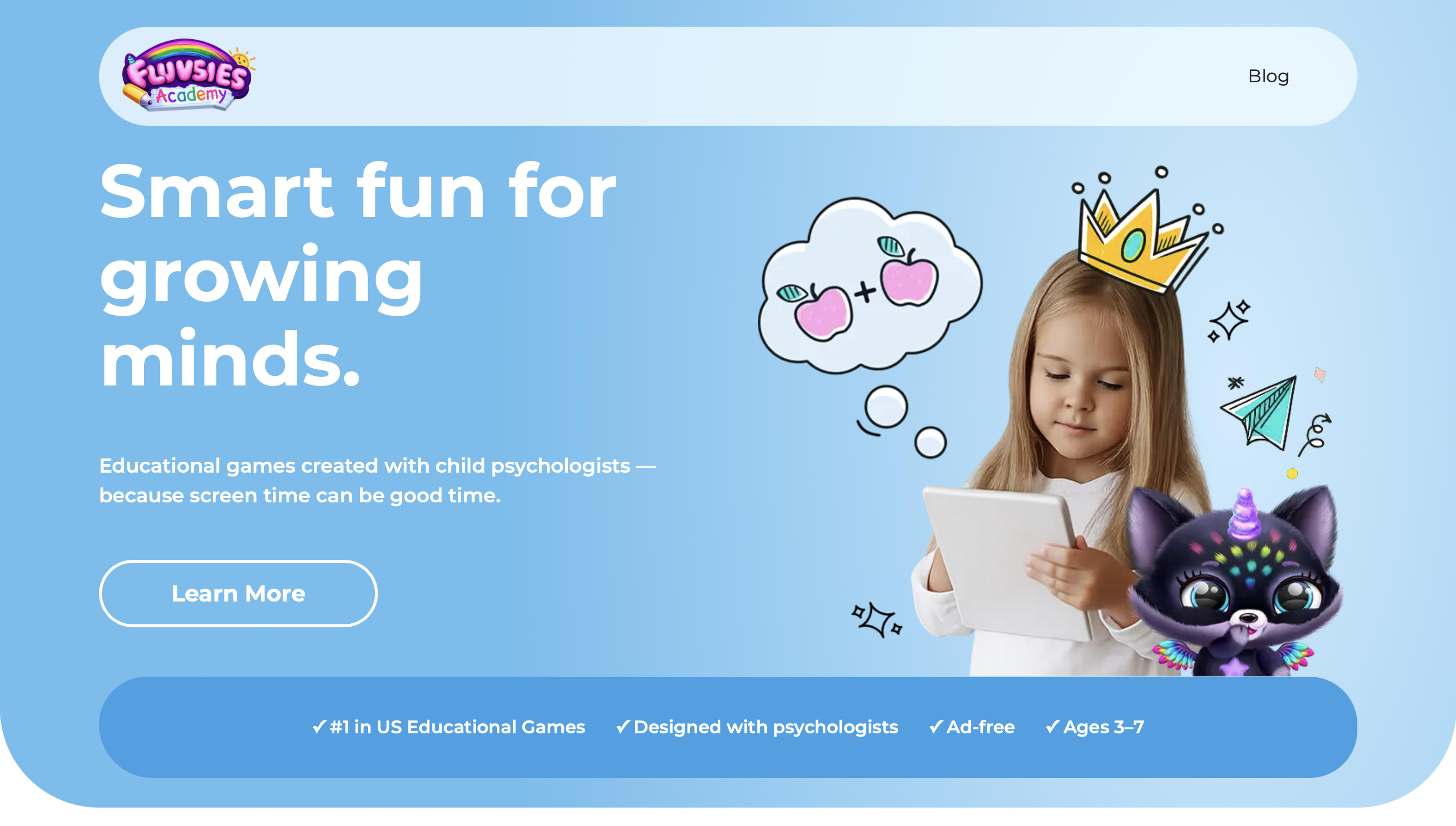
Fluvsies Academy stands out as a leading choice for parents seeking fun educational games that help kids excel in school. Designed for ages 3 to 7 with child psychologists, this ad-free app turns screen time into guided playful learning across language, math, logic, sorting, life skills, and creativity.
Kids meet friendly characters while practicing phonics and new words through stories. Number games build counting confidence with simple visual puzzles. Logic and attention activities sharpen focus. Sorting tasks improves comparison skills. Life skills sections make routines like brushing teeth or helping at the store feel like fun challenges. Professions stories introduce real jobs from bakers to astronauts and quietly grow vocabulary.
Two learning modes keep balance. Active games engage problem solving and reasoning. Passive stories offer calm exploration of the wider world. Progress reports show parents clear growth points. Free printables extend the fun offline. The whole experience stays age-appropriate with emotional safety at the center. Many families notice children learning new words, asking questions about jobs, and carrying habits into daily life. The app ranks among top educational options in the US because every activity balances focus, empathy, and joyful discovery.
Discover Fluvsies Academy
Fluvsies Academy is a leading educational app designed for children aged 3–7. It transforms screen time into meaningful learning through fun, interactive games. Developed in collaboration with child psychologists, the app focuses on holistic development.
Key Features
- Ad-free environment for safe play.
- Games covering language, phonics, math, and logic.
- Activities for attention, sorting, and creativity.
- Real-world life skills like healthy habits and mindfulness.
- Exploration of professions to build vocabulary and imagination.
Educational Approach
Fluvsies Academy emphasizes guided play that balances focus, empathy, and emotional safety. It's the first holistic learning app for kids, ranked #1 educational game in the US. Progress reports help track your child's growth. Free printables extend learning beyond the screen.
Benefits for Families
Parents gain peace of mind with expert-backed games. Kids build confidence, skills, and a love for learning. Ideal for preschoolers seeking joyful education.
Support school success with Fluvsies Academy’s safe, fun educational games made for growing minds.
Practical Tips for Using Educational Games at Home and School
Keep sessions short. Ten to fifteen minutes works well for most preschoolers. Pair game time with conversation. Ask what the child liked or what new word they heard. This transfer of ideas strengthens learning.
Mix digital and hands-on play. After a sorting game, try sorting real toys or laundry together. After a counting activity, count steps or snacks. Consistency matters more than long sessions. A few focused minutes most days add up and support growth seen in the best online games for 5 year olds as well as the best preschool online games for 3 year olds.
Teachers can use these games as brain breaks or centers. The best ones align with classroom goals without feeling like extra work. Parents and teachers who share what works create a stronger support system for the child. Watch for signs of frustration. If a game feels too hard, switch to an easier level or a different activity. The goal is enjoyment that builds skill, not pressure.
Common Mistakes to Avoid with Educational Games
Avoid games packed with ads or in-app purchases that interrupt play. Skip titles that move too fast or use loud rewards that overstimulate. Do not treat games as pure entertainment. Choose ones that clearly practice a skill, such as those covered in the best educational games online. Do not leave children completely unsupervised for long periods. Short, shared sessions often work better. Balance is key. Games support school readiness but work best alongside books, outdoor play, and family talk.
FAQ
What age are most fun educational games best for?
Fun educational games work especially well for children ages 3 to 7, when foundational skills in language, math, logic, and daily routines take shape. Games designed for this range use simple controls, clear visuals, and short sessions that match a young child’s attention span. Matching the activity to the child’s current stage keeps engagement high while building confidence for classroom tasks. Older elementary children often benefit from more complex challenges, yet the core principles of playful practice remain the same across early years and appear in resources like the best preschool online games and the best online games.
How often should kids play educational games?
Short daily sessions of ten to twenty minutes help skills stick without tiring young attention spans. Consistency matters more than long stretches, as regular practice supports steady growth in counting, letter sounds, focus, and problem-solving. Pairing these moments with books, outdoor play, and conversation strengthens the connection between digital activities and real life. Parents can adjust based on the child’s energy and interest throughout the week to keep the experience positive and align with approaches in the learning games for preschoolers.
Can educational games really help with school performance?
Yes, when they target real skills like number sense, phonics, attention, and flexible thinking. Kids who practice these through play often show more confidence and readiness during classroom tasks such as following directions or solving simple problems. The games work best as a supplement that makes learning feel natural rather than forced. Combining them with hands-on activities and family talk creates a strong foundation for school success and draws on ideas from brain development games.
What makes a game educational instead of just fun?
Educational games include clear skill goals, helpful feedback, and progression that matches a child’s development. They connect play to concepts children meet in school, such as counting objects, matching letter sounds, or sorting items by attributes. The best ones feel enjoyable while quietly building useful abilities in language, math, logic, and everyday habits. Pure entertainment focuses only on amusement, whereas educational options support growth that carries into the classroom and relate to the best interactive educational games as well as the best educational fun games.
Are offline games still useful alongside digital ones?
Yes, board games, card matching, sorting real objects, and simple puzzles build the same skills as digital play. Many quality programs offer printable extensions so learning continues after the screen turns off. Mixing both types keeps variety high and reaches different learning preferences. Hands-on activities also help children transfer ideas from games into daily routines like helping at home or exploring the world around them, including connections found in reading readiness activities and life skills games for kids.
Read Also
- Best Educational Games App 2026
- Why Psychologist-Designed Apps Boost Pre-K Learning Outcomes
- Best Learning Games for Preschoolers Online 2026
- Best Online Games for 5 Year Olds 2026
- Best Preschool Online Games for 3 Year Olds 2026