

Why Early Literacy Games Give Kids a Head Start






Kids start building language skills long before kindergarten. Early literacy games turn play into practice with letter sounds, words, and stories. Many families use simple home games or trusted educational games for kids ages 3-7 that mix fun with real learning.
Early skill-building often includes the best reading readiness activities that introduce letter sounds and words. Complementary choices feature the best brain games for preschoolers for focused thinking, the best problem-solving games for toddlers that encourage early reasoning, and the best pattern recognition games that sharpen observation through playful practice.
What Early Literacy Really Means for Young Children

Early literacy is more than knowing the alphabet song. It covers the skills kids need before they read full sentences. Phonological awareness helps them hear the separate sounds in words. Print awareness shows them how books work, from left to right and top to bottom. Vocabulary grows when they hear and use new words in context. Letter knowledge connects shapes to names and sounds.
These pieces work together. A child who can clap out the beats in a word or point to the front of a book already has tools that make formal reading lessons easier. Games make these skills feel natural. Instead of drills, kids match pictures, sing rhymes, or sort letter cards while laughing. Activities like those in the best early literacy games, the best alphabet games for preschoolers online, and the best number recognition games support this growth through play.
Play-based practice fits how young minds learn best. Children ages 3 to 5 stay engaged longer when learning looks like a game. Short sessions keep attention high and frustration low. Over time, the repeated, happy practice builds automatic habits that carry into school.
How Literacy Games Build Core Skills Before Formal School
Games target the exact foundations teachers look for on the first day of kindergarten. Rhyming games train the ear to notice sound patterns. Kids who can find words that sound alike later blend sounds into real words more easily. Letter-matching games strengthen recognition of both uppercase and lowercase forms. Sound-sorting activities link letters to the noises they make. Many families turn to the best phonics games for preschoolers and the best learn to read games for these exact skills.
Story games add another layer. When children retell a simple tale or choose the next picture in a sequence, they practice narrative structure and prediction. These moments grow comprehension skills that matter once books get longer. Reading readiness activities often blend storytelling with sound play to strengthen the same foundations.
Many games also support attention and memory recall for kids. Following multi-step directions in a board game or digital activity trains the brain to stay focused. Turn-taking builds social language at the same time. The mix of fun and structure means kids practice without realizing they are working on school-ready skills.
Parents notice small wins. A child who once mixed up letter sounds starts pointing them out on signs. Another who struggled to sit for a story now asks to hear the same book again so they can finish the ending themselves. These everyday signs show the games are working.
Why Starting Before Kindergarten Makes a Real Difference
Kindergarten moves fast. Teachers introduce letter sounds, shared reading, and writing tools right away. Children who arrive with some familiarity can join in sooner. They spend less energy figuring out basic concepts and more energy on new ideas.
Games create that familiarity in a low-pressure setting. At home, a parent can stop when a child gets tired or switch activities if interest fades. There is no grade or comparison with classmates. The child builds confidence through success rather than struggle. Options such as the best learning games for preschoolers online and the best online preschool educational games help create this readiness through short, joyful sessions.
Children who engage with sounds, print, and stories early often show stronger language growth. They enter school with larger vocabularies and better ability to hear sound differences. That foundation supports later reading fluency and understanding.
The timing matters. The years from 3 to 5 are especially open to language growth. Games take advantage of this window without pushing formal lessons too soon. They keep learning joyful so kids stay curious about books and words.
Types of Early Literacy Games That Work Well
Simple household games need almost no materials. I Spy with beginning sounds turns a car ride into practice. Clapping the syllables in family names builds phonological awareness. Sorting magnetic letters on the fridge mixes play with letter recognition.
Board games designed for young players often include letter or sound matching. Kids move tokens while saying letter names or finding pictures that start with the same sound. The social side keeps motivation high.
Digital games offer another useful option when designed carefully. Short, focused activities with clear audio and calm pacing can reinforce the same skills. The best ones avoid ads and sudden rewards that pull attention away from the learning. Instead they give gentle feedback and let the child progress at a comfortable speed. Families often explore the best educational games and the best interactive educational games that follow this approach.
Story-based games combine listening and speaking. Children hear a short narrative, then answer questions or choose what happens next. This builds vocabulary and comprehension in a natural flow. Profession-themed stories expand word knowledge further by connecting language to real roles like baker or firefighter. Preschool online games for 3 year olds and fun online games for preschoolers frequently include these elements.
Mixing physical and digital play keeps things fresh. A child might practice letter sounds on a tablet, then hunt for those letters in a book or on a walk. The variety helps skills stick across different settings.
Practical Ways Parents Can Use Literacy Games Every Day
Keep sessions short. Five to ten minutes of focused play often works better than longer stretches. Stop while the child still wants more so the experience stays positive. Follow the child’s lead. If they love animals, use animal names for rhyming or beginning-sound games. Interest fuels effort. Talk about the game afterward. Ask what sound a letter made or which picture matched. These conversations turn passive play into active language practice.
Combine games with books. After a rhyming activity, read a book full of rhymes. After letter matching, look for those letters on the page. The link between game and print strengthens the learning. Reading readiness activities for kids and alphabet games for preschoolers online make this connection easy to build at home.
Watch for signs of readiness. Some children enjoy sound games early. Others prefer stories first. Both paths support literacy. Adjust the type of game rather than forcing one approach. Consistency matters more than intensity. A few minutes most days build stronger habits than occasional long sessions. Over weeks and months, the small practices add up to noticeable growth.
How Fluvsies Academy Turns Early Literacy into Joyful Play
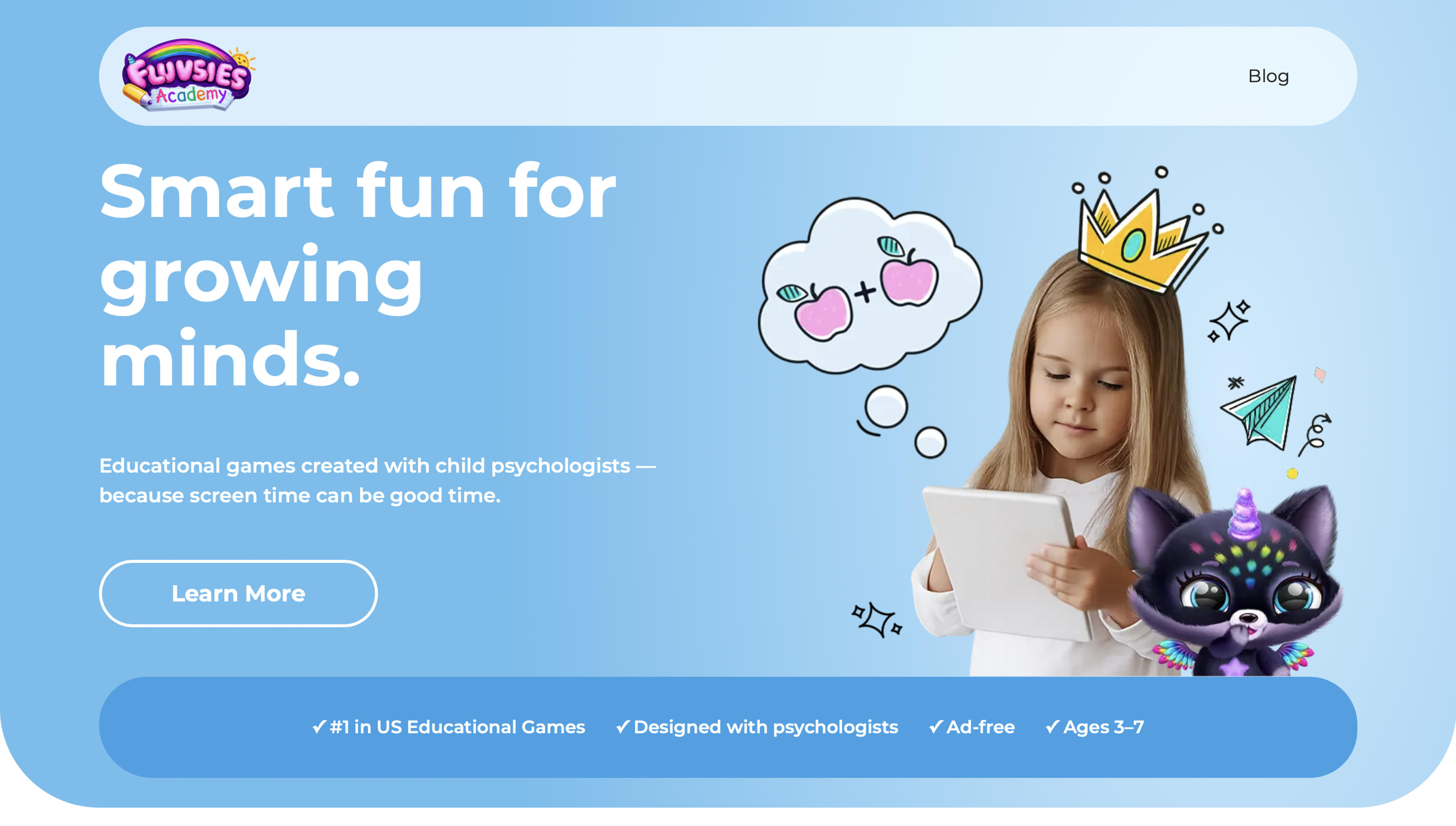
Fluvsies Academy creates educational games for children ages 3 to 7 that make language and phonics feel like adventure. Designed with child psychologists, the app offers an ad-free space where kids explore letter sounds, simple words, and vocabulary through guided mini-games and stories.
Children practice phonics while caring for cute characters and discovering real-world professions. A game about bakers or astronauts naturally introduces new words and ideas. Sorting and logic activities sit alongside language practice so kids build focus and comparison skills at the same time. Life skills and creativity elements, including healthy habits and mindfulness, support the whole child.
Parents receive progress insights that show growth in language and other areas without pressure. Free printables extend the learning offline. The short, age-appropriate sessions fit busy days and keep children coming back because the play stays fun and safe. This approach gives families a reliable way to support early literacy at home. Kids gain familiarity with sounds, words, and print concepts while building the confidence and focus that help them settle into kindergarten.
Discover Fluvsies Academy
Fluvsies Academy is a leading educational app designed for children aged 3–7. It transforms screen time into meaningful learning through fun, interactive games. Developed in collaboration with child psychologists, the app focuses on holistic development.
Key Features
- Ad-free environment for safe play.
- Games covering language, phonics, math, and logic.
- Activities for attention, sorting, and creativity.
- Real-world life skills like healthy habits and mindfulness.
- Exploration of professions to build vocabulary and imagination.
Educational Approach
Fluvsies Academy emphasizes guided play that balances focus, empathy, and emotional safety. It's the first holistic learning app for kids, ranked #1 educational game in the US. Progress reports help track your child's growth. Free printables extend learning beyond the screen.
Benefits for Families
Parents gain peace of mind with expert-backed games. Kids build confidence, skills, and a love for learning. Ideal for preschoolers seeking joyful education.
FAQ
What age should children start literacy games?
Most children are ready for simple sound and letter play around age 3, when they can enjoy rhyming, clapping syllables, and matching pictures to beginning sounds. Younger toddlers gain more from songs, everyday conversations, and shared picture books that build oral language first. By ages 4 and 5, many kids handle structured matching, sorting, and short story games that strengthen phonological awareness and print concepts. Resources such as online educational games for 3 year olds and preschool online games for 4 year olds support this stage with age-appropriate activities. The key is watching each child’s interest and attention span rather than following a strict timeline. Games work best when they feel like play and match the child’s current curiosity about words and sounds.
Do digital literacy games replace books and conversation?
Digital literacy games work best as one helpful piece alongside real books and everyday talk. Shared reading builds deeper comprehension, emotional connection, and story structure skills that screen activities alone cannot fully provide. Conversation about daily events, questions during play, and retelling stories grow the oral language foundation that supports later reading. Short, well-designed digital sessions can reinforce letter sounds and vocabulary, but they gain power when parents link them to books and real-life discussions. Families often explore reading readiness activities and early literacy games for children to create this balanced mix. Combining all three creates a richer early literacy environment for preschoolers.
How can I tell if a literacy game is effective?
An effective literacy game keeps clear learning goals, uses age-appropriate pacing, and offers positive, helpful feedback without pressure. Children stay engaged and often ask to play again because the activity feels rewarding rather than frustrating. Over time, parents may notice kids spotting letters in the environment, trying new words in conversation, or showing stronger interest in books and stories. Progress reports in thoughtfully designed apps can highlight growth in specific areas like letter knowledge or sound awareness. Options such as learn to read games and phonics games for preschoolers often include these helpful features. The strongest sign remains a child who approaches language play with growing confidence and curiosity.
Are literacy games helpful for children who already know some letters?
Yes, literacy games still add value even when a child already recognizes some letter names. Knowing letter shapes is only one piece of early literacy. Games that focus on letter sounds, blending, vocabulary building, and story structure expand skills beyond basic recognition. Playful practice keeps curiosity high and helps children move smoothly toward more advanced reading work. Children who already know letters often enjoy the challenge of matching sounds, creating simple words, or retelling stories, which deepens their foundation before kindergarten. Many turn to alphabet games for preschoolers and sight word games for kids for the next level of practice.
How much time should kids spend on literacy games each day?
Short, regular sessions work best for young children. Five to fifteen minutes of focused play is often enough to build skills without overwhelming attention spans. Quality matters more than length, so stop while the child still feels interested and successful. Pairing game time with reading aloud, talking about the day, and singing creates a balanced approach that supports steady growth. Consistency across most days helps the practice stick better than occasional longer sessions. Families find helpful structure in learning games for preschoolers and educational games online that fit easily into daily routines.
Read Also
- Best Phonics Games for Preschoolers 2026
- Best Early Literacy Games
- Best Learn to Read Games
- Best Reading Readiness Activities
- Best Alphabet Games for Preschoolers Online