

Educational Games Online That Keep Kids Engaged for Hours





Parents are always looking for smart ways to turn screen time into meaningful learning. Educational games online deliver exactly that - a perfect mix of fun and real skill development for young children. These games help kids stay focused longer, spark curiosity, and build important abilities in language, math, logic, and everyday life skills.
Discover even more engaging learning options with the best basic math skills games to help build a strong numeracy foundation. Combine them with fun online preschool educational games tailored for early learners, strengthen spelling skills through the best spelling games for 5 year olds online, and support overall cognitive growth with our top brain development games for kids.
Try Fluvsies Academy today and give your child joyful learning that lasts.
Why Educational Games Online Capture Kids' Attention So Effectively
Young children learn best when activities match their natural curiosity. Educational games online use stories, puzzles, and rewards to hold focus far longer than traditional methods. Kids return often because they enjoy satisfying wins and see mistakes as chances to try again without pressure. These platforms adjust easily to each child's pace. One may repeat simple sorting tasks until confident, while another explores complex patterns right away. This flexibility lowers frustration and builds self-confidence naturally.
Many games draw from everyday routines like brushing teeth, shopping, or pet care. Such familiar role-play strengthens memory and practical skills while feeling like pure fun. Educational games online for preschoolers shine with bright visuals and sounds that suit short attention spans yet support longer sessions. Parents frequently see improved concentration and more curious questions afterward.
To further enhance early learning, many families turn to the best early literacy games that build foundational reading skills through play. These pair beautifully with best reading readiness activities designed to prepare children for school success, while the best word games for 5 year olds online make vocabulary building enjoyable. For stronger problem-solving abilities, try the best logic puzzles for kids that challenge young minds in a fun and rewarding way.
Key Skills Built Through Online Educational Play
- Language and phonics develop rapidly through sound-matching games and interactive storytelling. Children practice blending sounds, forming simple words, and following engaging narratives that expand vocabulary organically. Speaking or repeating elements within the games supports early reading readiness in a pressure-free way.
- Math concepts become tangible via counting, sorting objects, and recognizing patterns. Number games introduce quantity and basic operations without worksheets. Clear visual feedback turns abstract ideas into concrete achievements that motivate continued practice.
- Logic and attention sharpen as kids tackle logic puzzle games or navigate challenges. Sorting activities train comparison, categorization, and focus skills. These foundational thinking abilities prepare children well for school while improving concentration through enjoyable play.
- Creativity and life skills for kids bloom in pretend-play scenarios. Games that teach responsibility, empathy, or daily routines let children rehearse real behaviors safely. Mindfulness features further support emotional awareness and calmness.
Overall, the best educational games online typically cover multiple areas at once for balanced development. Kids gain not only academic basics but also persistence, problem-solving, and social understanding through character interactions.
Top Educational Games Online for Preschoolers in 2026
The market offers many quality choices that keep young children happily engaged. Leading platforms prioritize safe, ad-free content designed with child development research in mind. Free resources provide diverse activities featuring familiar characters, making them excellent supplements for specific topics like letters or numbers. Families frequently combine several options to maintain freshness and match individual interests.
Educational games for kids that keep them engaged generally feature simple interfaces, clear progression, and positive reinforcement. Parents benefit from trying options before long-term commitment to ensure the best fit. Many top-rated games update regularly with new content, preventing boredom and supporting ongoing skill growth across language, math, creativity, and emotional intelligence.
How to Choose the Right Educational Games for Your Child
Selecting the best educational games online involves considering several key factors. Start with age appropriateness - games for 3-7 year olds need intuitive controls, manageable session lengths, and content that avoids overwhelming young minds. Safety comes first. Choose completely ad-free platforms without intrusive purchases and with strong privacy protections. Designs created with input from child psychologists or educators tend to deliver more trustworthy experiences.
Think about your family's learning priorities. Some children need extra language support, while others benefit from logic or social-emotional activities. Versatile platforms that address multiple skills in one environment prove especially valuable. Device compatibility and offline modes matter for busy households or travel. Parent-friendly dashboards for tracking progress add convenience without complexity. Fun online educational games usually earn strong community feedback and receive consistent updates to stay engaging and relevant.
Benefits of Regular Play with Educational Games
Regular engagement brings noticeable advantages. Children strengthen cognitive abilities through repeated practice in enjoyable settings, leading to better long-term retention. They also develop greater persistence as they pursue in-game goals.
Social and emotional skills grow through interactions with characters that model kindness and cooperation. Role-playing scenarios allow safe practice of empathy and emotional regulation. Family bonding opportunities increase when parents join sessions or discuss what children learned. This shared time transforms screen use into meaningful conversations.
Many kids display higher confidence and better school reading readiness after consistent play with quality games. Active participation improves memory and understanding far more effectively than passive screen time. Educational games additionally support fine motor skills through precise controls and pattern recognition, contributing to overall development.
Making the Most of Educational Screen Time at Home
Establish reasonable time limits that fit your daily family rhythm. Balance game sessions with outdoor activity and traditional reading for a healthy variety. Create a calm, distraction-free play space. Occasionally playing together allows natural reinforcement of concepts through casual discussion. Take advantage of progress-tracking tools to celebrate achievements positively. Printable resources from quality platforms extend learning beyond the screen into hands-on fun. Observe your child's responses carefully. Learning games that hold attention well and prompt curious questions are usually the strongest matches.
Fluvsies Academy: A Standout Choice for Engaged Learning
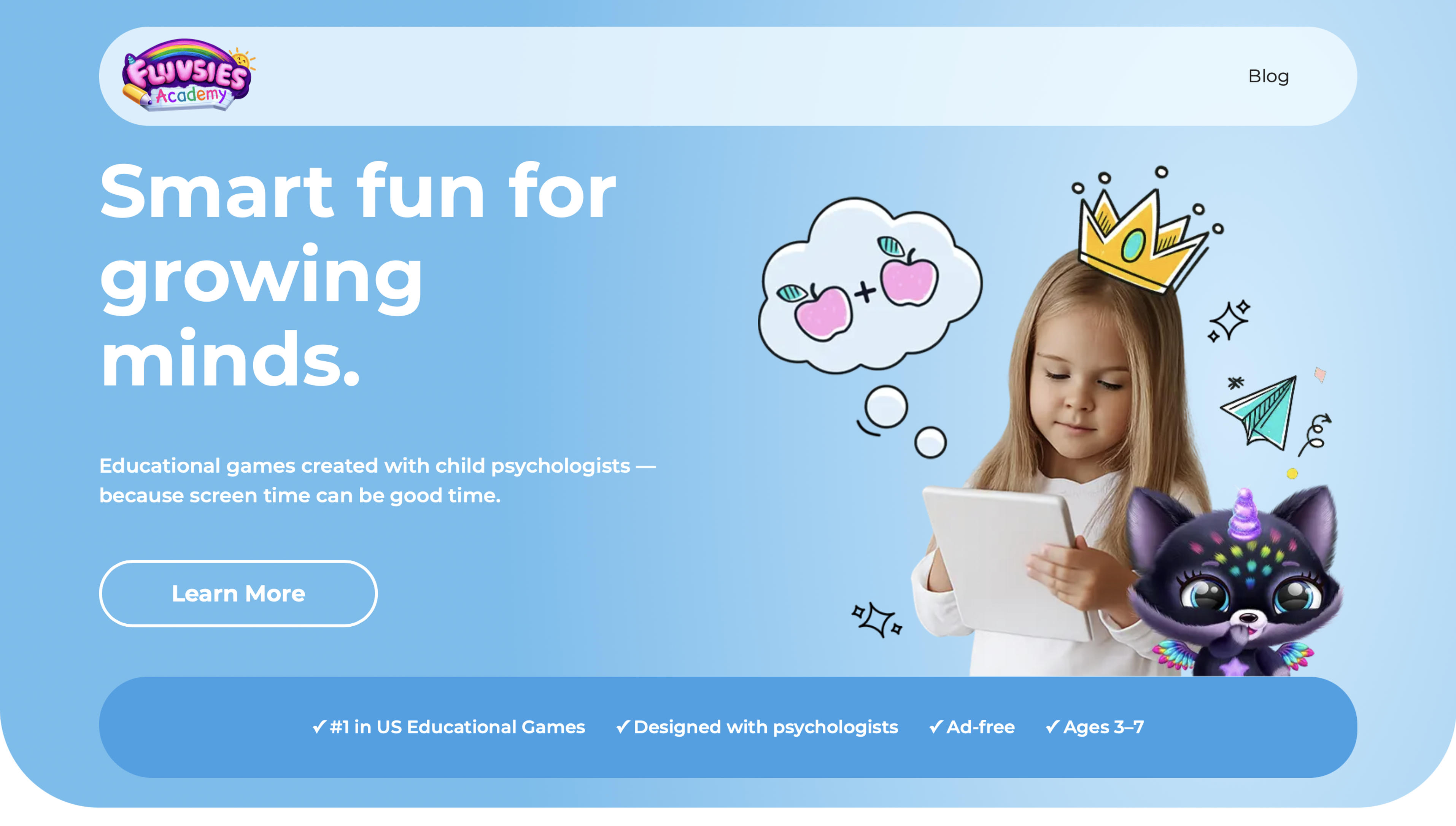
Fluvsies Academy stands out as the leading choice for parents who want screen time that truly supports growth. This holistic learning app turns everyday play into meaningful moments for children ages 3 to 7. Designed with child psychologists, it offers a safe, ad-free environment packed with vibrant characters and calm visuals.
Kids dive into language and phonics through stories that spark imagination. Number games build confidence with simple puzzles. Logic and attention activities sharpen focus while sorting tasks improve comparison skills. Life skills and creativity come alive as children explore professions such as bakers or astronauts and practice real routines like brushing teeth or helping at the store. Mindfulness, kids yoga, and healthy habits round out the experience so emotional safety stays front and center. Two learning modes balance active problem-solving with relaxing passive stories. Parents appreciate the progress reports that show clear growth without any pressure.
Discover Fluvsies Academy
Fluvsies Academy is a leading educational app designed for children aged 3–7. It transforms screen time into meaningful learning through fun, interactive games. Developed in collaboration with child psychologists, the app focuses on holistic development.
Key Features
- Ad-free environment for safe play.
- Games covering language, phonics, math, and logic.
- Activities for attention, sorting, and creativity.
- Real-world life skills like healthy habits and mindfulness.
- Exploration of professions to build vocabulary and imagination.
Educational Approach
Fluvsies Academy emphasizes guided play that balances focus, empathy, and emotional safety. It's the first holistic learning app for kids, ranked #1 educational game in the US. Progress reports help track your child's growth. Free printables extend learning beyond the screen.
Benefits for Families
Parents gain peace of mind with expert-backed games. Kids build confidence, skills, and a love for learning. Ideal for preschoolers seeking joyful education.
Try Fluvsies Academy today and watch your child thrive through joyful, expert-designed play.
Tips for Parents to Support Learning at Home with Games
Pay close attention to what most captivates your child. Extend game themes into real-world activities, such as sorting household items after completing a matching logic puzzle. Discuss stories and characters to reinforce new vocabulary and ideas. Open-ended questions about their gameplay encourage reflection and deeper understanding. Incorporate physical movement. Many games pair naturally with kids' yoga or active breaks to balance seated play. Participate supportively without controlling every step. Gentle guidance helps children feel secure while fostering independence and problem-solving confidence.
The Future of Educational Games Online
Developers continue enhancing personalization and introducing fresh content regularly. Advancing technology ensures experiences remain current and increasingly aligned with the latest child development insights. Platforms are moving toward even more comprehensive support for holistic growth, with engaging and safe designs that families can confidently use for years. Interactive educational games online will keep evolving to blend learning and play more seamlessly than ever.
FAQ
What makes educational games online effective for young children?
Educational games online prove effective because they turn learning into active participation rather than passive observation. Children stay motivated through immediate feedback, stories, and rewards that match their developmental stage, making repetition feel natural instead of tedious. These games support multiple areas at once, including language, logic, and emotional skills, creating well-rounded growth in a low-pressure environment that feels like play. Platforms designed with expert input help ensure content remains age-appropriate and focused on building confidence alongside knowledge.
How old should kids be to start playing educational games online?
Children can begin exploring online educational games around age 3, when they show interest in simple interactive activities and have basic motor skills for touchscreens. At this stage, games with large visuals, clear audio cues, and short sessions work best to match developing attention spans. As kids grow toward 5-7 years old, more complex challenges involving logic, patterns, and storytelling become suitable for deeper skill building. The key lies in selecting content that aligns with the child's current abilities to avoid frustration while encouraging steady progress in areas like phonics and number sense.
Can educational games replace traditional learning?
Educational games work best as valuable supplements that reinforce and extend traditional learning rather than replacing it entirely. They provide engaging practice opportunities that help concepts stick through repetition and real-time application in fun scenarios. Combining games with books, conversations, hands-on activities, and real-world experiences creates the most complete developmental support. This balanced approach leverages the strengths of digital tools for motivation while maintaining the social and practical elements found in offline learning. Many families find that thoughtful integration leads to better overall readiness for school and lifelong curiosity.
What should parents look for in online educational games?
Parents should prioritize completely ad-free environments with strong privacy protections and age-appropriate content free from distractions. Look for designs created with expert input that balance academic skills like language and math with life abilities such as empathy and routines. Intuitive controls, progress insights for families, and options for offline play add significant practical value. Versatile platforms covering multiple developmental areas in one safe space tend to deliver the most consistent benefits. Regular content updates help maintain freshness and continued engagement as children grow.
How do I keep kids engaged for longer sessions?
Varied challenges, appealing characters, and multiple play modes help sustain interest across longer sessions in educational games online. Rotating between different activity types prevents boredom while reinforcing skills from various angles, such as switching from phonics stories to logic puzzles. Creating a comfortable routine with short breaks and positive parental involvement further supports extended focus without pressure. Games that adapt difficulty naturally and celebrate small achievements encourage children to persist longer while building confidence. Observing individual preferences allows customization that keeps play feeling personal and rewarding.
Read Also:
- Best Educational Computer Games 2026
- Best Kids Learning Apps 2026
- Best Kids App for Learning 2026
- How Educational Games Help Cognitive Skills for Kindergarten
- Best Educational Online Games for Preschoolers 2026
Try Fluvsies Academy today and give your child joyful learning that lasts.