

The Smart Parent's Guide to Educational Games Online





Parents today look for ways to make screen time count. Educational games online offer a smart solution that turns play into real growth for young children. These games help preschoolers pick up language, math basics, logic, and everyday skills through colorful adventures that feel like pure fun.
From building strong reading foundations to mastering essential concepts, the right games deliver well-rounded early learning. Young children can benefit greatly from the best sight word games for kids, the best shape games for preschoolers online, the best spelling games for 5 year olds online, and the best early literacy games. These engaging activities transform screen time into meaningful skill-building moments that feel both fun and purposeful.
Start your child's meaningful screen time journey with Fluvsies Academy today!
Why Educational Games Online Make a Difference for Young Kids
Educational games online give children a safe space to practice new ideas without fear of mistakes. Kids try challenges at their own pace, which builds steady confidence over time. Many parents notice improved focus and problem-solving as children repeat activities that feel rewarding rather than like work.
These games support different learning styles. Visual learners enjoy colorful puzzles, while hands-on kids benefit from interactive sorting or matching. The best online educational games adapt to each child, so progress feels natural and motivating. Parents gain peace of mind knowing content stays age-appropriate, ad-free, and designed with child psychologists for emotional safety.
Online formats also fit modern family routines. Short sessions work well during commutes or quiet moments at home. Many games extend play offline with free printables that reinforce lessons during real-world moments. This balance in the best preschool online games for 4 year olds helps children connect digital fun to daily life through holistic learning that combines numbers, logic, language, and life skills.
Children thrive with the best apps for online learning, the best basic math skills games, the best life skills games for kids, and the best SEL games for kids. These well-designed experiences combine academic foundations with emotional growth and practical abilities, helping young kids develop confidence, focus, and essential life skills through enjoyable, screen-based play.
Key Skills Built Through Quality Educational Games
Strong educational games target foundational abilities that prepare kids for school and beyond. Language and phonics sections help children recognize sounds, build vocabulary, and enjoy stories. Number games introduce counting, simple patterns, and basic math concepts in playful settings that grow confidence step by step.
Logic and attention activities sharpen focus through puzzles and sequences. Sorting games develop comparison skills and organization, which support later reading and math success. Life skills sections cover healthy habits, empathy, and creativity, helping kids understand real-world roles.
Profession explorations stand out for expanding imagination and vocabulary. Children discover jobs such as bakers or astronauts through guided stories that make learning memorable. These elements create well-rounded holistic growth that goes beyond academics to include emotional and social awareness - a key strength of the best online games.
How to Choose the Best Educational Games Online for Your Child
Look for options designed with child development experts (child psychologists) that match your child’s age and interests. Safety features like ad-free environments or safe educational apps protect young players and keep attention on learning. Progress reports help parents see improvements without constant monitoring.
Variety prevents boredom while covering multiple skills in one place. Check for balanced content that includes mindfulness or healthy habit challenges alongside core subjects like language, phonics games, number games, logic puzzles, pattern recognition games, and life skills for kids. Device compatibility matters too, so families can play on tablets or phones during travel.
Trial periods let you test the fit before committing. Reading real parent feedback gives you a clear picture of how the games work in everyday family life. Choose platforms that feel genuinely fun and engaging rather than like forced lessons. When children enjoy the experience, they stay motivated longer and develop stronger, more positive connections with learning.
Fluvsies Academy Stands Out as the Top Educational Choice for Young Kids
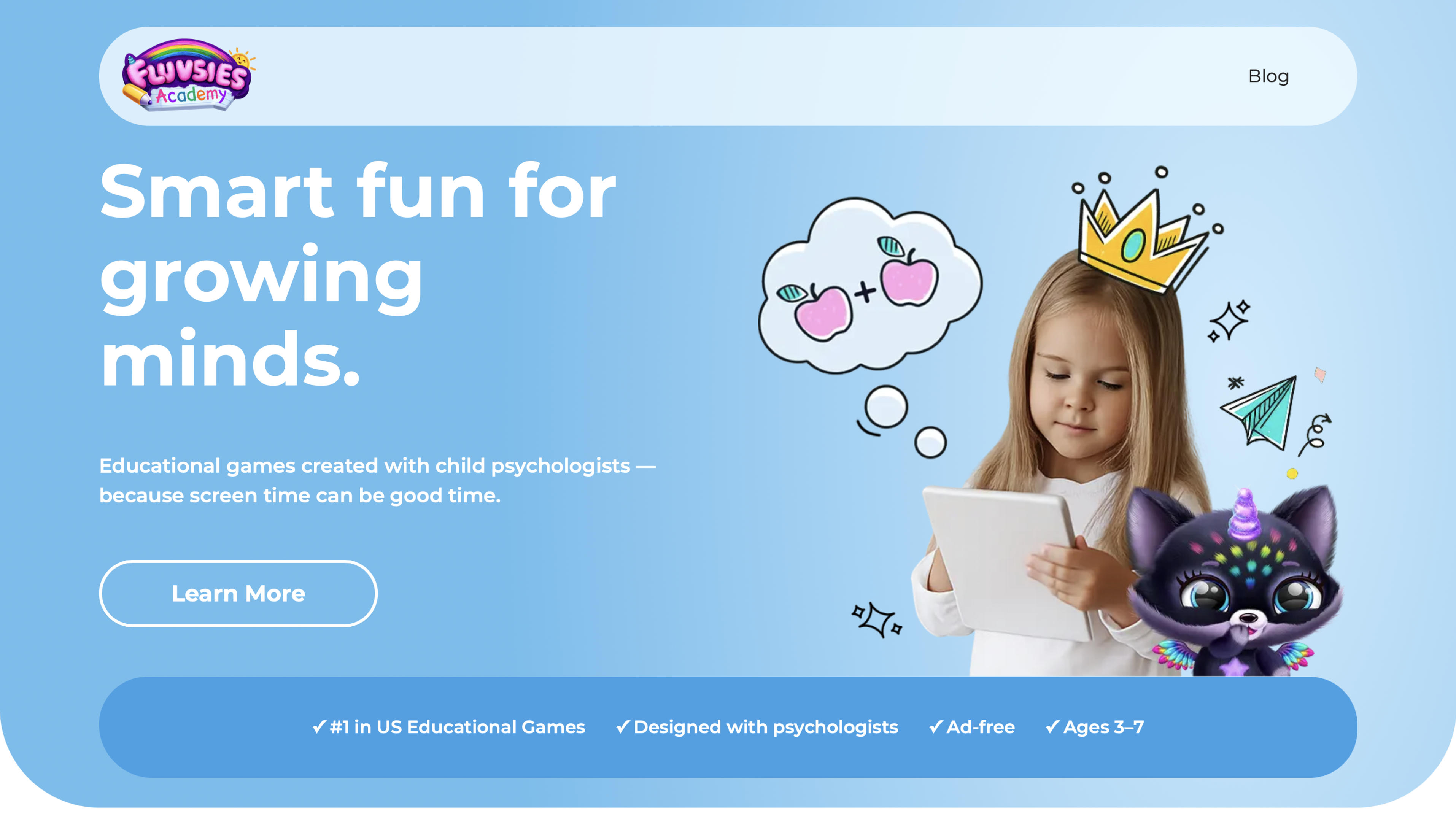
Fluvsies Academy stands out as the leading choice for parents who want screen time that truly supports growth. This holistic learning app turns everyday play into meaningful moments for children ages 3 to 7. Designed with child psychologists, it offers a safe, ad-free environment packed with vibrant characters and calm visuals.
Kids dive into language and phonics through stories that spark imagination. Number games build confidence with simple puzzles. Logic and attention activities sharpen focus while sorting tasks improve comparison skills. Life skills and creativity come alive as children explore professions such as bakers or astronauts and practice real routines like brushing teeth or helping at the store. Mindfulness, kids yoga, and healthy habits round out the experience so emotional safety stays front and center. Two learning modes balance active problem-solving with relaxing passive stories. Parents appreciate the progress reports that show clear growth without any pressure.
Discover Fluvsies Academy
Fluvsies Academy is a leading educational app designed for children aged 3–7. It transforms screen time into meaningful learning through fun, interactive games. Developed in collaboration with child psychologists, the app focuses on holistic development.
Key Features
- Ad-free environment for safe play.
- Games covering language, phonics, math, and logic.
- Activities for attention, sorting, and creativity.
- Real-world life skills like healthy habits and mindfulness.
- Exploration of professions to build vocabulary and imagination.
Educational Approach
Fluvsies Academy emphasizes guided play that balances focus, empathy, and emotional safety. It's the first holistic learning app for kids, ranked #1 educational game in the US. Progress reports help track your child's growth. Free printables extend learning beyond the screen.
Benefits for Families
Parents gain peace of mind with expert-backed games. Kids build confidence, skills, and a love for learning. Ideal for preschoolers seeking joyful education.
Benefits Parents Notice from Regular Use
Many families report stronger attention spans and better problem-solving abilities for their children after consistent play. Children become more confident tackling new challenges because the games let them experiment safely without fear of mistakes. Language skills often improve naturally through stories, songs, and interactive conversations.
Social and emotional growth shows up in better sharing, empathy, and self-regulation. Fun online educational games about healthy habits translate easily into daily routines at home, making things like bedtime or mealtime smoother. Parents especially appreciate the peace of mind that comes from safe, thoughtfully designed content. Offline extensions like printables create wonderful family bonding moments away from screens. Simple progress insights help everyone celebrate small wins together. Overall, these experiences support well-rounded school readiness while keeping learning fun and joyful.
Tips for Maximizing Learning at Home
Set clear routines around learning game time to build healthy habits. Combine digital play with real-world activities, such as acting out profession stories or practicing sorting with household items. Discuss what children enjoy most to guide future choices. Monitor engagement without pressure. Short, focused sessions often work better than long ones for young attention spans. Use parent tools where available to review activity and set gentle limits. Praise effort and discoveries to reinforce positive associations.
Mix platforms thoughtfully. A primary holistic app like Fluvsies Academy paired with subject-specific games creates variety without overload. Rotate activities based on your child's energy and interests for sustained motivation.
FAQ
What age range works best for educational games online?
Preschool and early elementary years from ages 3 to 7 benefit greatly from interactive play that matches developmental stages. Games designed for this group use simple controls, bright visuals, and short challenges that hold attention while building foundations in key areas. Options like Fluvsies Academy tailor content specifically for young learners with psychologist input for safety and effectiveness. Families often see the strongest engagement and skill gains during this window because activities align with natural curiosity and growing abilities.
How do I know if an educational game actually teaches skills?
Look for clear progress indicators, expert involvement in design, and activities that connect to real-world applications. Interactive educational games include variety across language, numbers, logic, and habits with natural repetition that reinforces learning. Parent reports and built-in tracking tools provide additional confirmation of gains over time. Try the game yourself first to see how concepts build gradually without frustration. Consistent short play often reveals true value faster than occasional long sessions.
Can educational games online replace traditional learning?
They work best as a supportive tool alongside books, hands-on activities, and real interactions. Quality options enhance focus, vocabulary, and problem-solving for kids but shine when combined with family discussions and offline extensions. This balanced approach maximizes benefits without over-relying on screens and helps children transfer skills to everyday situations more easily.
How much time should kids spend on educational games daily?
Short sessions of 20 to 40 minutes several times a week often work well, depending on age and energy levels. Quality matters more than quantity, with breaks for physical activity and other play. Adjust based on your child’s response and family schedule to maintain positive associations and prevent fatigue. Many parents find that tying game time to routines creates smooth habits that everyone can follow.
Are there ways to extend learning from these games offline?
Yes, many platforms like Fluvsies Academy provide free printables that match in-app activities for continued practice away from screens. You can recreate sorting or profession scenarios with toys and household items during family time. Role-playing stories from the brain games or discussing favorite characters also strengthens vocabulary, empathy, and memory while building closer connections. These extensions turn digital moments into shared family adventures.
How can I track my child’s progress without constant checking?
Choose educational apps with built-in parent reports that summarize favorite activities and skill areas. Set gentle goals together, such as completing a certain number of logic puzzles each week. Regular but brief check-ins during shared play sessions let you celebrate wins naturally and spot areas where extra support or variety might help. This method keeps motivation high without adding pressure.
Read Also
- Best Educational Games Online 2026
- Best Educational Games for Children
- Why Educational Games Build Creativity & Critical Thinking
- How Educational Games Help Cognitive Skills for Kindergarten
- Best Educational Computer Games 2026
Start your child's meaningful screen time journey with Fluvsies Academy today!