

What Makes These Top-Rated Educational Games So Effective






Parents today look for ways to turn screen time into real growth for their kids. Top-rated educational games stand out because they blend fun with skill-building in ways that keep children hooked while they learn. These games help preschoolers develop language, logic, math, and even healthy habits through joyful activities that feel like play, not lessons.
Families love exploring the best apps for online learning, the best basic math skills games, the best life skills games for kids, and the best SEL games for kids. These engaging titles turn everyday screen time into meaningful opportunities that support language, math, emotional intelligence, and practical skills - all while keeping preschoolers happily involved.
The Science Behind Effective Educational Games

Top-rated educational games succeed because they tap into how young brains learn best. They create safe spaces where kids experiment, make choices, and see immediate results from their actions. This hands-on approach builds stronger connections than passive activities like watching videos.
Child psychologists help shape these games to balance challenge with success. Activities adapt to each child’s pace, so little ones stay motivated without frustration. Immediate feedback, such as cheerful animations when a puzzle clicks, reinforces learning and encourages kids to try again.
Fun educational games also support social and emotional growth. Role-playing scenarios teach empathy and problem-solving for kids in contexts that mirror real life. Children practice taking turns, understanding feelings, and working through small setbacks - skills that transfer well beyond the screen.
Well-designed titles like the best pattern game, the best memory games, the best shape games, and the best alphabet games deliver targeted practice that supports pattern recognition, working memory, spatial awareness, and early literacy. These activities align perfectly with how young brains develop, turning play into powerful, science-backed learning moments.
Key Features That Make Games Engaging and Impactful
Interactive educational games share traits that keep kids coming back while delivering real value. Bright visuals and lovable characters draw children in, but the real magic lies in the gameplay mechanics.
Interactive Play That Builds Core Skills
Many top educational games use guided play to strengthen language and phonics. Kids match sounds, build words, or follow stories that introduce new vocabulary naturally. Number recognition activities turn counting into adventures, helping children gain confidence with quantities and patterns.
Logic and attention games sharpen focus through sorting, matching, and simple puzzles. These tasks improve comparison skills and help kids organize thoughts, which supports school readiness. Life skills sections for kids stand out in standout apps. Children explore professions like bakers or astronauts, expanding their understanding of the world while practicing creativity and responsibility.
Progress Tracking and Personalization
Parents value tools that show progress over time. Simple reports highlight strengths and areas for more practice, helping families celebrate wins together. Adaptive difficulty keeps the experience fresh and suitable for each child. Ad-free environments remove distractions, letting focus stay on learning. This setup creates calm, productive sessions that many parents prefer over random apps.
How Top Games Compare in Supporting Young Learners
When choosing learning games, families often look at how well each option supports different areas. Strong choices offer a balanced mix of academic and life skills in one safe space. Psychologist-designed apps prioritize emotional safety and real-world connections that set them apart.
Other solid options include apps focused on creativity and pet care to build responsibility, or platforms with broad curriculum coverage. The best ones stand out for their holistic approach that includes mindfulness elements and profession explorations tailored for young ages. Parents report that children using these problem solving games show better engagement and retention of concepts. Quality options turn play into meaningful growth with progress reports and extensions that continue learning offline.
Real-World Benefits Parents Notice
Kids who play quality educational games often carry skills into daily life. Alphabet games help with clearer speaking and listening. Math activities make everyday tasks like sharing snacks or setting the table smoother. Logic puzzles encourage patience and creative solutions when facing small challenges. Social-emotional growth appears in how children express feelings or show empathy toward characters and siblings. Many families note increased curiosity about professions and the world, sparking conversations that strengthen bonds. Offline extensions, such as printables, bridge screen time with hands-on fun. This combination supports well-rounded development that prepares kids for school and beyond.
Best Practices for Maximizing Learning Through Games
To get the most from these tools, parents can play alongside their children sometimes. Talking about what happens in the learning game helps reinforce concepts and builds stronger family connections. Short, regular sessions work better than long marathons for young attention spans. Set clear routines so screen time feels purposeful. Combine digital play with real-world practice, like trying the healthy habits shown in games during daily routines. Monitor progress together to celebrate improvements and adjust as needed. Choose platforms with strong safety features. Ad-free options and age-appropriate content give peace of mind while supporting focus.
Common Skill Areas in Top Educational Games
Several key areas stand out across leading educational games. Language and phonics come through stories, sound matching, and vocabulary building, leading to stronger communication and reading readiness. Math games and number games benefit from counting puzzles and pattern recognition, building confidence with quantities.
Logic and focus improve via puzzles, attention challenges, matching, and simulations that enhance problem-solving for kids. Life skills grow through role-play, healthy habits, and mindfulness, supporting real-world application and empathy. Emotional growth appears in character care and positive feedback that aids self-regulation. This variety helps match games to a child's specific needs and interests.
Why Psychologist-Designed Games Make a Difference
Collaboration with child psychologists leads to noticeably better outcomes for young players. These experts bring a deep understanding of how children think, feel, and develop at each stage. They design every activity to match short attention spans typical of preschoolers, while still providing enough gentle challenges to keep kids engaged and motivated.
Positive emotions are kept at the center through encouraging feedback, celebrations of small successes, and guidance that never feels like failure. This careful balance makes learning feel natural, supportive, and genuinely fun rather than forced or like hidden schoolwork. Beyond academics, these psychologist-designed games nurture the whole child. Mindfulness features help little ones practice calm focus and manage emotions during play and in daily life. Life skills sections introduce responsibility and social understanding through engaging professions explorations - such as becoming a baker, astronaut, or community helper.
Fluvsies Academy - A Leading Educational Games Platform for Ages 3-7
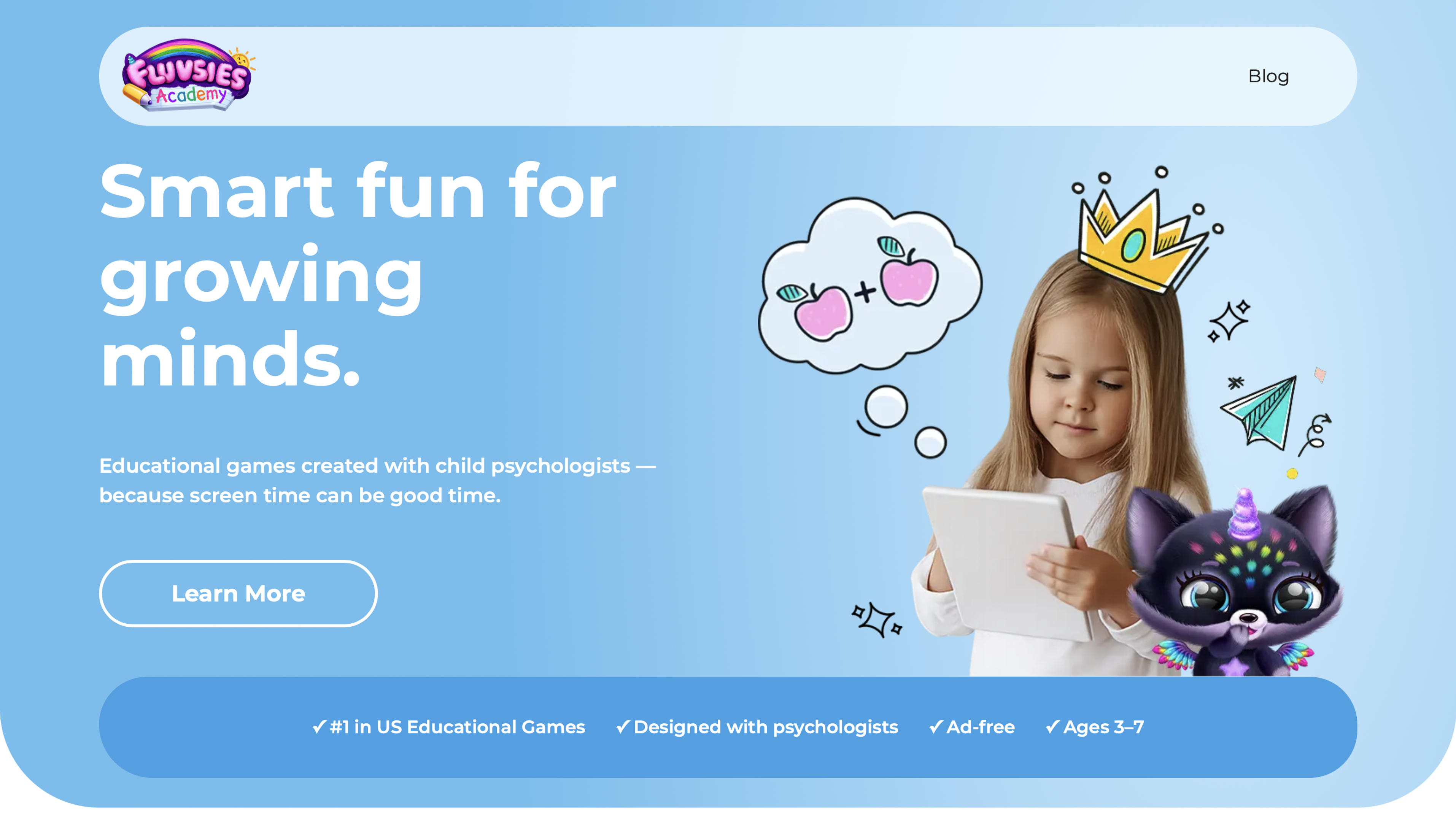
Fluvsies Academy stands out as the leading choice for parents who want screen time that truly supports growth. This holistic learning app turns everyday play into meaningful moments for children ages 3 to 7. Designed with child psychologists, it offers a safe, ad-free environment packed with vibrant characters and calm visuals.
Kids dive into language and phonics through stories that spark imagination. Number games build confidence with simple puzzles. Logic and attention activities sharpen focus while sorting tasks improve comparison skills. Life skills and creativity come alive as children explore professions such as bakers or astronauts and practice real routines like brushing teeth or helping at the store. Mindfulness, kids yoga, and healthy habits round out the experience so emotional safety stays front and center. Two learning modes balance active problem-solving with relaxing passive stories. Parents appreciate the progress reports that show clear growth without any pressure.
Discover Fluvsies Academy
Fluvsies Academy is a leading educational app designed for children aged 3–7. It transforms screen time into meaningful learning through fun, interactive games. Developed in collaboration with child psychologists, the app focuses on holistic development.
Key Features
- Ad-free environment for safe play.
- Games covering language, phonics, math, and logic.
- Activities for attention, sorting, and creativity.
- Real-world life skills like healthy habits and mindfulness.
- Exploration of professions to build vocabulary and imagination.
Educational Approach
Fluvsies Academy emphasizes guided play that balances focus, empathy, and emotional safety. It's the first holistic learning app for kids, ranked #1 educational game in the US. Progress reports help track your child's growth. Free printables extend learning beyond the screen.
Benefits for Families
Parents gain peace of mind with expert-backed games. Kids build confidence, skills, and a love for learning. Ideal for preschoolers seeking joyful education.
Ready to unlock smarter screen time? Start your free trial of Fluvsies Academy today!
Choosing the Right Game for Your Family
Choosing the right educational game takes a bit of thought, but it pays off when you match options to your child's unique profile. Start by considering their exact age, current interests, and specific skills they are working on or need extra support with.
For example, a child who loves stories might thrive with strong language and phonics elements, while another who enjoys pattern recognition elements could benefit more from logic-focused puzzles. Look for variety within a single platform so the content stays fresh and prevents boredom over weeks or months of regular use. At the same time, the games should target meaningful growth areas without feeling repetitive or too easy or hard.
Safety always comes first for peace of mind. Prioritize ad-free environments that remove unnecessary distractions and keep the focus purely on learning and fun. Progress insights, such as simple parent-friendly reports, help you see what your child enjoys most and where they are improving, so you can celebrate together and make small adjustments.
FAQ
What age range benefits most from top-rated educational games?
Preschool and early elementary years, especially ages 3 to 7, see strong gains from well-designed games. At this stage, children absorb language, basic math, and social concepts quickly through play because their brains are developing rapidly in areas like attention, memory, and emotional understanding. Tailored experiences match these developmental windows with age-appropriate challenges that build solid foundations without pressure. Many parents find that consistent play in memory games during these years leads to noticeable improvements in confidence, curiosity, and readiness for school activities.
How do educational games support skills beyond academics?
Many games weave in emotional regulation, creativity, and real-life applications that go far beyond traditional subjects. Children practice empathy through character interactions and stories that show different perspectives, while alphabet games expand vocabulary and spark imagination about the wider world. Healthy habits builders and mindfulness moments help kids learn calm focus and responsibility that carry over into daily routines at home. This broader focus helps children develop greater confidence, resilience when facing small challenges, and a natural curiosity that lasts well into later learning years.
Are ad-free educational games better for young children?
Yes, ad-free educational games tend to work better for young children because they reduce distractions and keep attention squarely on learning and enjoyment. Platforms without ads create calmer, more consistent experiences where kids stay engaged for longer periods. Parents feel more comfortable knowing the environment stays safe and purposeful. This setup supports deeper concentration, better retention of skills, and a more positive overall association with digital playtime.
What makes certain apps unique among educational options?
Standout choices combine academic skills with mindfulness, life skills for kids, and professions explorations in one complete, holistic package. Input from child psychologists ensures emotional safety stays central alongside fun learning elements, while helpful extras like progress reports and printables allow learning to continue offline. These features create a more rounded experience that supports the whole child.
How can parents track progress with these games?
Look for built-in progress reports that highlight achievements, favorite activities, and areas showing steady improvement over time. Many options offer simple, easy-to-understand insights that let families celebrate small wins together. Some platforms even suggest related offline ideas or next steps. Regular check-ins with these tools help parents stay involved without needing to watch every session.
Read Also
- Best Educational Online Games 2026
- Best Kids Learning Apps 2026
- Best Educational Games for Preschoolers
- How Educational Games Help Cognitive Skills for Kindergarten
- Best Learning App for Kids 2026