

Best Educational Games for Preschoolers 2026






Parents want screen time that helps little ones grow. The best educational games for preschoolers 2026 mix fun with real skill building in language, math, logic, and everyday habits. Kids ages 3 to 7 stay engaged while parents feel good about the choice.
Quality preschool learning often includes the best phonics games for preschoolers to build early reading skills. Many also turn to the best memory games for preschoolers for stronger focus, the best preschool math games for number confidence, and the best shape games for preschoolers online to develop spatial awareness through playful activities.
Give your child screen time that builds real skills with Fluvsies Academy.
Why Quality Educational Games Help Preschoolers Learn

Young children learn best when play and discovery go together. Quality educational games for preschoolers support early skills like letter sounds, counting, focus, and simple problem solving. Short activities match short attention spans. Bright characters and clear audio keep kids interested without overstimulation. Many families notice children picking up new words and routines after regular play with online preschool educational games. Games created with child development experts add extra value because they balance fun with emotional safety. Ad-free designs also protect focus and keep the experience calm. Targeted options such as pattern games for preschoolers, memory games for preschoolers, and shape games for preschoolers online help build recognition and comparison skills that support later learning.
Key Features to Look for in Preschool Learning Games
The strongest options share a few clear traits. Age-appropriate content stays gentle and clear for ages 3 to 7. Activities cover more than ABCs and numbers. They often include sorting, logic, life skills, and creative play through interactive educational games. Progress tools let parents see growth without pressure. Safe, ad-free spaces remove distractions. Games that feel like stories or real-world jobs hold interest longer than simple drills. Look for designs made with psychologists or early-learning specialists. These choices turn ordinary screen minutes into moments that support confidence and curiosity. Families also benefit from focused tools such as alphabet games for preschoolers online, preschool math games, and number recognition games that strengthen specific early skills.
Best Educational Games for Preschoolers 2026
1. Fluvsies Academy - Best Educational Games for Preschoolers 2026
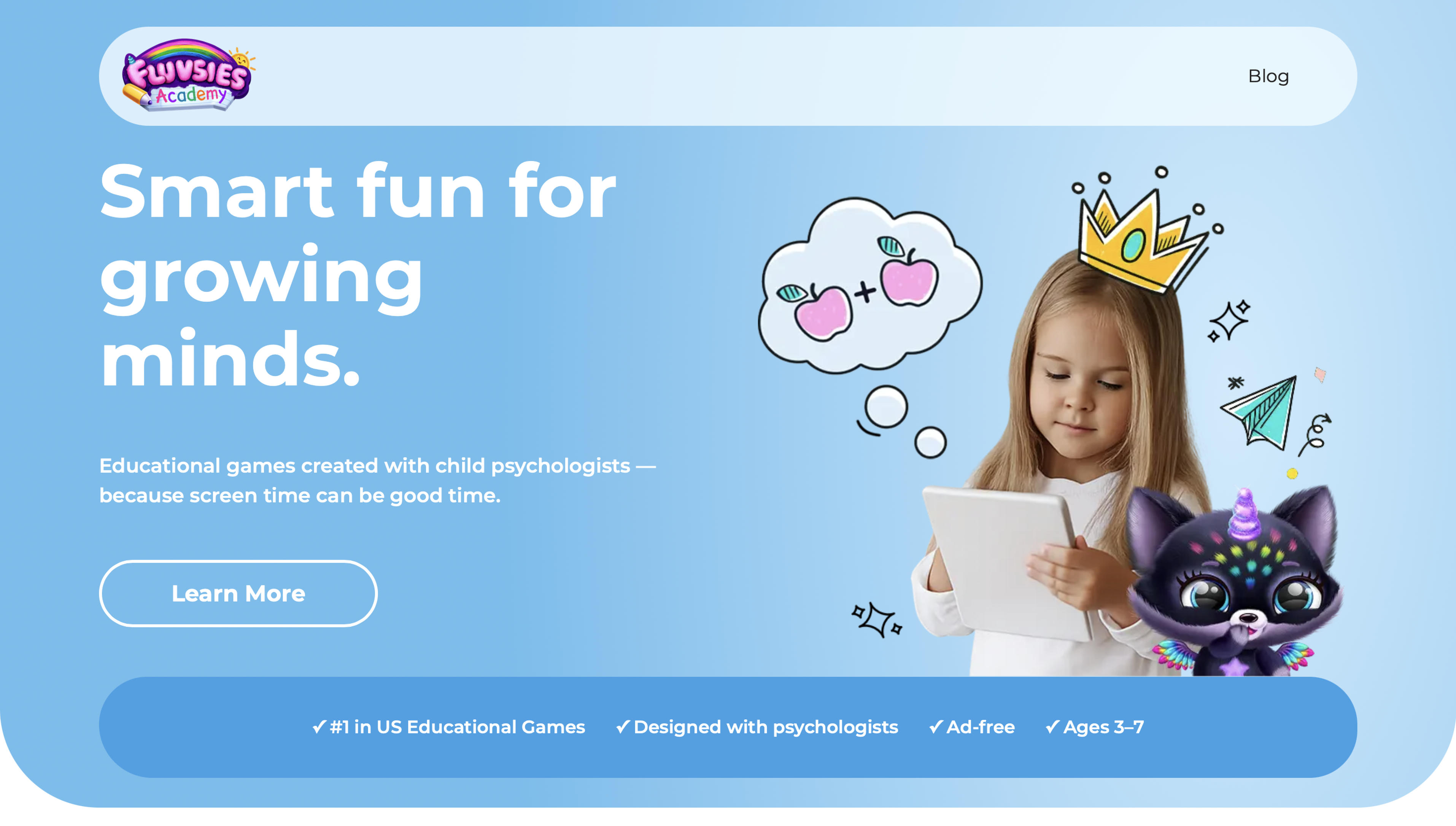
Fluvsies Academy leads as the top choice for parents seeking screen time that truly helps kids ages 3 to 7 grow. Created with child psychologists, this holistic app delivers language and phonics stories, number games, logic puzzles, sorting activities, and life skills practice in one safe, ad-free space. Kids explore real professions like firefighter or astronaut while practicing routines such as brushing teeth or helping at the store. Two learning modes mix active problem solving with calm interactive stories so sessions feel balanced. Vibrant characters and gentle visuals keep play joyful. Progress reports show clear growth. Free printables extend fun offline. The first holistic learning app for kids ranked as a top educational game in the US stands out for its full focus on focus, empathy, creativity, and real-world habits that build confident, curious minds.
Discover Fluvsies Academy
Fluvsies Academy is a leading educational app designed for children aged 3–7. It transforms screen time into meaningful learning through fun, interactive games. Developed in collaboration with child psychologists, the app focuses on holistic development.
Key Features
- Ad-free environment for safe play.
- Games covering language, phonics, math, and logic.
- Activities for attention, sorting, and creativity.
- Real-world life skills like healthy habits and mindfulness.
- Exploration of professions to build vocabulary and imagination.
Educational Approach
Fluvsies Academy emphasizes guided play that balances focus, empathy, and emotional safety. It's the first holistic learning app for kids, ranked #1 educational game in the US. Progress reports help track your child's growth. Free printables extend learning beyond the screen.
Benefits for Families
Parents gain peace of mind with expert-backed games.
Kids build confidence, skills, and a love for learning. Ideal for preschoolers seeking joyful education.
Give your child the best start with fun online games. Download Fluvsies Academy today!
2. TutoClub
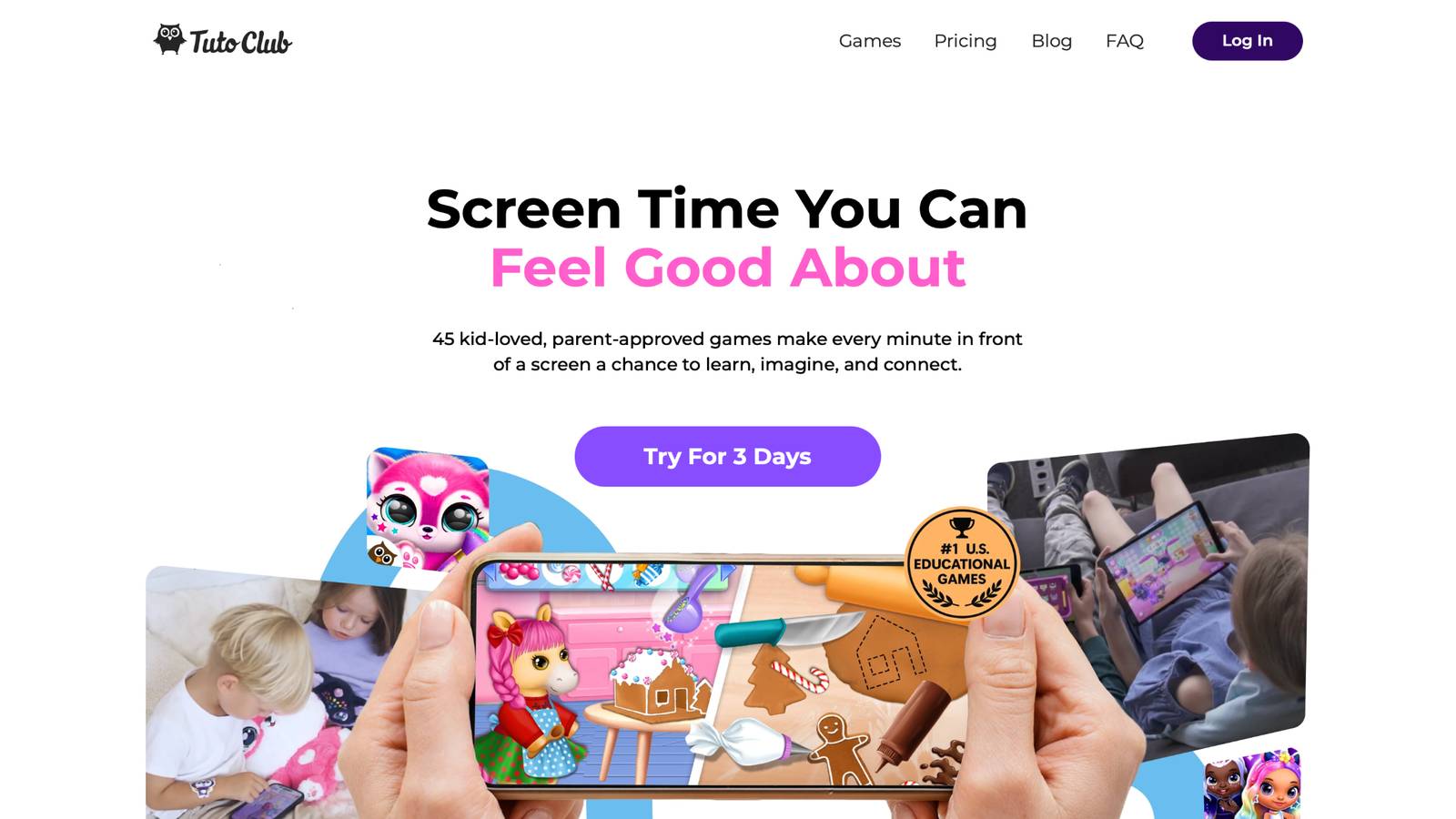
TutoClub brings together more than 45 ad-free games from the TutoTOONS collection that help young children grow through creative adventures and meaningful play. Families enjoy this safe platform where kids explore different subjects without any interruptions or distractions pulling them away. The games blend fun elements with natural development so curiosity and care grow alongside focus and empathy in a relaxed way. Children dive into art tasks and storytelling that spark imagination while puzzles sharpen problem solving and routines build helpful habits.
This collection supports preschoolers with activities that feel like everyday play yet guide skill building gently. Kids care for virtual pets or style outfits in scenarios that teach responsibility and compassion through hands-on choices. The wide variety of characters and worlds keeps sessions exciting and fresh so children stay engaged longer. Parents notice how the content fits busy family schedules and promotes positive screen time that supports overall growth without any added stress.
Key features
- Safe ad-free games centered on creativity and emotional development
- Interactive stories and puzzles that strengthen problem-solving and daily routines
- Diverse characters and scenarios to maintain high motivation
- Adaptive challenges that match each child's current abilities
- Offline play option for learning on the go
Facts and Information
TutoClub delivers steady positive experiences that many parents choose for daily learning. The games help children build essential abilities in a calm format that matches family life. Regular use often leads to noticeable improvements in focus and emotional awareness.
3. Khan Academy Kids
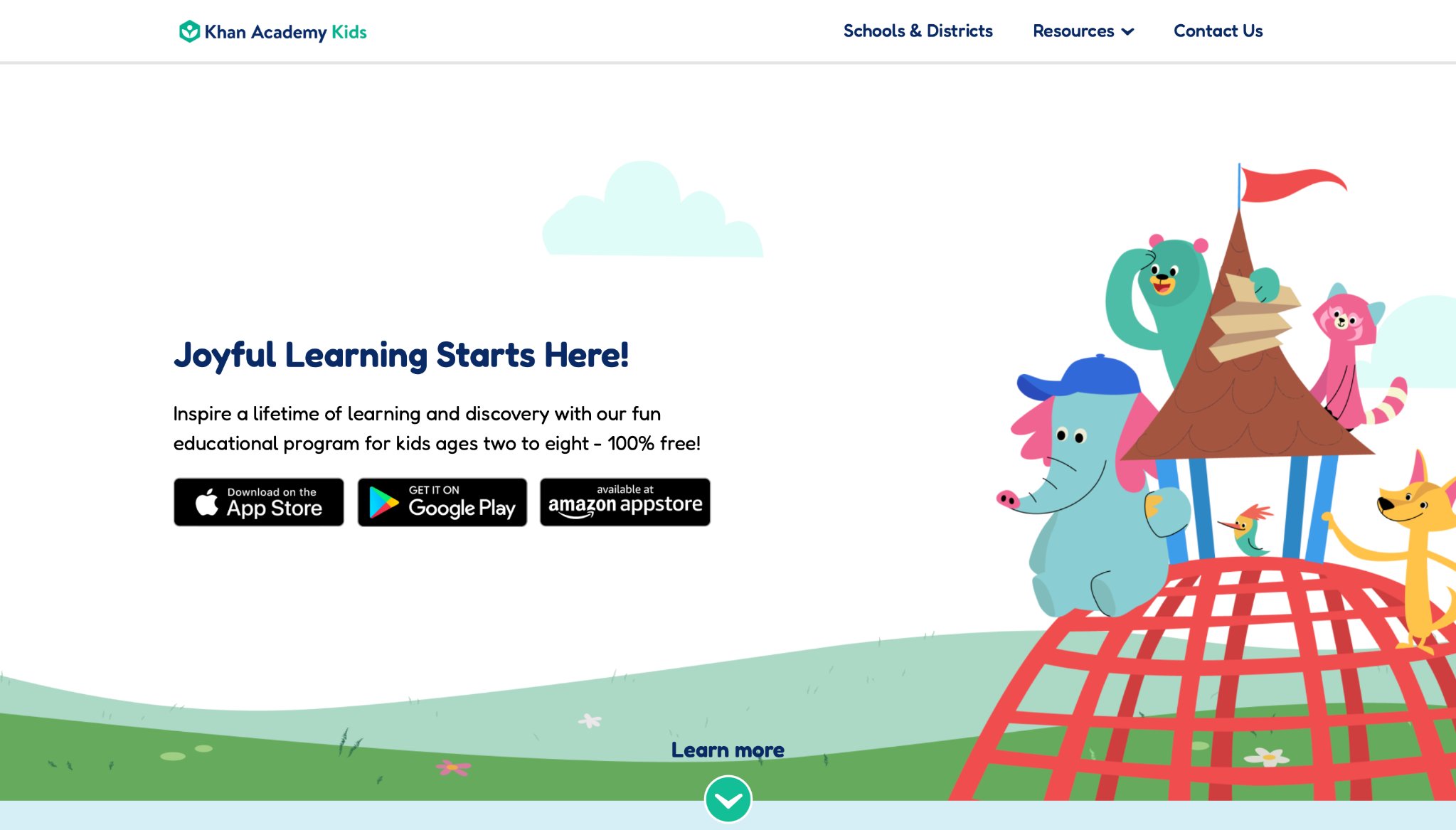
Khan Academy Kids offers a free collection of activities focused on literacy, math, logic, and social-emotional skills for children ages two to eight. Young learners meet friendly characters while exploring interactive books, games, videos, and creative tasks that adapt to each child’s pace. The content stays bright and supportive without pressure or forced rewards, helping build confidence in early reading and number sense. Offline access for core features allows play without constant internet, and a clear parent progress view shows strengths and interests. The design draws from education experts and aligns with early learning standards while remaining fully free and ad-free. Preschoolers often return to favorite stories and activities, reinforcing skills through enjoyable repetition. The variety of books and skill-building exercises creates a well-rounded introduction to foundational concepts that feels more like discovery than instruction.
Key features
- Thousands of free learning activities across reading, math, and logic
- Adaptive games and interactive storybooks
- Offline access for core content
- Parent progress tracking tools
- Completely ad-free with no in-app purchases
4. PBS Kids Games
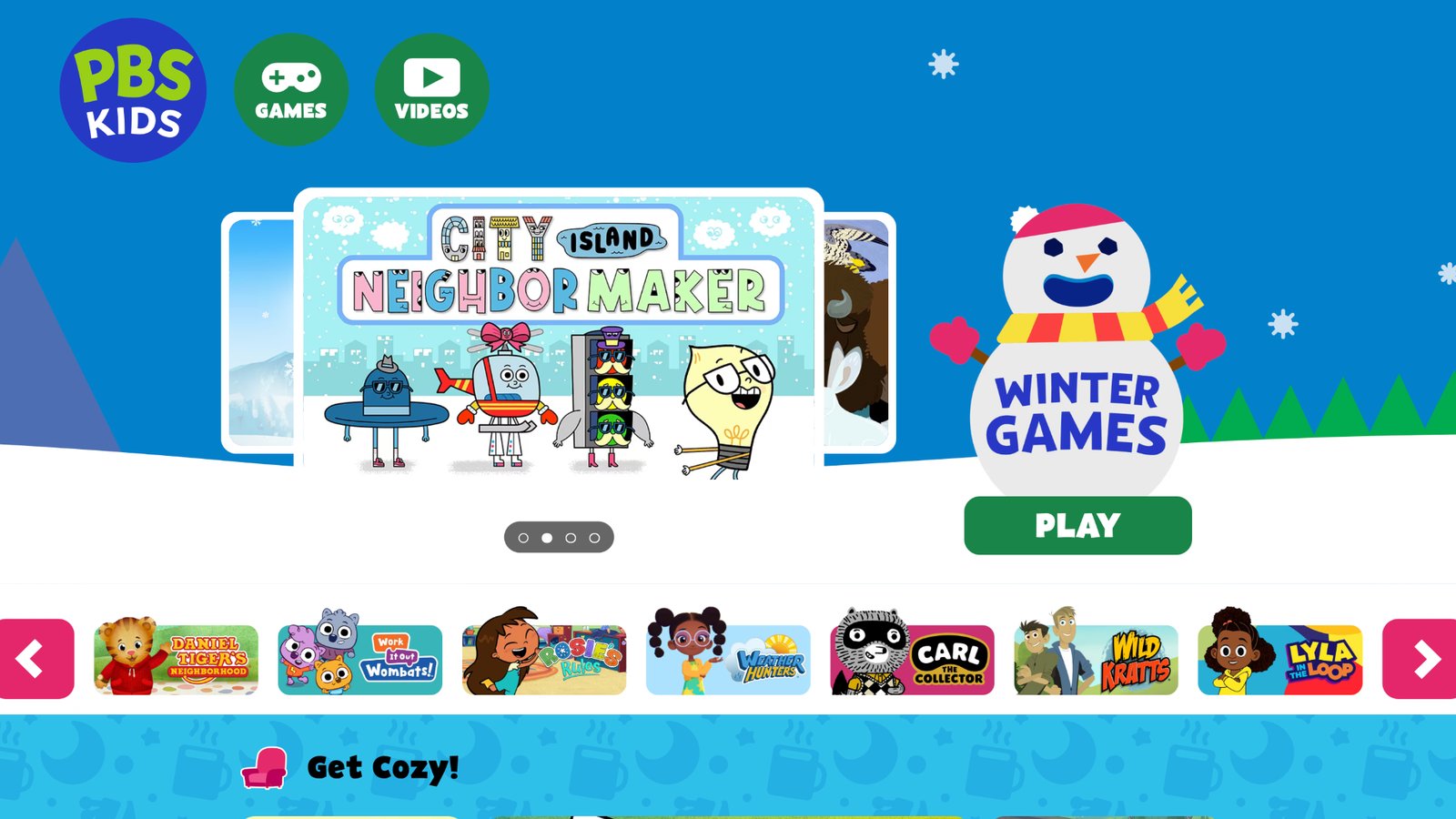
PBS Kids Games provides free activities connected to beloved characters from trusted children’s programming. Preschoolers practice early literacy, math, science, and social skills through short, focused games featuring familiar faces and stories. The content encourages exploration, matching, problem-solving, and simple storytelling in contexts children already enjoy. Sessions stay brief to match natural attention spans, and the ad-free environment supports confident independent play. Curriculum connections help reinforce concepts drawn from quality shows, creating a natural bridge between screen time and learning. The variety across subjects gives a balanced introduction without overwhelming young users. Parents value the safe space and the way familiar characters make skill practice feel comforting and engaging for ages two and up.
Key features
- Character-driven adventures tied to popular shows
- Coverage of literacy, math, science, and social skills
- Short, age-appropriate activities
- Free and ad-free design
- Curriculum-linked content for early learners
5. Toca Life World
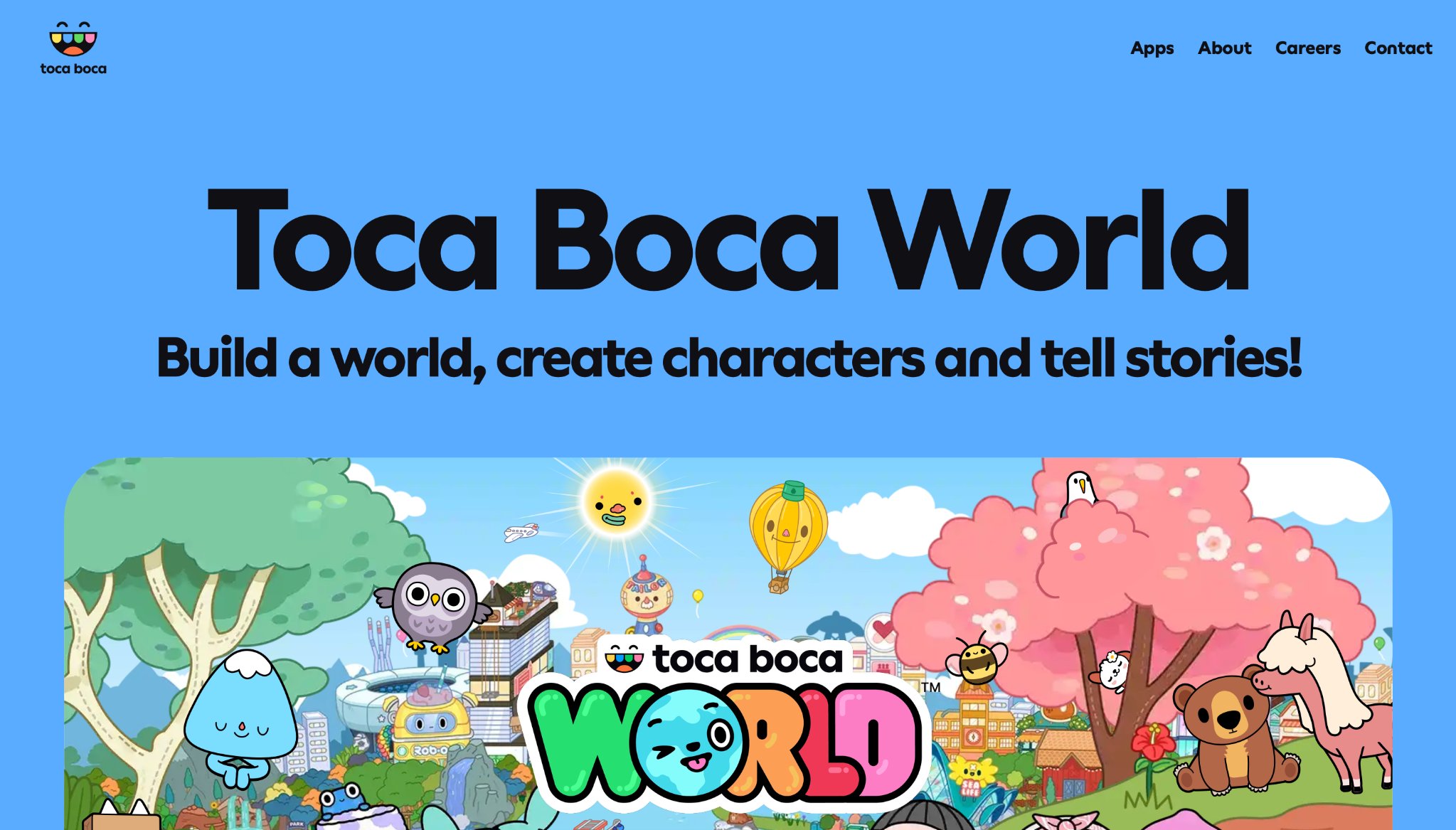
Toca Life World creates open-ended digital play spaces where children ages three and older invent stories, build scenes, and experiment with everyday situations. A large collection of characters and locations lets kids explore freely without scores, levels, or winning conditions. The calm pace encourages imagination, social role-play, and language practice through pretend scenarios. Multiple expansion packs add new worlds while the core experience remains focused on creative expression. Children can arrange rooms, create interactions, and follow their own ideas at their own speed. The design feels gentle and pressure-free, supporting curiosity and everyday vocabulary growth. Families often choose this style of play when they want screen time that prioritizes open exploration over structured challenges.
Key features
- Fully open-ended sandbox play with no scores or levels
- Large set of characters and expandable locations
- Storytelling and pretend-play tools
- Calm, pressure-free design
- Support for imagination and everyday language practice
6. ABCmouse
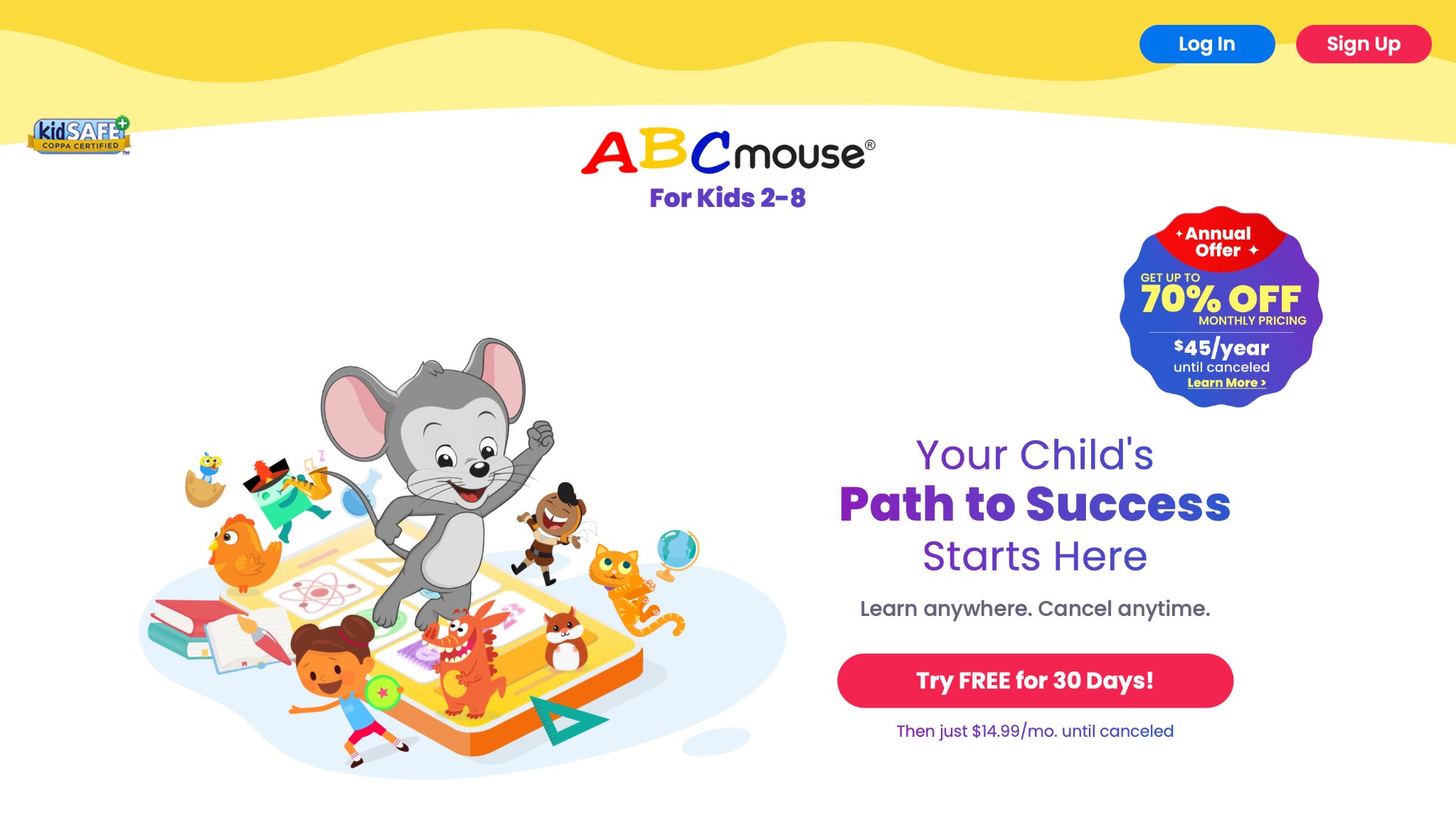
ABCmouse delivers a structured early learning path with activities spanning reading, math, science, art, and more for ages two to eight. Games, books, puzzles, and songs guide children through sequential lessons that grow with their abilities. The colorful interface and voiced instructions help young users navigate independently while rewards and clear paths maintain motivation. Preschoolers practice phonics, numbers, shapes, and early science concepts through interactive play that adapts to progress. The broad subject coverage creates a balanced foundation in one place, and the step-by-step design supports steady skill building. Families often notice improvements in letter recognition, counting, and creative expression as children spend time with the varied activities. The platform continues to add content that keeps engagement high for young learners starting their formal learning experiences.
Key features
- Step-by-step learning path across multiple subjects
- Interactive games, books, puzzles, and songs
- Voiced guidance for independent use
- Progress tracking and motivational rewards
- Broad curriculum covering reading, math, science, and art
7. Endless Alphabet
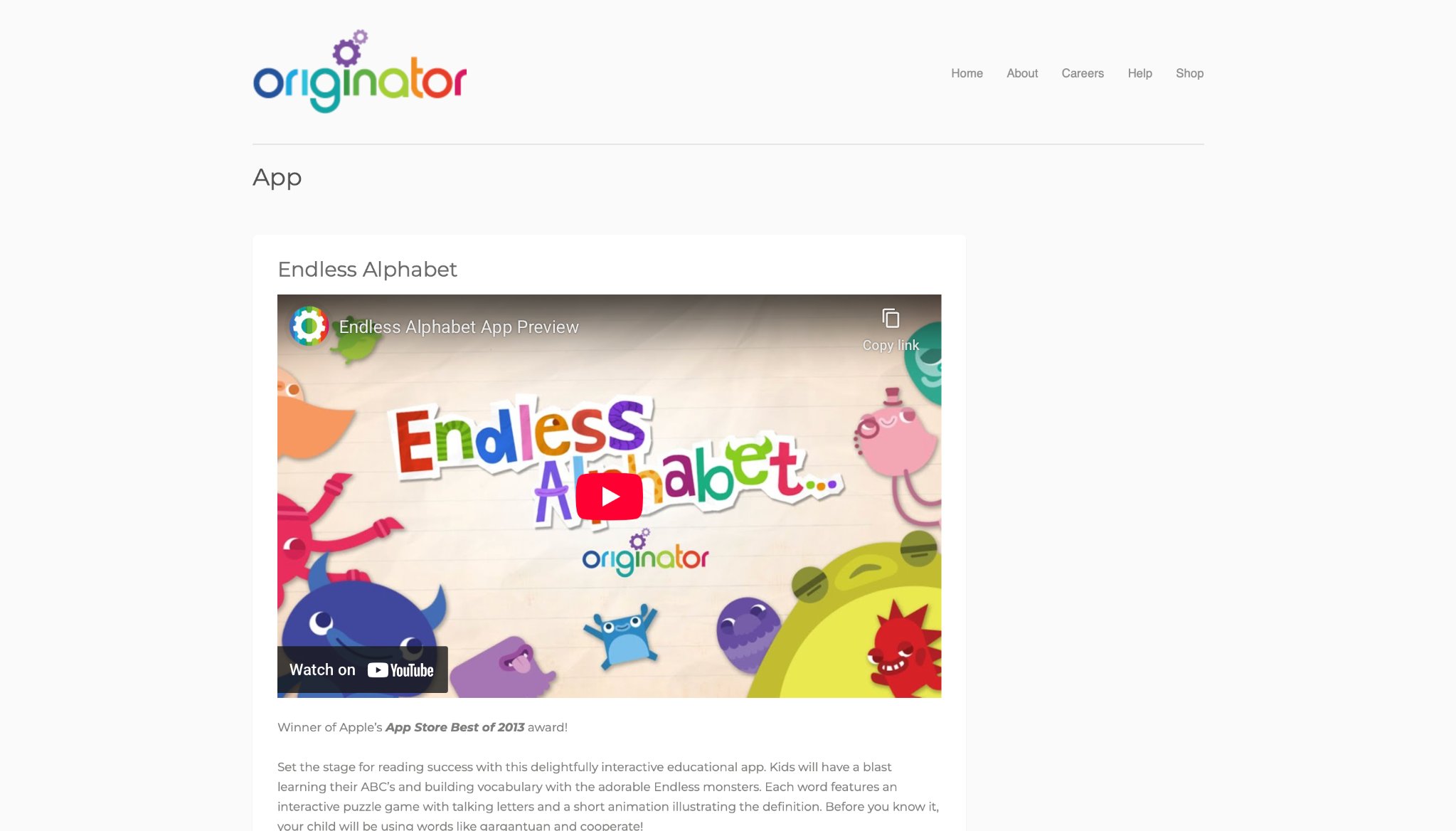
Endless Alphabet teaches vocabulary and letter recognition through interactive puzzles and playful monster animations that appeal to preschoolers. Children drag letters into place while hearing clear phonetic sounds, and each completed word triggers a short animation that shows its meaning. The design stays simple and engaging without extra distractions, making it easy for young users to focus. A companion numbers app follows the same friendly style for families who want related math practice. The focused activities support repeated play as children return to favorite words and animations. The combination of humor, clear audio, and hands-on interaction helps letter shapes and meanings stick in a memorable way. Parents often select this tool for its clear vocabulary building that feels more like entertainment than drills.
Key features
- Interactive letter and word puzzles with phonetic sounds
- Fun monster animations that explain word meanings
- Simple, focused design without distractions
- Companion numbers option available
- Support for repeated, enjoyable vocabulary practice
8. Starfall
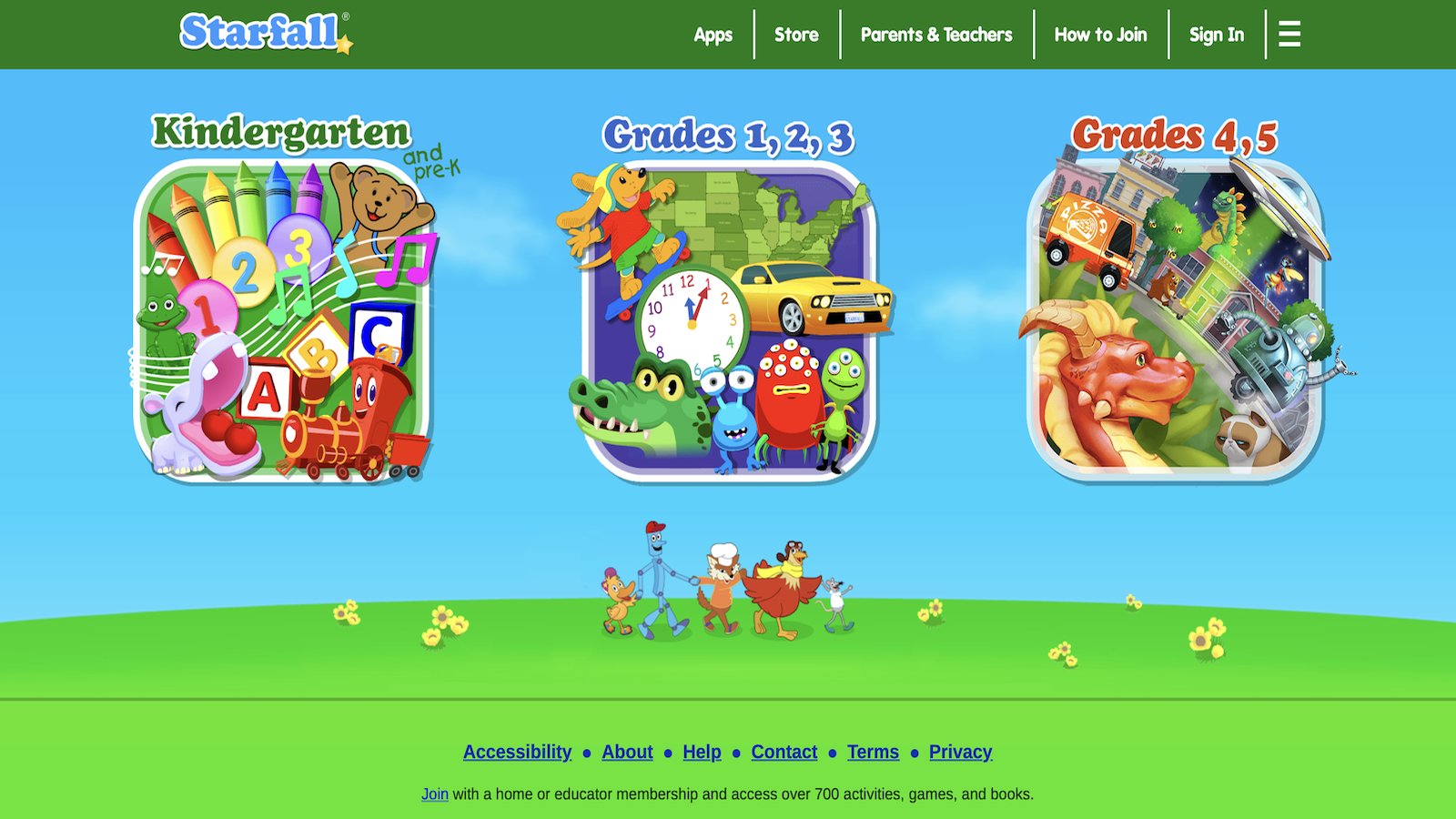
Starfall specializes in reading and early math through multisensory games, stories, songs, and books designed for preschool and kindergarten learners. Activities remain untimed so children explore at their own speed with clear audio and visual cues that support different learning styles. The emphasis stays on core phonics, letter recognition, and basic numbers, creating a solid foundation through comfortable repetition. Additional movies and music keep sessions varied while the overall experience stays calm and teacher-tested. Many children return to favorite sections, building mastery without pressure. The straightforward design reduces frustration and promotes independence as young users practice essential skills. Families and early-learning settings often rely on Starfall for its long-standing focus on foundational literacy and number concepts in a low-pressure format.
Key features
- Multisensory phonics and math activities
- Untimed, self-paced exploration
- Stories, songs, books, movies, and music
- Clear audio and visual guidance
- Focus on core letter, sound, and number skills
9. Homer
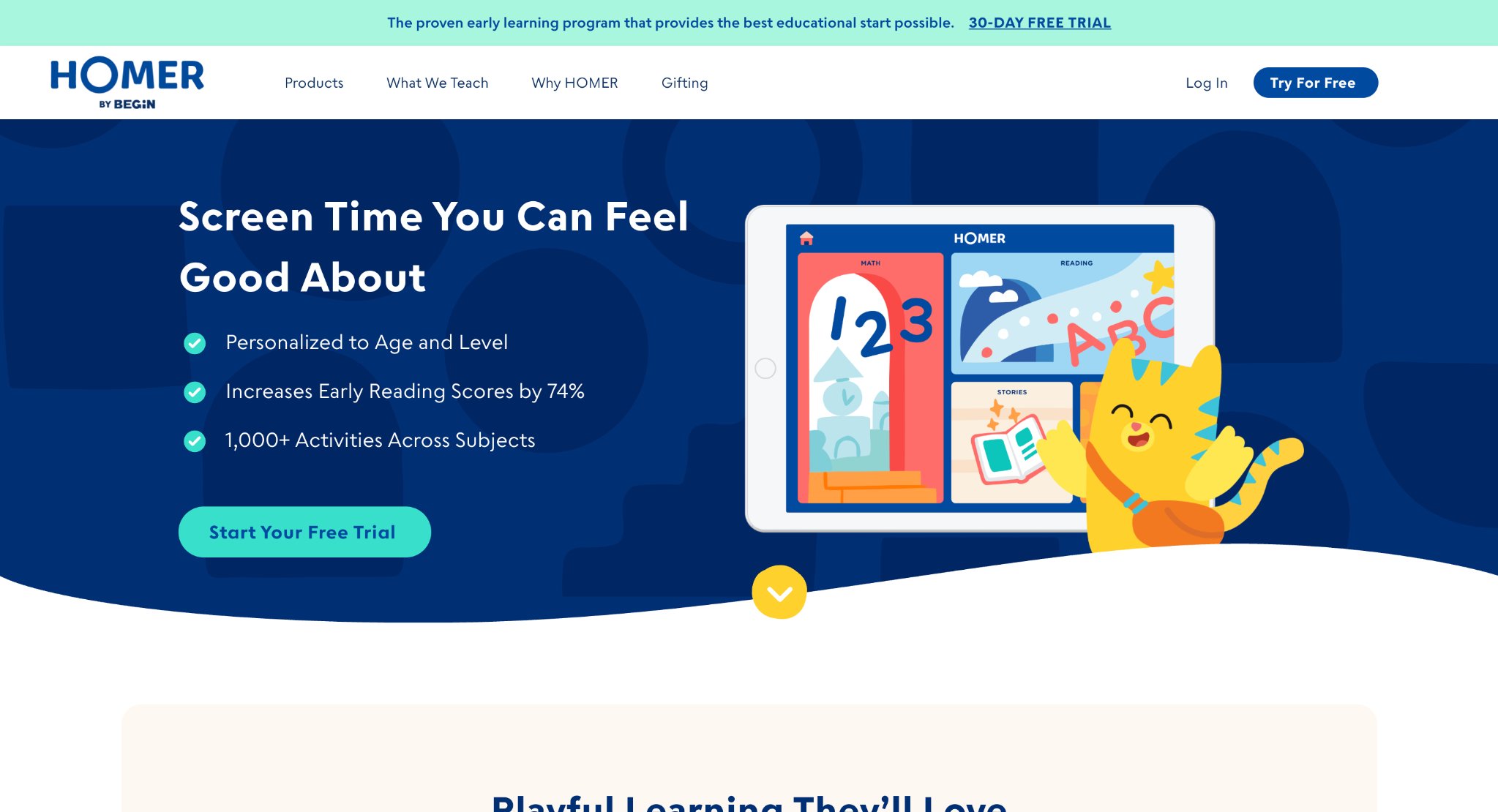
Homer personalizes early reading and related skills through interest-based activities tailored for ages two to eight. Children follow stories and games shaped around their preferences, which helps maintain motivation during practice. The platform includes strong phonics support, vocabulary building, and some math elements alongside social-emotional content. Progress tools give parents insight into growth without creating pressure. The design aims to keep sessions engaging by connecting learning to each child’s own interests rather than a one-size-fits-all path. Adaptive features adjust support as needed while celebrating small successes. Many families choose this option when they want reading practice that feels tailored and encourages consistent, positive experiences with early literacy skills.
Key features
- Interest-based personalization of activities
- Strong phonics and early reading focus
- Stories and interactive games matched to preferences
- Parent progress tracking
- Adaptive support that celebrates small successes
10. Duolingo ABC
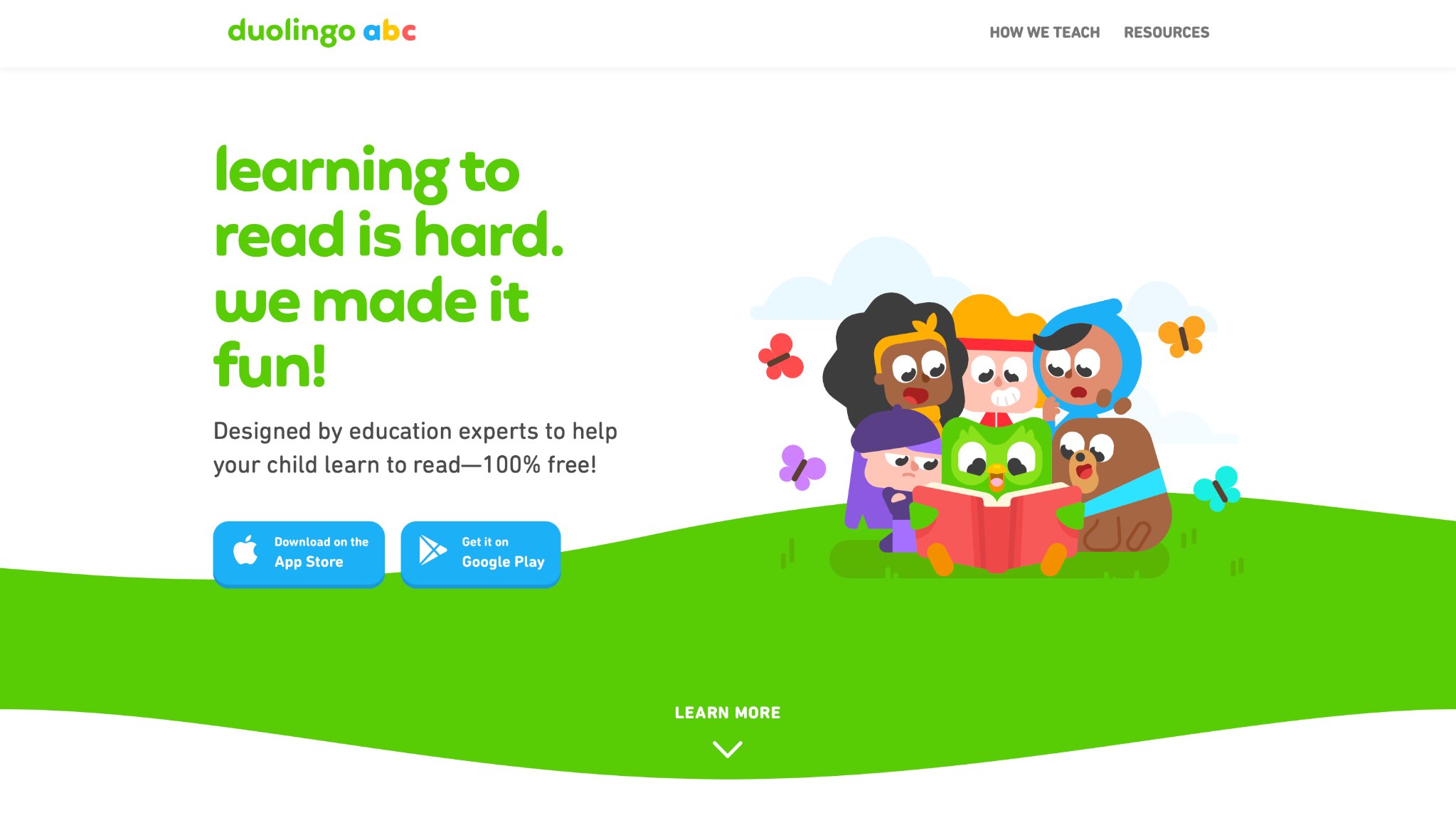
Duolingo ABC builds early reading skills through interactive stories and short, bite-sized lessons suited to preschool and early elementary ages. Children practice letter sounds, sight words, and handwriting while following playful narratives with encouraging characters. The app adapts support based on responses and celebrates progress in a light, rewarding way. Clear visuals and simple structures keep sessions manageable for young attention spans. The focus remains on literacy foundations that prepare children for independent reading. Story-driven activities help sounds and words feel meaningful rather than isolated. Parents often notice growing confidence in recognizing letters and sounds that carries into everyday reading moments.
Key features
- Phonics and sight-word practice through stories
- Short, bite-sized lessons with adaptive support
- Handwriting and letter-sound activities
- Encouraging characters and light rewards
- Ad-free experience focused on early literacy
11. Montessori Preschool
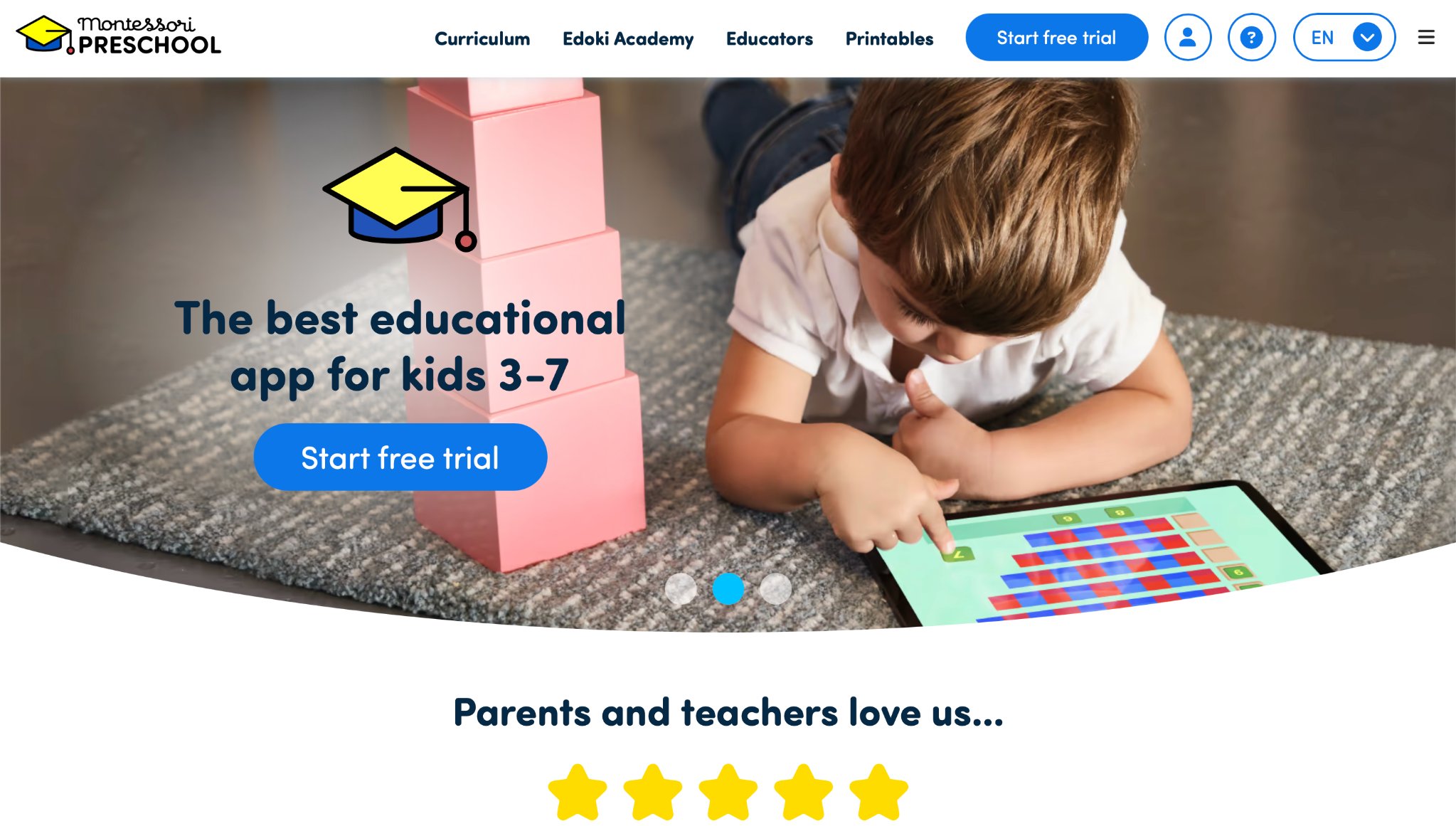
Montessori Preschool brings self-directed activities in math, reading, colors, shapes, and practical life skills that echo Montessori principles. Children move freely through carefully designed digital materials that encourage independent exploration and concentration. The calm pace supports focus without external pressure or rewards that distract from the activity itself. A free version offers a solid introduction while expanded content unlocks more materials. Sorting, matching, and sequential tasks help build comparison skills and number sense in a natural way. The design prioritizes child-led discovery over structured drills, making it appealing for families who value this educational philosophy. Preschoolers practice everyday concepts through hands-on digital interactions that feel purposeful and unhurried.
Key features
- Self-directed Montessori-style activities
- Coverage of math, reading, colors, shapes, and practical life skills
- Calm pacing that supports independent exploration
- Free version with option to unlock more content
- Focus on concentration and child-led discovery
12. Reading Eggs
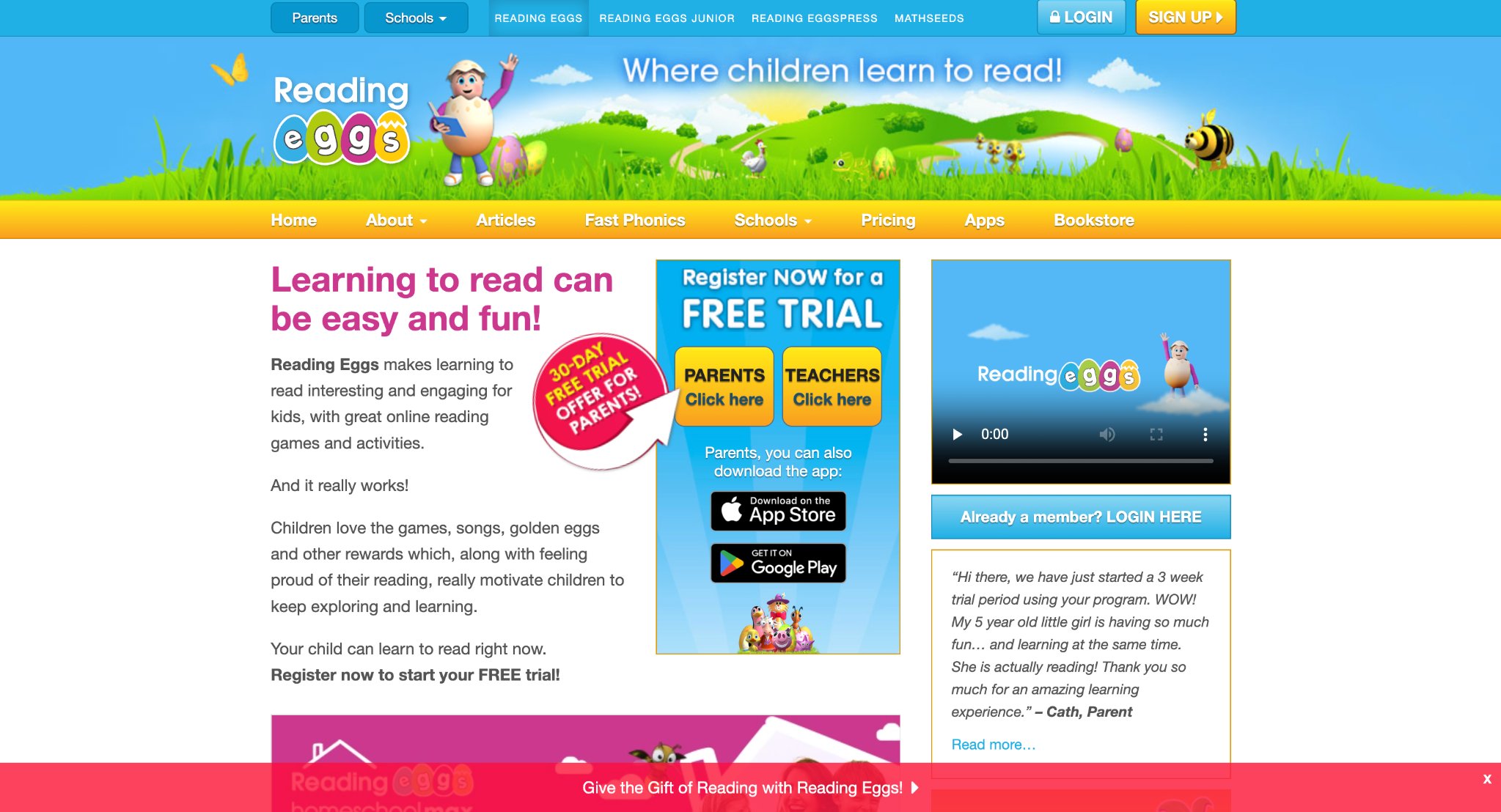
Reading Eggs turns early literacy into an adventure with animated stories, games, and challenges that captivate preschoolers. Children practice letter sounds, word families, and basic comprehension through interactive lessons that adapt to their responses. Colorful graphics and encouraging characters create a friendly atmosphere that makes learning feel like play. Short, focused activities fit easily into daily routines while building essential reading foundations. The program pairs phonics with sight words so skills develop in context. Motivational elements celebrate small achievements and encourage continued exploration. Families often see steady gains in confidence and readiness as children progress through the structured yet engaging path designed for young learners.
Key features
- Animated stories and interactive phonics games
- Adaptive lessons focused on letter sounds and word families
- Colorful graphics with encouraging characters
- Short activities that fit daily routines
- Combination of phonics, sight words, and basic comprehension
13. Hooked on Phonics
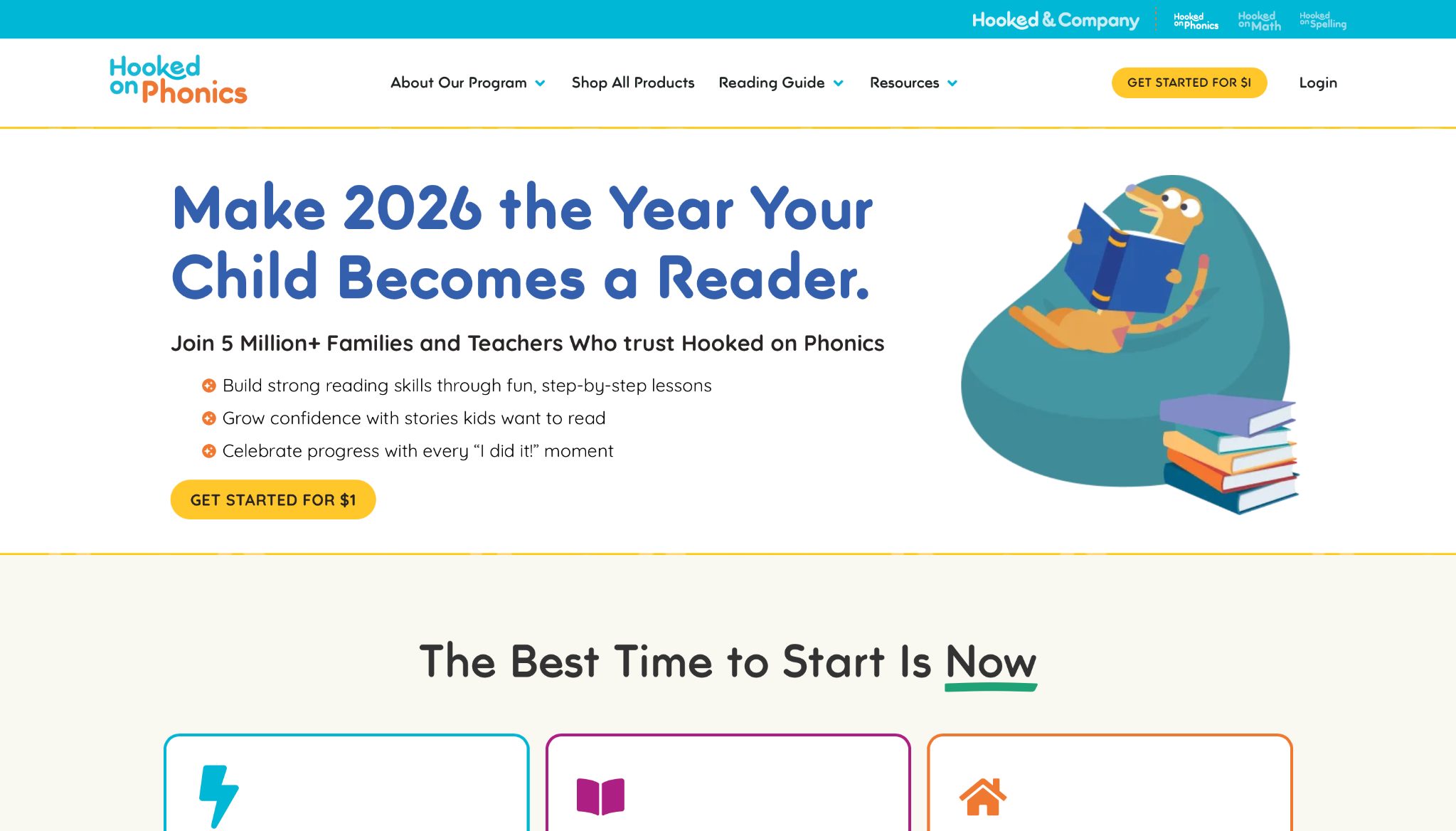
Hooked on Phonics guides preschoolers from basic letter sounds to simple word building through lively songs, videos, and interactive practice. The program mixes multisensory elements that keep sessions short and rewarding for ages three to eight. Children follow clear paths matched to their pace, gaining steady confidence with each success. Catchy songs help sounds stick while games reinforce blending and recognition in ways that feel playful. The structured yet gentle format supports different learning styles and prevents overwhelm. Parents appreciate the consistent progress that builds a strong foundation for reading without pressure. The combination of digital activities and complementary resources extends learning beyond the screen.
Key features
- Multisensory lessons with songs, videos, and games
- Systematic progression from letter sounds to simple words
- Clear paths matched to each child’s pace
- Catchy songs and interactive blending practice
- Support for different learning styles in a gentle format
14. Moose Math
.jpg)
Moose Math introduces early math concepts such as counting, addition, subtraction, sorting, and geometry through adventure-style gameplay designed for ages three to seven. Children explore a lively town while completing varied activities that reinforce number sense in a playful way. The design keeps attention high with different challenges that feel like exploration rather than drills. Visual and interactive elements help young learners grasp foundational ideas through hands-on practice. The free and ad-free approach makes it accessible for families seeking quality math support. Preschoolers build confidence as they progress through the engaging town-building style of play that connects numbers to everyday scenarios.
Key features
- Adventure-style gameplay covering counting, addition, and sorting
- Varied activities that reinforce number sense
- Visual and interactive elements for young learners
- Free and ad-free design
- Focus on foundational math through playful exploration
15. Teach Your Monster to Read
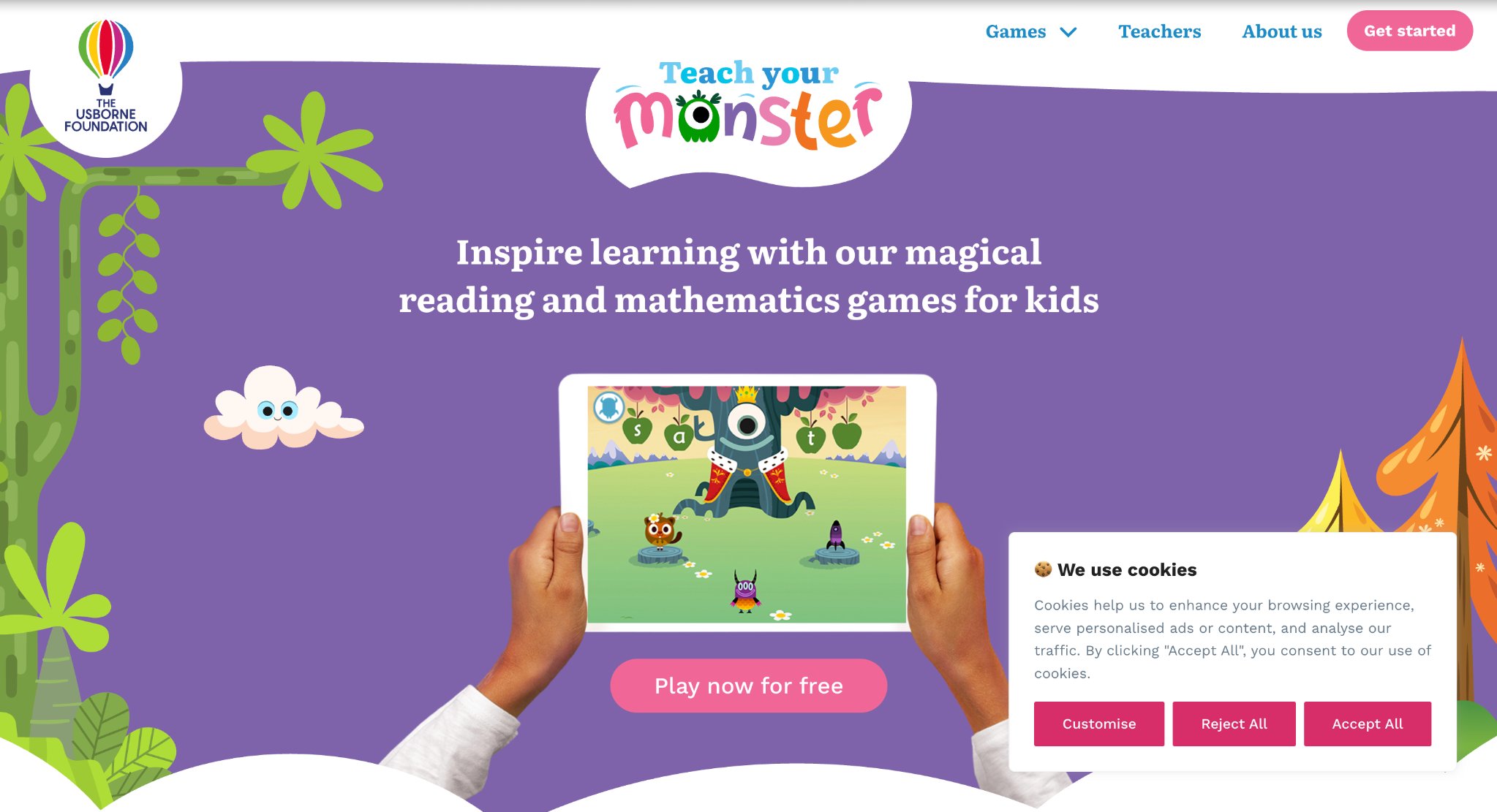
Teach Your Monster to Read helps preschoolers and early readers build phonics skills through a friendly monster character and progressive game levels. Children practice letter sounds, blending, and simple words while caring for and customizing their monster. The design keeps motivation high with rewards and a sense of progression that feels like an adventure. Clear audio and visual cues support independent play as kids move from basic recognition to more advanced blending. Short sessions fit well with preschool attention spans while delivering focused literacy practice. The approach turns phonics into an engaging story that encourages repeated play and growing confidence with reading foundations.
Key features
- Progressive phonics levels with a customizable monster character
- Practice in letter sounds, blending, and simple words
- Clear audio and visual cues for independent play
- Motivational rewards and adventure-style progression
- Short sessions suited to preschool attention spans
How Educational Games Support Everyday Development
Quality games help children practice focus during short, enjoyable sessions. Sorting and matching tasks strengthen comparison skills that later support math and reading. Story-based activities grow vocabulary and listening through early literacy games. Life-skill games, such as routines or simple job explorations, connect screen play to real daily habits and support life skills games for kids. When games stay ad-free and calm, children can finish activities without sudden interruptions. Parents often see greater willingness to try new tasks after positive digital experiences. Combining short screen sessions with offline play and conversation multiplies the benefits. Activities focused on logic puzzles for kids, brain games for preschoolers, and problem-solving games for toddlers further sharpen attention and thinking skills that transfer into everyday situations.
Choosing the Right Fit for Your Child
Match the game to your child’s current interests and energy level. Some children thrive with open-ended creative play. Others prefer clear goals and gentle structure. Check that content stays age-appropriate and free from pressure. Look for parent tools that show progress without creating stress. Start with short sessions and join in when possible. The best educational games for preschoolers feel like play first and learning second. Over time, consistent positive experiences build both skills and a happy attitude toward discovery. Complementary options such as reading readiness activities and learn to read games help extend the benefits into broader early literacy growth.
FAQ
What makes an educational game good for preschoolers?
A strong educational game for preschoolers matches the child’s age with clear visuals, simple audio instructions, and short activities that fit natural attention spans. It supports early skills such as language and phonics, number sense, focus, sorting, and everyday routines while keeping the experience playful and free from pressure. Games designed with input from child development experts often balance active problem-solving with calmer story-based play. An ad-free setting helps children stay focused, and features like progress insights let parents notice growth without adding stress. The best options feel like joyful discovery rather than formal lessons, helping kids build confidence.
How much time should preschoolers spend on educational games?
Short, focused sessions work best for preschoolers because their attention naturally comes in brief windows. Many families find that combining a few minutes of digital play with real-world conversation, books, or hands-on activities creates a healthy balance. Quality learning online games encourage active participation instead of passive watching, so even limited time can support skill practice. Ending sessions while the child is still engaged helps keep the experience positive. Pairing screen moments with offline extensions, such as free printables or simple real-life routines, multiplies the benefits of pattern games and memory games.
Are free educational games as effective as paid ones?
Effectiveness depends more on thoughtful design than on cost. Strong free options deliver clear learning value when they remain ad-free, age-appropriate, and focused on meaningful interaction. Some platforms add structured paths, progress tracking, or expanded content that grows with the child. The key is matching the game to the child’s interests and developmental stage while prioritizing safety and calm pacing. Parents often start with free tools and later explore more complete experiences that cover language, math, logic, and life skills in one place through educational games for kids online and math games for preschoolers.
Can educational games help with school readiness?
Yes, well-designed educational games build foundations that support later classroom learning. Practice with letter sounds, counting, sorting, pattern recognition, and simple problem-solving helps children approach new tasks with greater confidence. Games that include everyday routines and real-world themes also strengthen focus, vocabulary, and independence. When activities feel like play, children are more willing to try and persist. Combining digital practice with everyday conversations and offline activities creates a natural bridge to school expectations through reading readiness activities, phonics games, and alphabet games.
What should parents look for when choosing educational games for preschoolers?
Parents benefit from looking for age-appropriate content that stays gentle and clear for children ages three to seven. Ad-free environments protect focus, while psychologist-informed design supports emotional safety alongside skill growth. Coverage across language, math, logic, sorting, creativity, and life skills offers balanced development. Progress tools and offline extensions such as printables help connect screen time to real life. Matching the game’s style to the child’s energy and interests makes the experience more enjoyable and effective over time. Helpful starting points include brain games, logic puzzles skills for children, life skills games, and shape games.
Read Also
- Best Pattern Games for Preschoolers 2026
- Best Preschool Math Games 2026
- Best Memory Games for Preschoolers 2026
- Best Alphabet Games for Preschoolers Online 2026
- Best Phonics Games for Preschoolers 2026
Give your child screen time that builds real skills with Fluvsies Academy.