

Best Online Learning Games for 3 Year Olds 2026






Parents want screen time that actually helps toddlers grow. The best online learning games for 3 year olds 2026 focus on playful activities that build language, early math, logic, and everyday skills. Fluvsies Academy leads with psychologist-designed games that make learning feel natural and fun for ages 3 and up.
Young children benefit from age-appropriate play such as the best fun games for 4 year olds online that spark curiosity. Options expand with the best online games for 5 year olds, the best online games for 6 year olds, and the best games for 7 year olds online that continue building language, early math, logic, and everyday skills through engaging activities.
Why Quality Learning Games Matter for 3 Year Olds

Young toddlers learn best through play that feels active and connected to real life. Good learning apps support early language, number sense, focus, and creativity without overwhelming little minds. They use calm visuals, clear steps, and positive feedback so 3 year olds stay engaged and confident.
Many families notice kids asking more questions or trying new words after short sessions. The strongest options stay ad-free and age-appropriate. They also give parents simple ways to see progress. When an app matches how preschool brains develop, screen time becomes a helpful part of daily routines instead of just entertainment.
Psychologist-designed learning apps stand out because experts guide the activities to balance challenge and fun. This approach helps skills transfer to everyday moments like sorting toys or talking about jobs. Families often turn to educational games for kids online and learning games for preschoolers online that focus on real developmental needs.
Key Features to Look for in Online Learning Games for 3 Year Olds
Look for online learning games built with child development experts. Ad-free design keeps the experience safe and calm. Short, guided games work better than long passive videos. Content that covers language, math, logic, sorting, and life skills gives a well-rounded boost.
Progress insights help parents see growth without pressure. Age-appropriate visuals and clear instructions matter a lot for 3 year olds. Games that mix active problem-solving with gentle stories keep toddlers interested. Real-world themes like professions or daily habits make learning stick.
The best choices also support emotional safety and curiosity. Free printables or offline extensions can extend the fun beyond the device. These elements turn short play sessions into lasting skill building. Many parents value phonics games for preschoolers, math learning apps for kids, and logic puzzles for kids that include these thoughtful design details.
Best Online Learning Games for 3 Year Olds 2026
1. Fluvsies Academy - Best Online Learning Games for 3 Year Olds 2026
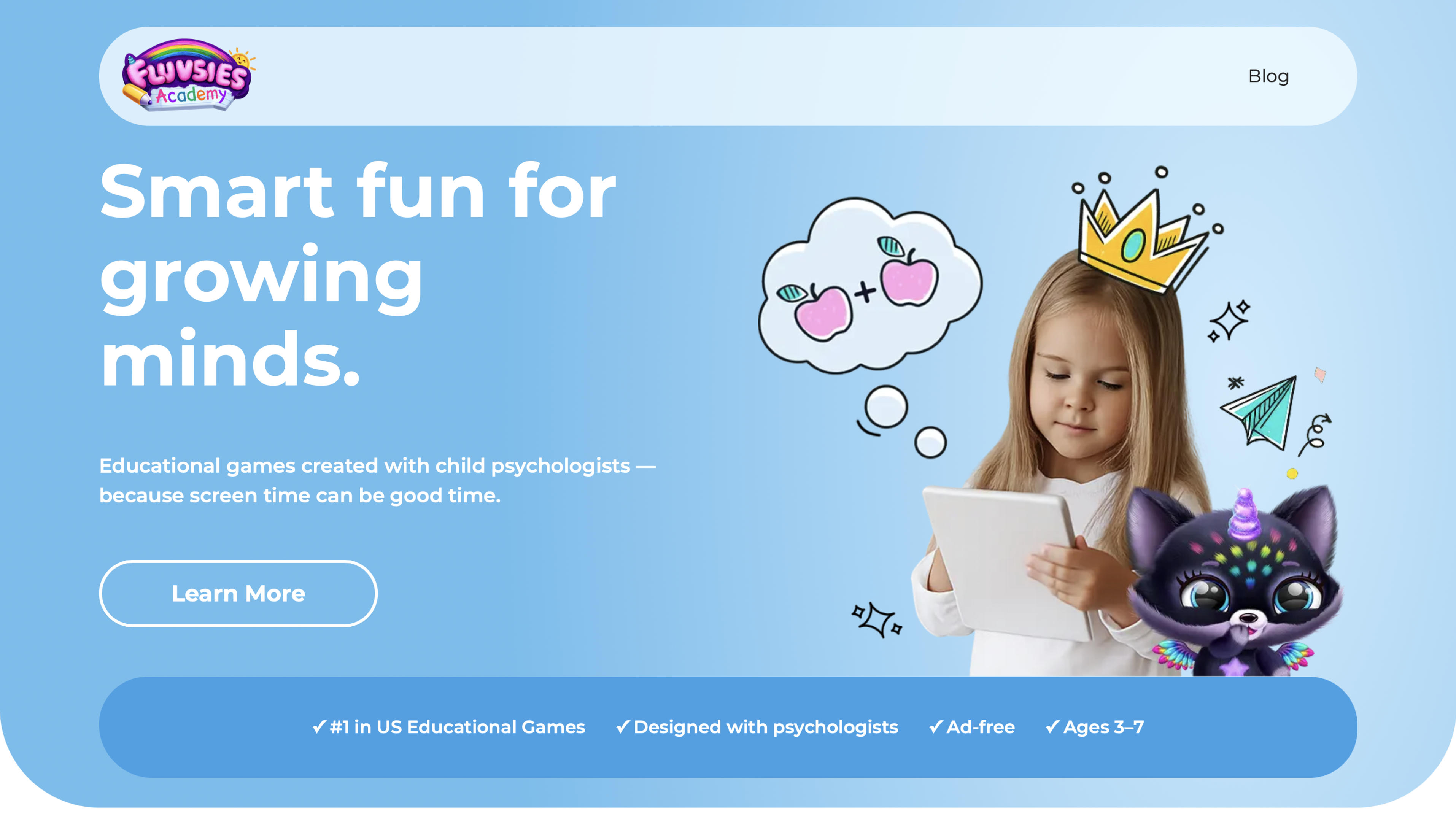
Fluvsies Academy brings a lively set of educational games made especially for children ages three to seven. Every activity grows from close work with child psychologists so the play feels natural, safe, and full of discovery. Kids move through language and phonics exercises that build early reading confidence, number games that make counting exciting, and logic puzzles that sharpen attention and sorting skills. Life skills sections turn everyday moments into adventures such as a fun teeth-brushing challenge or creative tasks that spark imagination. Professions games introduce real-world jobs like baker or astronaut and quietly expand vocabulary.
Mindfulness moments and kids yoga help little ones learn calm breathing and gentle movement while healthy habit activities reinforce positive routines. The entire experience stays ad-free so children stay immersed without distractions. Parents receive simple progress reports that highlight favorite activities and growing strengths. Free printables add hands-on fun that connects digital play with real-world practice. The platform works smoothly across devices and keeps content age-appropriate with a strong focus on empathy, emotional safety, and joyful independent play. Fluvsies Academy turns every minute of screen time into purposeful growth that preschoolers love and parents trust.
Discover Fluvsies Academy
Fluvsies Academy is a leading educational app designed for children aged 3–7. It transforms screen time into meaningful learning through fun, interactive games. Developed in collaboration with child psychologists, the app focuses on holistic development.
Key Features
- Ad-free environment for safe play.
- Games covering language, phonics, math, and logic.
- Activities for attention, sorting, and creativity.
- Real-world life skills like healthy habits and mindfulness.
- Exploration of professions to build vocabulary and imagination.
Educational Approach
Fluvsies Academy emphasizes guided play that balances focus, empathy, and emotional safety. It's the first holistic learning app for kids, ranked #1 educational game in the US. Progress reports help track your child's growth. Free printables extend learning beyond the screen.
Benefits for Families
Parents gain peace of mind with expert-backed games.
Kids build confidence, skills, and a love for learning. Ideal for preschoolers seeking joyful education.
Give your child the best start with fun online games. Download Fluvsies Academy today!
2. TutoClub
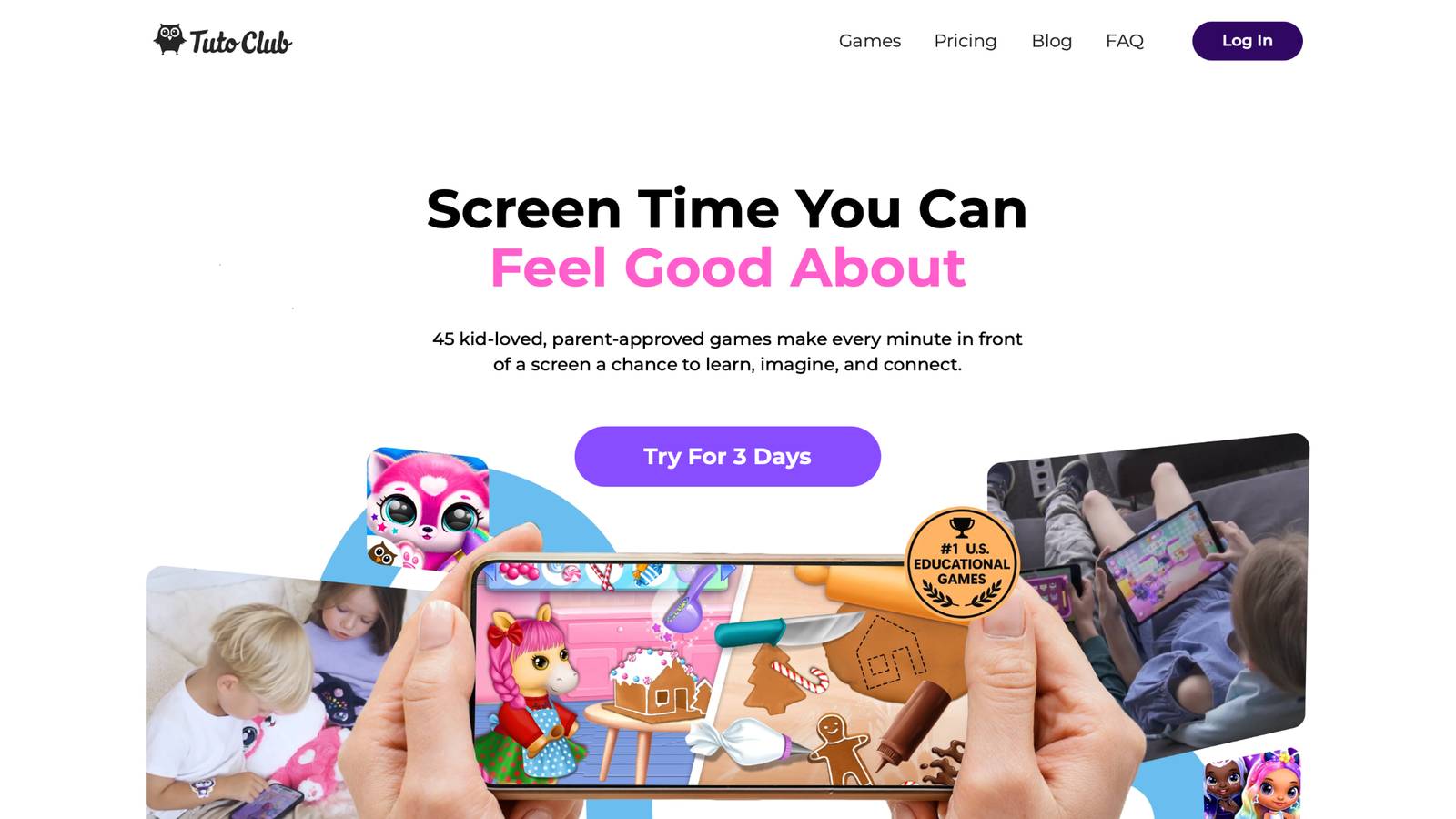
TutoClub brings together more than 45 ad-free games from the TutoTOONS collection that help young children grow through creative adventures and meaningful play. Families enjoy this safe platform where kids explore different subjects without any interruptions or distractions pulling them away. The games blend fun elements with natural development so curiosity and care grow alongside focus and empathy in a relaxed way. Children dive into art tasks and storytelling that spark imagination while puzzles sharpen problem solving and routines build helpful habits.
This collection supports preschoolers with activities that feel like everyday play yet guide skill building gently. Kids care for virtual pets or style outfits in scenarios that teach responsibility and compassion through hands-on choices. The wide variety of characters and worlds keeps sessions exciting and fresh so children stay engaged longer. Parents notice how the content fits busy family schedules and promotes positive screen time that supports overall growth without any added stress.
Key features
- Safe ad-free games centered on creativity and emotional development
- Interactive stories and puzzles that strengthen problem-solving and daily routines
- Diverse characters and scenarios to maintain high motivation
- Adaptive challenges that match each child's current abilities
- Offline play option for learning on the go
Facts and Information
TutoClub delivers steady positive experiences that many parents choose for daily learning. The games help children build essential abilities in a calm format that matches family life. Regular use often leads to noticeable improvements in focus and emotional awareness.
3. Khan Academy Kids
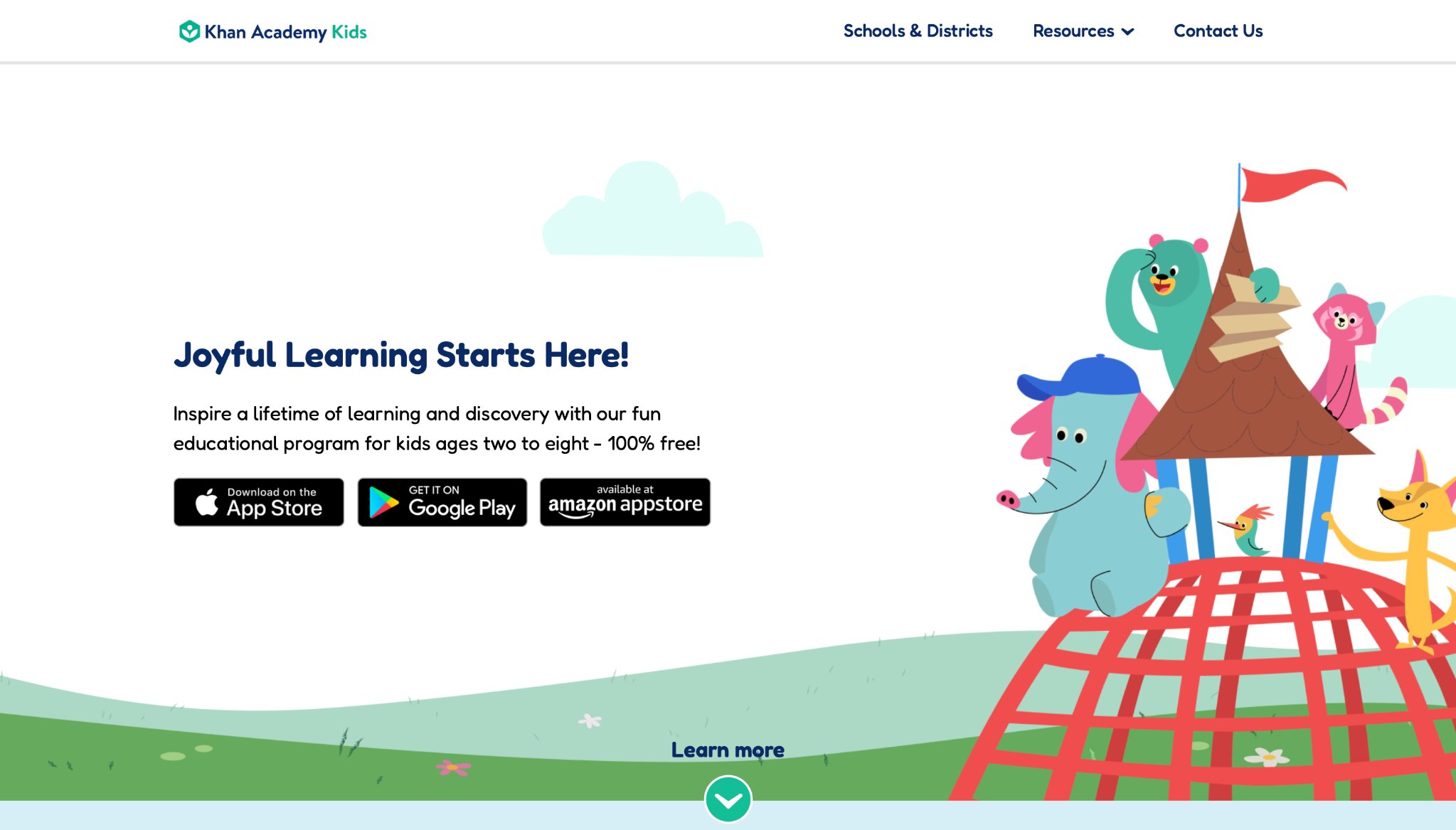
Khan Academy Kids offers a completely free early learning platform that covers reading, phonics, math, social-emotional learning, and creative expression for children ages 2 to 8. Friendly animal characters gently guide kids through thousands of interactive stories, books, games, videos, and activities that adapt to each child’s individual pace and level. As a nonprofit project, the app remains fully ad-free with no in-app purchases or hidden costs of any kind. Core content can be used offline once downloaded, and dedicated progress views are available for both parents at home and teachers in classroom settings. Strengths include the impressive breadth of subjects, research-informed design created with early-learning specialists, and genuine free access that removes barriers for any family. Some parents observe that the overall visual style feels calmer and less flashy than highly colorful commercial game apps, yet the thoughtful depth of activities, adaptive paths, and supportive guidance make it especially effective for building solid foundational skills whether used independently or with adult involvement.
- Key features: Adaptive learning paths, large library of interactive books and stories, math and literacy games, social-emotional content, offline capability, separate parent and teacher progress tools
- Facts and Information: Developed with early-learning experts, brings multiple core subjects together in one cohesive experience, suitable from preschool through early elementary, works well for both independent exploration and guided learning sessions
4. ABCmouse
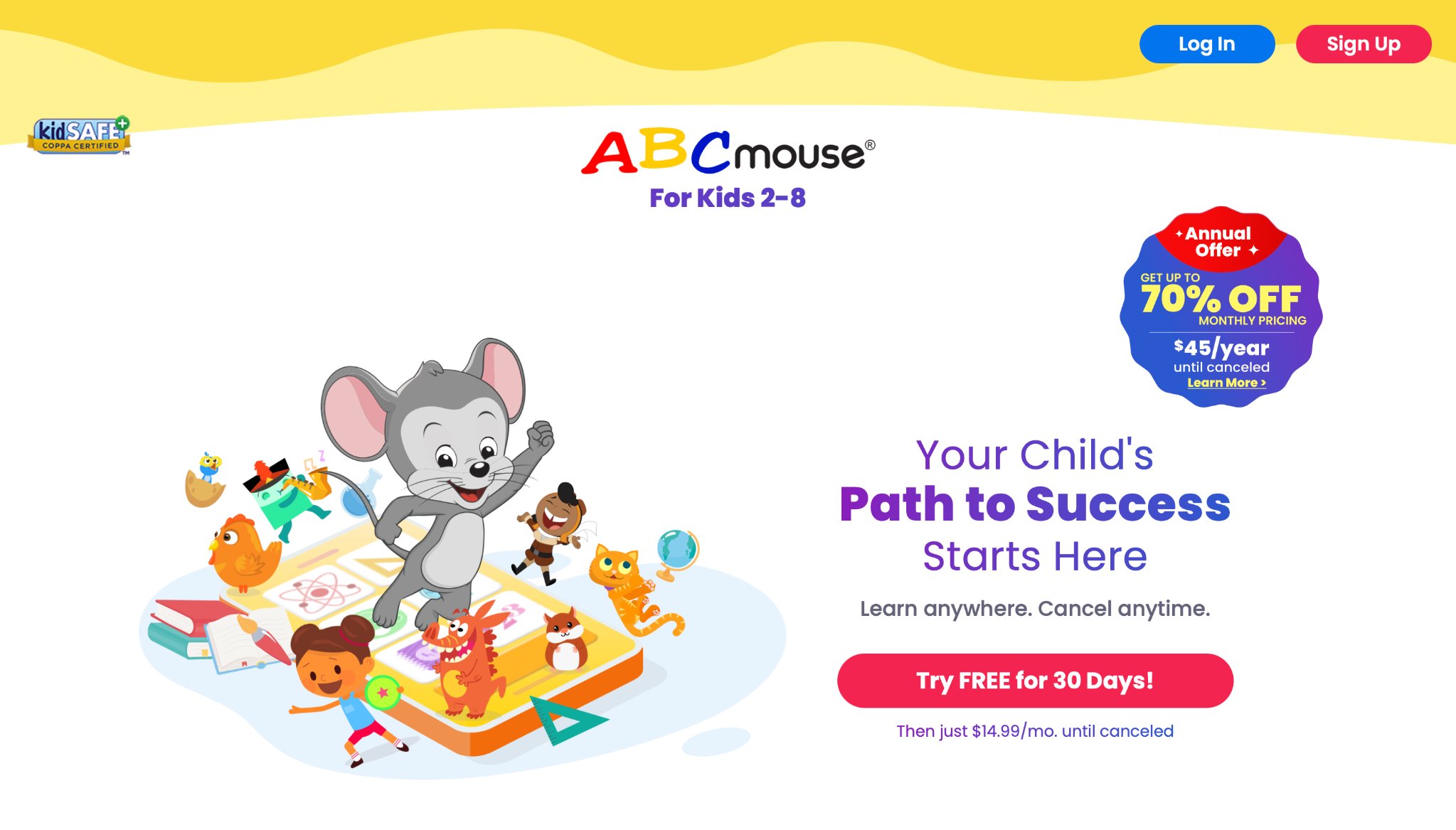
ABCmouse presents a structured, step-by-step early learning curriculum filled with thousands of activities spanning reading, math, science, art, music, and social studies for children ages 2 to 8. Progressive levels and a consistent reward system encourage children to advance through colorful virtual environments and interactive lessons at a measured pace. Printable resources allow learning to continue away from the screen. Strengths focus on the comprehensive subject coverage, clear guided progression, and the variety of formats that help many children stay motivated over extended periods. Some families find the overall structure more formal and lesson-oriented compared with pure open-ended play apps, yet the organized pathway and wide range of topics prove valuable for parents who prefer a more systematic approach to early education that can be followed consistently at home.
- Key features: Progressive multi-level learning paths, activities across numerous subjects, built-in reward system, printable materials, guided curriculum structure
- Facts and Information: Delivers core early academic skills through organized progression, frequently chosen by families seeking structured home learning support that spans reading, math, science, and creative subjects
5. PBS Kids Games
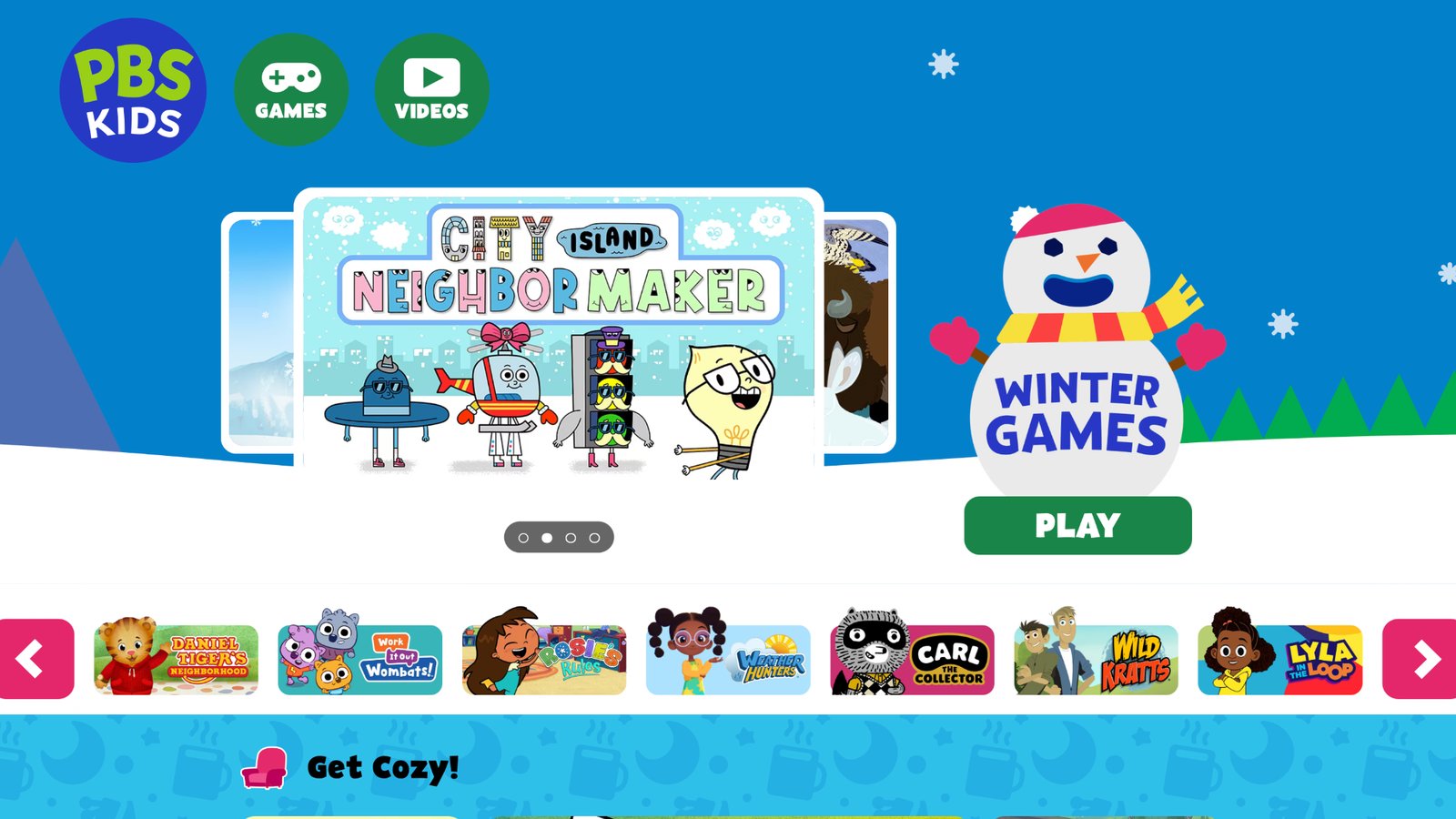
PBS Kids Games brings together familiar characters from well-loved educational television shows with interactive activities centered on math, reading, science, art, and social-emotional skills for preschool and early elementary children. Completely free access combined with the trusted reputation of the PBS brand makes it a simple and low-pressure option for many households. The games maintain a playful tone and connect naturally to stories and characters children already recognize and enjoy. Strengths include strong brand familiarity, free availability without restrictions, and an approachable style that suits short, relaxed play sessions. Content tends to feel lighter in structured depth when compared with full multi-subject curriculum apps, yet the friendly presentation and recognizable characters help many young children remain engaged while practicing foundational skills in a comfortable and familiar setting.
- Key features: Character-driven educational games, coverage of multiple early subjects, free access, connections to popular educational shows
- Facts and Information: Reflects the educational values of its parent programming, supports early skill development through playful stories and activities that many families already know and trust
6. Homer
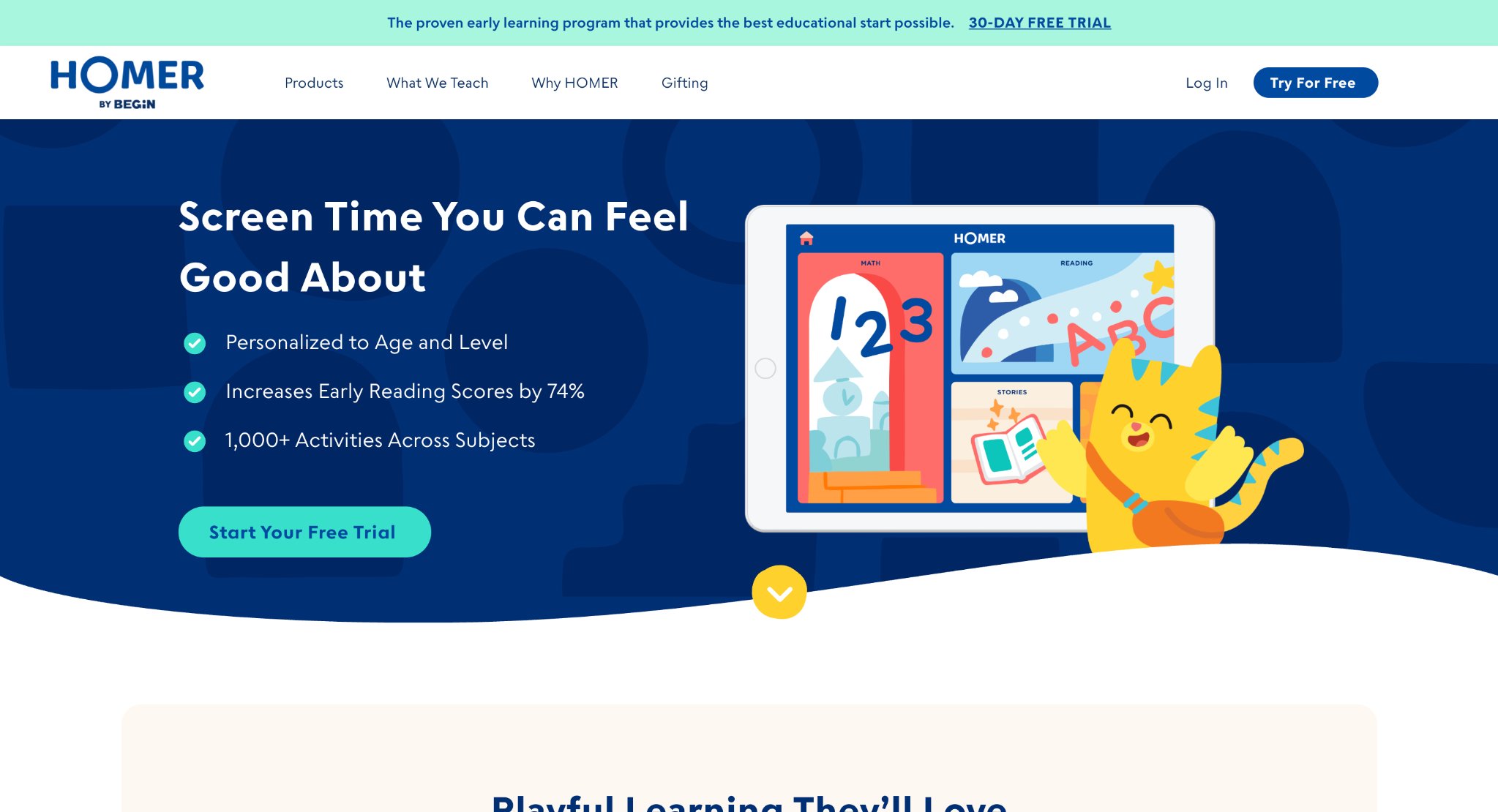
Homer creates personalized early reading and math pathways that adjust according to a child’s interests, age, and current skill level for ages 2 to 8. Interactive stories, targeted phonics lessons, and related activities work together to build literacy confidence while weaving in topics the individual child already finds appealing. Strengths rest in the tailored reading support and engaging story formats that allow many children to progress comfortably at their own speed. Some parents prefer broader subject variety beyond the strong literacy and early math emphasis, but the personalization and interest-driven approach make Homer particularly effective for strengthening reading readiness, vocabulary, and overall confidence in young learners who respond well to customized content.
- Key features: Adaptive reading and math paths, interest-based interactive stories, focused phonics activities, personalized lesson sequences
- Facts and Information: Created with input from education experts for early literacy development, continuously adjusts content to match individual progress and preferences, helps children build skills steadily through engaging, relevant material
7. Lingokids
Lingokids employs a playlearning approach that combines songs, interactive games, stories, and voice recognition features to develop English language skills alongside general early learning objectives for ages 2 to 8. Activities promote active participation and weave academic content together with practical life skills. Strengths include high energy engagement, lively musical elements, and a broad mix of subjects that keep many children motivated and returning for more. The overall pace and stimulation level can feel energetic for quieter or more sensitive learners, yet the blend of music, movement, voice interaction, and playful challenges works especially well for children who thrive in active, song-filled learning environments.
- Key features: Songs and interactive games, voice recognition, multi-skill academic and life-skills activities, highly playful format
- Facts and Information: Merges language practice with wider early developmental skills through active, music-driven methods that many young children find highly motivating and repeatable
8. SplashLearn
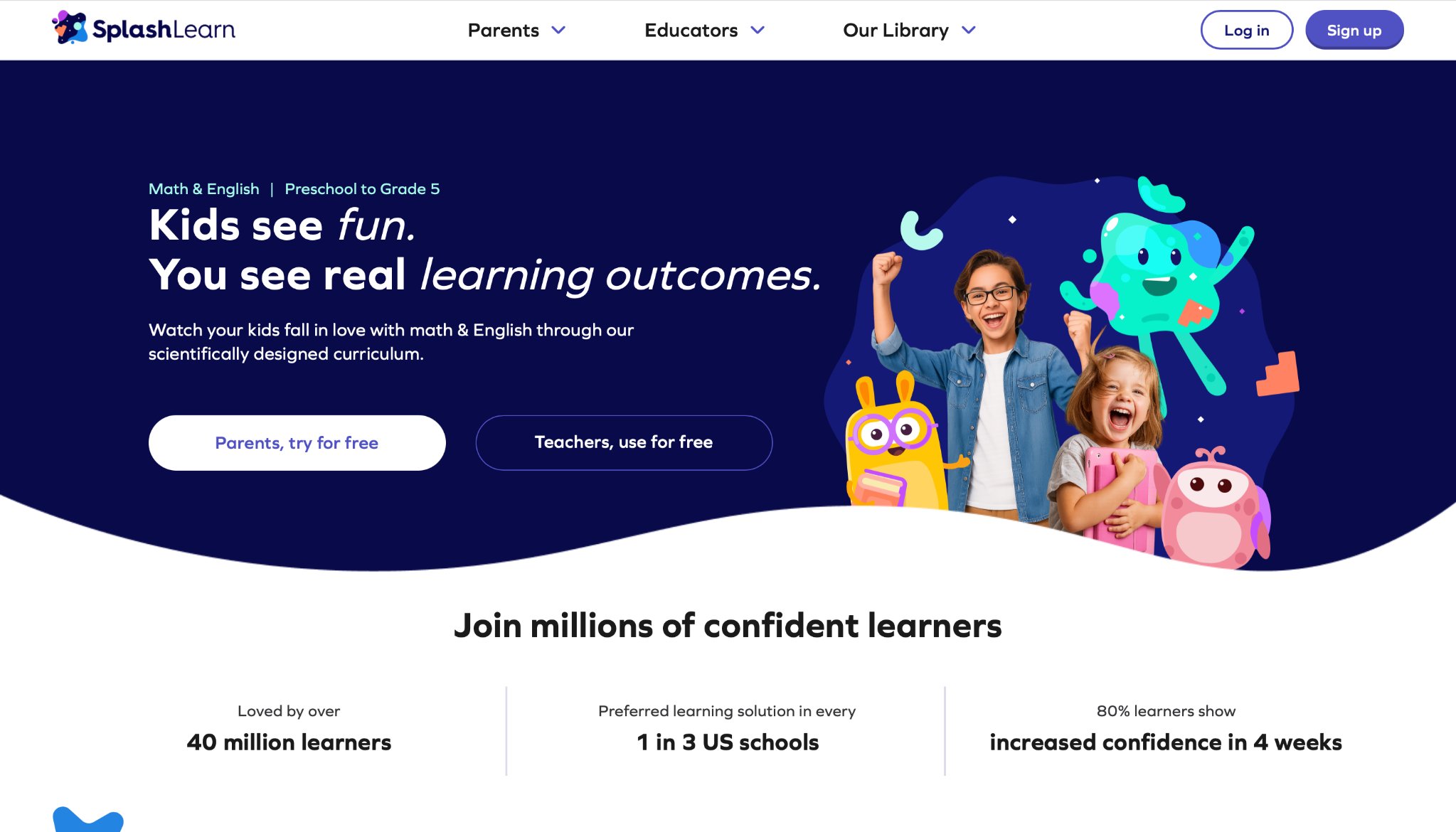
SplashLearn delivers adaptive math and reading games that automatically adjust difficulty according to each child’s responses, covering a wide age span from preschool through elementary grades. Interactive challenges, supporting worksheets, and clear progress reports help families track steady skill growth. Strengths lie in the responsive personalization for math and reading practice and the game-like presentation that sustains attention. Subject coverage concentrates more heavily on math and reading than on a full multi-subject curriculum, which makes it well suited for focused daily practice while still providing an engaging and supportive experience that reinforces core academic skills over time.
- Key features: Adaptive difficulty games, detailed progress tracking, worksheets and practice activities, personalized challenge levels
- Facts and Information: Aligns with standard learning goals for math and reading, enables children to strengthen skills through responsive, game-based challenges that adapt in real time
9. Epic!
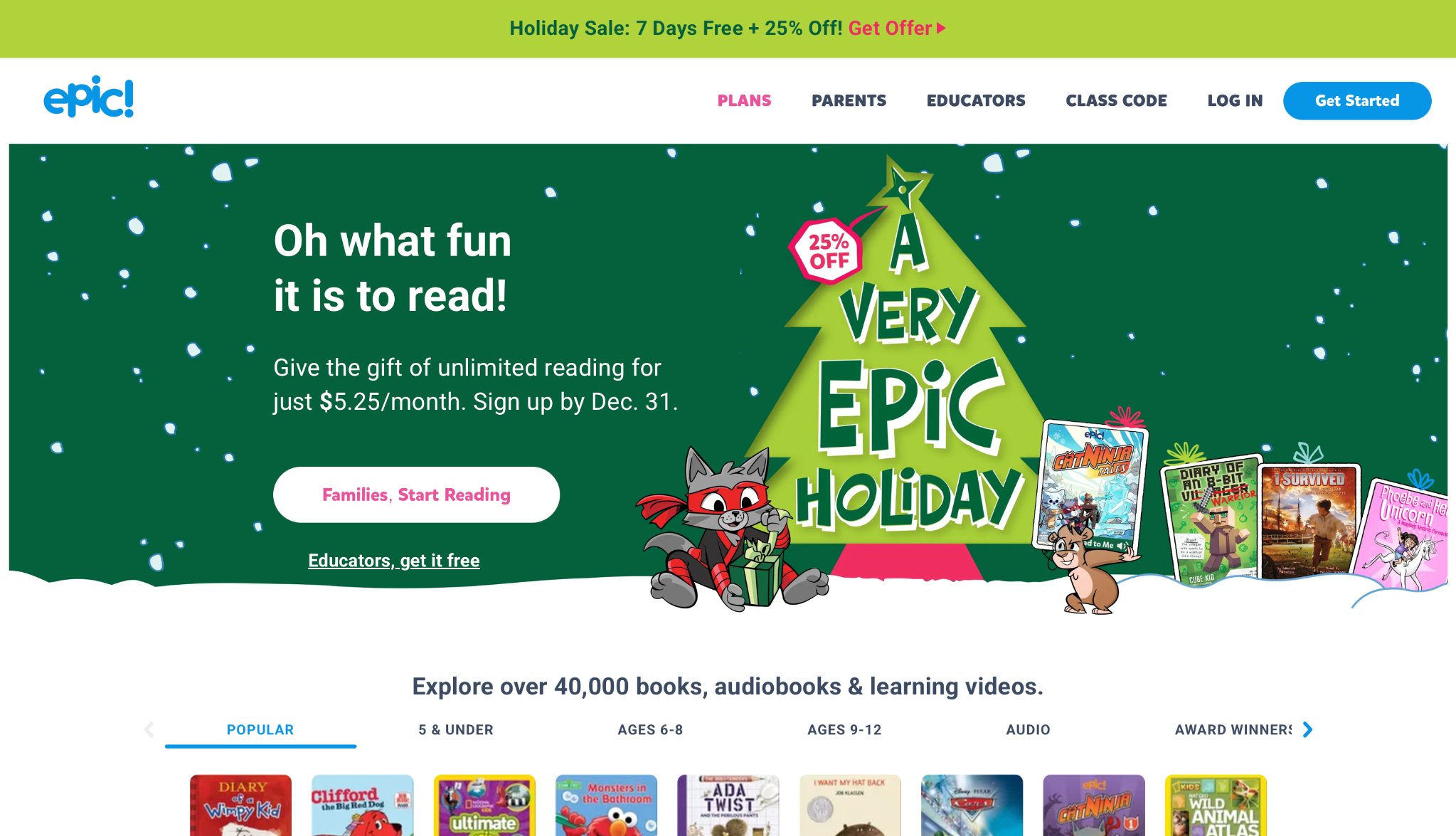
Epic! functions as a large digital library offering thousands of books, audiobooks, and educational videos that encourage both recreational reading and learning across a broad age range. Children can browse fiction and nonfiction titles independently, with read-to-me options and related quizzes available. Strengths include the extensive content selection and the strong encouragement of reading volume and choice. The platform serves best as a reading companion and digital library rather than a structured skill-building curriculum for the youngest preschoolers, yet many families appreciate the high-quality titles and the way the service nurtures a genuine interest in books and independent exploration.
- Key features: Extensive digital book collection, audiobooks, educational video content, read-to-me functionality
- Facts and Information: Promotes reading volume and personal choice for developing readers, provides diverse age-appropriate material that supports independent discovery and sustained reading habits
10. Duolingo ABC
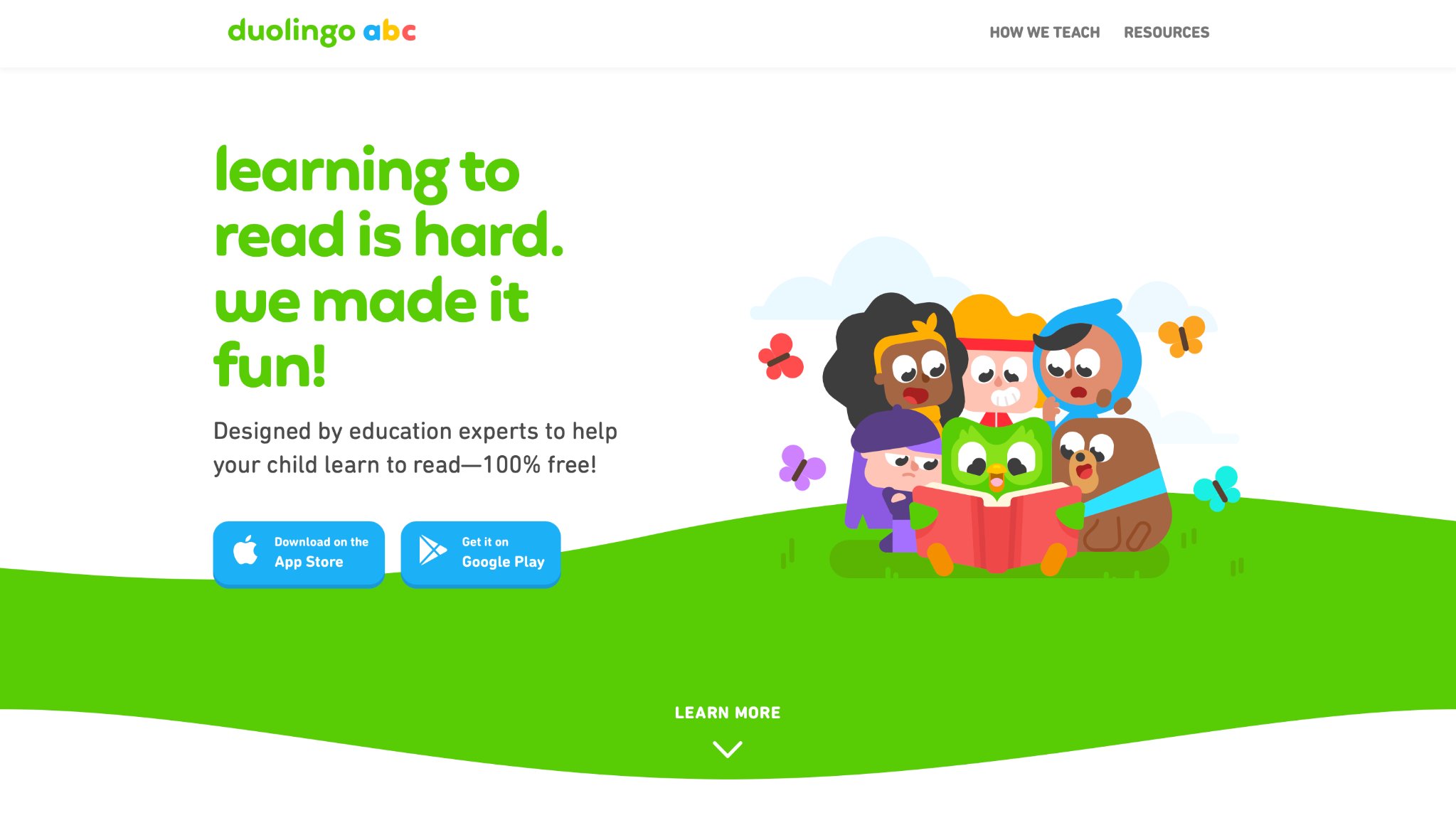
Duolingo ABC concentrates on early literacy and phonics through short, gamified lessons, interactive stories, and systematic letter-sound practice aimed at beginning readers. Simple and engaging activities support letter recognition, sound awareness, and early word construction. Strengths include free availability and a clear, focused phonics pathway that feels approachable for young users. The scope remains narrower than full multi-subject learning platforms, positioning it as a useful specialized add-on for reading practice rather than a complete early-education solution, yet the playful structure successfully helps many children establish foundational literacy skills in an enjoyable format.
- Key features: Structured phonics lessons, interactive stories, gamified progress tracking, letter-sound practice activities
- Facts and Information: Built specifically for early reading development with a straightforward playful framework that supports beginning literacy skills
11. Prodigy Math
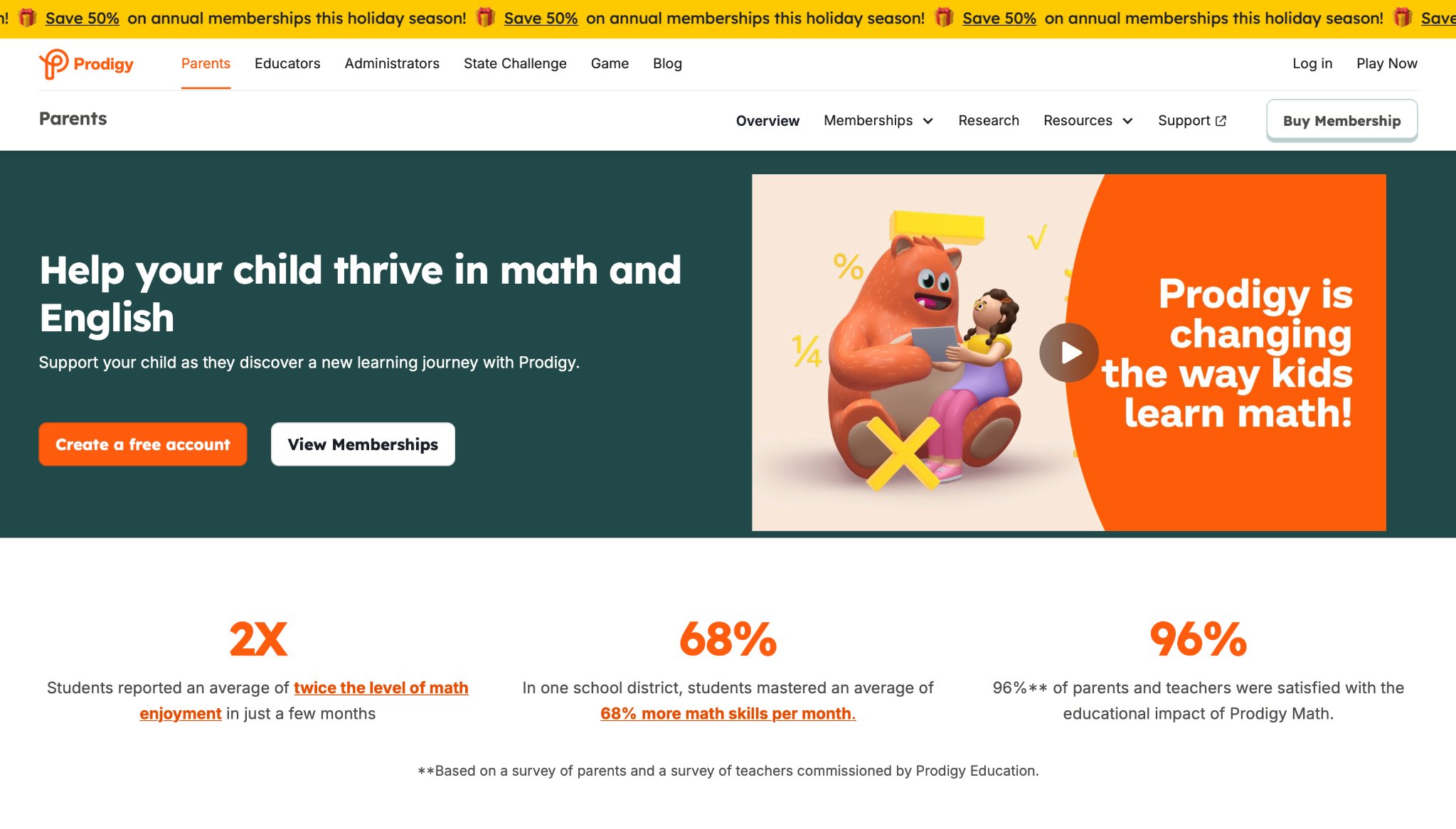
Prodigy Math transforms math practice into an adventure-style game in which children solve problems to advance through quests, battles, and challenges. Adaptive difficulty continuously matches the experience to each child’s current ability. Strengths include strong engagement for math practice and a fantasy world format that appeals to children who enjoy immersive game environments. The emphasis stays primarily on mathematics rather than broader early-learning domains such as language or life skills, making it a highly effective specialized tool for developing number confidence, problem-solving, and mathematical thinking through play that feels more like an adventure than traditional practice.
- Key features: Adventure-based math challenges, adaptive difficulty levels, quest and progression systems
- Facts and Information: Encourages consistent math practice through immersive adventure-style play that many children find absorbing and motivating
12. Starfall
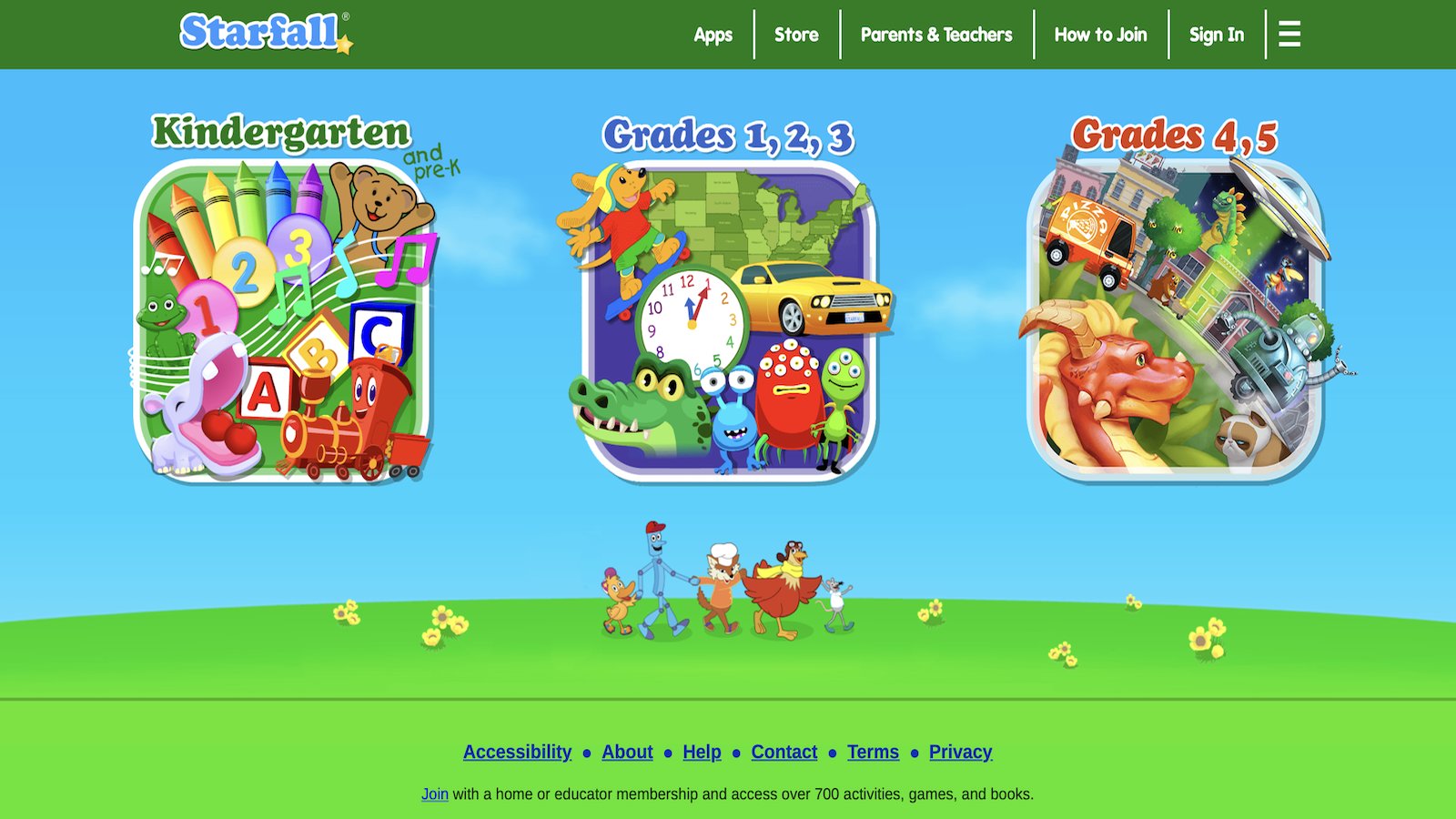
Starfall provides phonics-centered reading activities, interactive books, songs, rhymes, and basic math practice suitable for preschool through early elementary ages. Children work through letter sounds, word building, stories, and number concepts in a playful open format guided by friendly characters. Strengths include a systematic phonics sequence, research-informed instructional design, and free access to essential reading content that has helped many emerging readers. Some families note that the visual presentation feels more classic and less polished than modern high-production apps, yet the clear sequential structure, ad-free environment, and educational focus continue to support effective early literacy and number skill development.
- Key features: Systematic phonics activities, interactive books and songs, early math practice, sequential learning objectives
- Facts and Information: Research-based approach developed by experienced educators, builds reading and early math foundations through exploration, positive reinforcement, and playful activities
13. Reading Eggs
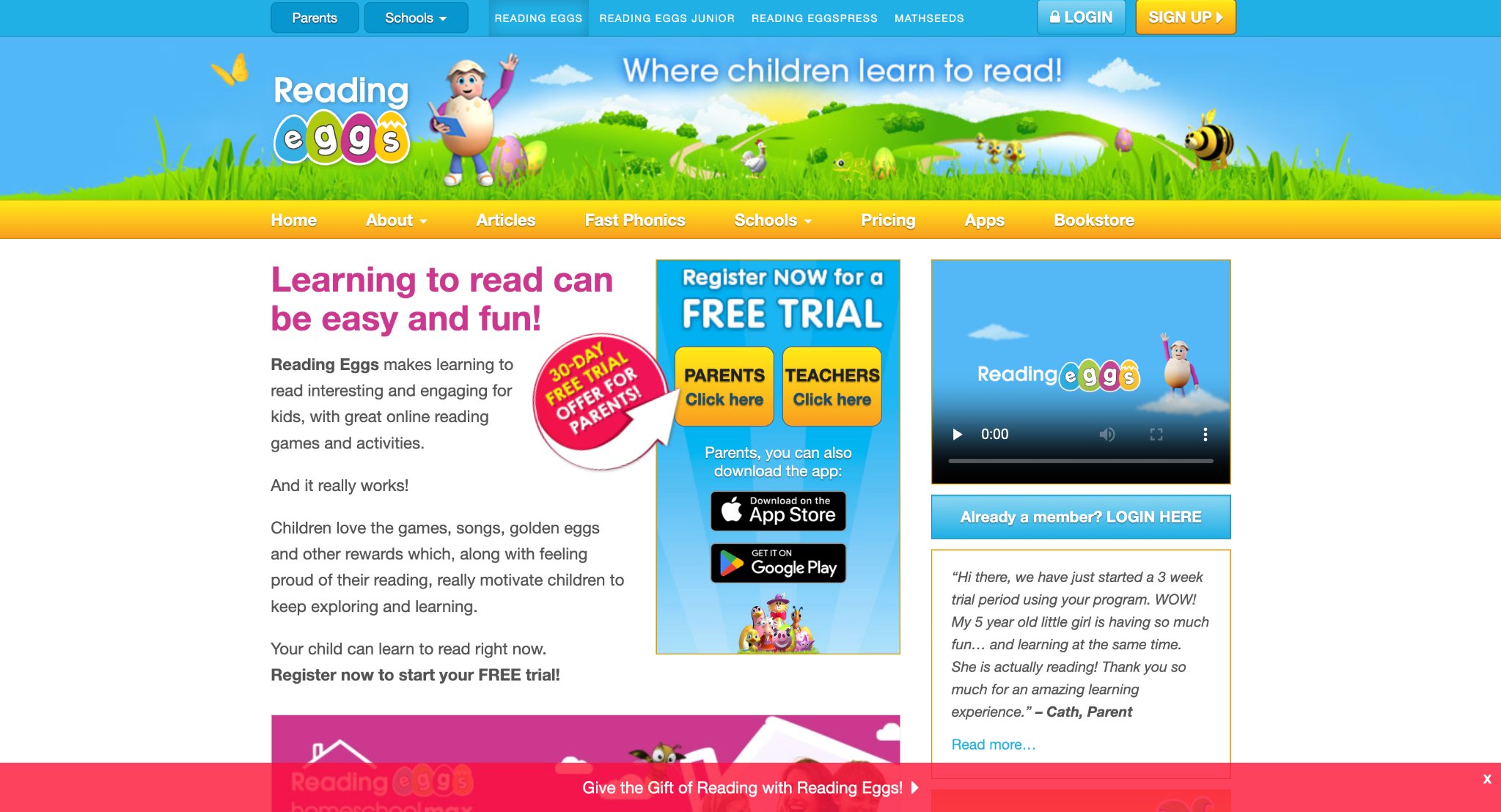
Reading Eggs offers a structured phonics and reading curriculum featuring interactive lessons, games, songs, and a substantial library of e-books designed for children from early preschool through elementary ages. Placement assessments help match each child to the right starting level, while reward systems sustain motivation. Strengths include the comprehensive step-by-step reading pathway, variety of activity types, and detailed progress reporting for parents. The program concentrates heavily on literacy development, so families seeking equal depth in mathematics or other subjects often combine it with additional resources, yet many children achieve steady and measurable reading progress through the guided, motivational format that blends instruction with playful elements.
- Key features: Structured phonics and reading lessons, large e-book library, interactive games and songs, progress reports, multi-level program options
- Facts and Information: Research-aligned reading system addressing phonics, vocabulary, fluency, and comprehension, enables self-paced advancement supported by motivational rewards and clear tracking
14. Teach Your Monster to Read
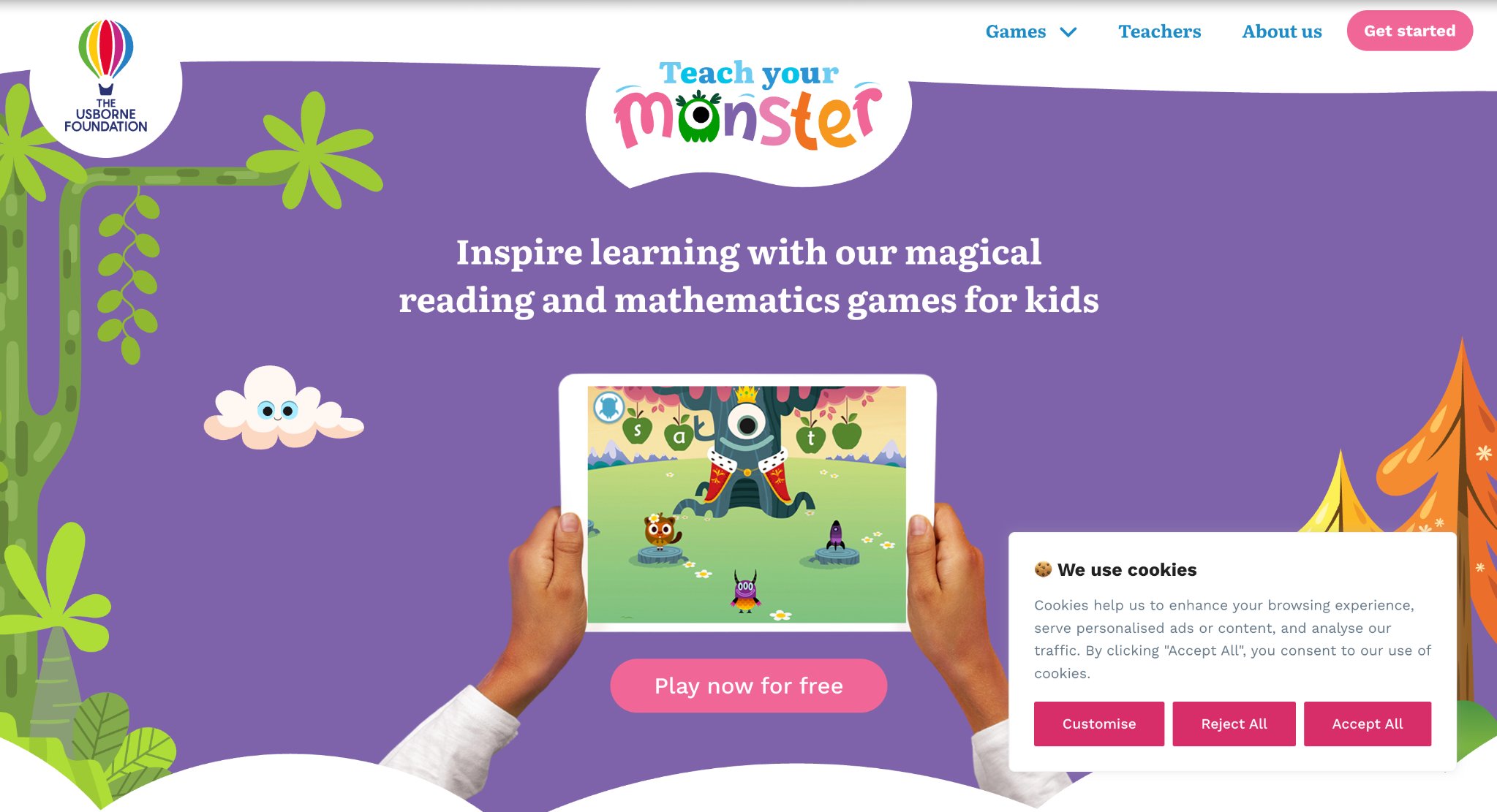
Teach Your Monster to Read converts phonics instruction into an engaging adventure in which children design a custom monster and guide it through magical worlds while mastering letter sounds, blending, segmenting, and early sentence reading. Three progressive game stages cover the foundational years of learning to read in short, focused sessions. Strengths include the appealing monster customization, clear and curriculum-aligned phonics progression, and design that complements classroom programs. The experience remains centered on early reading skills rather than a wide range of subjects, positioning it as a focused and highly motivating resource for building decoding confidence and reading readiness in young children through game-like exploration.
- Key features: Custom monster creation, progressive multi-stage phonics adventures, blending and segmenting practice, short focused sessions
- Facts and Information: Developed with academic collaboration to align with systematic phonics programs, supports the full early reading continuum from letter-sound correspondence to simple sentence comprehension through playful quests
15. Endless Alphabet
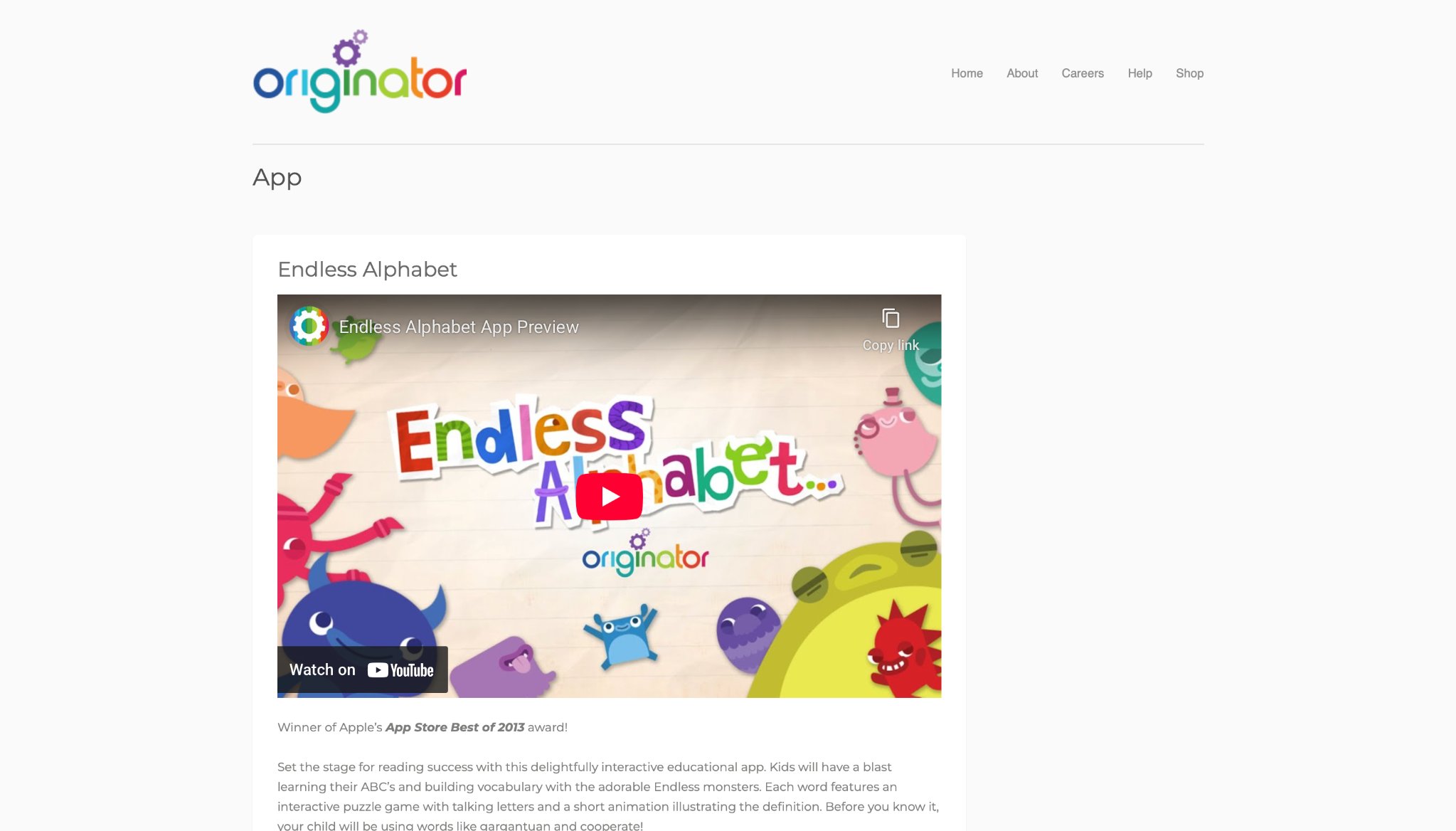
Endless Alphabet employs interactive word puzzles and charming monster characters to teach letter sounds, spelling patterns, and expanded vocabulary. Children drag animated talking letters into correct positions and then watch brief humorous animations that illustrate each word’s meaning in a low-pressure environment. Strengths include the delightful visual design, strong phonetic reinforcement, and introduction of interesting, less common vocabulary words. The focus stays primarily on alphabet knowledge and vocabulary building rather than comprehensive multi-subject learning or advanced reading fluency, yet the stress-free interaction style and light humor make it especially appealing for toddlers and preschoolers who are developing early literacy foundations at their own comfortable pace.
- Key features: Interactive letter and word puzzles, talking phonetic letters, animated definition sequences, vocabulary emphasis
- Facts and Information: Strengthens phonics awareness and vocabulary through playful, monster-led activities designed for independent, pressure-free exploration by young children
How Psychologist Input Shapes Better Learning Experiences
Apps shaped by child psychologists follow how young minds grow through active play and meaningful context. They emphasize gradual challenges, helpful feedback, and emotional safety. This leads to better focus and skill transfer than apps built only for entertainment.
Language activities connect sounds and words to everyday themes. Number and logic puzzle games use visuals and sorting that feel natural. Life skills sections introduce routines and professions in age-appropriate ways. The result is screen time that supports confidence and curiosity.
Parents often see children bring game ideas into real play or conversations. Expert-backed educational games help create this bridge. Choosing tools with clear developmental grounding makes daily sessions more purposeful. Related options include problem-solving games for toddlers, brain development games for kids, and life skills games for kids that reflect the same thoughtful approach.
Tips for Balancing Screen Time with Everyday Learning
Keep sessions short and pair them with books, outdoor play, or family talks. Choose apps that offer printables or real-life themes so skills continue offline. Watch how your child responds and adjust based on interest and energy.
Talk about what they discovered, such as a new word or a profession they explored. This conversation turns digital play into shared learning. Many families find that quality apps reduce guilt because the time feels useful.
Look for progress insights that show growth without pressure. Combine different activities so kids experience variety. The goal is joyful moments that build skills while fitting into busy family life. Learning games for preschoolers and reading readiness activities work especially well when used this way alongside number recognition games and educational apps for kids.
FAQ
What age group benefits most from learning apps?
Children ages 3 to 7 gain the strongest support from well-designed learning apps because this stage matches how young minds grow through playful, hands-on experiences. At these ages, activities focused on language, early math, focus, and social skills feel natural and help build confidence without pressure. Content that uses calm pacing, clear guidance, and age-appropriate visuals keeps sessions productive and enjoyable. Many families notice children applying new words or sorting ideas from the apps into everyday play. Choosing tools created with child development experts ensures the experience aligns with real developmental needs during these important preschool years, including options like preschool online games for 3 year olds and online educational games for 3 year olds.
How can I tell if an app is truly educational?
A truly educational app shows clear signs of expert involvement in child development and focuses on specific skills such as language, math, logic, or life skills. Ad-free design and age-appropriate content create a safe space where children can learn without distractions. Look for progressive challenges that build understanding step by step and feedback that helps kids learn rather than simply rewarding correct answers. Progress insights or noticeable growth in real-life skills, like asking more questions or trying new routines, also confirm the value. Apps shaped by psychologists often stand out because they balance fun with meaningful skill building that transfers beyond the screen, similar to the approach found in educational games apps and the best educational app.
Do learning apps replace traditional play or books?
Learning apps work best as a helpful addition to hands-on play, reading, and family time rather than a replacement for them. Short sessions can reinforce skills while books, outdoor activities, and conversations develop other important abilities. Apps that include real-world themes or free printables make it easier for children to carry ideas into daily life. This combination keeps learning varied, balanced, and enjoyable for young children. When used thoughtfully alongside traditional activities, digital play becomes one positive part of a rich early learning routine that can include reading readiness activities and learn to read apps for kids.
What makes an app safe for young kids?
Safe apps for young kids feature no ads, no external links, and no chat functions so children stay protected within a closed environment. Calm visuals, clear instructions, and a focus on emotional safety help prevent overwhelm and support positive experiences. Compliance with child privacy standards adds another layer of protection for personal information. Parent controls and simple progress views give adults insight without adding pressure. Tools designed specifically for early learners with psychologist input tend to prioritize these safety elements while still delivering engaging educational content, as seen in quality educational games and interactive educational games.
How do learning apps support life skills and creativity alongside academics?
Strong learning apps for kids go beyond letters and numbers by weaving in life skills and creativity through everyday themes and open-ended activities. Children might explore real professions, practice simple routines, or use imagination in sorting and storytelling games that feel like play. This whole-child approach helps build empathy, focus, and curiosity at the same time as academic foundations. Psychologist-designed experiences often include elements that encourage emotional awareness and creative problem-solving in a calm setting. The result is screen time that supports confident minds and curious hearts ready for both school and daily life.
Read Also:
- Why Psychologist-Designed Apps Boost Pre-K Learning Outcomes
- Best Learning Games for Preschoolers Online
- Best Educational Games App
- Best App for Kids Learning
- Best Educational App for Kids