

Best Preschool Educational Games 2026






Parents want screen time that helps young kids grow. The best preschool educational games 2026 turn play into real learning for language, numbers, focus, and daily habits. Kids ages 3 to 7 thrive with tools made for their stage of development.
Quality preschool learning often includes the best phonics games for preschoolers to build early reading skills. Many also turn to the best memory games for preschoolers for stronger focus, the best preschool math games for number confidence, and the best shape games for preschoolers online to develop spatial awareness through playful activities.
Discover the full range of joyful preschool educational games at Fluvsies Academy.
Key Features That Define Strong Preschool Learning Apps

Look for age-fit visuals, voice guidance, and tasks that grow with the child. Strong options cover language and phonics, early math, logic and attention, sorting, and creativity or life skills for children. Real-world themes like helping at a store or exploring jobs expand vocabulary and curiosity. Ad-free spaces and parent reports add peace of mind. Holistic approaches that also touch empathy or simple routines stand out because preschool growth involves more than letters and numbers. Short sessions that pair well with books and outdoor play fit busy family days.
Alphabet games for preschoolers, pattern games, and memory games often appear in the strongest educational games apps. Tools that support reading readiness activities and preschool math for children help them build confidence across multiple areas at once.
Why Quality Preschool Games Matter for Early Growth
Young children learn best when activities feel like play. Games that mix short challenges with friendly characters keep attention without overwhelm. They support letter sounds, counting, sorting, and simple problem solving for kids in ways that match how preschool brains work. Many families notice kids bring new words or ideas into everyday talks after sessions. Tools created with child development input often include calm pacing and clear feedback so children stay confident.
Safe designs without ads or outside links let parents feel better about device time. Progress tracking and varied themes, from numbers to real jobs, give kids reasons to return while building skills that transfer offline. Learning games for preschoolers online that focus on brain development for kids and problem-solving for toddlers help turn everyday screen moments into meaningful growth.
Best Preschool Educational Games 2026
1. Fluvsies Academy - Best Preschool Educational Games 2026
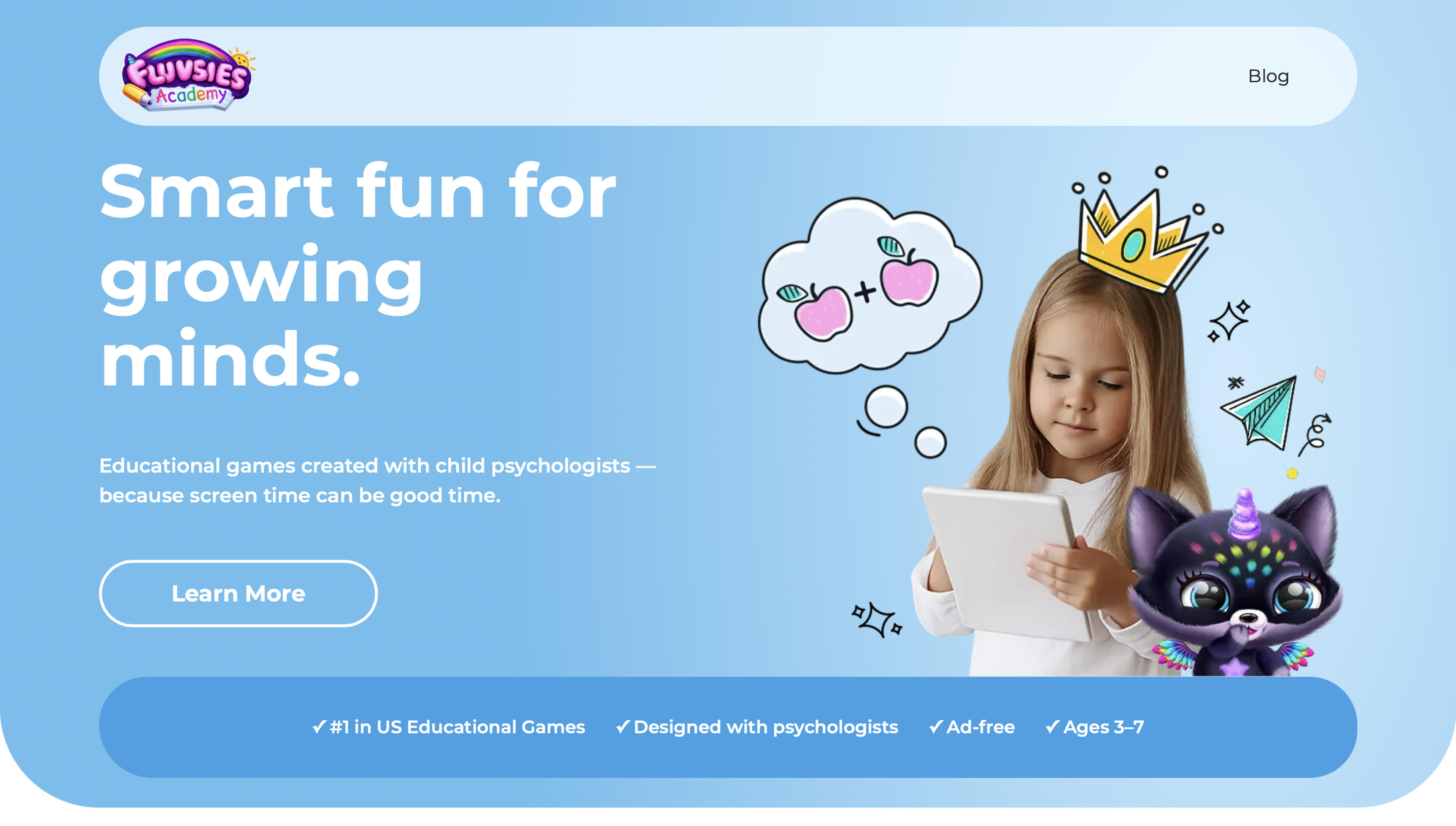
Fluvsies Academy delivers joyful, guided play created with child psychologists for ages 3 to 7. This ad-free app turns screen time into smart learning across language and phonics, number games, logic and attention, sorting activities, and life skills plus creativity. Kids explore real professions from bakers to astronauts while building vocabulary and confidence. Active modes sharpen focus and problem-solving. Gentler modes introduce everyday routines like brushing teeth through calm stories. Progress reports help families follow growth. The bright, friendly characters and safe design make learning feel like pure fun. Many parents praise how children stay curious and apply new skills offline. It ranks as a top educational game choice for its balanced, holistic approach that supports growing minds and hearts.
Discover Fluvsies Academy
Fluvsies Academy is a leading educational app designed for children aged 3–7. It transforms screen time into meaningful learning through fun, interactive games. Developed in collaboration with child psychologists, the app focuses on holistic development.
Key Features
- Ad-free environment for safe play.
- Games covering language, phonics, math, and logic.
- Activities for attention, sorting, and creativity.
- Real-world life skills like healthy habits and mindfulness.
- Exploration of professions to build vocabulary and imagination.
Educational Approach
Fluvsies Academy emphasizes guided play that balances focus, empathy, and emotional safety. It's the first holistic learning app for kids, ranked #1 educational game in the US. Progress reports help track your child's growth. Free printables extend learning beyond the screen.
Benefits for Families
Parents gain peace of mind with expert-backed games.
Kids build confidence, skills, and a love for learning. Ideal for preschoolers seeking joyful education.
Give your child the best start with fun online games. Download Fluvsies Academy today!
2. TutoClub
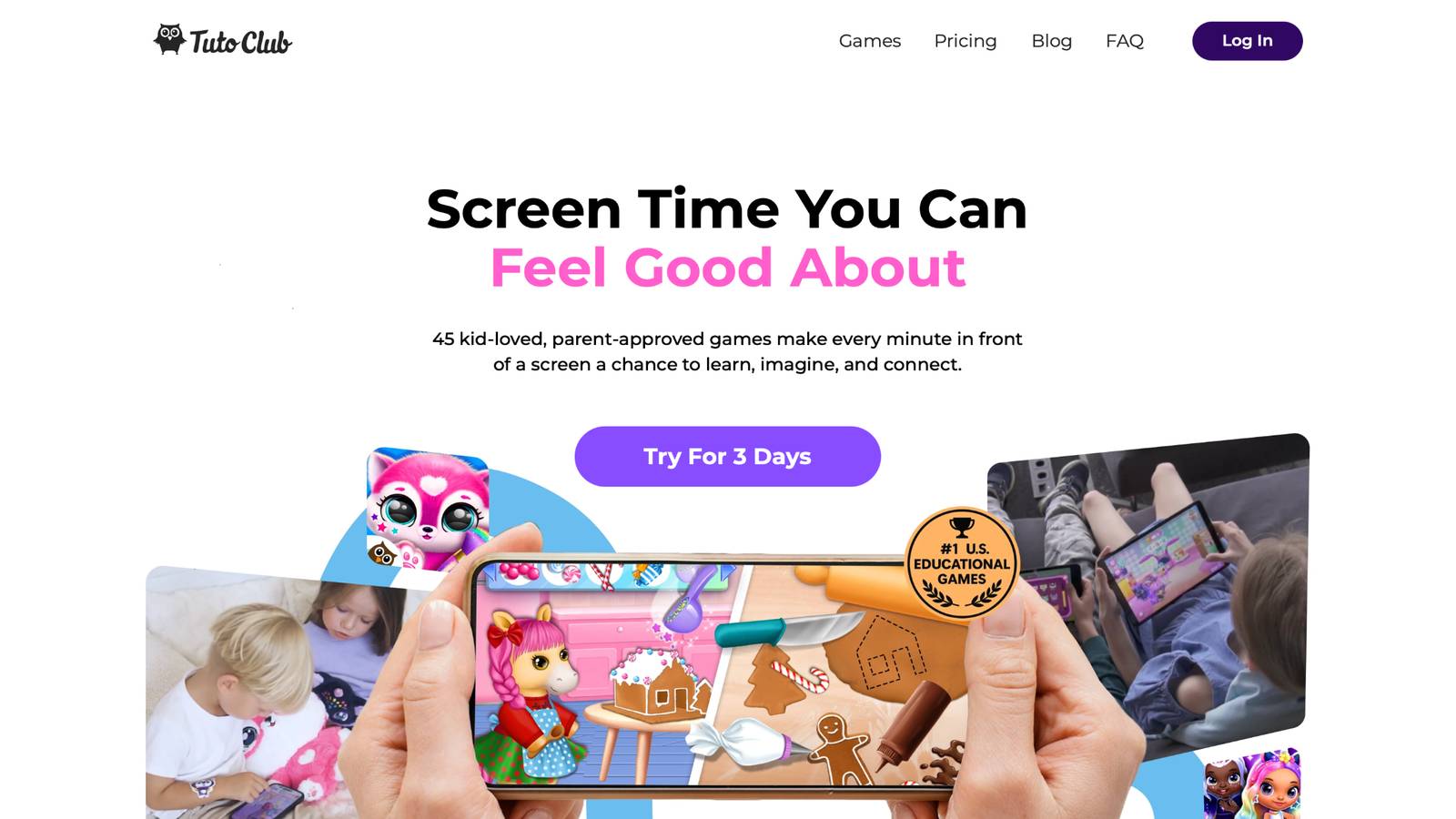
TutoClub brings together more than 45 ad-free games from the TutoTOONS collection that help young children grow through creative adventures and meaningful play. Families enjoy this safe platform where kids explore different subjects without any interruptions or distractions pulling them away. The games blend fun elements with natural development so curiosity and care grow alongside focus and empathy in a relaxed way. Children dive into art tasks and storytelling that spark imagination while puzzles sharpen problem solving and routines build helpful habits.
This collection supports preschoolers with activities that feel like everyday play yet guide skill building gently. Kids care for virtual pets or style outfits in scenarios that teach responsibility and compassion through hands-on choices. The wide variety of characters and worlds keeps sessions exciting and fresh so children stay engaged longer. Parents notice how the content fits busy family schedules and promotes positive screen time that supports overall growth without any added stress.
Key features
- Safe ad-free games centered on creativity and emotional development
- Interactive stories and puzzles that strengthen problem-solving and daily routines
- Diverse characters and scenarios to maintain high motivation
- Adaptive challenges that match each child's current abilities
- Offline play option for learning on the go
Facts and Information
TutoClub delivers steady positive experiences that many parents choose for daily learning. The games help children build essential abilities in a calm format that matches family life. Regular use often leads to noticeable improvements in focus and emotional awareness.
3. Khan Academy Kids
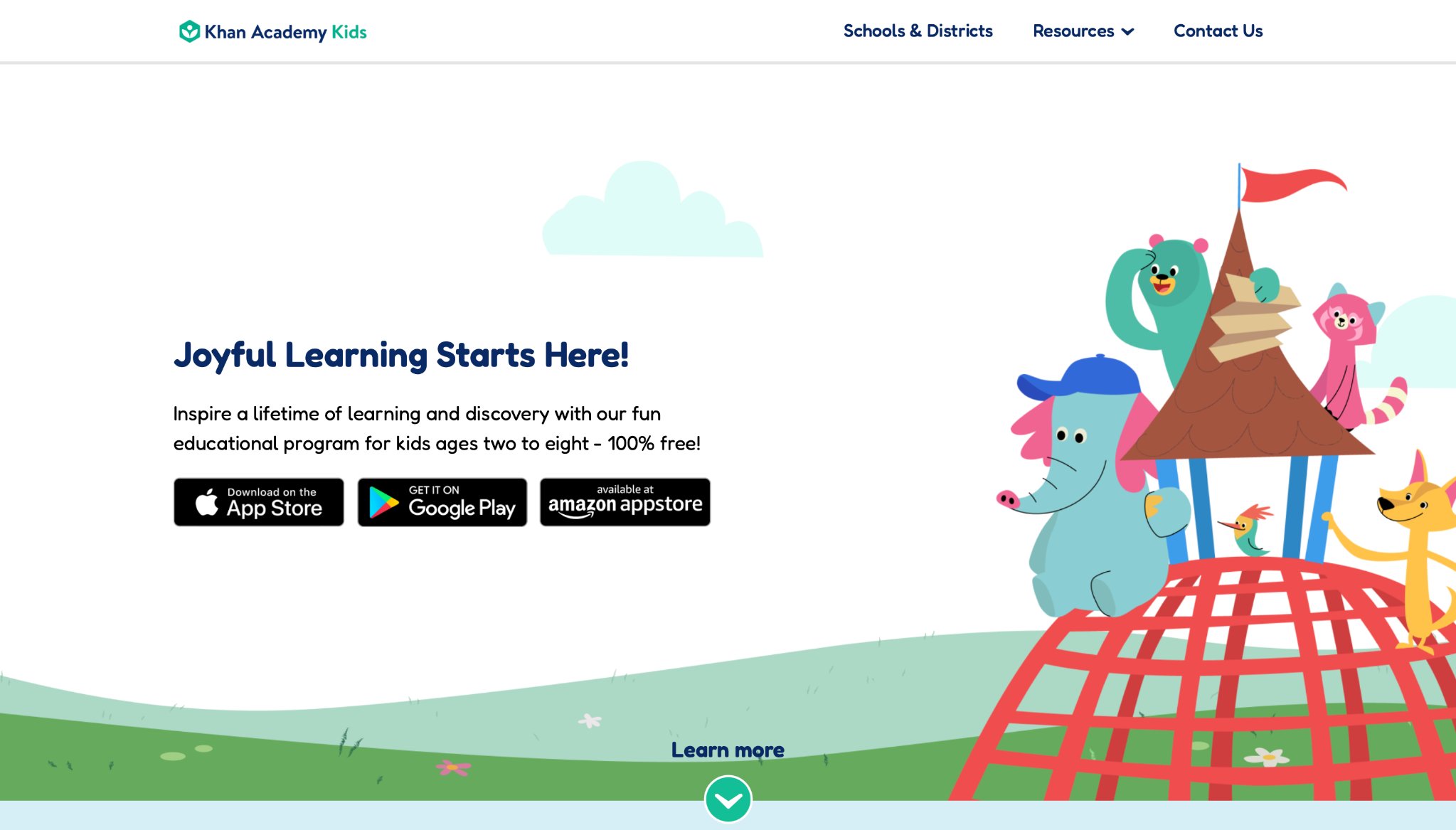
Khan Academy Kids is a completely free learning program created for children ages 2 to 8. Friendly characters guide hundreds of games, interactive books, videos, and creative activities that cover early literacy, math, social-emotional skills, and imaginative play. The adaptive path carefully adjusts to each child’s level so practice stays well matched and never feels too hard or too easy. Content was developed with early learning experts and aligns with recognized early childhood frameworks. Parents and teachers can track progress and assign specific activities. Strengths include the total absence of ads or hidden costs, the broad subject coverage, and the high production quality of the stories and games. Some families note that the large library can feel a little overwhelming at first, so a bit of adult guidance helps younger preschoolers focus on the most useful activities for their current stage.
Key features
- Thousands of games, books, videos, and creative tools
- Adaptive learning path that grows with the child
- Strong coverage of reading, math, and emotional development
- Completely free with no ads or in-app purchases
Facts and information
- Built in collaboration with early childhood specialists
- Supports foundational skills from preschool through early elementary
- Includes clear parent and teacher dashboards for progress insights
4. PBS KIDS Games
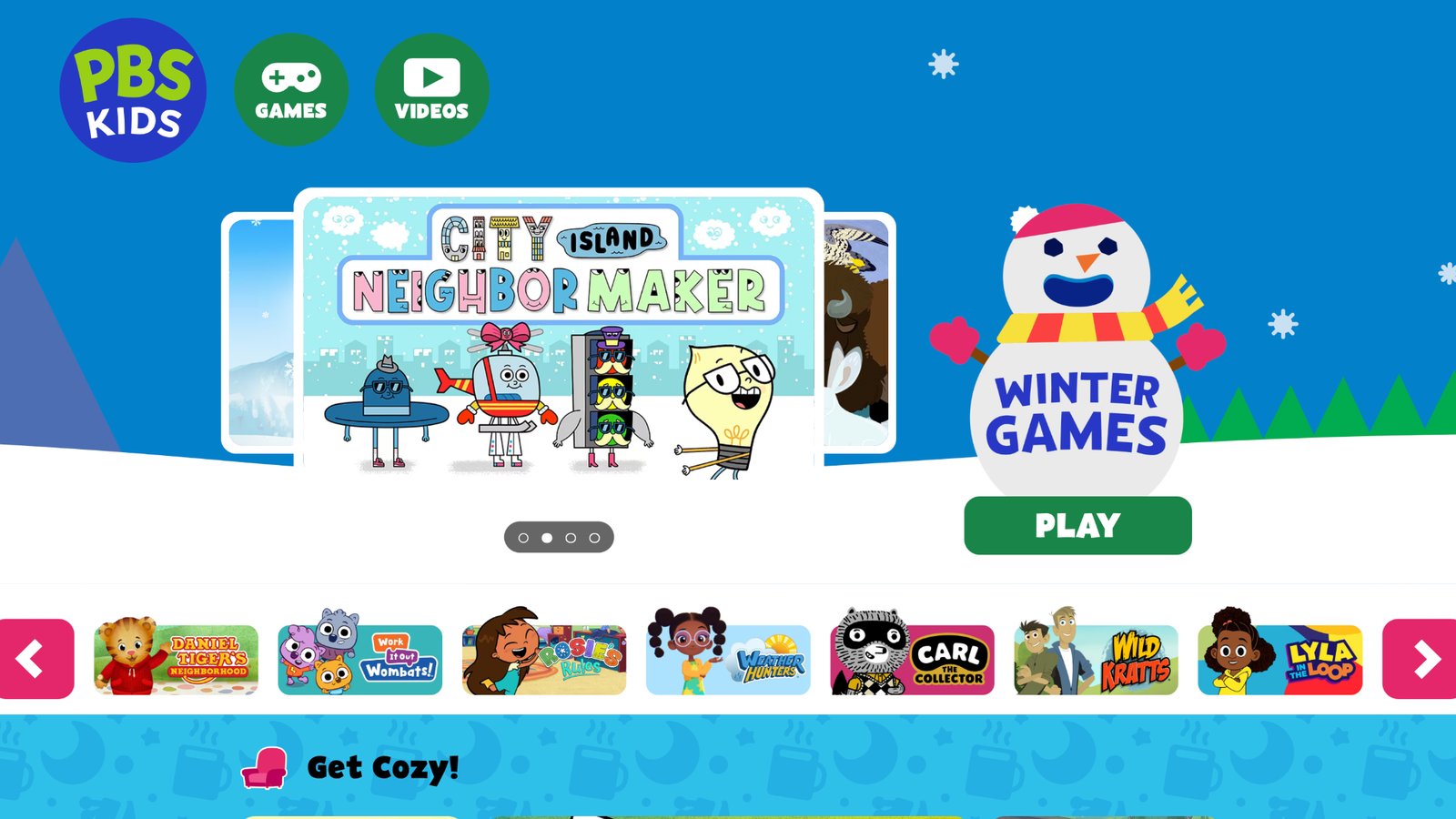
PBS KIDS Games offers a large collection of free curriculum-based activities starring familiar characters from shows many children already love and trust. Games target letters, numbers, science concepts, social-emotional skills, and creative play in short, engaging formats that feel connected to the television series. New titles are added regularly and the experience remains free of ads and commercial pressure. The app and website work across devices and many games can be played offline. Strengths include the trusted characters that make starting easy and the clear educational goals behind each activity. The interface can feel a little busy for the youngest players until they learn the menu layout, and some older preschoolers may prefer more structured progression once they are ready for greater challenge.
Key features
- Hundreds of free games across multiple subjects
- Characters from popular PBS shows
- Math, reading, science, and social-emotional focus
- Safe, ad-free environment with frequent updates
Facts and information
- Designed with child development input
- Available on web and mobile platforms
- Supports preschool through early elementary skill building
5. Toca Boca World
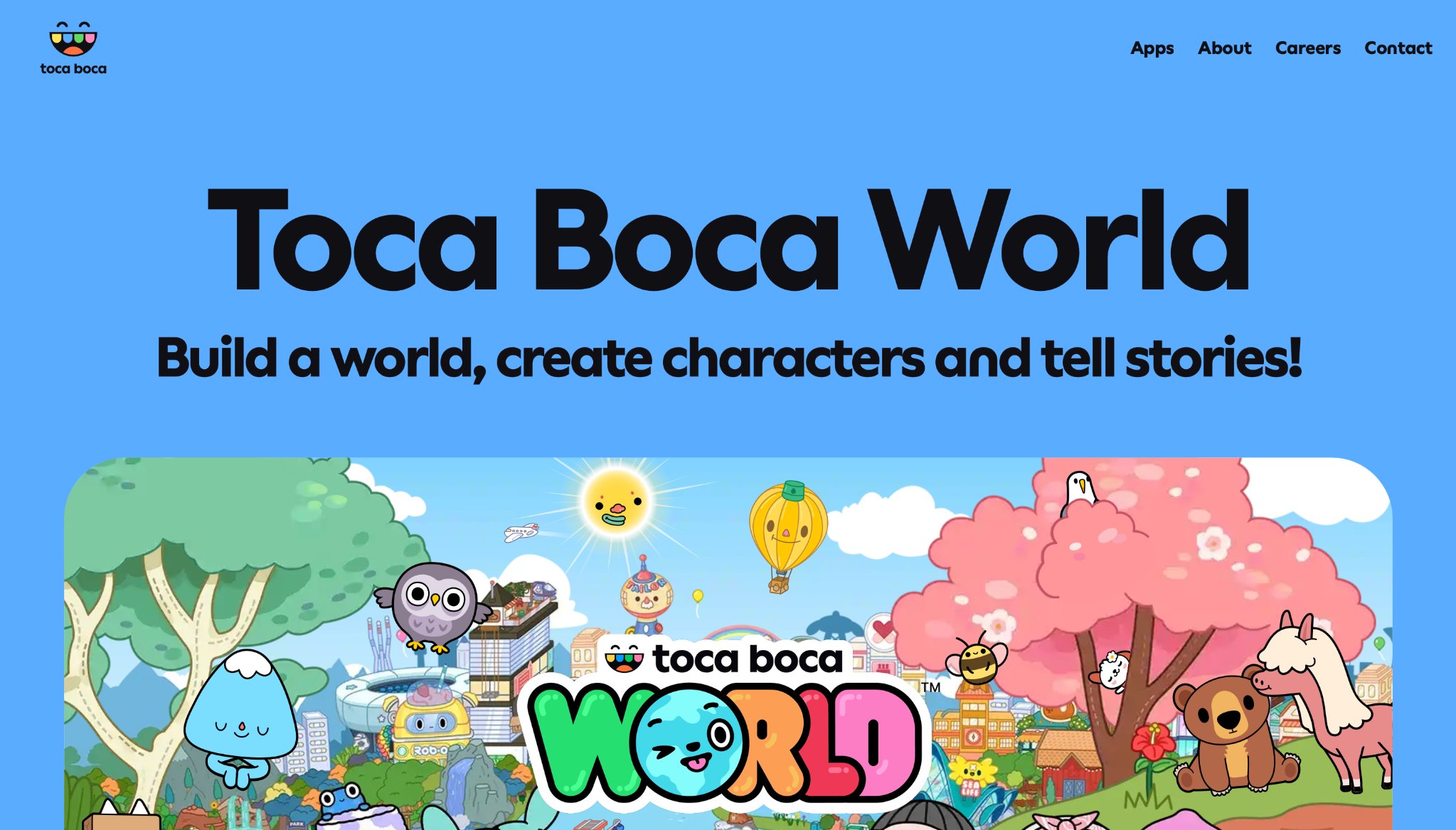
Toca Boca World creates an open-ended digital play space where children design their own characters, decorate homes and locations, and invent complete stories without any scores, levels, or winning conditions. Kids practice everyday scenarios such as shopping, cooking, going to school, or caring for others in a calm single-player setting that prioritizes imagination. The design feels like a digital dollhouse with endless possibilities. Strengths center on pure creativity, emotional safety, and the complete freedom to follow curiosity without pressure or competition. Structured academic skill practice is limited, so many families pair it with more directed learning tools when they want focused letter, number, or logic work.
Key features
- Character creator and home design tools
- Multiple locations for open storytelling
- Completely open-ended, no-win-or-lose play
- Safe single-player design with no chat or strangers
Facts and information
- Emphasizes imagination, narrative thinking, and empathy
- Appeals strongly to creative preschool and early elementary children
- Expands with optional content packs
6. Endless Alphabet
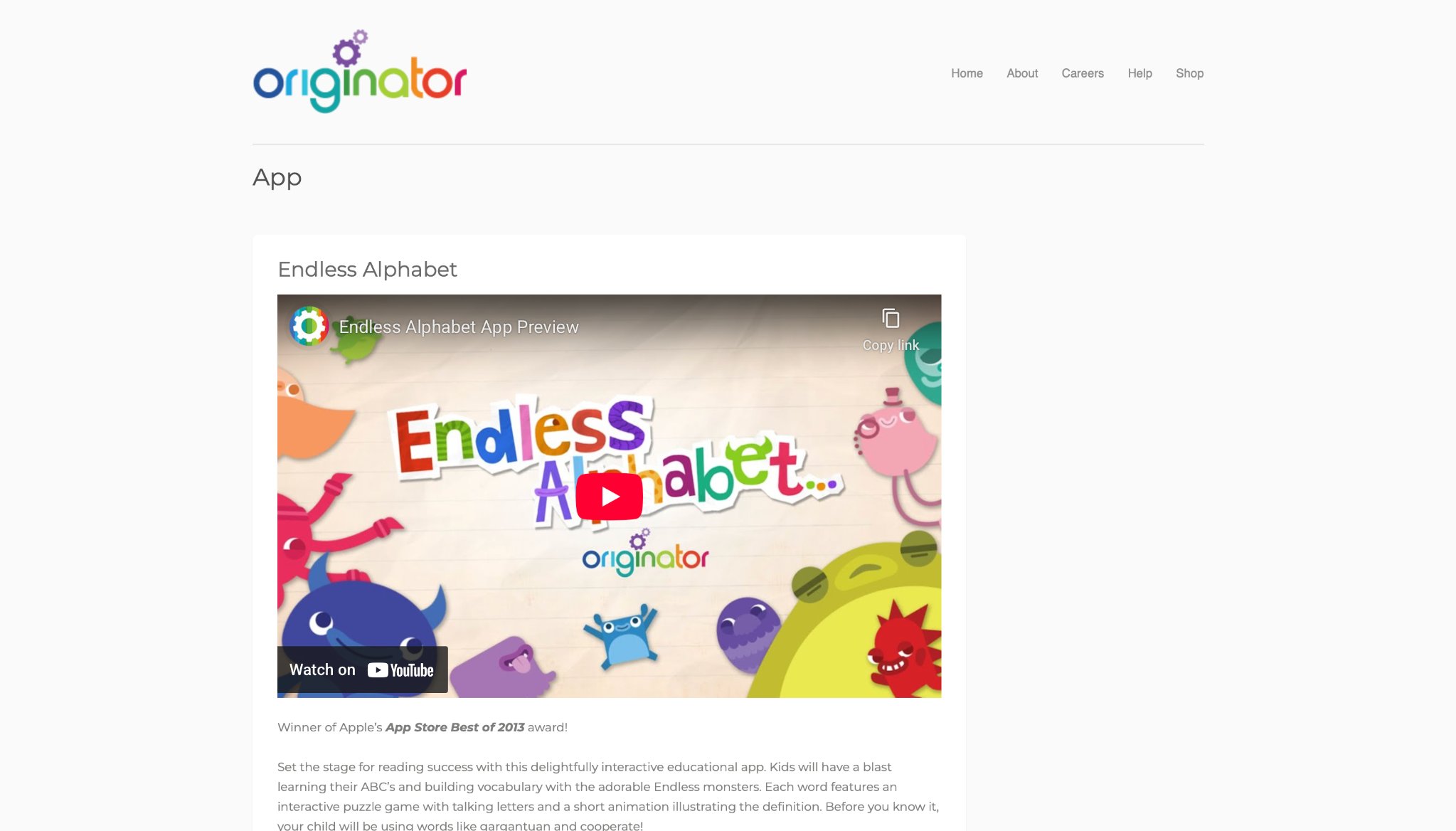
Endless Alphabet uses charming and slightly quirky monster characters to teach letter sounds and vocabulary through interactive puzzles that feel more like play than lessons. Children drag talking letters into place to form words, listen to the sound each letter makes, and then watch short, funny animations that clearly show the meaning of each word in a memorable way. The simple, focused format works especially well for preschool attention spans and completely avoids timers, high scores, or any sense of failure, so children can explore freely without pressure. Strengths include the clear phonics support, delightful visuals, and a completely stress-free pace that lets kids take their time. Coverage stays mainly on early literacy and vocabulary rather than broader subjects such as math or life skills, so most families use it as a specialized tool alongside other apps. The one-time purchase model also appeals to parents who prefer not to deal with subscriptions.
Key features
- Interactive letter and word puzzles with talking letters
- Animated explanations that bring vocabulary to life
- Clean, distraction-free design with no timers or scores
- Strong focus on phonics and word meaning
Facts and information
- Popular for early letter recognition and vocabulary growth
- Supports ages roughly 2 to 6
- One-time purchase model with no ongoing subscriptions
7. ABCmouse
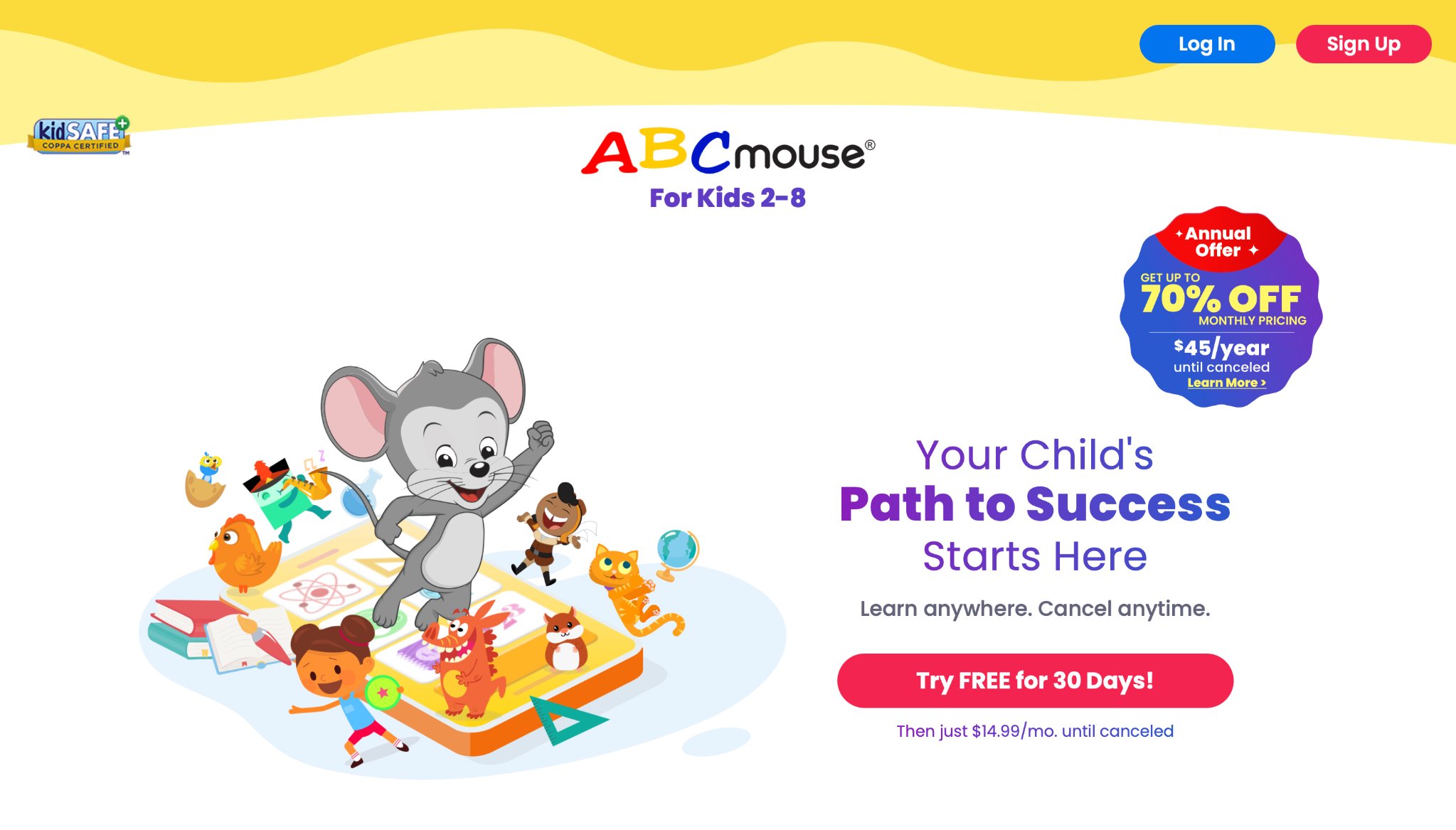
ABCmouse offers a structured early learning path with thousands of lessons, games, songs, stories, and activities that cover reading, math, science, and art for children ages 2 to 8. Interactive tasks and a clear reward system guide progress through carefully sequenced levels designed to build school readiness step by step. Parents can follow along with detailed progress reports that show what their child has completed and where they might need more practice. Strengths include the comprehensive curriculum and the wide variety of formats that keep many children engaged over longer periods. Some preschoolers respond better to less structured play, so balancing ABCmouse sessions with more open creative activities often produces the best results and prevents the experience from feeling too much like formal schoolwork at a young age.
Key features
- Step-by-step multi-subject learning path
- Thousands of lessons, games, stories, and songs
- Progress tracking and reward system for motivation
- Age-targeted content from preschool through early elementary
Facts and information
- Covers foundational academic skills in a sequenced way
- Includes interactive stories, videos, and practice tasks
- Designed for consistent short daily or weekly sessions
8. Sago Mini World
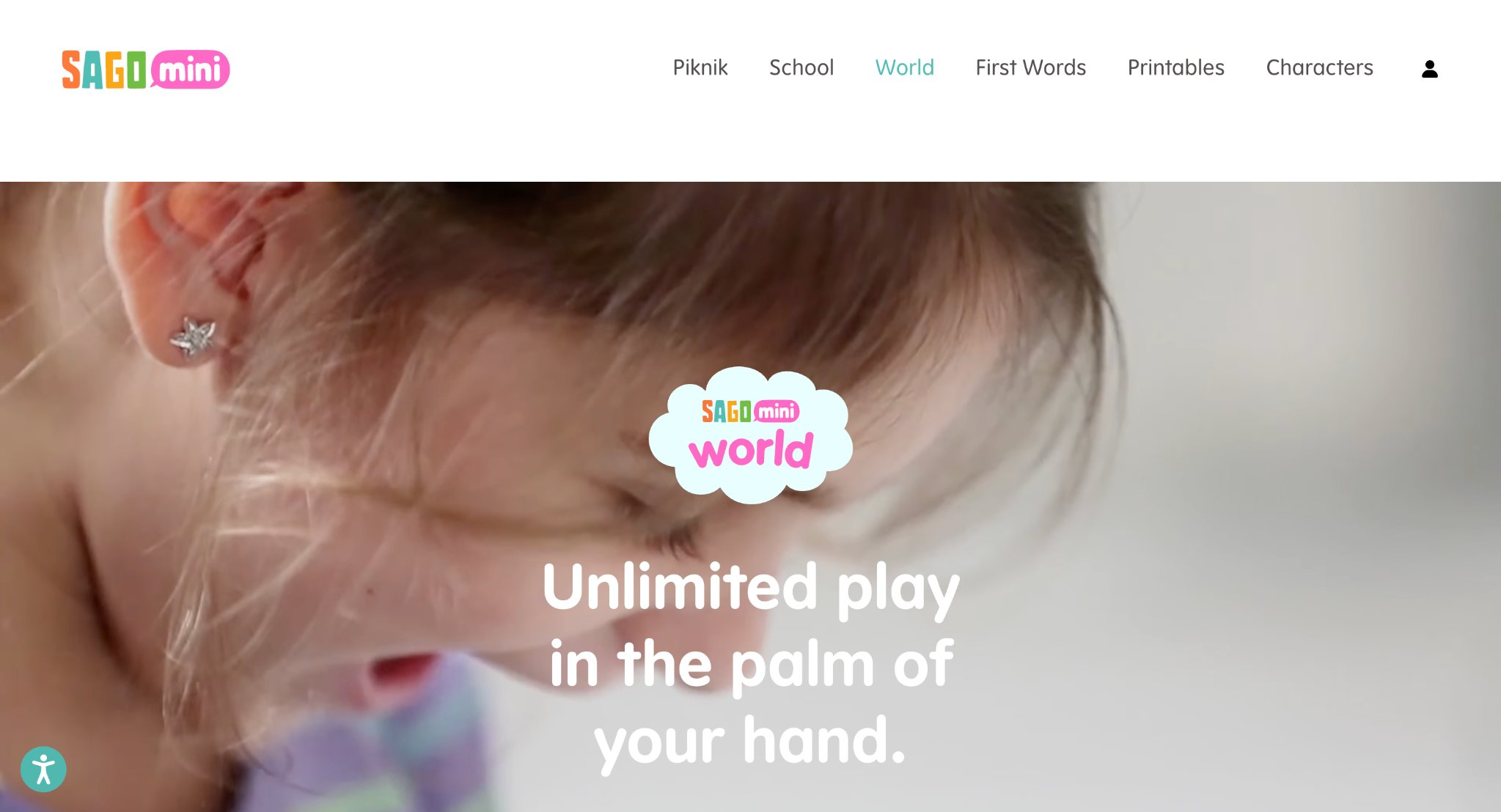
Sago Mini World provides gentle, open-ended experiences tailored especially to younger preschoolers and toddlers who are still developing basic motor and attention skills. Soft characters and simple touch interactions invite exploration without pressure, complex menus, or competitive elements that could frustrate little ones. Themes support curiosity, cause-and-effect understanding, and quiet creative moments in a calm atmosphere that feels safe and inviting. Strengths lie in the soft pacing and toddler-friendly design that even the youngest users can navigate with minimal help. Older preschoolers may outgrow the simpler activities fairly quickly and start looking for more challenge or variety, so families often move on to other apps once children are ready for greater complexity.
Key features
- Soft, accessible interfaces designed for young children
- Open exploration and gentle storytelling
- Focus on younger preschool and toddler ages
- Safe, low-stimulation play environment
Facts and information
- Appeals strongly to toddlers and early preschoolers
- Encourages independent discovery at a gentle pace
- Part of a family of calm kids apps
9. Montessori Preschool
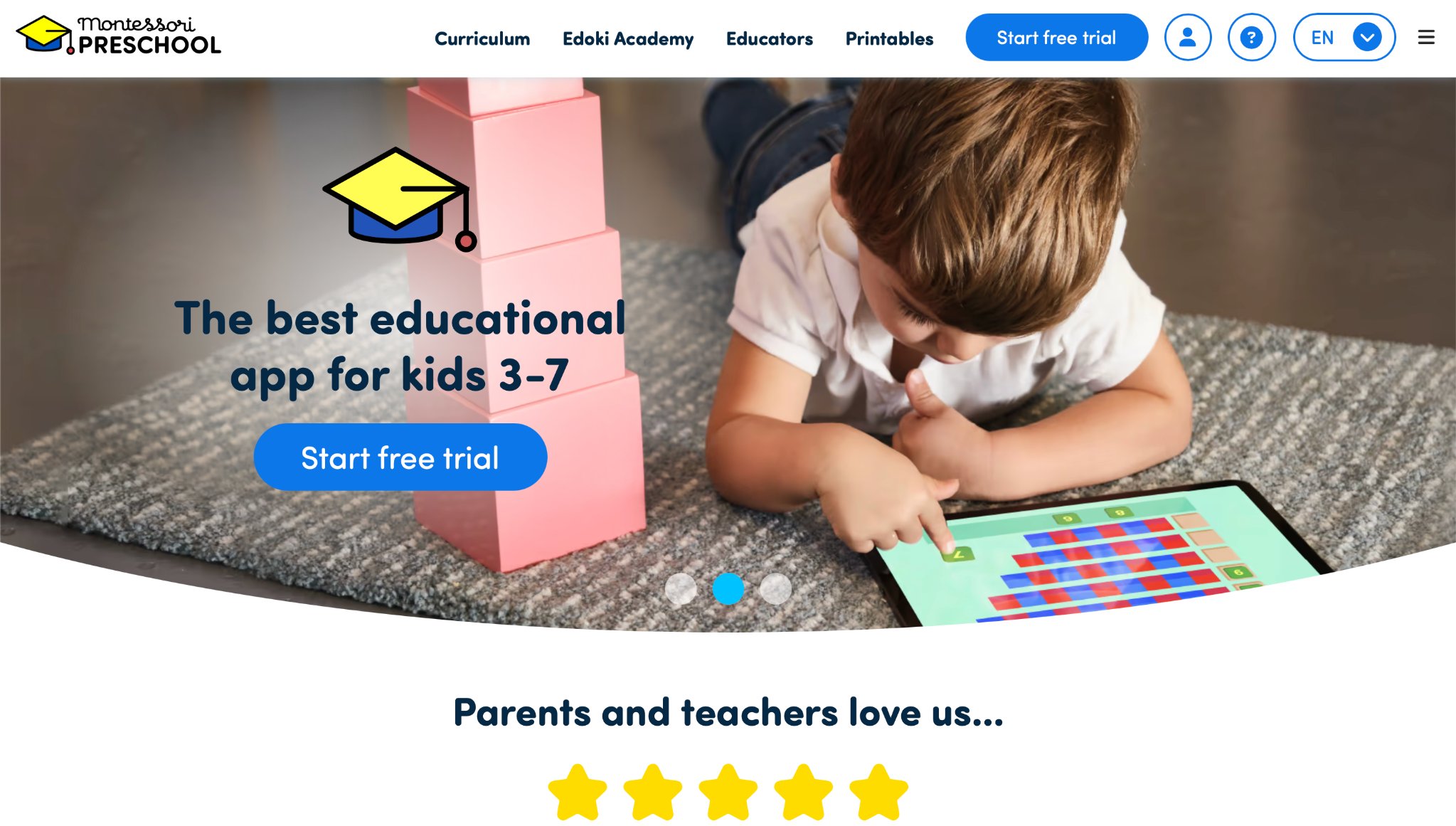
Montessori Preschool brings self-directed activities inspired by classic Montessori methods to the screen in a thoughtful way. Children work with numbers, letters, shapes, colors, and simple logic puzzles at their own pace, with built-in opportunities for independent correction and concentration that mirror the classroom approach. The design encourages autonomy, careful observation, and a sense of quiet focus rather than constant stimulation. Strengths include the alignment with hands-on learning principles and a calm atmosphere that respects the child’s natural rhythm. Some families prefer pairing the digital sessions with real physical materials such as sandpaper letters or number rods to get the full benefit of the Montessori approach and keep the learning grounded in the real world.
Key features
- Self-paced Montessori-style tasks
- Coverage of early math, literacy, shapes, and colors
- Emphasis on independence and self-correction
- Suitable for ages roughly 3 to 7
Facts and information
- Created with input from Montessori teachers
- Supports independent skill practice
- Includes progressive challenges that grow with the child
10. SplashLearn
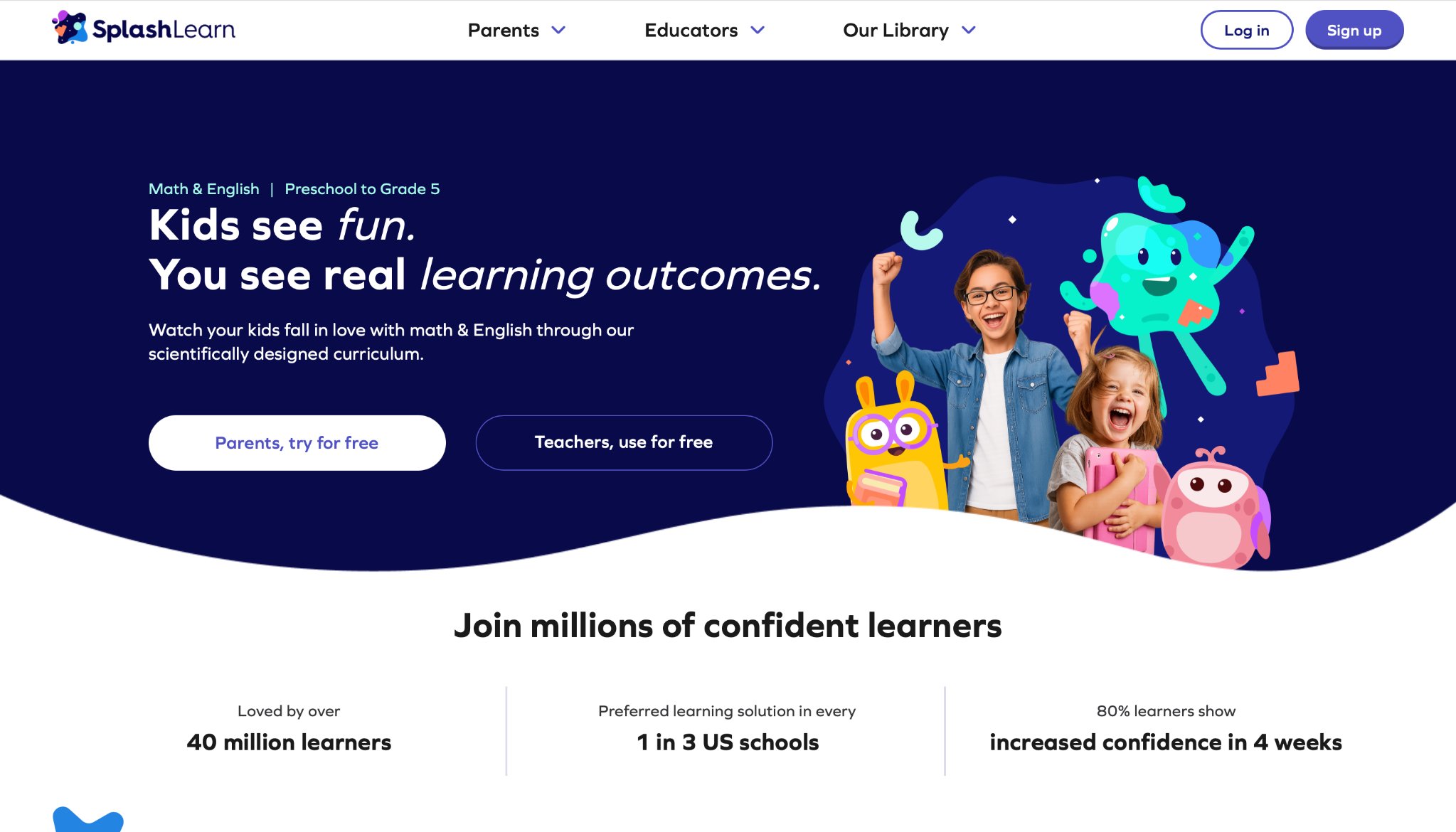
SplashLearn focuses on adaptive math and reading games that carefully respond to a child’s answers and adjust difficulty in real time so the experience stays challenging without becoming frustrating. Colorful activities, stories, and challenges keep engagement high while covering preschool through early grade concepts in a structured yet playful way. Personalized paths help fill specific skill gaps and give children a sense of steady progress. Strengths include the adaptive engine and the large, well-organized activity library that offers plenty of variety. The broader grade range means some content sits above pure preschool level, so parents often select age-appropriate sections or set limits to keep the experience focused and prevent younger children from feeling overwhelmed.
Key features
- Adaptive math and reading games that respond to performance
- Personalized learning paths
- Stories and interactive practice activities
- Progress insights for parents
Facts and information
- Supports foundational skills with game-based practice
- Used by many families for supplemental learning
- Covers early years into elementary grades
11. CBeebies Learn
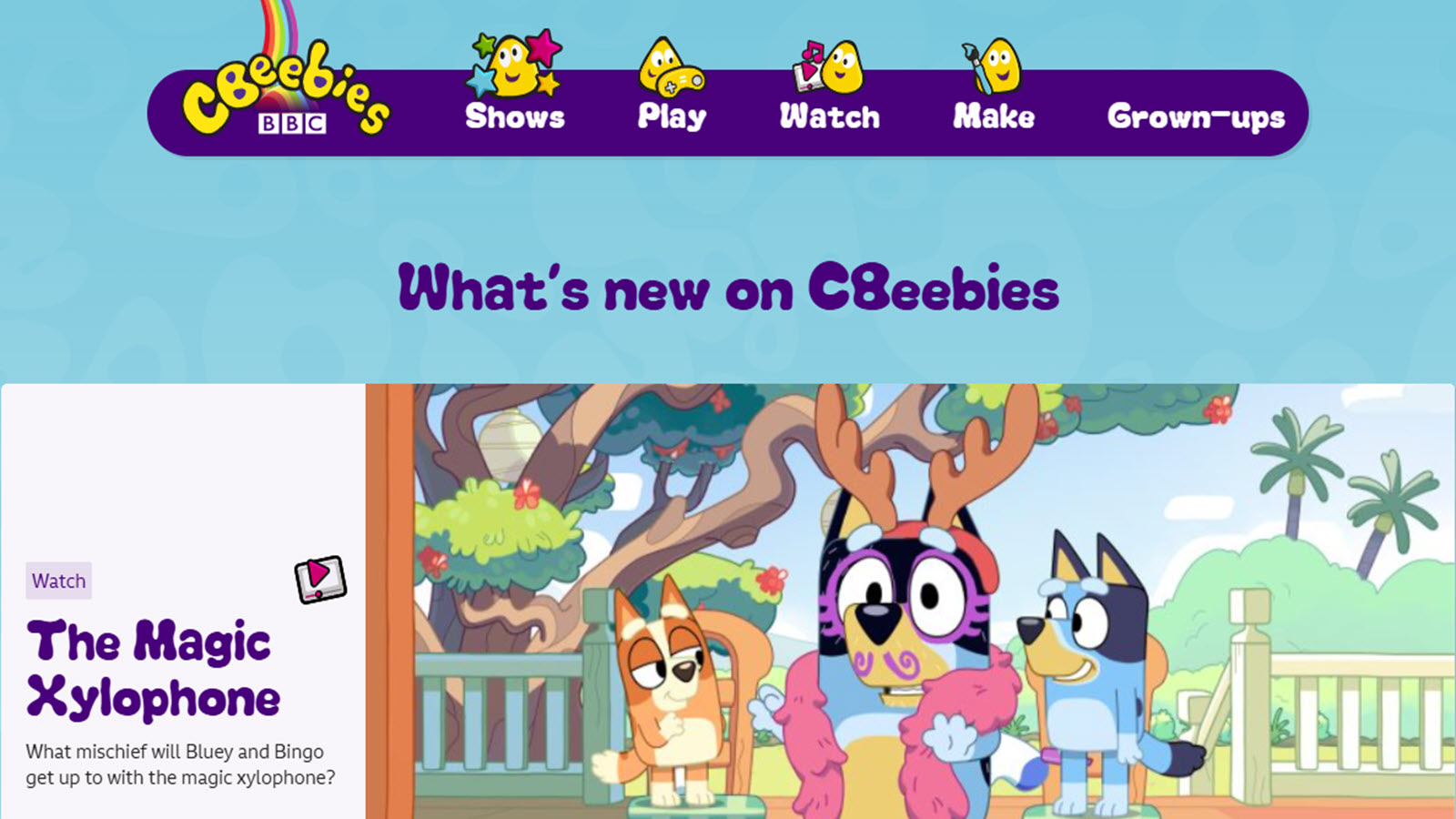
CBeebies Learn draws on popular British preschool characters that many children already recognize and enjoy to practice numbers, phonics, shapes, colors, and simple concepts in short, friendly activities. Games and interactive tasks align with early years learning goals and stay completely free of ads or in-app purchases, which gives parents peace of mind. Strengths include the familiar faces that make starting easy and the clear curriculum links that help families feel confident about the educational value. Availability and language focus may suit some families more than others depending on location, preferred accents, or cultural references, but the overall tone remains gentle and age-appropriate.
Key features
- Character-based preschool games
- Practice in math, literacy, shapes, and colors
- Offline-friendly options
- Safe design for young children
Facts and information
- Linked to early years learning frameworks
- Supports ages around 2 to 4 especially well
- Emphasizes playful skill building with known characters
12. Endless Numbers
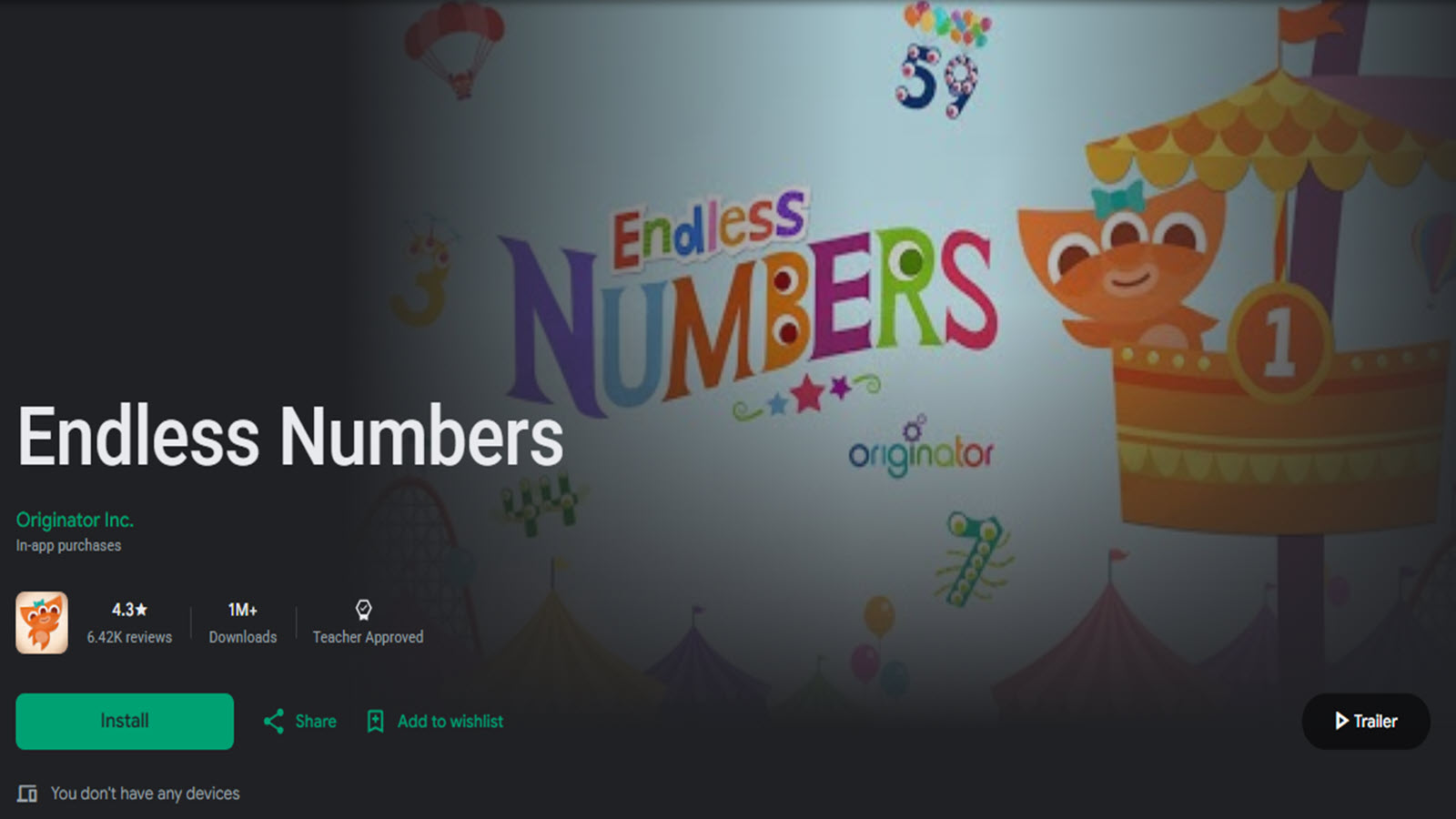
Endless Numbers is the math companion to Endless Alphabet and uses the same charming monster style that many children already love. Kids practice number recognition, counting, sequences, quantity, and simple addition through interactive puzzles and short animations that bring each number to life in a playful way. Children drag numbers into place, watch sequences unfold, and see quick stories that give meaning to mathematical concepts without any sense of pressure. The stress-free design with no timers or scores keeps the focus on discovery and confidence. Strengths include the consistent visual language and clear early numeracy support that feels connected to the alphabet version. Coverage stays focused on foundational number skills rather than broader topics, so it pairs especially well with other apps that cover literacy or creative play.
Key features
- Interactive number and quantity puzzles
- Animated sequences and simple equations
- Clean, low-pressure design
- Strong early math focus
Facts and information
- Builds number recognition, counting, and basic addition
- Suitable for preschool ages
- Complements the Endless Alphabet approach
13. Teach Your Monster to Read
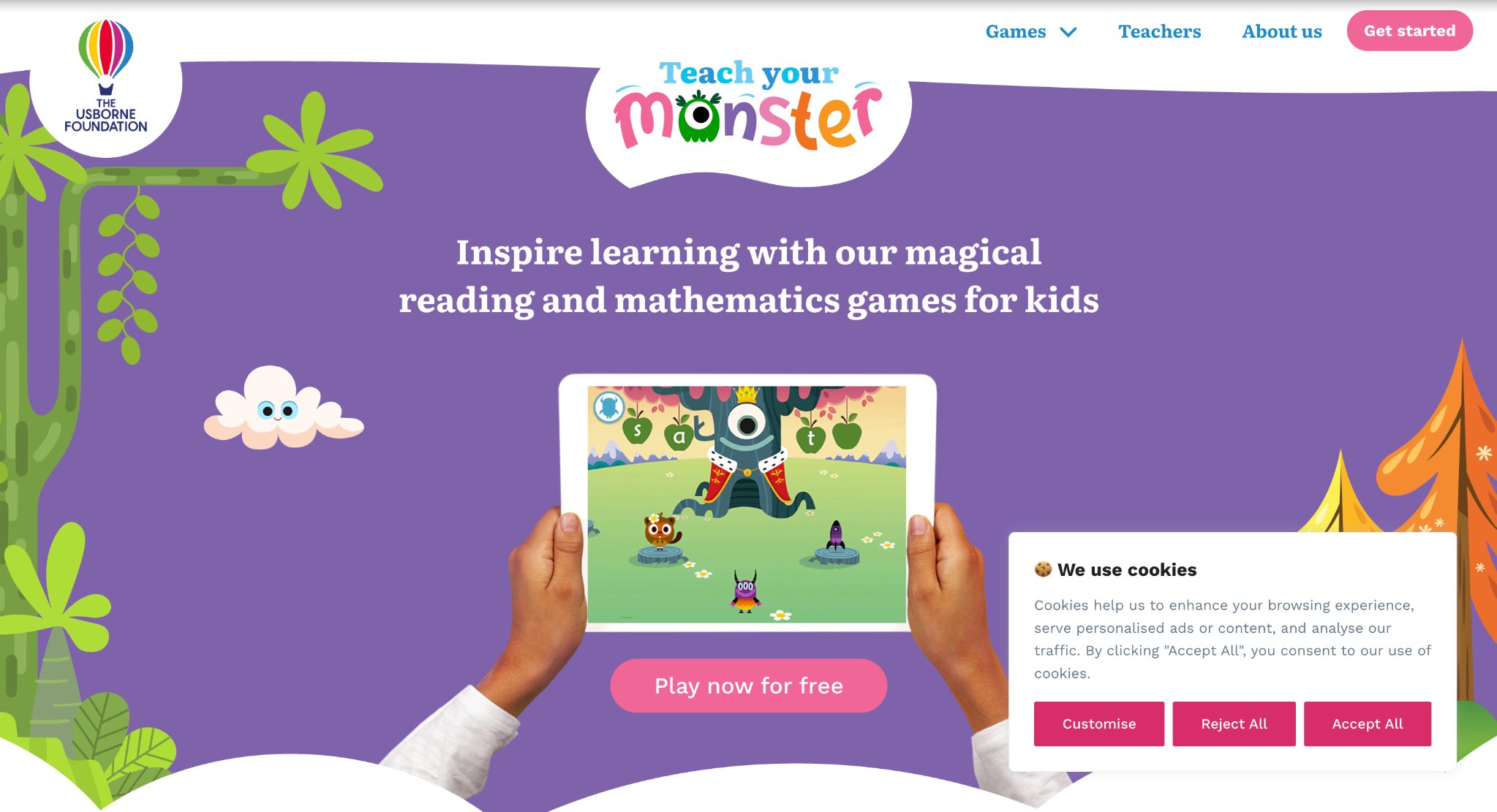
Teach Your Monster to Read turns phonics practice into a full adventure that keeps children motivated over time. Kids create their own monster and help it learn to read so it can repair its spaceship and return home, meeting colorful characters along the way. Three progressive games carefully cover letter sounds, blending, segmenting, tricky words, and short sentences in a logical sequence. The experience was developed with literacy experts and aligns with synthetic phonics approaches used in many schools, which gives it strong educational credibility. Strengths include the engaging story frame, clear skill progression, and free web version that makes access easy for families. Younger preschoolers often need an adult nearby at the beginning to help navigate the interface and celebrate early successes until they gain confidence.
Key features
- Personalized monster and adventure storyline
- Three staged games covering early reading skills
- Phonics, blending, and sentence practice
- Free web access with mobile options
Facts and information
- Created with academic input for phonics learning
- Supports ages roughly 3 to 6
- Tracks progress and offers targeted practice mode
14. Duolingo ABC
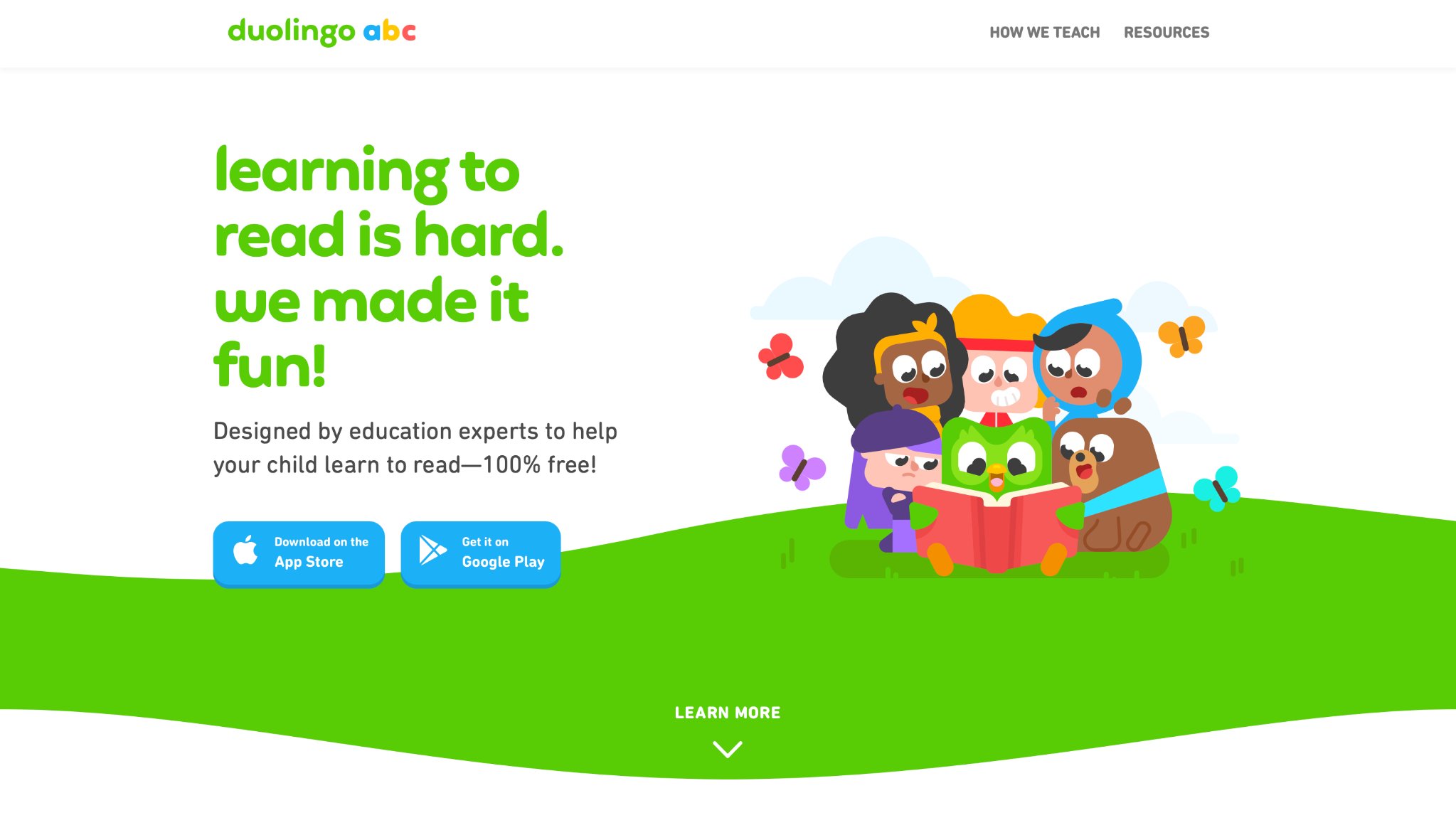
Duolingo ABC is a completely free phonics and early reading app designed for children ages 3 to 8 that takes a structured yet playful approach. Bite-sized lessons teach letter sounds, handwriting, sight words, vocabulary, and simple stories through short interactive games that feel more like play than formal instruction. The curriculum follows science-of-reading principles and lets children move at their own pace with clear progression from basic letter recognition to reading simple sentences. Strengths include the total absence of ads or purchases, the well-structured sequence, and the offline capability for many activities that makes it useful on the go. Some children find the early levels a bit repetitive if they already know basic letters, so starting at the right point or skipping ahead when ready helps maintain motivation and keeps the experience enjoyable.
Key features
- Hundreds of short phonics and reading lessons
- Letter tracing, sound matching, and story practice
- Fully free with no ads or in-app purchases
- Offline capability for many activities
Facts and information
- Built by literacy specialists using evidence-based methods
- Supports preschool through early elementary reading skills
- Encourages independent practice once children know the interface
15. HOMER
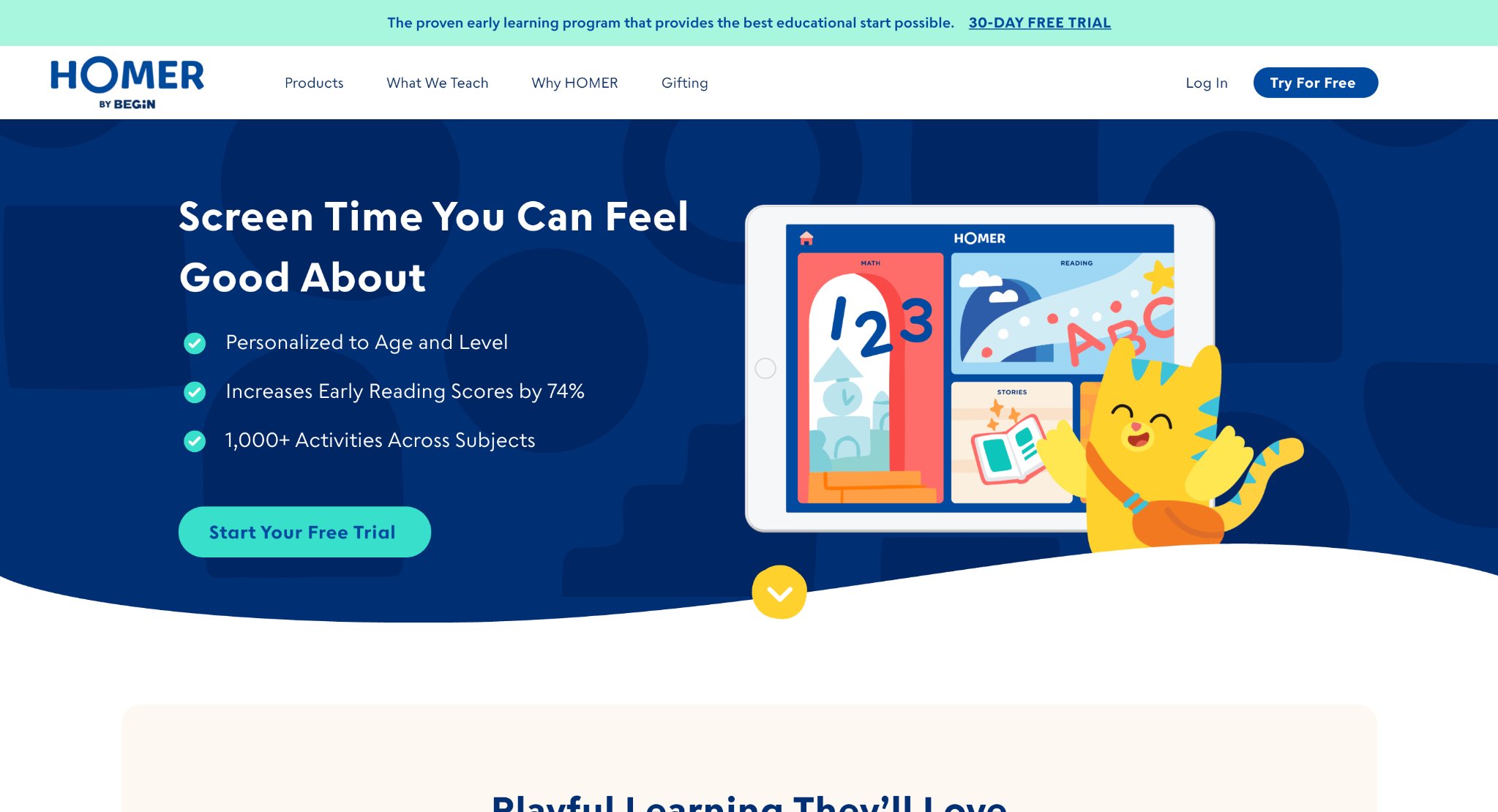
HOMER offers a personalized early learning path that adapts to each child’s interests, strengths, and current skill level in a thoughtful way. Activities cover reading, math, social-emotional skills, and creativity through stories, games, songs, and interactive tasks that feel relevant to the individual child. Parents answer a few simple questions at the start so the app can tailor the experience from the very beginning and keep motivation high. Strengths include the individualized approach and engaging content that many children find more interesting than generic programs. The need for initial adult setup and the subscription model are points some families notice when comparing free or one-time-purchase options, but the personalization often makes the investment feel worthwhile for those who use it regularly.
Key features
- Personalized learning path based on child interests
- Coverage of reading, math, and social-emotional growth
- Stories, games, and interactive activities
- Progress tracking for parents
Facts and information
- Focuses on making learning feel relevant and motivating
- Suitable for preschool and early elementary ages
- Emphasizes both academic and emotional skill building
How to Choose the Right Games for Your Preschooler
Match activities to your child’s current interests and energy levels. Some kids prefer short, focused challenges in number recognition games or logic puzzles games, while others enjoy open creative spaces that support imagination and storytelling. Watch how they respond after a few sessions. Do new words from phonics games or counting ideas from math games for 5 year olds appear in real life conversations or play? Safe, ad-free designs with clear age ranges reduce frustration and keep the experience positive.
Mix digital play with books, outdoor time, and hands-on sorting or drawing so skills transfer naturally. Tools that include parent insights help you see progress without turning play into pressure. The best fits feel joyful and leave room for conversation afterward. Look for options that cover early literacy, preschool math, pattern recognition, and life skills so children build a balanced foundation. Learning games for preschoolers online that adapt to different energy levels and interests often create the strongest long-term engagement.
Building Daily Habits with Educational Play
Short, consistent sessions work better than long ones for most preschoolers. Tie game themes to real routines, such as counting while setting the table or talking about jobs after a professions activity. Many families use printables or simple follow-up questions to keep learning going offline and reinforce what children practiced on screen. Calm visuals and positive feedback help children feel successful without pressure.
Over time, these moments support focus, curiosity, and confidence that carry into school readiness and everyday independence. Activities focused on brain development for children, problem-solving for toddlers, and reading readiness activities create natural bridges between digital play and daily life. Games that include memory practice for kids or shape recognition for preschoolers also strengthen attention and observation skills that show up during ordinary moments at home or outdoors.
Focus Area: Language & Phonics
- Strong games help with letter sounds, new words, and simple stories.
- Everyday benefit: Kids ask more questions and use new words when they talk.
Focus Area: Early Math
- Strong games help with counting, shapes, and simple comparisons.
- Everyday benefit: Kids feel more confident with numbers in daily tasks.
Focus Area: Logic & Attention
- Strong games help with puzzles, sorting, and focus challenges.
- Everyday benefit: Kids concentrate better during play and other activities.
Focus Area: Life Skills
- Strong games help with routines, different jobs, and creativity.
- Everyday benefit: Kids gain more independence and use their imagination.
FAQ
What age works best for preschool educational games?
Most preschool educational games work well for children ages 3 to 7, when attention spans, motor skills, and curiosity support guided play. Games designed for this stage use simple visuals, voice guidance, and short tasks that match how young children learn through interaction. Younger children often benefit from calmer, open-ended activities, while those closer to school age enjoy progressive challenges in language, numbers, and logic. Looking for age-appropriate content helps keep the experience enjoyable and effective.
How much screen time is helpful for learning games?
Short, focused sessions tend to work best for preschoolers so the experience stays positive and supports rather than replaces other play. Quality games with calm pacing and clear goals allow children to practice skills without overload. Many families find that pairing digital activities with books, outdoor time, or conversation helps new ideas transfer into daily life. The key is choosing tools that feel like joyful play while building focus and confidence through learning games for preschoolers online.
Can these games help with school readiness?
Yes, well-designed preschool educational games support school readiness by building foundational skills in language, early math, attention, and problem-solving. Activities that involve sorting, counting, phonics, and simple routines prepare children for classroom expectations in a playful way. Creativity and life skills games help with social and emotional readiness. Consistent joyful practice often leaves children more confident as they approach formal learning.
Are psychologist-designed apps different from regular kids apps?
Psychologist-designed apps follow how young children actually learn through active play, meaningful feedback, and emotional safety. They avoid overstimulation and connect skills to real-life themes such as daily habits or professions. This approach supports better engagement and helps ideas transfer offline more naturally. Features like calm visuals, progressive challenges, and ad-free environments set them apart from purely entertainment-focused options and align with strong brain games.
What should parents look for when choosing preschool educational games?
Parents benefit from looking for age-appropriate design, ad-free environments, and activities that cover language, math, logic, and life skills. Games created with child development input often include clear progression and feedback that builds understanding rather than just rewarding clicks. Real-world themes and opportunities for creativity help skills feel relevant. Progress insights and offline extensions like printables can also make the experience more useful for everyday growth, especially when they include problem-solving games and reading readiness activities.
Read Also
- Why Psychologist-Designed Apps Boost Pre-K Learning Outcomes
- Best Apps for Learning 2026
- Best Educational Games Online 2026
- Best Educational App for Kids 2026
- What to Look for in Top-Rated Educational Games for Children
Discover the full range of joyful preschool educational games at Fluvsies Academy.