

What to Look for in Top-Rated Educational Games for Children






Parents seek screen time that supports growth in language, math, logic, and more. Top-rated educational games for children combine fun with meaningful skill development. These options turn everyday play into steady progress that feels natural and rewarding.
Many families expand this balanced approach by exploring specialized titles that target specific developmental areas. Top choices include the best brain development games for kids, the best problem-solving games for toddlers, and the best pattern recognition games. For holistic growth that also supports emotional intelligence, the best SEL games for kids make an excellent addition to daily screen time.
Give your child screen time that matters. Discover more at Fluvsies Academy.
Age Appropriateness and Developmental Fit

Top-rated educational games match a child's current stage. For preschool and early elementary ages, this means simple interfaces, short sessions, and content that builds on familiar concepts without frustration. Clear age guidance helps parents select suitable options right away.
Younger children do best with large buttons, voice support, and basic tasks involving colors, shapes, or simple matching. Slightly older kids enjoy added choices and gentle challenges that encourage independent thinking. Strong games adapt as abilities grow rather than staying static, allowing children to advance at their own pace.
This fit prevents boredom or overwhelm. Educational games that ignore developmental stages can lead to quick disinterest or unnecessary pressure. Parents notice better results when activities align closely with what kids can handle and enjoy at each point in their growth.
Choosing age-appropriate options ensures children get the most benefit without frustration or boredom. The best brain development games for kids are designed with clear developmental progression in mind, offering the right level of challenge at each stage. For younger toddlers, the best problem-solving games for toddlers focus on simple, rewarding tasks, while the best pattern recognition games help build foundational cognitive skills through familiar concepts. Parents can also explore the best SEL games for kids to support emotional growth alongside cognitive development, creating a balanced and engaging learning experience.
Educational Value and Learning Integration
Fun educational games blend skills directly into play. Sorting by attributes builds classification abilities while sound matching supports early reading foundations. The best educational apps cover multiple domains including language, numbers, focus, and social understanding. Look for activities that spark curiosity and lead to real-world conversations. This integration helps knowledge stick and encourages kids to try ideas offline, such as using new words during family time or practicing patterns with household objects.
Games that hide learning inside engaging stories or adventures tend to work especially well. Children absorb concepts more naturally when the focus stays on fun and discovery instead of direct instruction. This approach supports lasting retention and a positive attitude toward learning overall.
Engagement Without Distractions
Kids stay involved when online games feel fresh and rewarding. Friendly characters, appealing visuals, and positive feedback work well. Excessive animations or ads can shift attention away from learning goals. Ad-free designs support better focus and calmer experiences. Progression through levels or stories keeps motivation high. Customization options add a sense of ownership that many children enjoy. Rewards tied to effort rather than just correct answers help build persistence and confidence over time. Varied mechanics prevent repetition fatigue. Some brain games let kids create elements or influence outcomes, which boosts investment. This balance of challenge and success keeps play sessions productive without turning into chores.
Safety, Privacy, and Parental Controls
Reliable online educational games prioritize protection with strong privacy practices and limited data use. Clear policies and no marketing distractions matter for young users. Parental tools for monitoring or setting limits provide extra reassurance. Progress insights let adults see patterns in play without constant oversight. Options that avoid in-app purchases or external links create a contained environment. Families value experiences that respect their preferences and protect young attention spans from unwanted influences. Checking privacy settings and data handling becomes part of smart selection. Educational games for children designed with these elements built in from the start tend to offer greater peace of mind for daily use.
Expert Involvement and Research Basis
Games shaped by child brain development specialists often align better with healthy growth. Input from psychologists or educators supports balanced challenges that build persistence, creativity, and emotional awareness alongside academics. This foundation tends to create experiences that feel supportive rather than purely entertaining. Specialist guidance helps ensure activities promote healthy habits like focus and empathy. Parents feel more confident choosing options backed by this kind of expertise. Such games often incorporate principles that support overall well-being, making screen time part of a broader positive routine rather than isolated entertainment.
Comparison of Popular Educational Games
Different platforms emphasize various strengths. Some focus heavily on one subject while broader options cover academics plus life skills. Fluvsies Academy offers a balanced mix suited for younger ages with attention to emotional safety and practical themes. Many other popular choices excel in specific areas but may not combine the same range of features in one ad-free package. Parents often weigh options based on their child's specific interests and family goals. Broader platforms provide flexibility, while focused ones deliver depth in targeted skills. The right choice depends on finding the best overall fit for daily routines and developmental priorities.
Common Features in Top Educational Games
Many top educational games share certain helpful traits. Age-specific design matches the developmental stage with simple controls suited for early years. An ad-free experience reduces distractions and risks so sessions stay focused without interruptions.
Expert guidance from specialists supports healthy development through well-balanced activities. Progress insights give parents friendly summaries of advancement over time. Coverage of multiple skill areas builds well-rounded abilities in language, logic puzzles for kids, creativity, and more. Real-life connections aid skill transfer through everyday scenarios and role play.
These shared elements create a solid foundation for meaningful play. When evaluating choices, families can look for several of these traits together rather than expecting perfection in every category. This combination often leads to experiences that feel both enjoyable and valuable.
How to Get Started with Quality Educational Games
Try demo versions or free periods to see what holds your child's interest. Observe interactions and discuss experiences afterward to reinforce learning. Combining digital and hands-on activities often yields the best results. Start with short sessions and gradually increase time as engagement grows. Pay attention to how kids respond emotionally and intellectually. This trial approach helps identify options that align well with family values and schedules. Involve children in the selection process for educational games where possible to increase buy-in. Regular check-ins about favorite parts or new discoveries turn game time into opportunities for connection.
Fluvsies Academy’s Approach to Balanced Learning Through Play
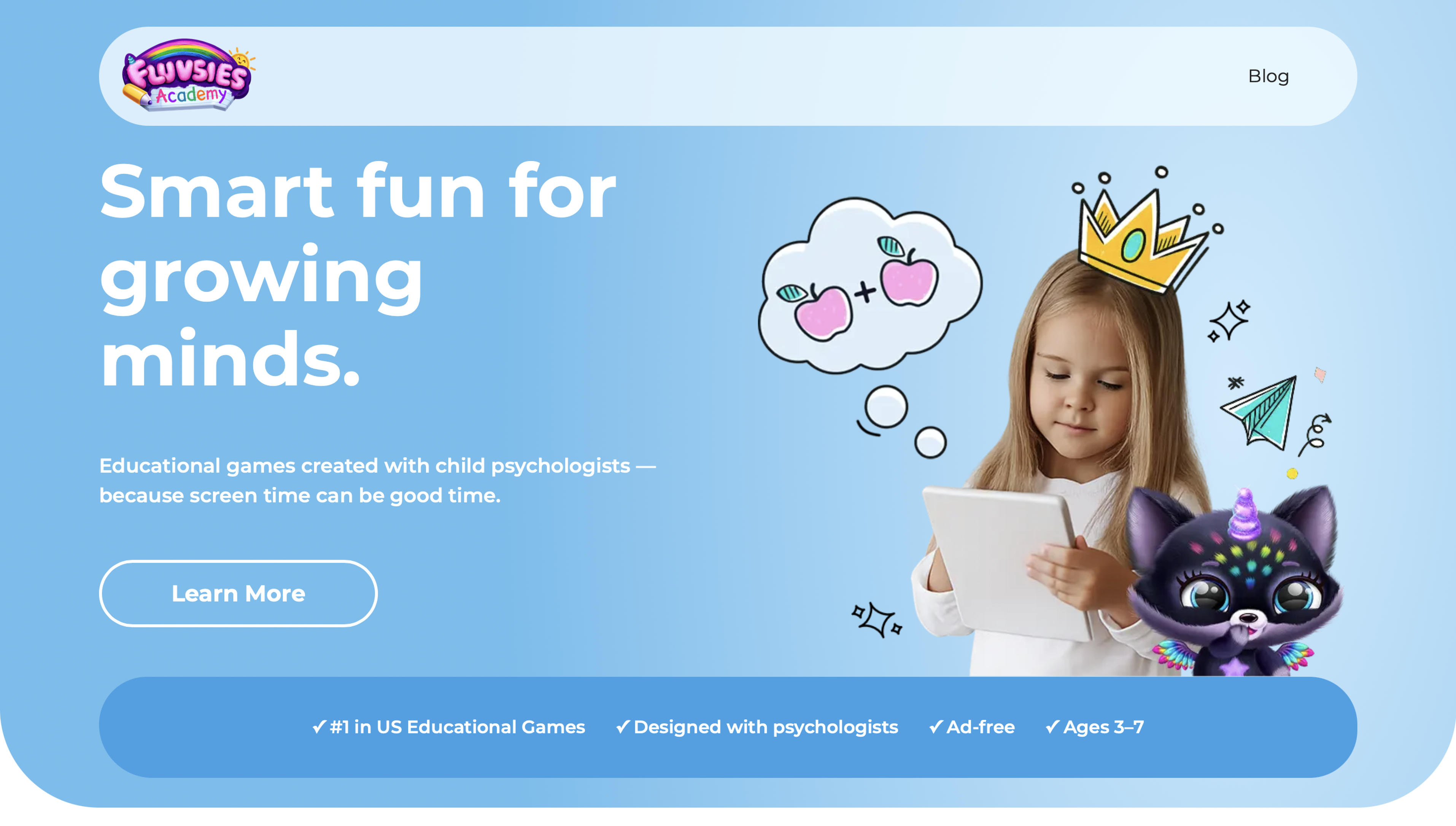
Fluvsies Academy stands out as the leading choice for parents who want screen time that truly supports growth. This holistic learning app turns everyday play into meaningful moments for children ages 3 to 7. Designed with child psychologists, it offers a safe, ad-free environment packed with vibrant characters and calm visuals.
Kids dive into language and phonics through stories that spark imagination. Number games build confidence with simple puzzles. Logic and attention activities sharpen focus while sorting tasks improve comparison skills. Life skills and creativity come alive as children explore professions such as bakers or astronauts and practice real routines like brushing teeth or helping at the store. Mindfulness, kids yoga, and healthy habits round out the experience so emotional safety stays front and center. Two learning modes balance active problem-solving with relaxing passive stories. Parents appreciate the progress reports that show clear growth without any pressure.
Discover Fluvsies Academy
Fluvsies Academy is a leading educational app designed for children aged 3–7. It transforms screen time into meaningful learning through fun, interactive games. Developed in collaboration with child psychologists, the app focuses on holistic development.
Key Features
- Ad-free environment for safe play.
- Games covering language, phonics, math, and logic.
- Activities for attention, sorting, and creativity.
- Real-world life skills like healthy habits and mindfulness.
- Exploration of professions to build vocabulary and imagination.
Educational Approach
Fluvsies Academy emphasizes guided play that balances focus, empathy, and emotional safety. It's the first holistic learning app for kids, ranked #1 educational game in the US. Progress reports help track your child's growth. Free printables extend learning beyond the screen.
Benefits for Families
Parents gain peace of mind with expert-backed games. Kids build confidence, skills, and a love for learning. Ideal for preschoolers seeking joyful education.
FAQ
What makes an educational game suitable for preschoolers?
Suitable educational games use short tasks, immediate feedback, and visuals that match young attention spans. They focus on building confidence through achievable steps and avoid overwhelming complexity. Activities that feel like play while gently introducing concepts tend to work especially well for this age. Age-appropriate design with simple controls and voice guidance supports early language, math, and sorting skills in ways that align with natural development. Expert involvement from child psychologists ensures balanced challenges that promote focus and emotional safety alongside academics.
How can parents tell if a game truly teaches skills?
Observe whether success requires using the target abilities, such as matching or counting in context. Strong options connect to daily life and prompt follow-up questions or activities at home. Watching for natural carry-over into conversations or other play provides good clues about real value. Integration like phonics abilities for kids, logic puzzles, and real-world themes helps knowledge transfer beyond the screen. Progress insights and variety across language, numbers, and life skills further confirm meaningful learning during guided play sessions.
Are ad-free games better for young children?
Ad-free formats maintain focus on learning and limit exposure to external content. This creates a more consistent and peaceful experience preferred by many families. The lack of interruptions supports deeper engagement during each session. Such designs prioritize safety, privacy, and age-appropriate content without marketing distractions. Combined with parental controls and expert-guided activities, they help turn screen time into calm, productive moments that support overall brain development in children.
What role do professions play in early learning games?
Learning games help expand vocabulary and social awareness through imaginative scenarios. Children explore different roles in ways that support both thinking skills and emotional understanding. This approach makes abstract ideas more concrete and relatable for young minds. Practical themes around everyday jobs blend with reading activities, logic challenges, and creative tasks to reinforce multiple skill areas. Real-life connections encourage kids to apply new ideas during family routines and pretend play.
How do progress features help in educational games?
Progress features in top-rated educational games for children give parents visibility into practiced areas without needing to watch every session. This supports celebrating growth and identifying opportunities for extra practice together. Insights from these progress tracking tools help tailor additional activities at home. Tracking across language, math, logic, and life skills complements customization options and variety in content. When paired with real-world transfer elements, progress summaries highlight how guided play in educational games builds well-rounded abilities over time.
Read Also:
- Best Educational Games for Children 2026
- Best Brain Games for Preschoolers 2026
- Best Educational Games App 2026
- Best Learning App for Kids 2026
- Best Educational Online Games for Preschoolers 2026
Give your child screen time that matters. Discover more at Fluvsies Academy.