

How Educational Games Build Number Sense & Early Math Skills






Educational games help to develop number sense in children and early math skills in ways that feel like pure play. Kids learn to understand quantities, recognize patterns, and build confidence with numbers without pressure.
Beyond building strong number sense, these educational games pair beautifully with other engaging activities that support well-rounded development. Parents often enhance early math play with the best brain development games for kids, the best problem-solving games for toddlers, and the best pattern recognition games. For emotional growth alongside cognitive skills, the best SEL games for kids offer valuable support in a playful format.
Try Fluvsies Academy today and give your child joyful math moments that build real skills.
What Is Number Sense and Why Does It Matter for Young Children

Number sense refers to a child's intuitive feel for numbers. It includes understanding quantities, recognizing that numbers represent amounts, comparing sizes like more or less, and seeing relationships such as one more or one less. This foundation goes beyond rote counting to flexible thinking that helps kids solve everyday problems.
Strong number sense in the early years supports later math learning for kids, problem-solving, and logical reasoning. Children who develop it early feel more comfortable tackling new challenges because they grasp the "why" behind numbers rather than just memorizing facts. Everyday moments, such as sharing snacks or setting the table, become natural practice opportunities. Math skills games make these ideas concrete. Kids manipulate objects, see immediate feedback, and experiment safely. This builds a positive attitude toward math from the start.
To strengthen number sense effectively, incorporating targeted games helps children develop these intuitive skills naturally. Engaging with the best pattern recognition games supports understanding of sequences and relationships between numbers. The best math learning app for kids offers interactive ways to explore quantities and comparisons through immediate feedback. Complement these with the best fun online educational games and the best memory games for preschoolers to create varied, enjoyable experiences that reinforce number concepts while boosting overall cognitive development and confidence.
How Educational Games Support the Development of Number Sense
Fun educational games encourage active engagement that worksheets often miss. Children practice one-to-one correspondence by matching objects to numbers, subitizing (quickly recognizing small groups without counting each item), and understanding cardinality (the last number counted tells the total amount). These core ideas form the backbone of early math. Many math learning games use visuals like dots, paths, or characters to help kids connect symbols to real quantities. Repetition in a fun context strengthens memory and fluency without boredom. Children also learn estimation, ordering, and basic operations through play that feels rewarding.
Studies show that regular sessions with well-designed educational games lead to noticeable improvements in foundational skills. Linear number paths, for example, help kids grasp sequence and magnitude effectively. Parents appreciate how these activities fit busy routines. Short sessions build focus and persistence while kids enjoy colorful worlds and gentle challenges.
Key Benefits of Using Games for Early Math Skills
Interactive educational games offer several advantages that support development in meaningful ways:
- Builds confidence and reduces anxiety: Kids succeed through play and see progress quickly, which encourages them to try harder tasks.
- Develops multiple skills at once: Many activities combine numbers with sorting, patterns, language, or problem-solving in kids for well-rounded growth.
- Promotes persistence and focus: Challenges with just-right difficulty levels teach children to stick with tasks and learn from mistakes in a low-pressure setting.
- Connects math to real life: Themes like professions, shopping, or helping characters make numbers relevant and memorable.
- Supports different learning styles: Visuals, sounds, movement, and stories accommodate varied needs while keeping engagement high.
These benefits extend beyond math. Children often transfer skills to daily routines, such as counting steps or sorting toys, which reinforces learning naturally.
Effective Features to Look for in Math Educational Games
Not all of the math games deliver the same value. Strong options share characteristics that maximize learning:
- Age-appropriate pacing: Activities match developmental stages with simple controls and clear feedback.
- Varied representations: Numbers appear as objects, dots, paths, or symbols to build flexible understanding.
- Built-in scaffolding: Gentle hints or adaptive difficulty help kids stay successful while progressing.
- Integration with other areas: Combining math game sessions with stories, logic, or life skills creates richer experiences.
- Safety and focus: Ad-free environments with no distractions prioritize learning and emotional well-being.
Practical Ways Games Build Specific Early Math Skills
1. Counting and One-to-One Correspondence
Memory games let children practice matching each object to a number word and symbol. Activities like moving characters along paths or collecting items teach accurate counting sequences.
2. Subitizing and Quick Recognition
Small groups of dots or arrangements in number recognition games help kids recognize quantities instantly. This skill speeds up mental math and builds number flexibility.
3. Comparing and Ordering
Sorting by size, finding more or less, or arranging numbers strengthens magnitude understanding. These comparisons appear naturally in puzzle or adventure formats.
4. Patterns and Basic Operations
Repeating sequences or simple addition through grouping objects introduce ideas like "one more." Visual tools make these concepts intuitive.
Tips for Parents to Maximize Learning Through Games
Choose educational games that match your child's current abilities and interests to maintain motivation. Play together sometimes to talk about what they notice with numbers. Keep sessions short and positive so math stays enjoyable. Extend digital play with real-world activities like counting during grocery trips or sorting socks. Monitor progress naturally through observation and the tools many apps provide. Combine options with offline activities for the best results.
Recent Insights on Play-Based Math Learning
Studies continue to show that guided play helps children internalize math concepts more deeply than rote methods. Activities that encourage exploration and discussion lead to stronger retention and positive attitudes. Linear board-style games, in particular, support number line understanding effectively. Experts emphasize integrating math with other developmental areas for well-rounded growth. Platforms designed with input from child brain development specialists tend to deliver more balanced experiences.
Fluvsies Academy: Building Number Sense Through Play
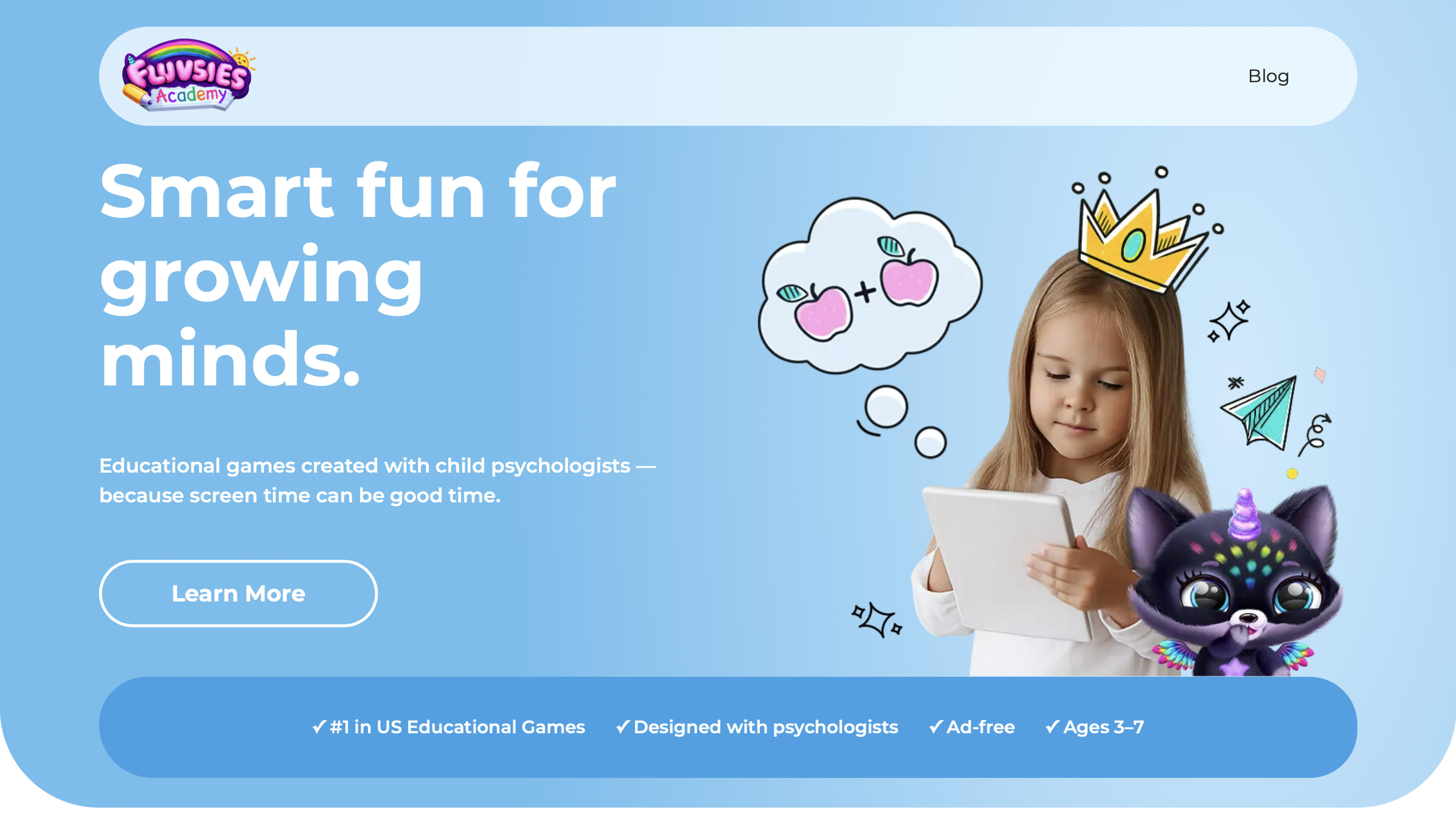
Fluvsies Academy stands out as the leading choice for parents who want screen time that truly supports growth. This holistic learning app turns everyday play into meaningful moments for children ages 3 to 7. Designed with child psychologists, it offers a safe, ad-free environment packed with vibrant characters and calm visuals.
Kids dive into language and phonics through stories that spark imagination. Number games build confidence with simple puzzles. Logic and attention activities sharpen focus while sorting tasks improve comparison skills. Life skills and creativity come alive as children explore professions such as bakers or astronauts and practice real routines like brushing teeth or helping at the store. Mindfulness, kids yoga, and healthy habits round out the experience so emotional safety stays front and center. Two learning modes balance active problem-solving with relaxing passive stories. Parents appreciate the progress reports that show clear growth without any pressure.
Discover Fluvsies Academy
Fluvsies Academy is a leading educational app designed for children aged 3–7. It transforms screen time into meaningful learning through fun, interactive games. Developed in collaboration with child psychologists, the app focuses on holistic development.
Key Features
- Ad-free environment for safe play.
- Games covering language, phonics, math, and logic.
- Activities for attention, sorting, and creativity.
- Real-world life skills like healthy habits and mindfulness.
- Exploration of professions to build vocabulary and imagination.
Educational Approach
Fluvsies Academy emphasizes guided play that balances focus, empathy, and emotional safety. It's the first holistic learning app for kids, ranked #1 educational game in the US. Progress reports help track your child's growth. Free printables extend learning beyond the screen.
Benefits for Families
Parents gain peace of mind with expert-backed games. Kids build confidence, skills, and a love for learning. Ideal for preschoolers seeking joyful education.
FAQ
How do educational games specifically improve number sense in preschoolers?
Educational games improve number sense by offering repeated, interactive practice with quantities, patterns, and relationships in engaging contexts. Children build intuition through visuals and immediate feedback that make abstract concepts concrete and memorable. This approach aligns with how young minds learn best, turning everyday play into opportunities for understanding one-to-one correspondence, subitizing, and cardinality. These games also foster flexible thinking so kids see numbers as useful tools rather than isolated facts.
What age range benefits most from number sense games?
Children ages 3 to 7 benefit most from number sense games as they form foundational ideas during this critical period. Early exposure through play helps set them up for success in school math with activities that match their developmental stage and attention span. Math games provide gentle challenges that grow with the child, supporting skills like counting, comparing, and basic operations while building confidence. This timing ensures concepts stick naturally before formal schooling begins.
Can screen-based games replace hands-on math activities?
Screen-based games work best as a strong complement to hands-on math activities rather than a full replacement. Digital options deliver consistent practice, varied representations, and immediate feedback that reinforce concepts like ordering and patterns effectively. Physical play adds important tactile experiences, so combining both approaches creates richer learning. Many educational games also include ideas for extending play offline to blend the strengths of each method.
How can I tell if a math game is truly educational?
Look for features like clear progression, multiple ways to represent numbers, and built-in support such as hints or adaptive difficulty that keep children successful. Truly interactive educational games integrate math with other areas like logic or stories while maintaining safety through focused, ad-free designs. They prioritize age-appropriate pacing and meaningful feedback that builds skills without frustration. Parent tools for tracking progress can also indicate thoughtful development.
What makes certain apps effective for early math?
Effective math learning apps for early math blend number practice with related skills like sorting, patterns, and real-life themes in safe, engaging environments. They use psychologist-informed design to balance focus, emotional safety, and holistic growth while offering progress insights for families. Varied activities and scaffolding help children stay motivated and build lasting confidence with quantities and relationships. This combination supports natural development across different learning styles.
Read Also:
- Best Counting Games for Kids 2026
- Best Educational Games for Children 2026
- Best Preschool Online Games for 3 Year Olds 2026
- Best Educational Games App 2026
- Best Brain Games for 5 Year Olds Online 2026
Try Fluvsies Academy today and give your child joyful math moments that build real skills.