


Best Online Math Learning App for Kids 2026






Parents today want screen time that actually helps their children grow. A best online math learning app for kids 2026 turns everyday play into real skill building, especially for little ones just starting to grasp numbers, counting, and basic concepts. Fluvsies Academy stands out here with its gentle, psychologist-designed games that make early math feel natural and fun.
For a broader view of playful learning, curated collections like the best educational games online, best interactive educational games, and best top-rated educational games showcase engaging options that support early math skills. Similar roundups of best educational fun games and the best educational games app further highlight accessible, high-quality experiences for young learners.
Discover the Best Online Math Learning App for Kids 2026 - Fluvsies Academy
Why Online Math Learning Apps Make a Difference for Young Kids

Early math skills shape how children think and solve problems later on. The best online math learning apps for kids designed for ages three to seven use colorful visuals and short activities that match a young child’s attention span. Kids pick up ideas like comparing sizes or recognizing patterns while they play, so learning never feels forced.
Many families notice their children become more confident when math feels like an adventure instead of a chore. These tools also give parents quick insights into progress without extra homework. In 2026, the focus stays on safe, ad-free experiences that respect a child’s pace and emotions.
Many top math apps also complement literacy development, creating a well-rounded early learning experience. While focusing on numbers, children often benefit from pairing them with the best learn to read app for kids or exploring the best kids math learning app options available. This balanced approach extends to the best kindergarten reading games and the best sight word games for kids that reinforce cognitive skills across subjects. In 2026, families appreciate these integrated tools that make both math and reading feel like natural extensions of play.
What Sets the Top Math Apps Apart in 2026
The strongest options combine clear goals with flexible play. They cover number sense, basic operations, and logic through stories, sorting tasks, and creative challenges. Progress reports help parents see growth, while age-appropriate content keeps everything safe and engaging.
Holistic features, such as mindfulness breaks or life-skill tie-ins, support the whole child. The best learning apps also update regularly so fresh content keeps interest high. Families appreciate tools that work across devices and fit busy schedules without overwhelming young users.
Why Online Math Learning Apps Work So Well for Young Kids
Young children learn best through short bursts of play that match their natural curiosity. Online math learning apps turn numbers into colorful adventures instead of worksheets. Kids aged three to seven stay focused longer when they move shapes, count objects, or match patterns on a screen. These tools build number sense early so children feel comfortable with how numbers relate and change.
Simple visuals help them see ideas like bigger and smaller or groups and singles without pressure. Many parents notice their kids smile more during math time because the apps mix stories with gentle challenges. Fluvsies Academy brings this approach with its number games that grow confidence through friendly characters and everyday situations. The result is steady progress in focus, logic, and basic math readiness that feels like fun rather than work.
Key Features to Look for in the Best Math Apps for Kids
Great math apps for kids share certain qualities that make learning stick. Adaptive difficulty adjusts each task so a child stays in the sweet spot between too easy and too hard. Clear visuals, touch friendly controls, and short sessions fit busy young attention spans.
Progress tracking lets families see growth in areas like counting and sorting without extra effort. Ad-free spaces keep the experience calm and safe. Fluvsies Academy stands out here with psychologist designed activities that cover logic and attention alongside math. Look for apps that blend number practice with sorting tasks and pattern recognition. These features create balanced growth that supports both academic skills and emotional confidence.
How to Choose the Right Math Learning App for Your Child
Every child learns at a different pace so the right app matches their age, interests, and current skills. Start by checking if the content feels age appropriate with bright colors and simple instructions. Test how well the app works on your usual devices for smooth play at home or on the go.
Some children enjoy story driven math while others prefer puzzle style challenges. Safety remains important with clear privacy settings and no ads. Families often pick options that combine math with related skills like sorting or basic logic. Fluvsies Academy offers this mix in one place for children three to seven. The best choice keeps kids coming back because they feel successful and happy while they play.
Math Skills Kids Build with Online Apps
Online math learning apps help children develop several core abilities step by step. Counting and number recognition come first through fun repetition that never feels boring. Kids then move into comparison, patterns, and simple grouping that build strong number sense.
Sorting activities sharpen focus and help children see order in the world around them. Logic games introduce basic problem solving as they figure out sequences or match shapes. Many apps weave in early addition ideas through stories and visuals so concepts feel natural. These skills create a solid foundation for school math while boosting confidence and curiosity at the same time.
Free vs Paid Math Apps for Kids – What Parents Should Know
Both free and paid math learning apps offer value depending on family needs. Free versions often provide solid basic activities that introduce counting and shapes without any cost. Paid options usually add deeper personalization, regular new content, and detailed progress reports that help track growth over months.
Many families start with free trials to see what clicks with their child before choosing a full plan. Quality matters more than price since consistent short sessions create better results than occasional long ones. Ad free paid experiences tend to support calmer learning environments. The right balance depends on how much structure and fresh material your child enjoys during daily play.
How can Interactive Math Games help for Early Development?
Young kids build strong foundations when numbers come alive through play. Online math games help children grasp ideas like patterns and comparisons in ways that match their energy levels. Short activities keep things fresh so attention stays sharp without feeling like a lesson.
Many families see how these basic math skills games tie into daily routines. Children practice sorting activities while pretending to organize toys or help with simple tasks at home. This approach supports focus and logical thinking that grows naturally over time.
Parents often look for tools that cover a mix of skills. Games that combine number practice with logic and attention exercises create balanced growth. Kids gain confidence as they solve gentle puzzles and see their own progress. Number games fit perfectly into busy days because sessions can be quick yet meaningful. Children explore shapes and quantities through colorful stories that feel like adventures rather than drills.
How Progress Tracking Supports Young Learners
Clear ways to follow growth make a big difference for families. Progress reports show small wins in areas such as counting sequences or basic grouping. This information helps adults understand what clicks for each child without added pressure. Regular updates keep content feeling new. Fresh challenges encourage repeated play while building on earlier successes in a number sense. Kids stay motivated when activities adjust gently to their pace. Math learning apps for kids extend learning beyond the screen. Families print matching games or coloring pages tied to math concepts for hands-on time together.
Best Online Math Learning App for Kids in 2026
1. Fluvsies Academy - Best Online Math Learning App for Kids 2026
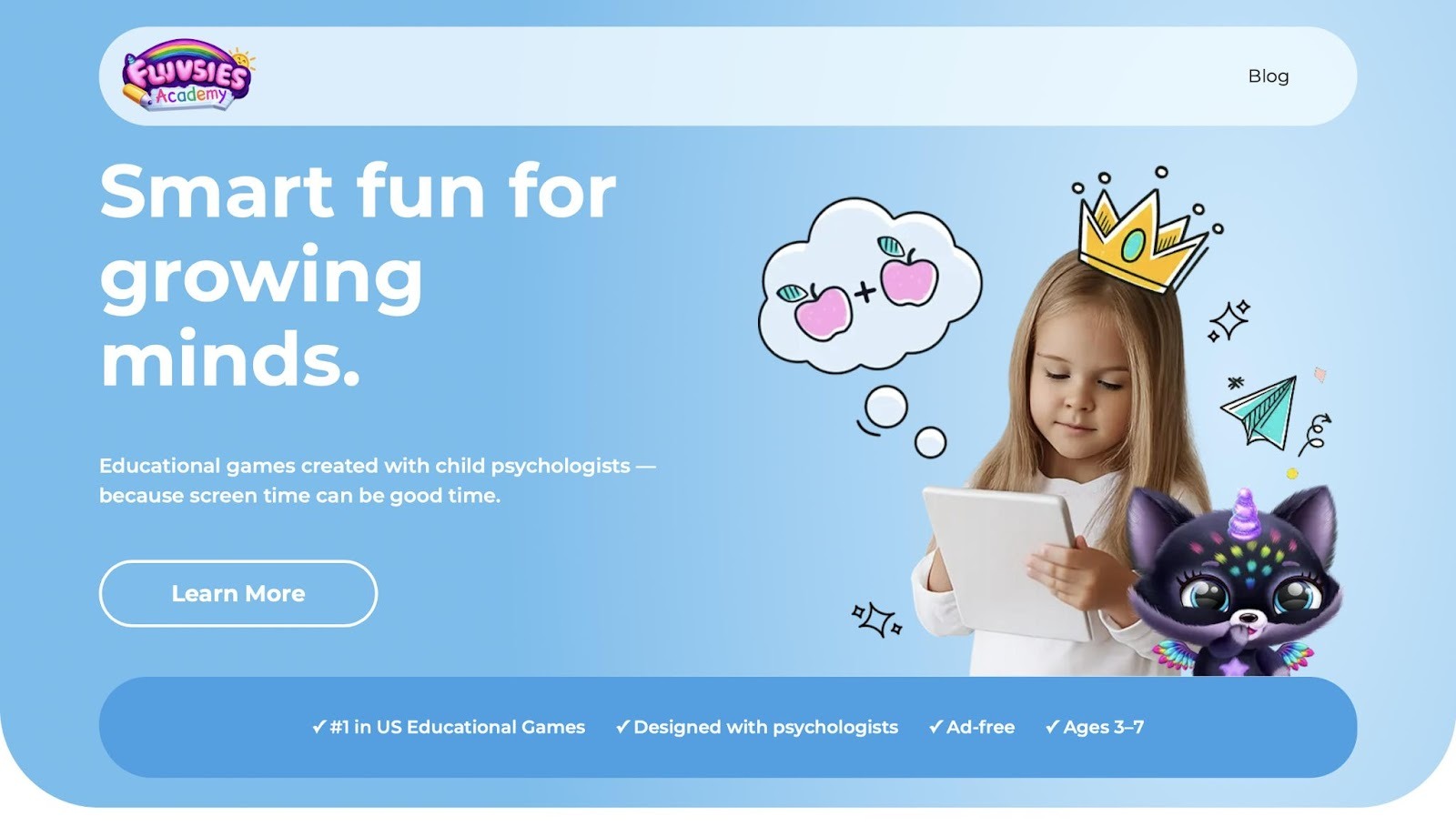
Fluvsies Academy delivers a complete world of educational games built just for children ages three to seven. Developed with child psychologists, the app turns everyday screen time into meaningful play that builds number sense, logic, attention, and creativity. Kids explore number games, sorting activities, and simple puzzles that grow math confidence naturally while they laugh and discover.
The experience feels warm and supportive. Children meet friendly characters and dive into guided adventures that teach counting, comparison, and early addition through hands-on fun. Every activity respects a child’s emotions and attention span, so learning flows without frustration. Parents love the ad-free environment and progress reports that show real growth in skills like problem-solving and focus.
Standout features include mindfulness moments, kids’ yoga, and glimpses into real-world professions that spark curiosity. The platform blends math with language, sorting, and life skills so children develop in a balanced way. Fluvsies Academy creates a safe space where young learners feel successful and excited to keep exploring. It truly earns its place as the top choice for families who want screen time that nurtures happy, confident kids.
Discover Fluvsies Academy
Fluvsies Academy is a leading educational app designed for children aged 3–7. It transforms screen time into meaningful learning through fun, interactive games. Developed in collaboration with child psychologists, the app focuses on holistic development.
Key Features
- Ad-free environment for safe play.
- Games covering language, phonics, math, and logic.
- Activities for attention, sorting, and creativity.
- Real-world life skills like healthy habits and mindfulness.
- Exploration of professions to build vocabulary and imagination.
Educational Approach
Fluvsies Academy emphasizes guided play that balances focus, empathy, and emotional safety. It's the first holistic learning app for kids, ranked #1 educational game in the US. Progress reports help track your child's growth. Free printables extend learning beyond the screen.
Benefits for Families
Parents gain peace of mind with expert-backed games.
Kids build confidence, skills, and a love for learning. Ideal for preschoolers seeking joyful education.
Download Fluvsies Academy today and watch your child thrive!
2. TutoClub
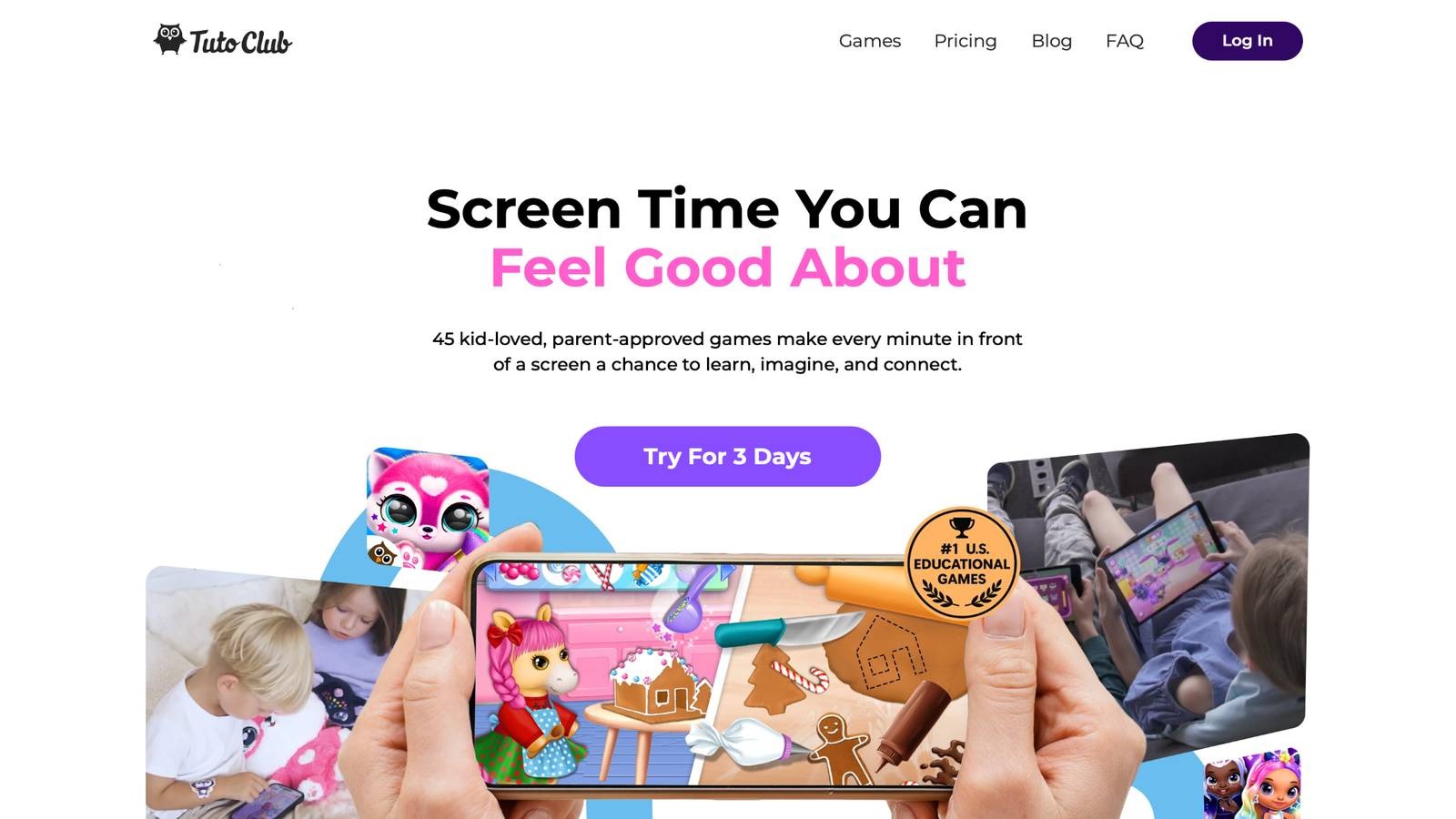
TutoClub brings families a vibrant subscription platform filled with more than 45 educational games that turn ordinary screen time into purposeful adventures for young children. The collection features a variety of gentle activities centered on creativity, problem-solving, and emotional growth, while naturally introducing early math ideas through fun stories, sorting challenges, and interactive puzzles. Kids dive into calm, distraction-free worlds where they care for characters, explore open-ended tasks, and build confidence in a supportive setting that feels more like play than structured lessons.
Parents notice how the games foster real-life skills such as responsibility and focus, all while keeping content fresh with regular updates that add new stories and challenges. The platform works smoothly across multiple devices, creating flexible opportunities for learning at home or on the go without any distracting ads or interruptions. Children stay engaged as they progress through levels that blend math concepts like patterns and comparisons with broader developmental activities, helping them develop a positive relationship with numbers from an early age. TutoClub stands out for its balanced approach that nurtures the whole child, making it a trusted choice for families seeking wholesome digital experiences that support steady growth in math readiness and life skills alike.
- Key features: Ad-free access, multi-device compatibility, open-ended exploration activities, character care elements, and consistent new content additions.
- Facts and information: The platform prioritizes skill-building through play, with activities crafted to spark creativity, curiosity, and meaningful family connections in a safe digital space.
3. Prodigy Math Game
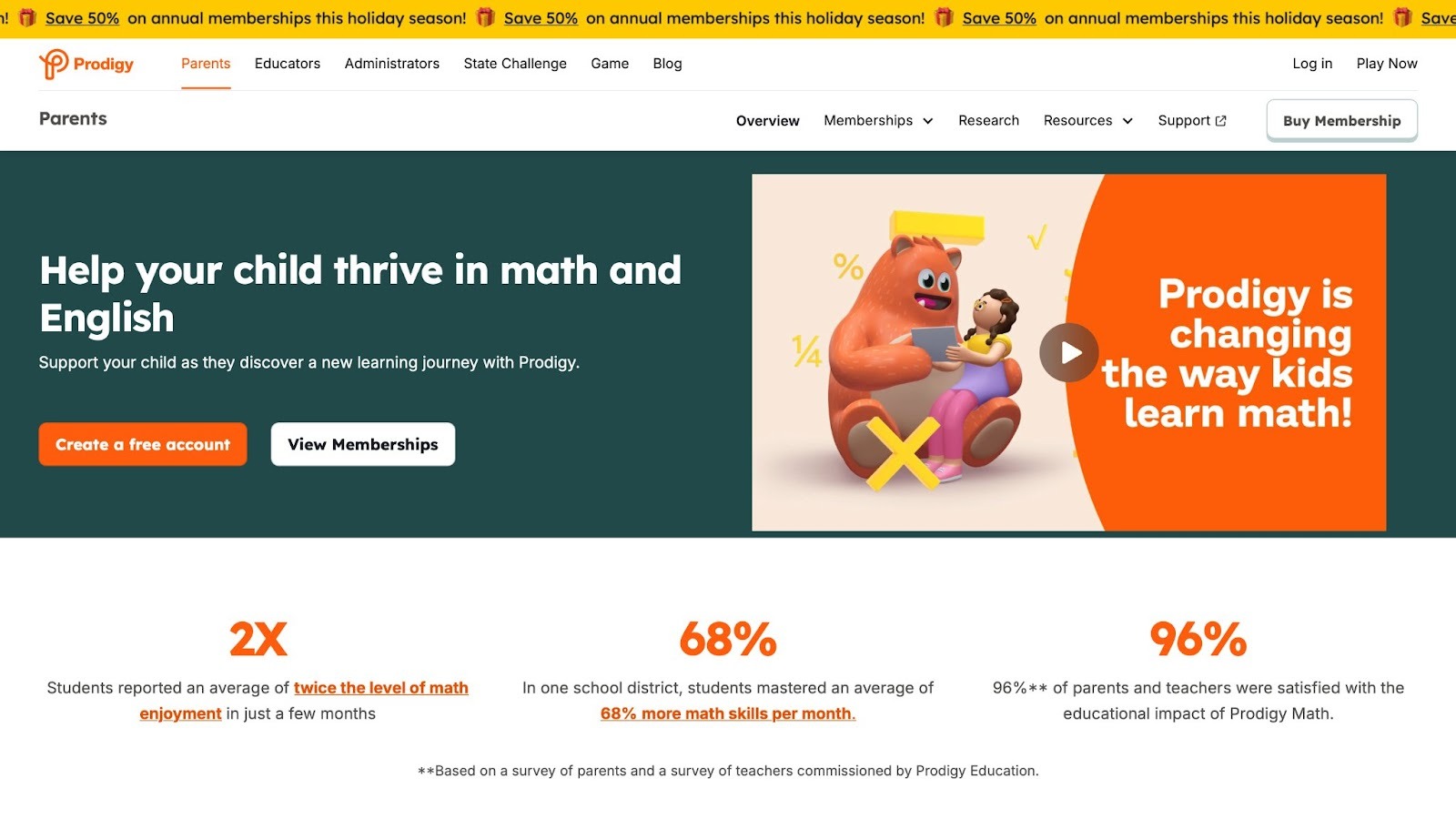
Prodigy Math Game immerses children in an exciting fantasy realm where math practice becomes part of epic quests and creature battles. Young learners solve problems to advance through colorful worlds, collect pets, and unlock new areas, all while building skills in addition, subtraction, and other foundational topics suited for early elementary ages. The adaptive engine adjusts question difficulty based on each child's responses, ensuring they stay challenged yet successful without frustration.
Families enjoy the rich storytelling that wraps practice in narrative fun, turning what might feel like drills into memorable adventures that keep kids returning day after day. The game encourages repeated engagement through rewards and progress milestones that celebrate small victories and steady improvement. Children develop stronger number sense and problem-solving abilities as they explore different game zones filled with friendly characters and interactive challenges. Prodigy creates a motivating environment that aligns well with school topics while adding layers of excitement that make learning feel effortless and rewarding for kids who thrive on games and stories.
- Key features: Role-playing quests, adaptive question system, pet collection mechanics, curriculum-aligned content, and detailed progress tracking tools.
- Facts and information: It transforms standard math practice into immersive adventures that promote consistent skill practice and growing confidence in mathematical thinking.
4. Khan Academy Kids
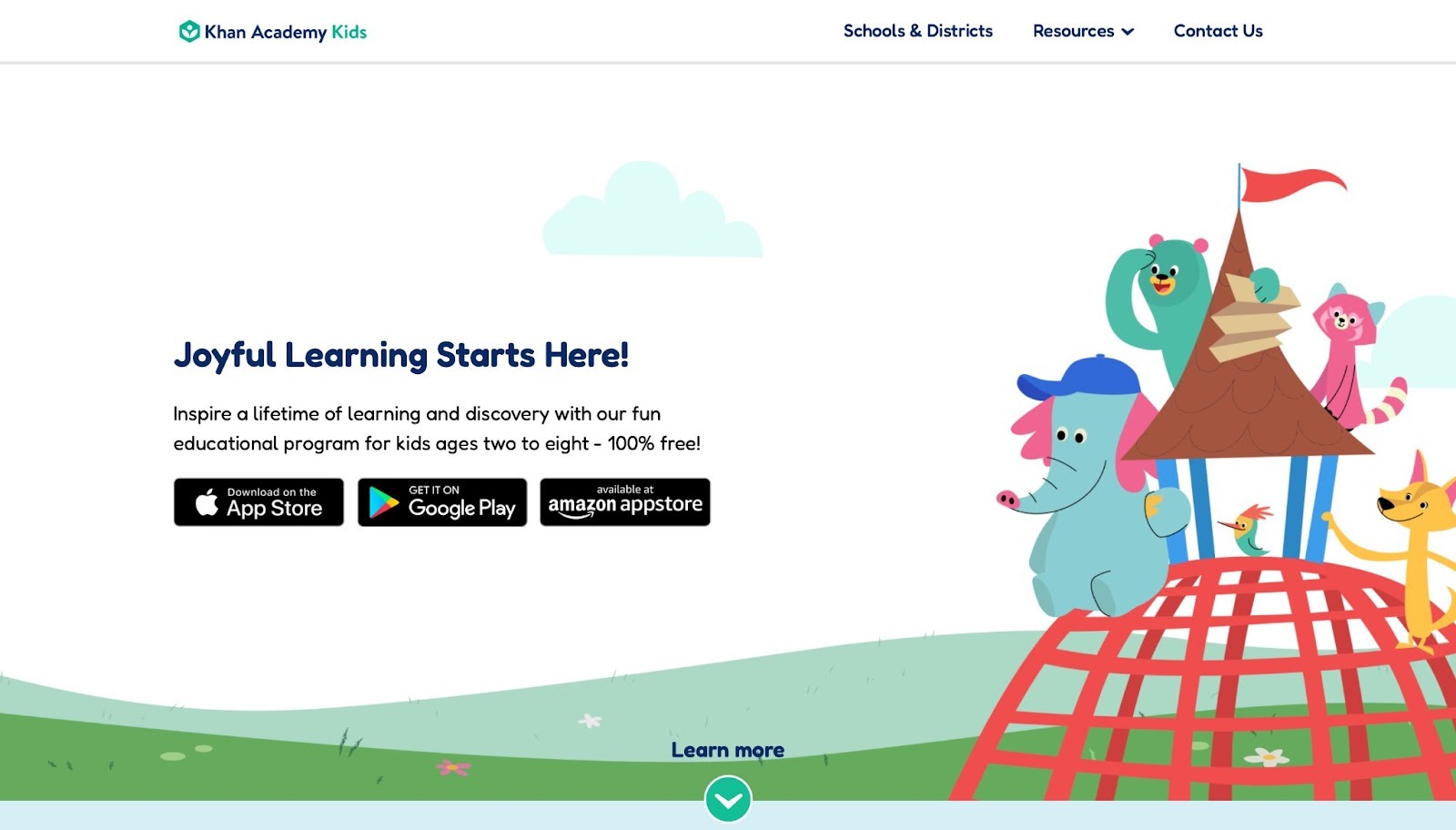
Khan Academy Kids offers a free, ad-free library of interactive stories, games, and activities designed to build early math foundations alongside reading and social-emotional skills for children ages two to eight. Young explorers meet friendly characters who guide them through short, rewarding sessions that cover counting, shapes, basic operations, and more through colorful visuals and hands-on manipulatives. The structured yet playful path grows with the child, providing gentle guidance that matches their pace and interests perfectly.
Families value the high-quality content that aligns with early learning standards and delivers clear progress insights without any pressure or ads. Kids enjoy the variety of story-driven lessons that make abstract ideas concrete and approachable, fostering curiosity and a love for discovery. The app supports holistic development by weaving math into broader early education themes, helping children gain confidence in their abilities. Khan Academy Kids serves as a reliable, accessible starting point that many parents choose for its thoughtful design and commitment to joyful learning experiences.
- Key features: Story-based lessons, interactive manipulatives, progress reports, bilingual support in select areas, and seamless alignment with developmental standards.
- Facts and information: Its extensive activity collection promotes balanced growth and turns early math concepts into engaging play that children naturally enjoy.
5. SplashLearn
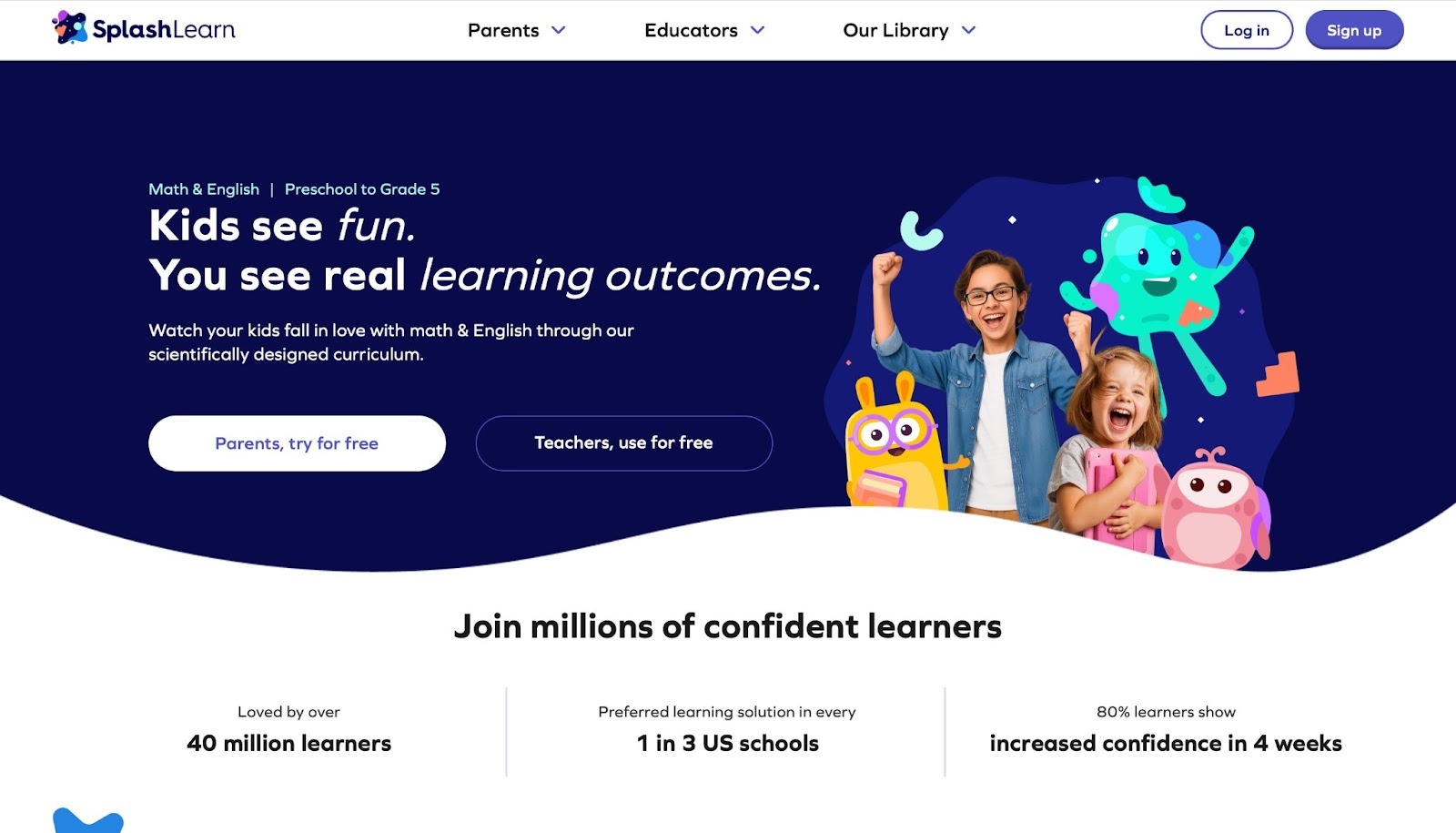
SplashLearn delivers bright, game-based math experiences and digital worksheets that cover counting, addition, subtraction, geometry, and more for pre-kindergarten through fifth grade. Children move through levels filled with colorful rewards and immediate feedback that keep motivation high and learning flowing smoothly. The platform blends interactive games with practice opportunities so kids reinforce concepts in ways that feel natural and fun rather than repetitive.
Parents find the content easy to follow and well matched to school standards, making it a helpful supplement that adds variety to daily routines. Young users build fluency through visual elements and adaptive paths that adjust to their growing abilities, supporting steady progress without overwhelming them. SplashLearn encourages exploration of different math topics through engaging challenges that celebrate achievements and spark continued interest. The variety of activities ensures children stay curious while developing solid foundational skills that prepare them for future success in mathematics.
- Key features: Game-integrated worksheets, adaptive learning paths, visual reward systems, and strong alignment with Common Core standards.
- Facts and information: It makes math practice enjoyable by combining play with reinforcement across a wide range of early and elementary topics.
6. DreamBox Learning
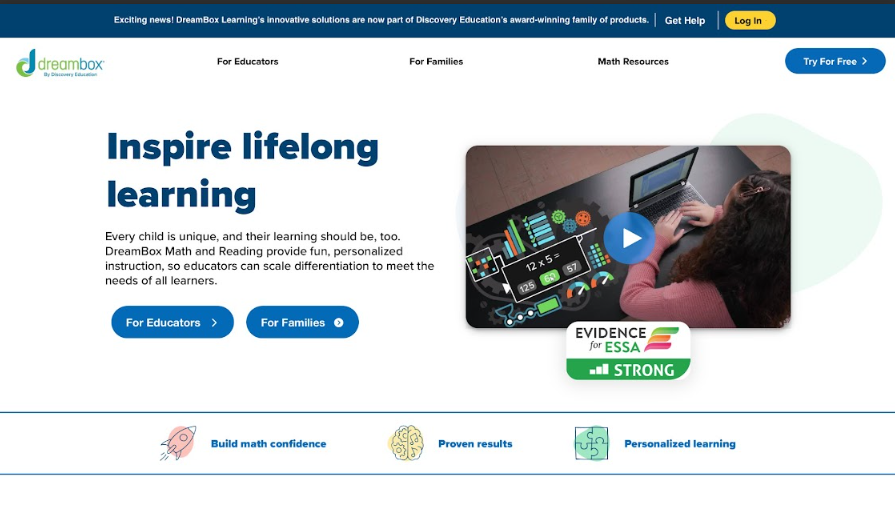
DreamBox Learning uses smart adaptive technology to create personalized math journeys tailored to each child's unique needs and pace. The platform presents concepts through rich visual models and interactive challenges that respond instantly to how kids interact, helping them build a deep understanding of numbers and operations. Young learners explore ideas in a supportive environment that feels intuitive and encouraging, with activities designed to strengthen number sense and logical thinking.
Families appreciate the conceptual focus that goes beyond rote memorization to foster genuine comprehension and confidence. The interface keeps children engaged through dynamic lessons that adjust smoothly as skills develop, making every session productive and enjoyable. DreamBox supports steady growth by emphasizing real understanding that children can apply in different situations, creating a strong foundation for ongoing math success. The thoughtful design helps kids feel capable and excited about tackling new challenges at their own comfortable rhythm.
- Key features: Real-time adaptation, visual learning models, conceptual depth, and insightful progress tracking for parents.
- Facts and information: Its adaptive engine crafts custom learning paths that enhance problem-solving abilities and lasting number sense in young users.
7. Zearn Math
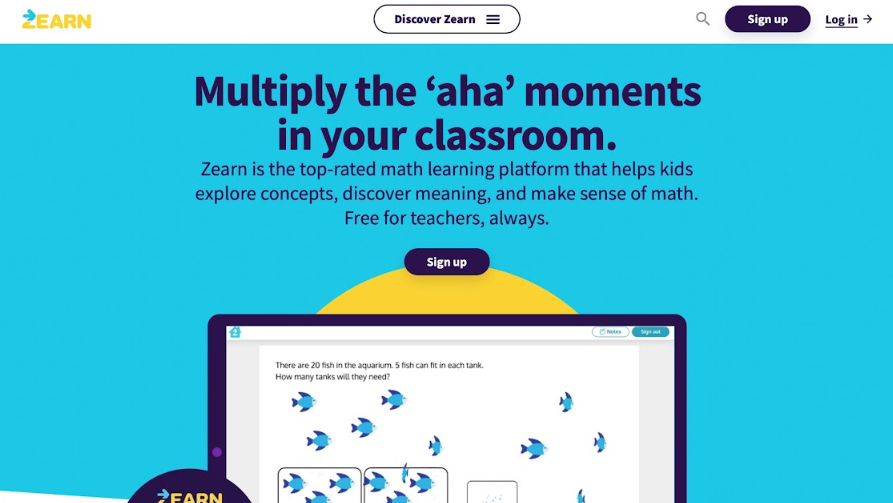
Zearn Math combines digital lessons with hands-on elements in a structured yet engaging format that follows a clear curriculum progression. Children work through bite-sized modules featuring video explanations, practice problems, and interactive tasks that build mastery step by step. The program supports both home and classroom learning by offering consistent pathways that reinforce key concepts in accessible ways.
Families like the focus on true understanding rather than quick memorization, which helps kids gain confidence as they see their own progress. Zearn keeps sessions manageable with short, focused activities that fit easily into busy schedules while delivering meaningful skill development. Young learners benefit from the balanced mix of guidance and independent practice that encourages them to explore math ideas thoroughly. The platform creates reliable growth opportunities that align well with grade-level expectations and prepare children for more advanced topics ahead.
- Key features: Module-based structure, visual explanations, practice exercises, and alignment with established grade-level standards.
- Facts and information: It prioritizes conceptual mastery through consistent, supportive activities that develop durable math skills.
8. IXL Math
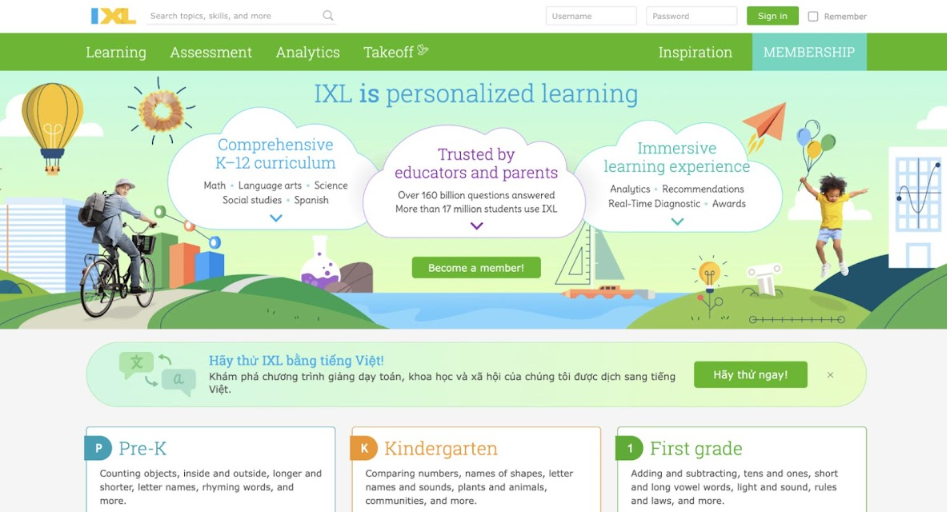
IXL Math provides thousands of targeted practice questions across every elementary math topic, allowing children to build skills precisely where they need them most. The platform tracks mastery levels and offers smart recommendations so kids can fill gaps efficiently and move forward with confidence. Instant feedback guides improvement during each session, helping young users understand their mistakes and celebrate successes along the way.
Parents appreciate the broad coverage that lets them address specific areas of interest or challenge without extra planning. IXL serves as a flexible practice partner that complements any curriculum by delivering customized experiences that match individual learning needs. Children gain fluency through repeated, focused practice that feels achievable and rewarding. The detailed insights help families monitor growth across multiple math domains while keeping the overall experience positive and productive.
- Key features: Skill-specific practice questions, real-time analytics, adaptive suggestions, and an extensive topic library.
- Facts and information: Its comprehensive tracking system supports targeted improvement and steady advancement in various math areas.
9. DoodleMath
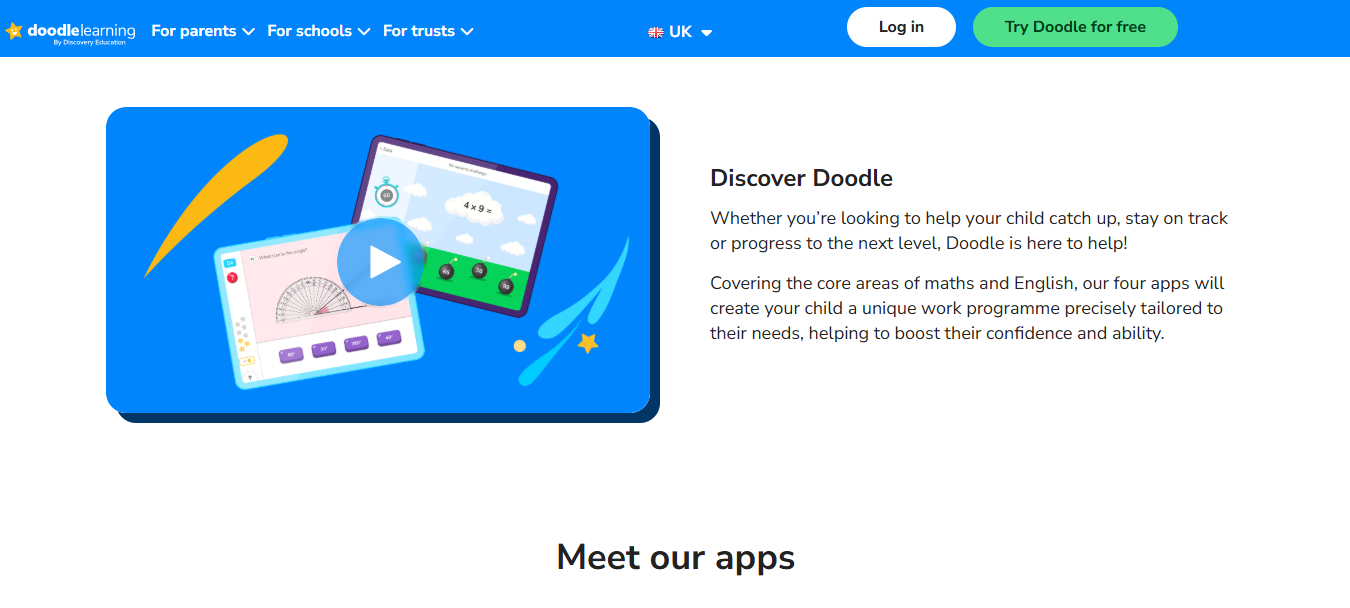
DoodleMath creates personalized daily practice sessions that adapt directly to each child's strengths and areas for growth. Short exercises mix interactive games and problems to build fluency in a relaxed, low-pressure style that children actually look forward to. The app keeps engagement high with unique challenges and rewards that make consistent practice feel exciting rather than routine. Families notice gradual improvements in both accuracy and overall math confidence as kids complete their daily sessions.
DoodleMath fits naturally into busy family schedules by offering flexible, bite-sized activities that deliver real results over time. Young learners benefit from the teacher-designed content that emphasizes understanding and enjoyment throughout the process. The platform supports long-term success by encouraging regular, enjoyable interaction with math concepts in ways that feel fresh and motivating.
- Key features: Personalized learning paths, daily reward systems, interactive problem sets, and content created by experienced educators.
- Facts and information: It focuses on consistent short sessions that promote lasting fluency and positive attitudes toward mathematics.
10. Funexpected Math
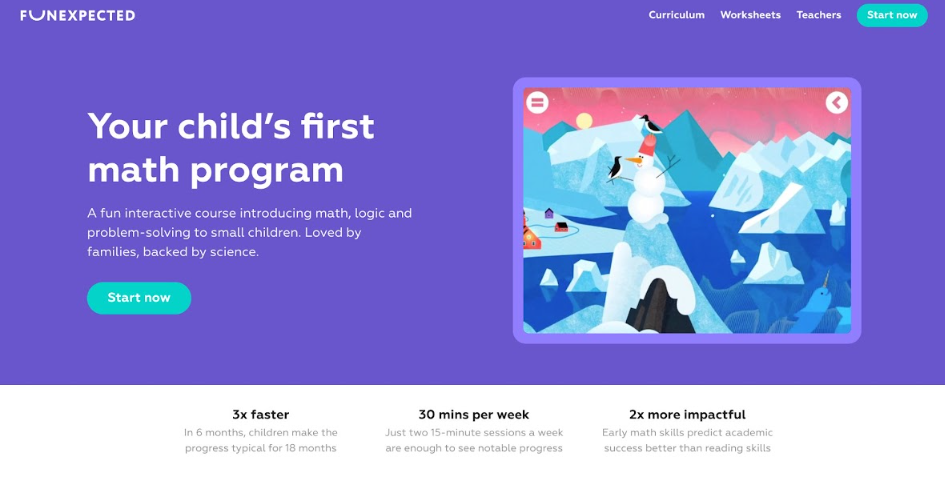
Funexpected Math supplies thousands of colorful interactive tasks and lessons perfectly suited for children ages three to seven. The app uses playful design and supportive guidance to introduce foundational ideas like patterns, measurement, and early operations through creative activities that feel more like exploration than work. Kids enjoy the friendly visual elements and gentle pacing that keep them interested and successful from the very first session.
Regular updates bring fresh content that maintains excitement and supports ongoing discovery. Funexpected Math offers a welcoming entry point for very young learners by blending math with storytelling and hands-on challenges that spark natural curiosity. The platform helps children develop strong number sense in an environment designed to nurture confidence and joy in learning. Families choose it for the thoughtful balance of fun and educational value that makes early math feel approachable and delightful.
- Key features: Extensive task library, interactive character guides, personalized lesson options, and engaging visual puzzles.
- Facts and information: It builds essential early skills through age-appropriate, creative challenges that encourage discovery and steady progress.
11. DragonBox Numbers
DragonBox Numbers invites children into a magical world where numbers come alive as playful characters that kids can manipulate and combine in creative ways. The app teaches core math concepts through intuitive drag-and-drop interactions that reveal addition, subtraction, and basic algebra ideas without traditional symbols at first. Young learners experiment freely with visual representations that build deep understanding of quantity and operations in a story-driven setting.
The progressive levels guide children naturally toward more complex thinking while keeping every moment fun and rewarding. Parents love how the design encourages logical reasoning and problem-solving skills that transfer beyond the screen. DragonBox Numbers creates an environment where math feels like an exciting puzzle rather than a subject to memorize, helping kids develop confidence and curiosity. The intuitive mechanics make abstract ideas concrete and memorable, supporting lasting foundational knowledge.
- Key features: Character-based number manipulation, progressive storytelling levels, visual concept introduction, and hands-on puzzle mechanics.
- Facts and information: It transforms early math into interactive discovery that strengthens logical thinking and number relationships.
12. Moose Math
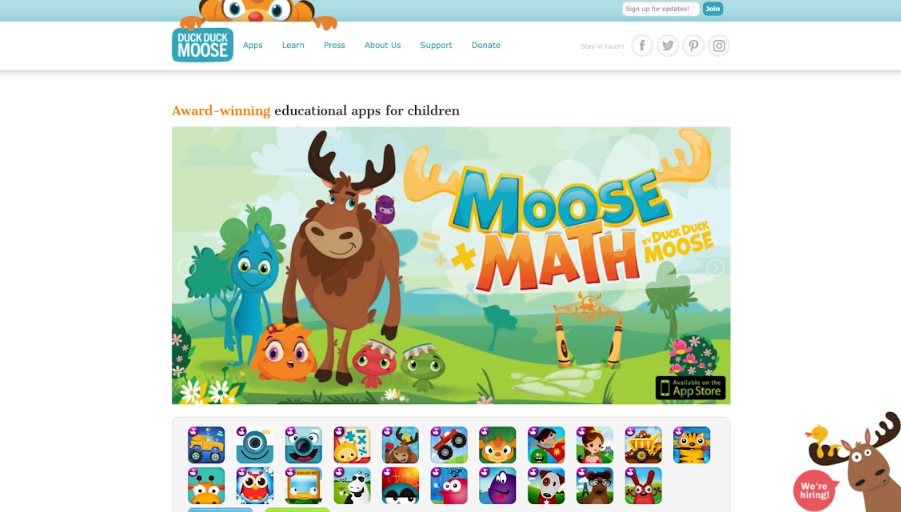
Moose Math turns learning into delightful mini-adventures featuring friendly moose characters and engaging activities that practice counting, addition, subtraction, and shape recognition. Children complete tasks like making smoothies or sorting items in a lost-and-found scenario, all within short, focused games that match young attention spans perfectly. The app blends math practice with creative play so kids stay motivated and absorb concepts through repetition that feels natural.
Families appreciate the variety of activities that reinforce skills in different contexts while providing immediate positive feedback. Moose Math supports early number sense development by connecting abstract ideas to tangible, fun experiences that children remember fondly. The colorful design and simple navigation make it easy for preschoolers to explore independently and celebrate their own successes. The platform offers a gentle introduction to math that builds enthusiasm and readiness for more formal learning ahead.
- Key features: Adventure-style mini-games, shape and number sorting tasks, immediate feedback systems, and character-driven activities.
- Facts and information: It focuses on foundational skills through playful scenarios that make early math concepts accessible and enjoyable for young children.
13. Mathseeds
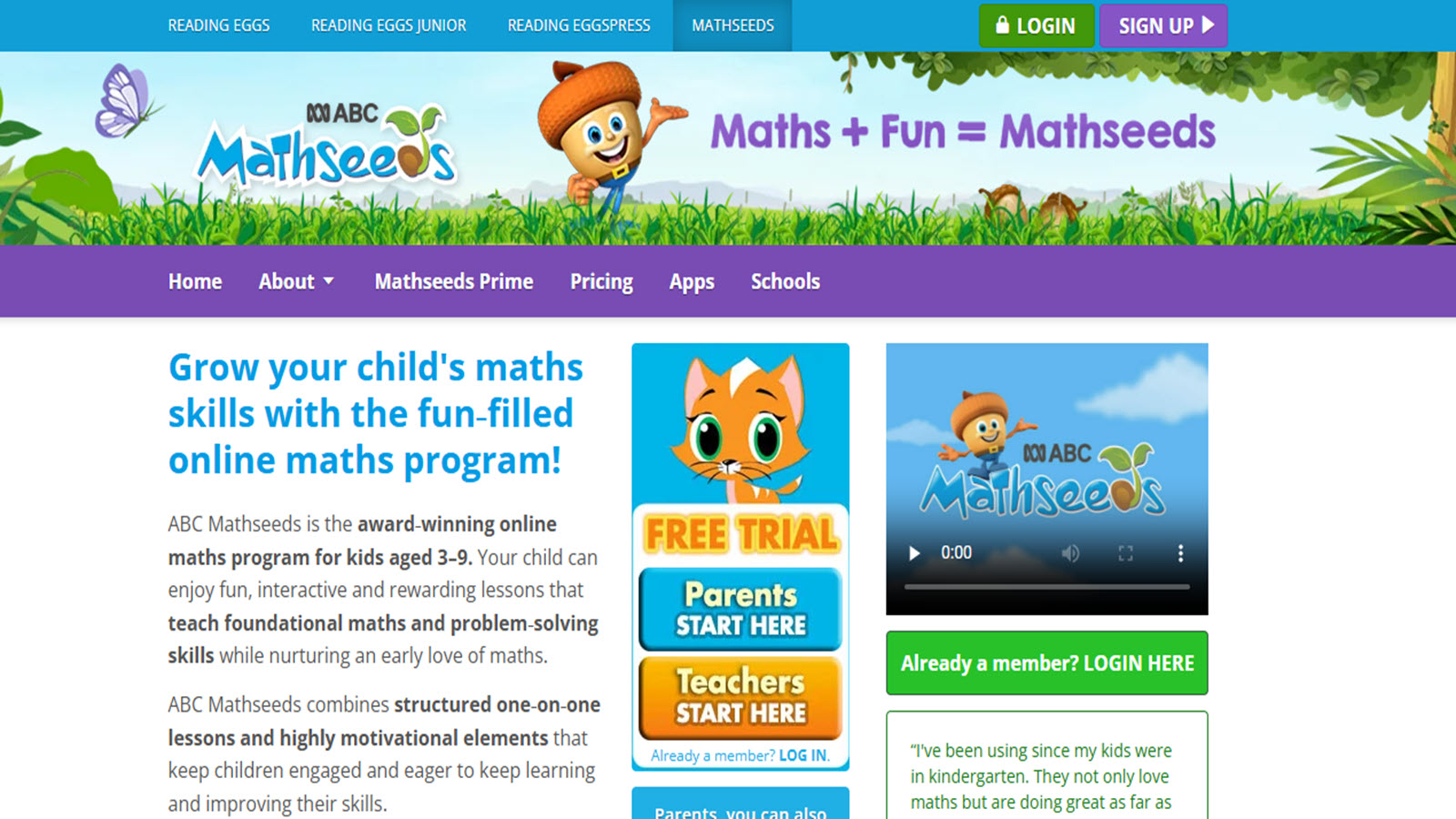
Mathseeds provides a comprehensive set of interactive lessons and games specifically created for early learners to master essential math and related skills on the go. Children engage with touch-friendly activities that cover counting, patterns, addition strategies, and more through colorful animations and rewarding challenges. The app adapts content to match individual progress, ensuring each child experiences success at their own pace while building strong foundations.
Parents value the motivational elements that turn practice into an exciting journey filled with achievements and discoveries. Mathseeds integrates seamlessly with mobile devices, offering flexible learning opportunities that fit family routines without requiring constant supervision. Young users develop fluency and confidence as they progress through levels designed to nurture curiosity and logical thinking. The platform delivers balanced experiences that combine skill practice with elements of fun and exploration.
- Key features: Mobile-optimized activities, adaptive lesson sequencing, reward-based progression, and comprehensive early skill coverage.
- Facts and information: It supports foundational math development through interactive, motivating content that encourages regular engagement and steady growth.
14. Elephant Learning
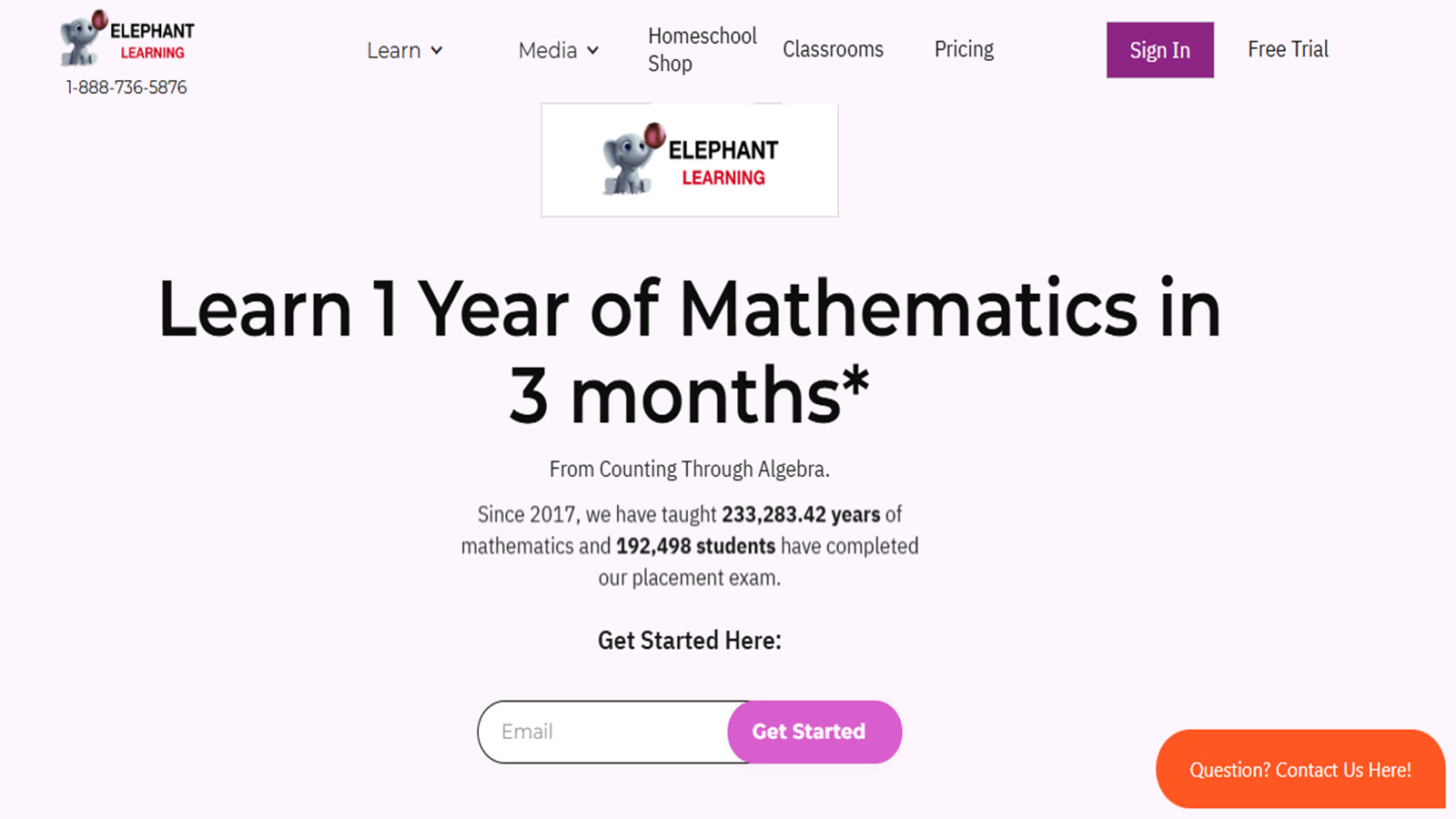
Elephant Learning functions as an automated math academy that personalizes content for children from early ages through elementary years. The platform uses adaptive algorithms to present lessons that match each child's current abilities, focusing on building genuine understanding of numbers and operations. Kids work through engaging modules that adjust dynamically to their responses, creating customized paths that promote confidence and mastery.
Families benefit from the efficient approach that accelerates learning without added pressure, allowing children to advance at a natural rhythm. Elephant Learning emphasizes conceptual depth through interactive challenges that make abstract ideas clear and memorable. The system tracks progress carefully while keeping sessions enjoyable and focused on real skill development. Children gain lasting mathematical thinking abilities that serve them well in school and everyday situations.
- Key features: Automated personalization engine, concept-focused modules, dynamic adjustment capabilities, and progress monitoring tools.
- Facts and information: It delivers tailored experiences that strengthen core math understanding and support accelerated yet comfortable learning growth.
15. Monster Math
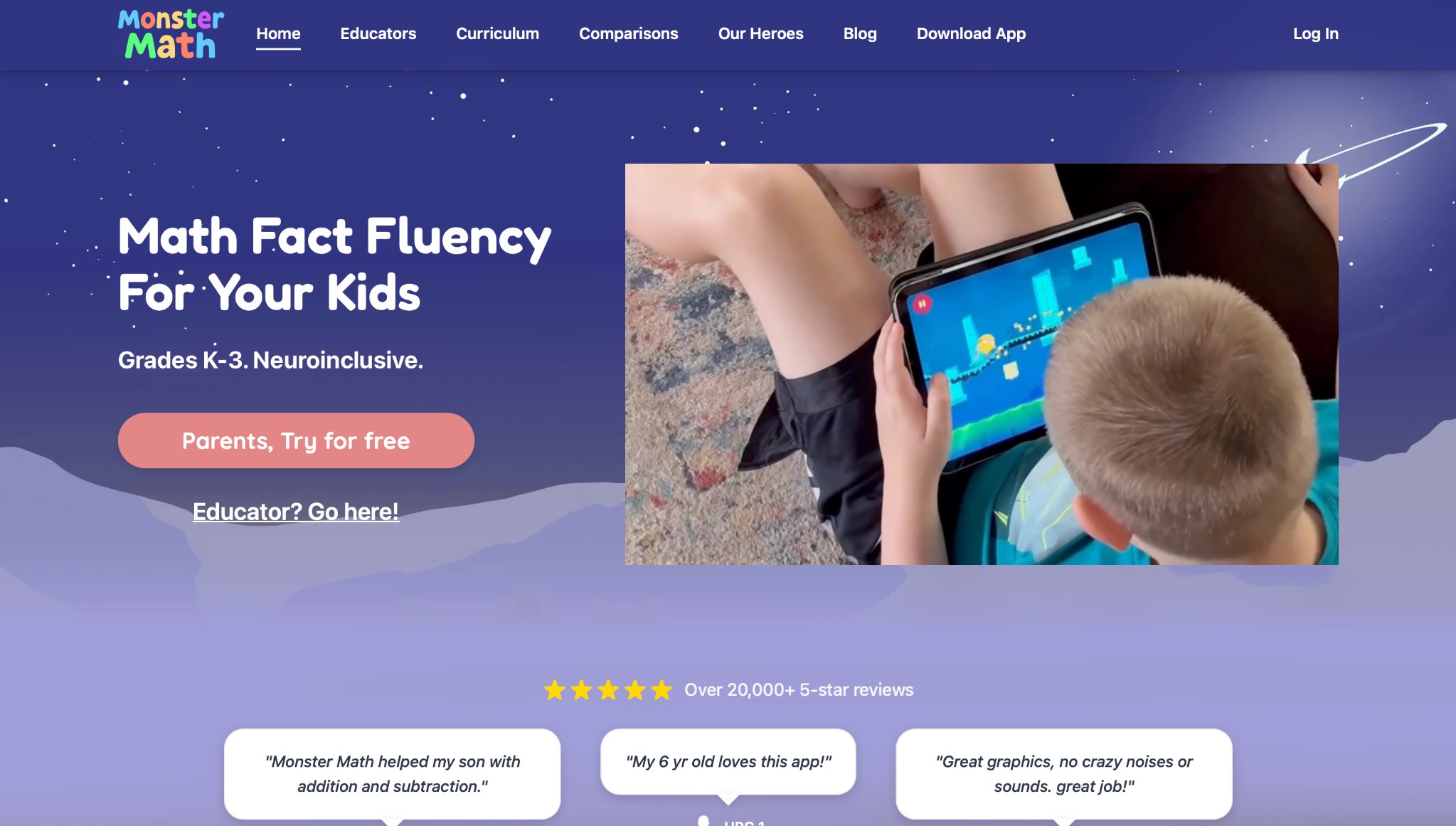
Monster Math engages children ages five to nine with story-driven games that embed addition, subtraction, and multiplication strategies into immersive adventures. Kids help friendly monsters solve puzzles and complete quests that naturally reinforce number sense and fact fluency through visual and interactive elements. The neuroinclusive design features calming visuals and gentle pacing that work well for diverse learning styles and preferences.
Parents appreciate how the app weaves math practice into meaningful narratives that keep young users motivated and focused. Monster Math builds confidence by celebrating progress and offering supportive guidance throughout each challenge. The platform creates positive associations with math by emphasizing exploration and success rather than drills. Children develop stronger problem-solving skills while enjoying the creative stories and character interactions that make learning feel like an exciting journey.
- Key features: Story-integrated puzzles, visual strategy reinforcement, calming design elements, and inclusive learning approaches.
- Facts and information: It supports number sense and fluency development through engaging, narrative-based activities tailored for early elementary learners.
16. ABCmouse
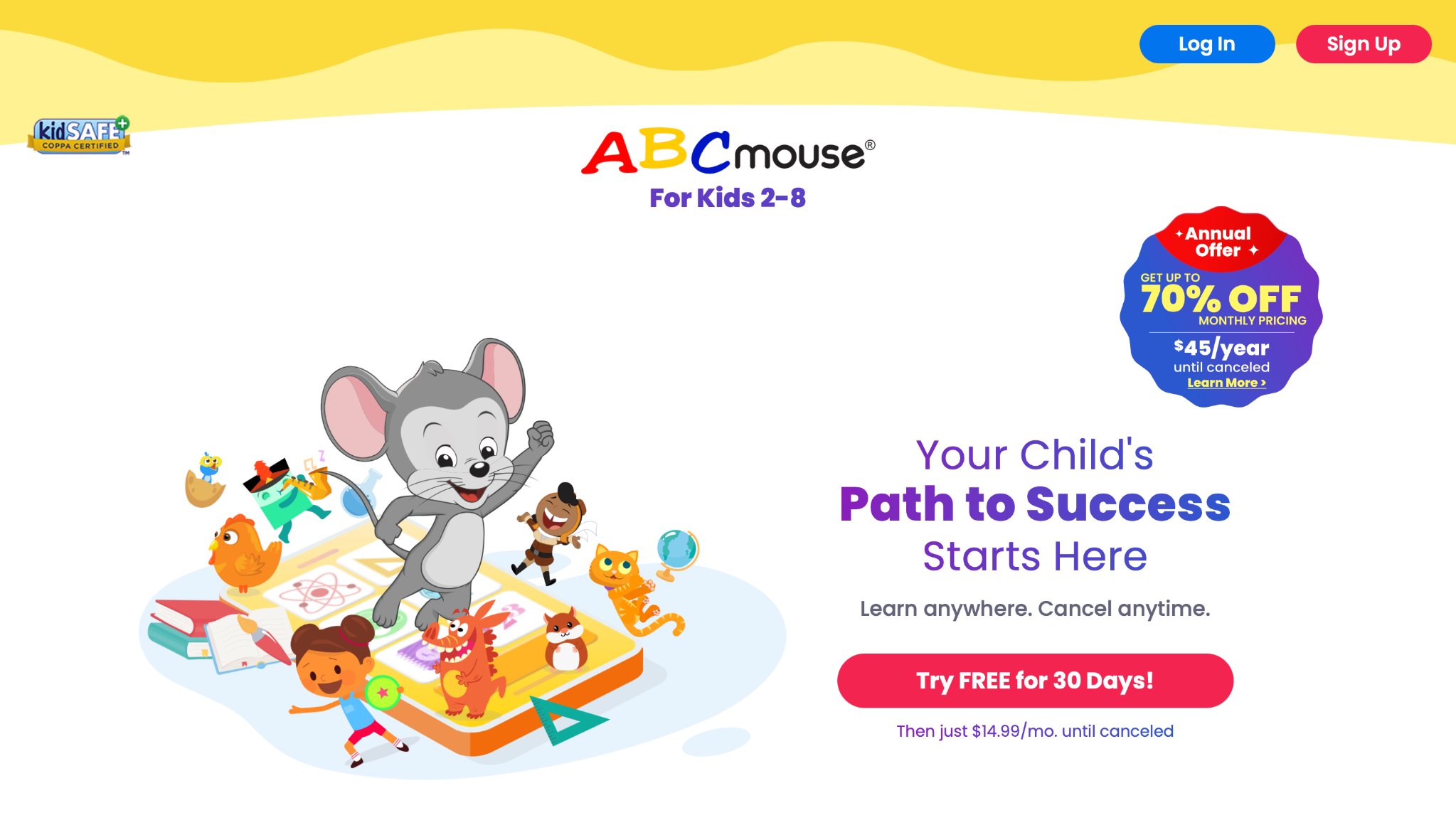
ABCmouse creates a complete early learning world packed with hundreds of math-focused games, interactive lessons, and animated activities designed specifically for children ages two to eight. Young learners build essential skills like counting, addition, subtraction, shapes, and patterns through colorful puzzles, virtual books, and hands-on digital manipulatives that feel like play. The structured curriculum guides kids step by step while letting them choose adventures that match their interests, keeping motivation high with rewards, stickers, and progress celebrations.
Parents appreciate how the app blends math with reading, science, and art so children develop in a balanced way without ever feeling like they are doing schoolwork. Every activity adapts gently to each child’s pace, offering extra support or challenges exactly when needed. The safe, ad-free environment lets kids explore freely while building real confidence in numbers and problem-solving. ABCmouse turns everyday screen time into meaningful growth moments that prepare children for kindergarten and beyond, making it a go-to choice for families who want one app that covers math alongside broader early education needs.
- Key features: Full curriculum alignment, interactive books and games, progress tracking dashboard, reward systems, and multi-subject integration.
- Facts and information: The platform supports foundational skill development through engaging, level-based activities that promote steady confidence and curiosity in young learners.
17. Mathletics
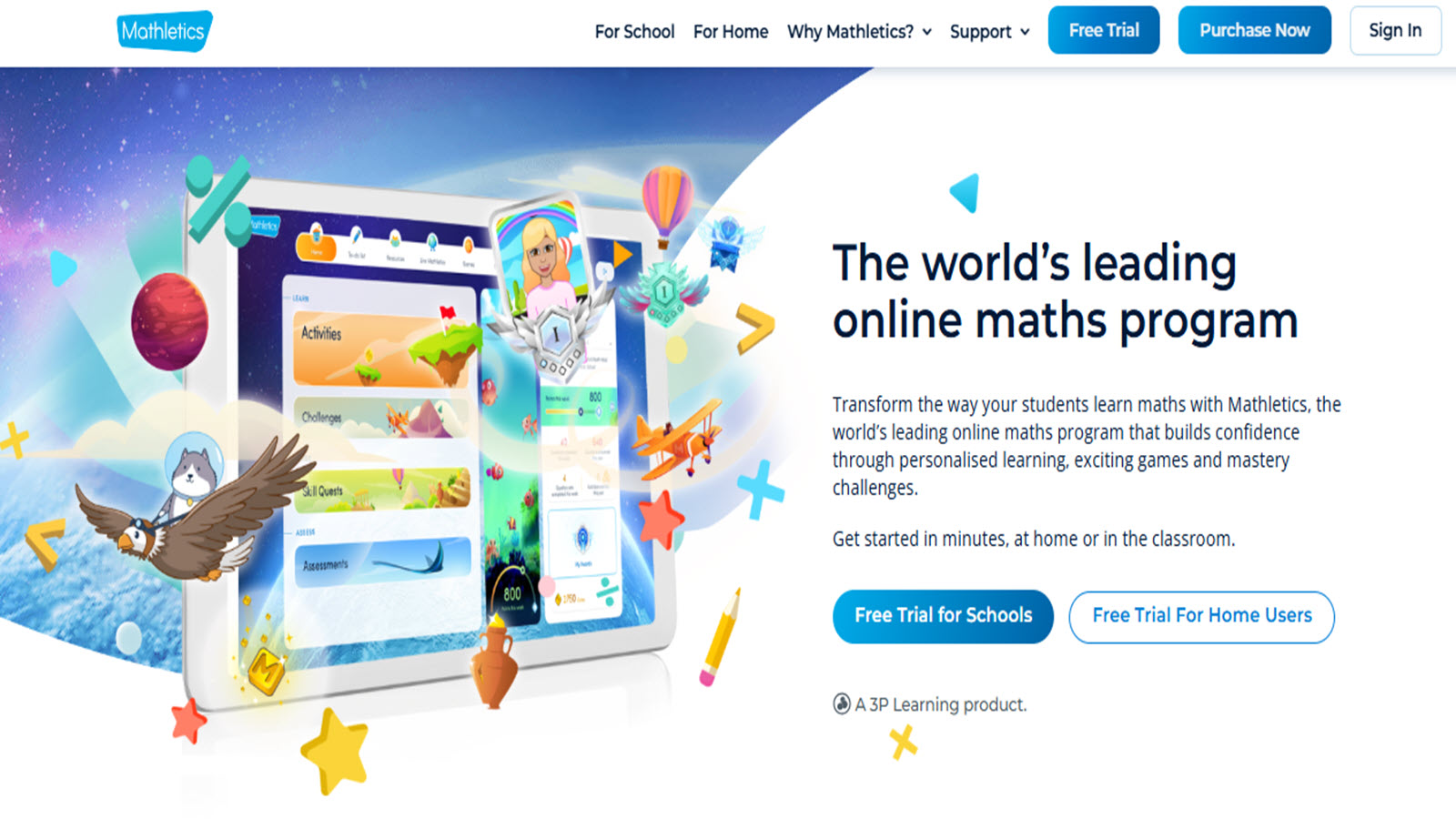
Mathletics delivers live math competitions, skill-building games, and personalized practice sessions that make learning exciting for elementary students. Children tackle curriculum-aligned challenges in a vibrant online arena where they earn points, climb leaderboards, and unlock new worlds by mastering topics from basic counting to more advanced operations. The adaptive system quickly identifies strengths and areas for growth, serving up just-right questions that keep kids engaged without overwhelming them.
Families love the real-time feedback and detailed reports that show clear improvement over time. Mathletics works beautifully across devices so children can practice at home or on the go during short bursts that fit busy schedules. The mix of solo missions and friendly class challenges encourages healthy competition while reinforcing concepts through repetition that feels fun rather than repetitive. Young users build fluency and problem-solving speed as they explore different game modes that celebrate every success along the way.
- Key features: Live multiplayer competitions, adaptive practice questions, curriculum-aligned content, progress analytics, and engaging reward mechanics.
- Facts and information: It combines gamification with targeted skill work to help children develop speed, accuracy, and lasting confidence in math.
18. Komodo Math
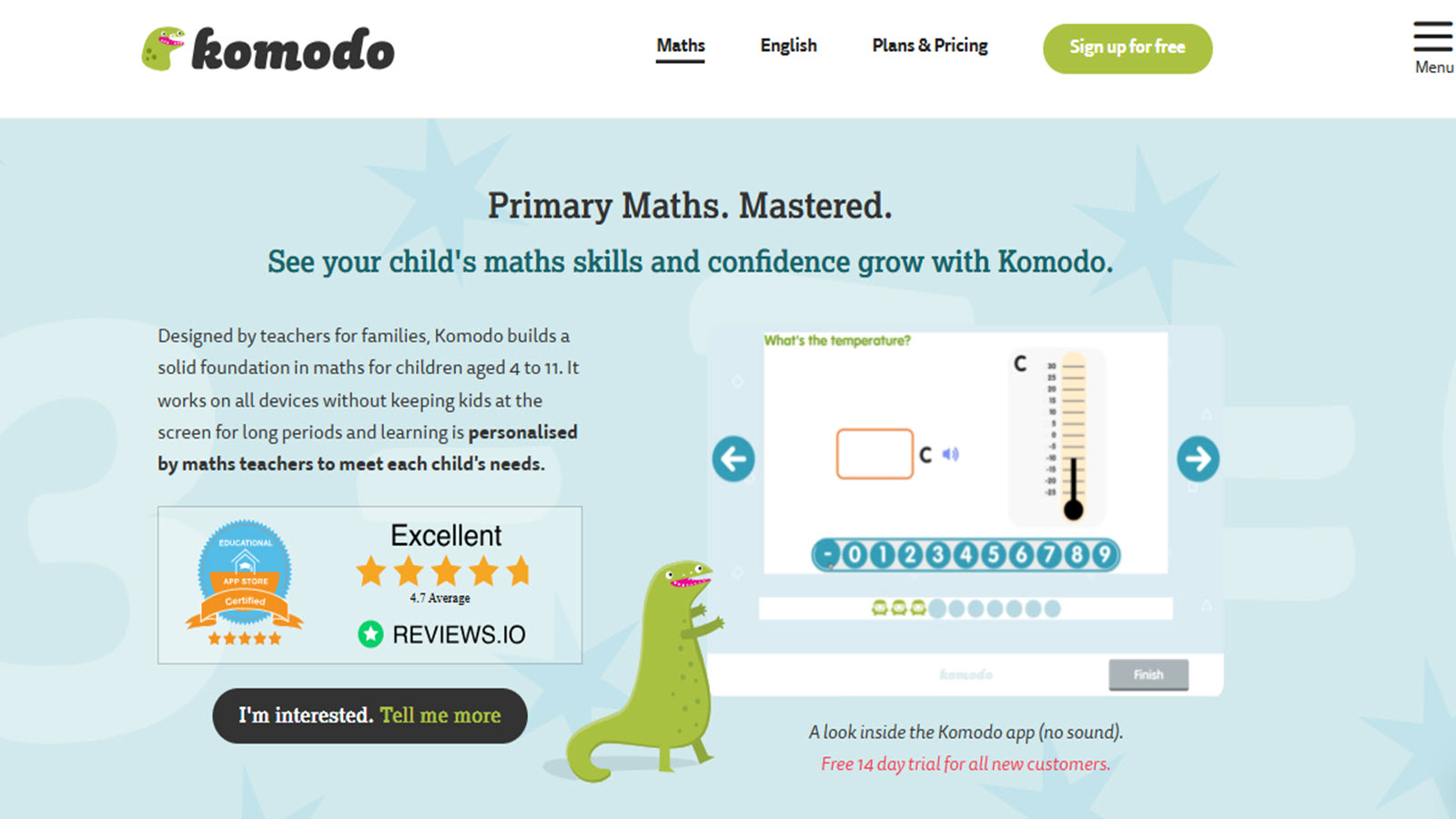
Komodo Math offers adaptive online lessons paired with parent-guided activities that strengthen number sense and calculation skills for children ages four to eleven. Kids work through bite-sized modules that adjust instantly to their responses, covering everything from early counting and place value to multiplication and fractions in a supportive digital space. The program emphasizes understanding over speed so children truly grasp why math works rather than just memorizing steps. Parents receive simple weekly updates and optional home extension ideas that turn learning into shared family moments.
Komodo keeps sessions short and rewarding with visual progress bars and gentle encouragement that builds self-esteem. The clean interface lets young users focus completely on the math without distractions, while the thoughtful design supports different learning styles and paces. Families choose Komodo for its balanced approach that blends technology with real-world connection and steady, measurable growth in mathematical thinking.
- Key features: Adaptive lesson sequencing, parent progress tools, conceptual focus modules, home activity suggestions, and visual skill trackers.
- Facts and information: It creates personalized paths that deepen understanding and connect digital practice with everyday math conversations.
19. Rocket Math
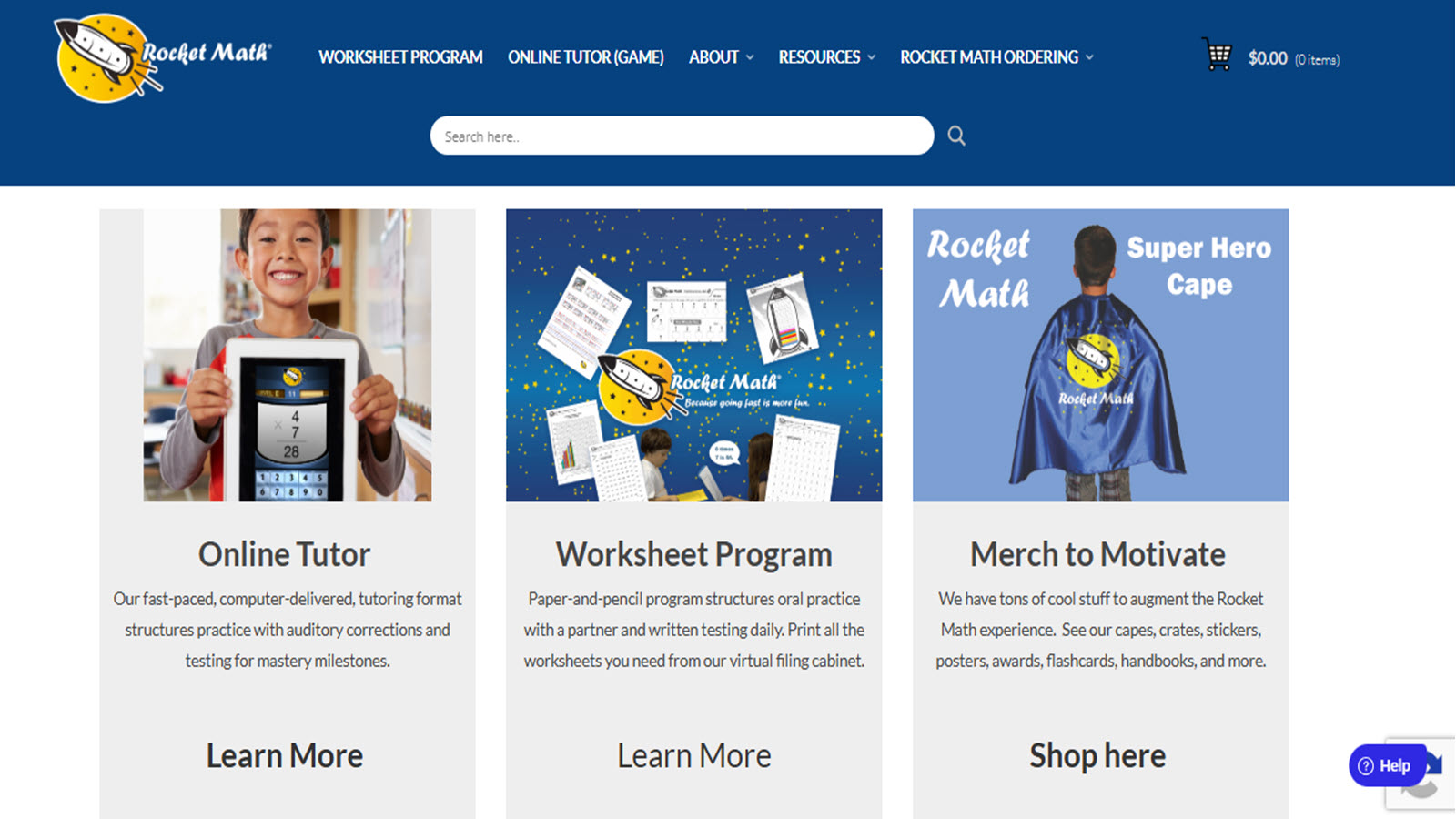
Rocket Math focuses on building fast, accurate math fact fluency through daily online practice that feels like a fun rocket launch. Children complete short, structured sessions that target specific addition, subtraction, multiplication, or division facts in a systematic way that prevents overwhelm. The program uses a proven sequence so kids master one small set of facts before moving to the next, creating solid foundations that make bigger problems easier later.
Progress feels exciting as students watch their rocket climb higher with each successful day. The simple, no-frills design keeps the focus on learning while built-in timers and instant corrections help develop both speed and accuracy. Families notice how consistent short practice leads to noticeable confidence when kids tackle schoolwork or real-life math situations. Rocket Math works especially well as a supplement that fills gaps quickly and turns fact practice into a positive habit children actually enjoy maintaining.
- Key features: Fact-specific daily drills, sequential mastery system, timed practice rounds, instant feedback, and progress visualization tools.
- Facts and information: It develops automatic recall through structured repetition that supports long-term math fluency and problem-solving ease.
20. Buzzmath
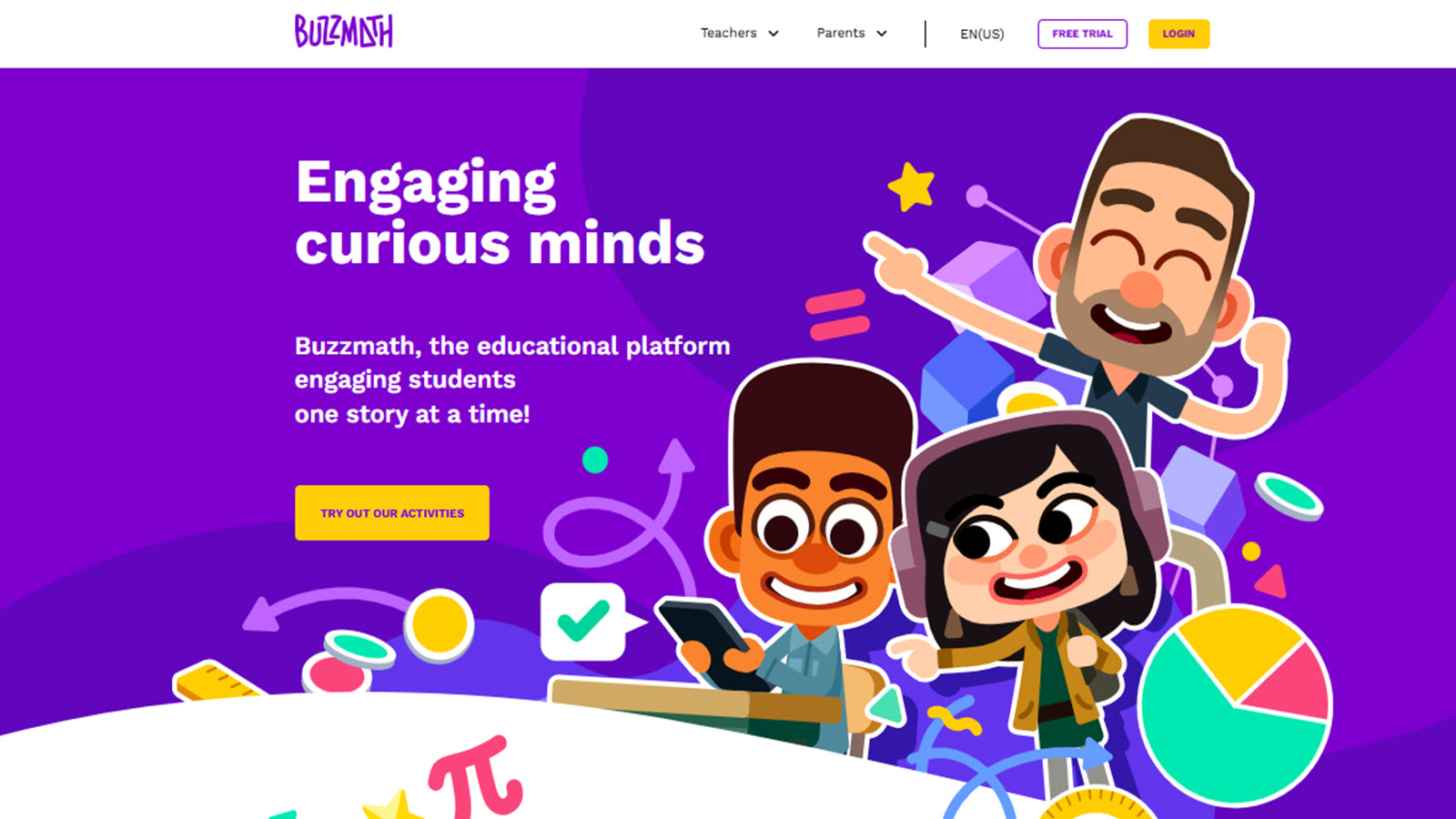
Buzzmath turns middle-elementary math into interactive story adventures where kids solve real problems inside colorful animated worlds. Students explore different chapters packed with visual challenges, puzzles, and mini-games that cover geometry, measurement, fractions, and operations in ways that feel like exploration rather than exercises. The platform emphasizes conceptual understanding by letting children manipulate objects, draw shapes, and test ideas before formal notation appears.
Immediate hints and explanations appear only when needed so learners stay independent while building strong reasoning skills. Teachers and parents receive clear reports that highlight both achievements and next steps without any pressure. Buzzmath works across tablets and computers so families can use it flexibly during travel or quiet evenings at home. The engaging narrative keeps children coming back voluntarily, turning math time into something they look forward to each day.
- Key features: Story-driven chapters, interactive manipulatives, visual problem-solving tools, conceptual explanations, and detailed progress reports.
- Facts and information: It promotes deep understanding through hands-on digital activities that make abstract math ideas concrete and memorable.
21. Duolingo Math
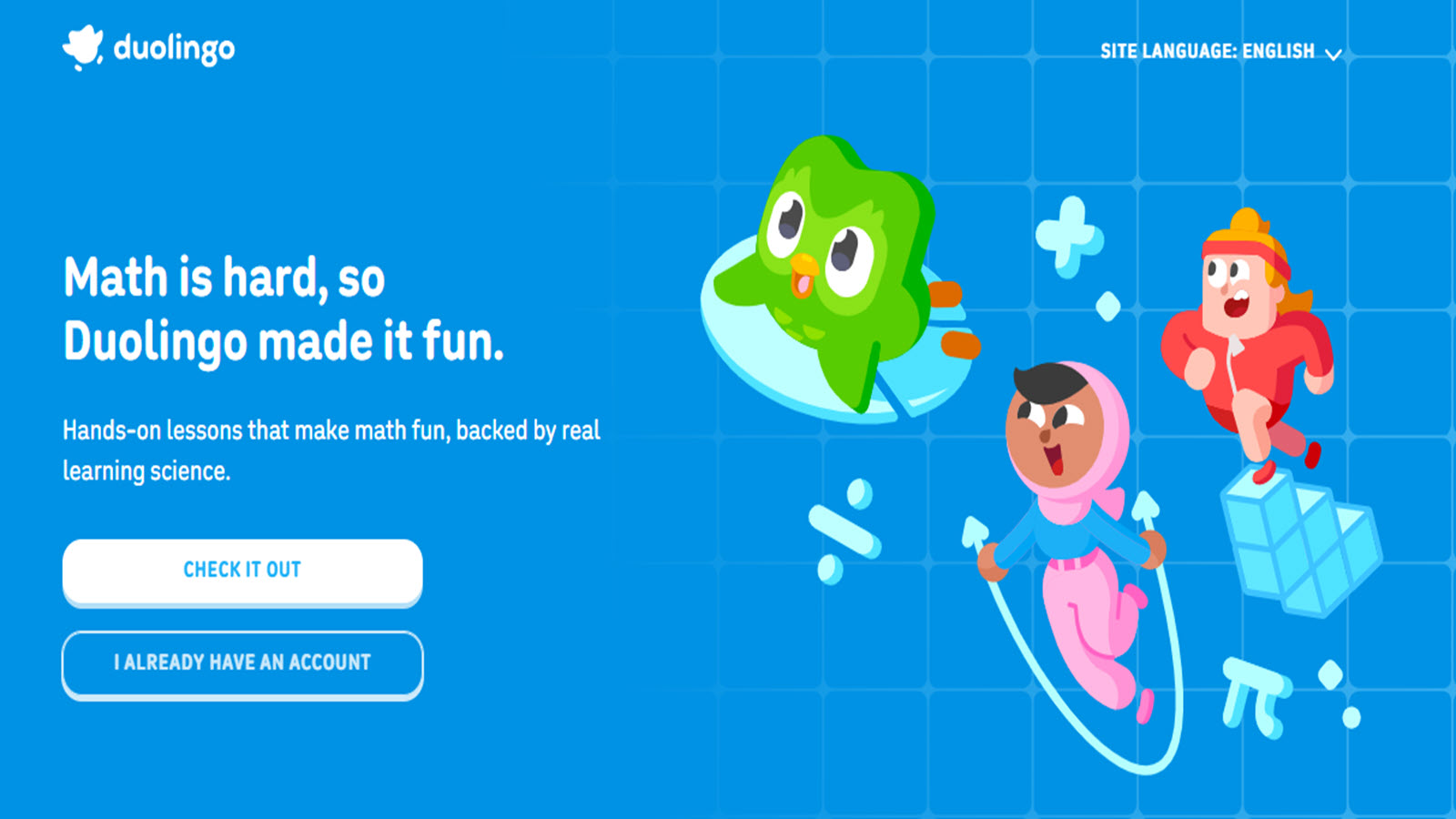
Duolingo Math brings the same bite-sized, game-like approach that made language learning popular straight into early math practice. Children tackle quick daily lessons that mix counting, shapes, basic operations, and logic puzzles with fun characters and streak rewards that keep motivation high. The adaptive system adjusts difficulty on the fly so every child works at the perfect level whether they are just starting or ready for more challenges. Short sessions fit easily into routines and feel more like quick brain games than traditional homework.
The app uses visual aids and simple animations to explain concepts clearly, helping young users connect numbers to real situations without confusion. Families like the seamless progress tracking and gentle reminders that encourage consistent practice without nagging. Duolingo Math creates positive associations with math by celebrating small wins and turning learning into an enjoyable habit that grows naturally alongside other daily skills.
- Key features: Daily bite-sized lessons, adaptive difficulty adjustment, character-based rewards, visual concept explanations, and streak motivation system.
- Facts and information: It builds foundational skills through consistent, engaging micro-lessons that foster confidence and long-term math enjoyment.
22. Elephant Learning Math Academy
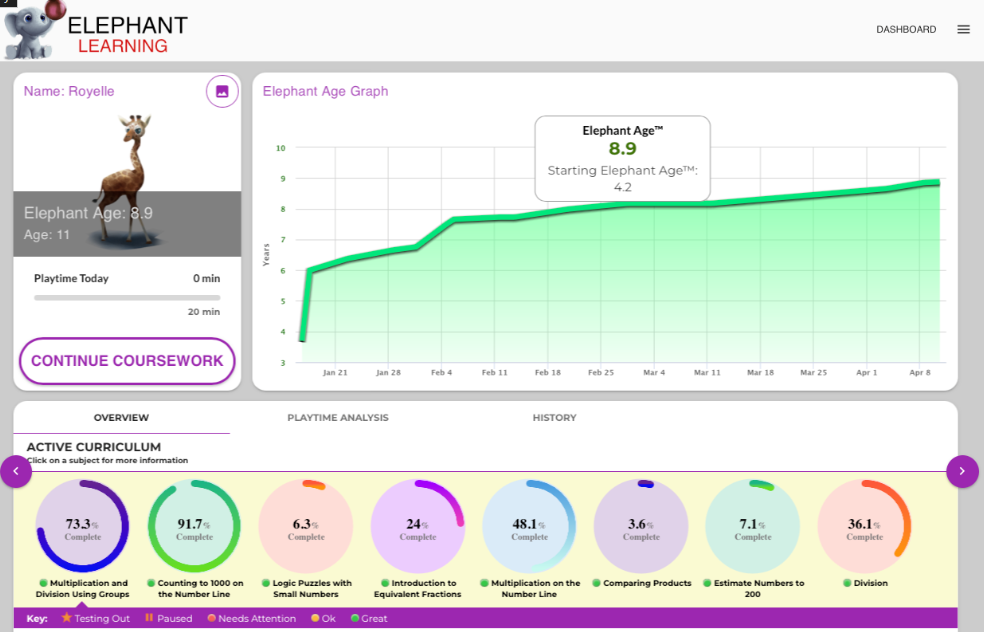
Elephant Learning Math Academy delivers a research-backed platform that focuses on building deep conceptual understanding through adaptive algorithms tailored for children ages three to ten. The system assesses a child's current knowledge and creates personalized learning paths that target specific gaps in number sense, operations, and problem-solving. Young users engage with interactive lessons that use visual models and real-world contexts, helping them connect abstract ideas to everyday experiences in a supportive digital environment.
The platform emphasizes measurable progress by tracking conceptual mastery rather than just completion of activities. Families appreciate how the content grows with the child, offering appropriate challenges that maintain engagement without causing frustration. Elephant Learning stands out for its commitment to efficient learning, aiming to accelerate math readiness while fostering a positive attitude toward the subject through consistent, targeted practice. (Headquartered in the United States.)
- Key features: Adaptive diagnostic assessments, visual conceptual models, personalized learning paths, progress analytics dashboard, and curriculum-aligned content coverage.
- Facts and information: The academy's algorithm focuses on conceptual mastery, covering topics from basic counting through pre-algebra with data-driven adjustments that respond to individual learning patterns.
23. Marble Math Junior
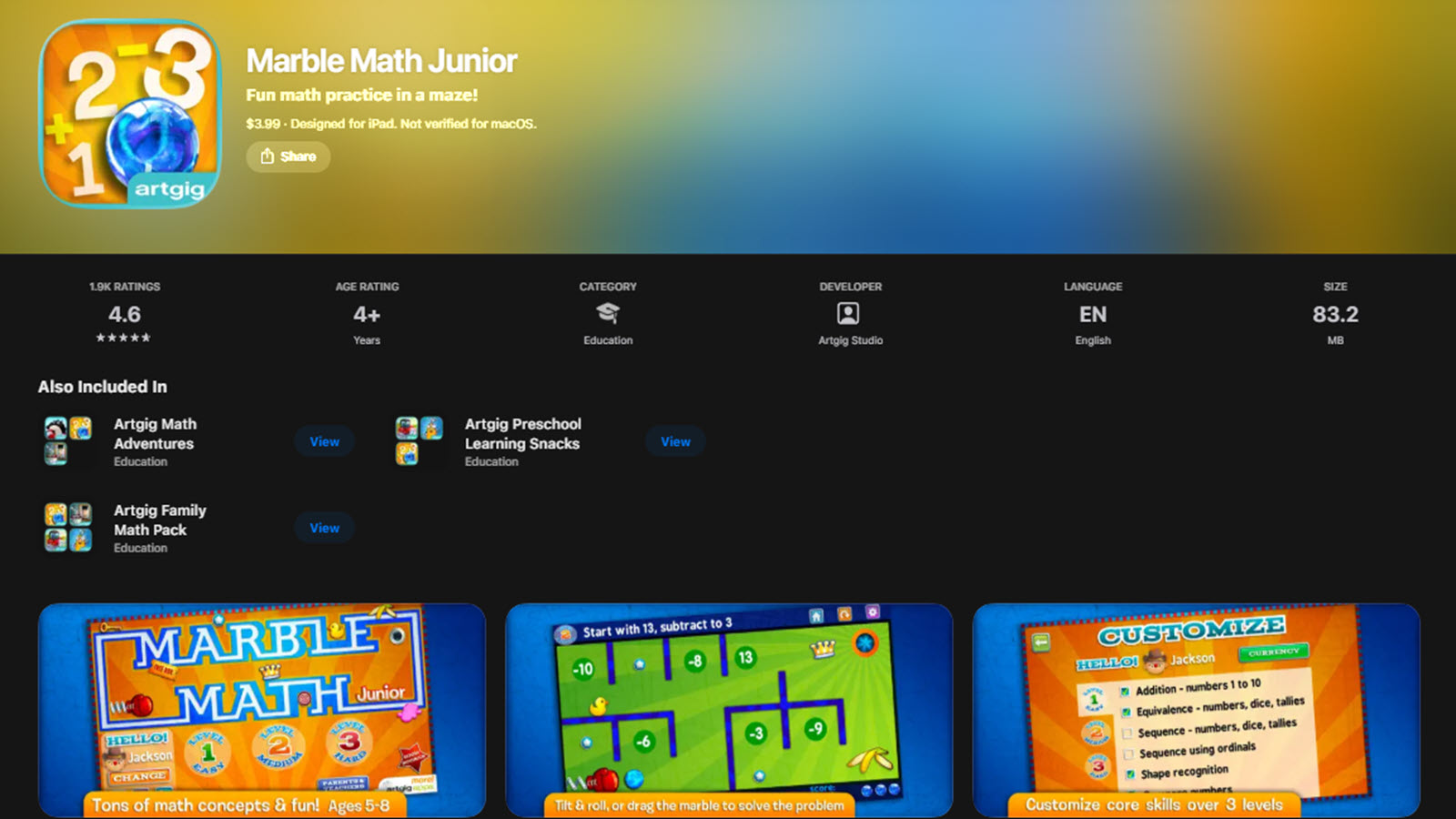
Marble Math Junior engages young learners ages five to eight with maze-style challenges where they guide a marble through levels by solving math problems. The app covers addition, subtraction, multiplication, shapes, and fractions through interactive collection and avoidance mechanics that feel like arcade games. Children navigate increasingly complex mazes while practicing facts and concepts in a dynamic, movement-based format.
Immediate feedback and adjustable difficulty levels keep the experience accessible yet challenging. The combination of physical-style control with mathematical thinking strengthens both motor skills and number fluency. Marble Math Junior turns practice into active play that appeals to children who enjoy hands-on challenges. (Available in the USA market.)
- Key features: Maze navigation with math problems, multi-topic coverage including fractions and shapes, adjustable difficulty, arcade-style gameplay, and progress saving across sessions.
- Facts and information: It integrates kinesthetic elements with core math skills, supporting fact fluency and problem-solving through engaging level-based adventures.
24. Reflex Math
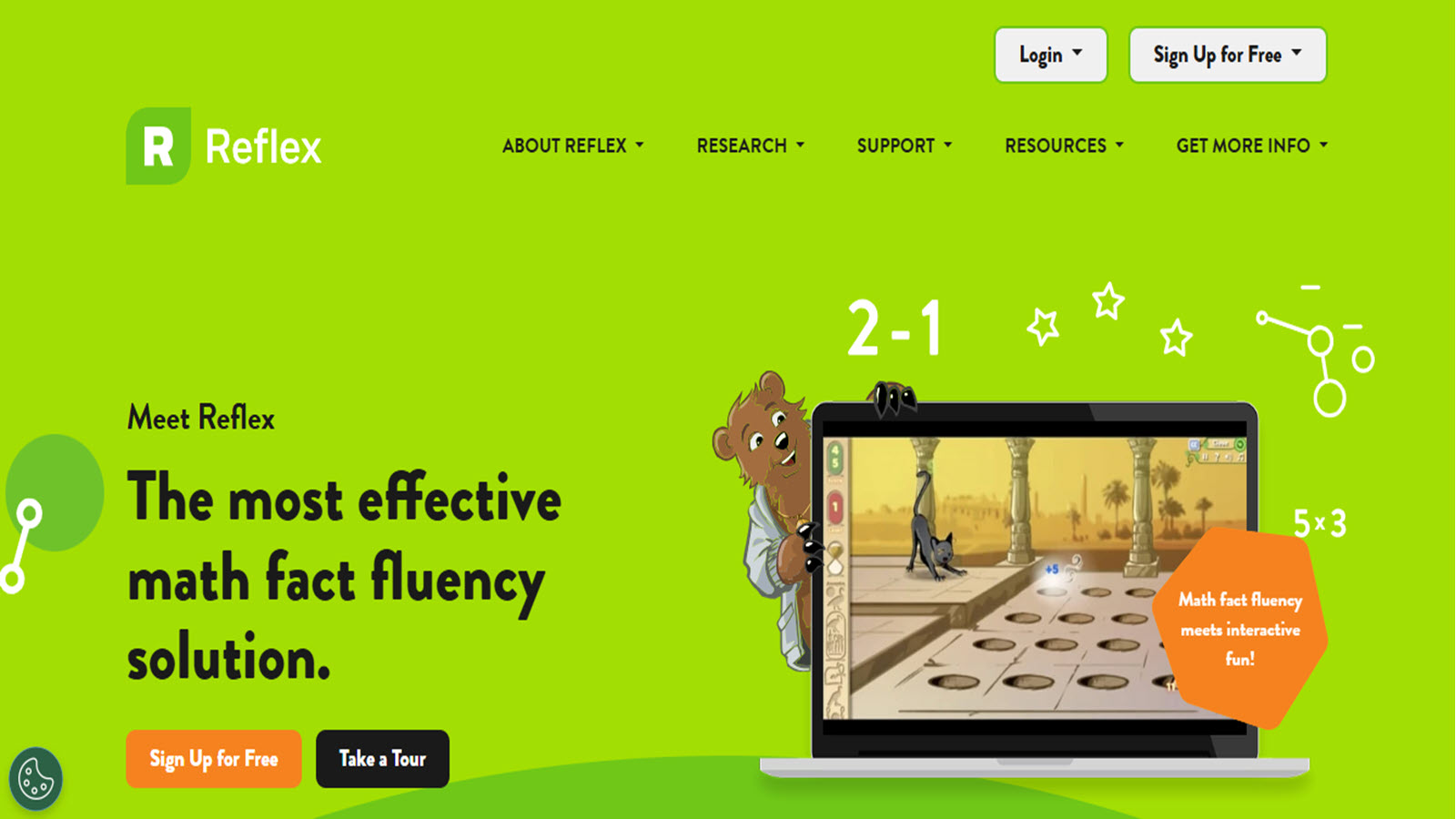
Reflex Math specializes in building exceptional math fact fluency for elementary and middle school students through a highly adaptive, game-based system that targets automatic recall of addition, subtraction, multiplication, and division. The platform employs a fact family methodology, allowing children to discover relationships between operations while progressing through colorful, fast-paced games that feel more like entertainment than drills. Real-time performance monitoring ensures every session stays in the student’s optimal learning zone, gradually increasing speed and accuracy without causing frustration.
Detailed parent dashboards provide clear visualizations of fluency growth, highlighting specific fact families mastered and those needing additional focus. This structured yet playful format encourages short daily sessions that accumulate into lasting confidence and mental math proficiency, freeing cognitive resources for higher-level problem solving and conceptual work in the classroom and beyond. The program’s emphasis on automaticity has made it a trusted tool among US families seeking measurable improvements in computational speed and accuracy.
- Key features: Fact family approach across all four operations, adaptive real-time difficulty adjustment, engaging fluency games with immediate feedback, comprehensive progress dashboards, Green Light daily goal system for consistent practice.
- Facts and information: Designed for grades 2–8, Reflex Math is used extensively in US schools and homes, with research demonstrating that consistent users achieve high levels of fact fluency, often exceeding 80–90 percent accuracy and speed benchmarks.
25. Mathletics
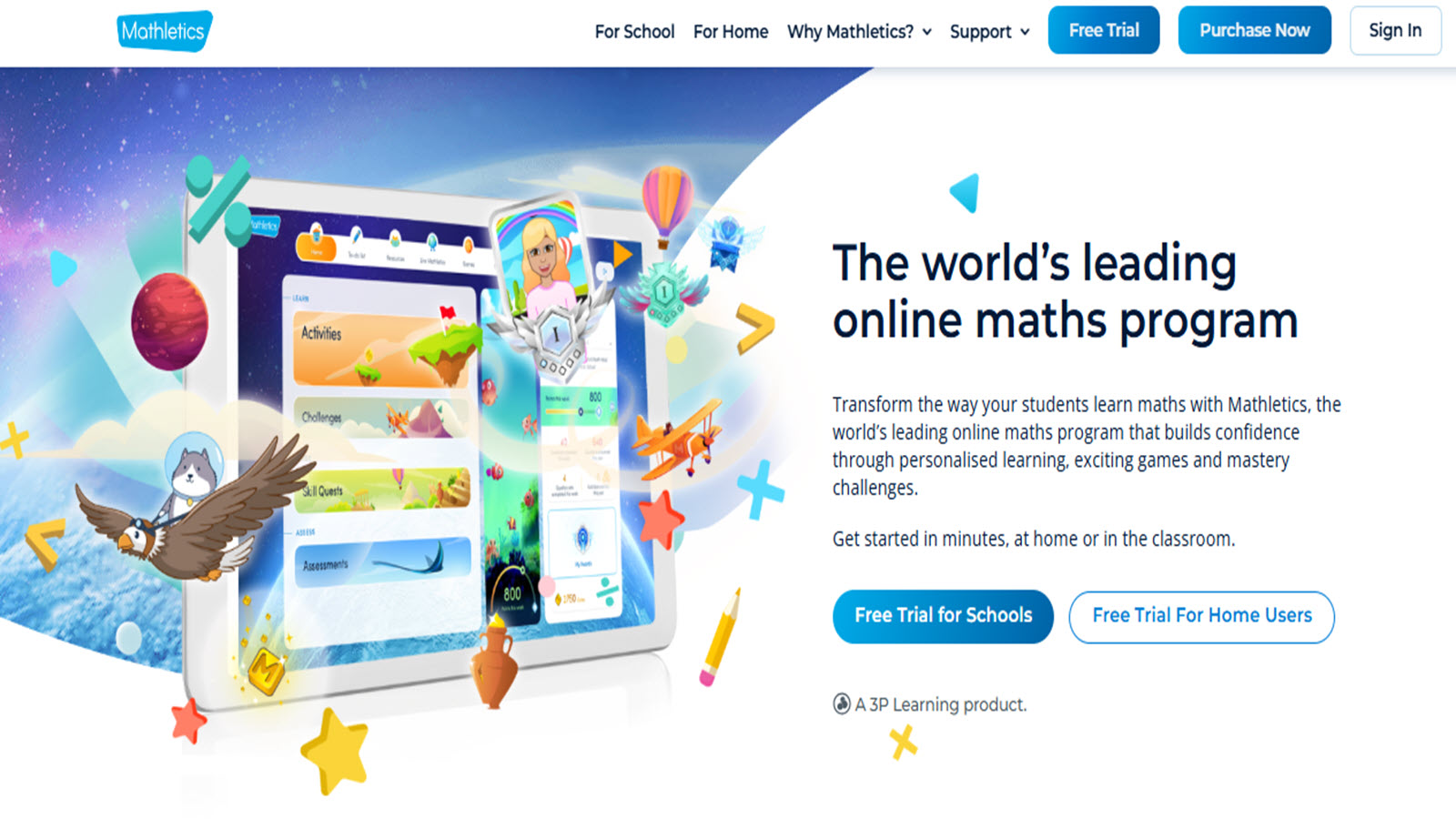
Mathletics combines curriculum-aligned activities, live competitions, and rewarding games to make math practice dynamic and motivating for elementary learners. Children engage with thousands of interactive questions, videos, and challenges that cover core topics from number sense to problem-solving and reasoning. The platform’s adaptive elements adjust to individual performance, while multiplayer features like Live Mathletics add a social, competitive layer that encourages regular participation.
Detailed analytics help track strengths and areas for growth, supporting both independent exploration and targeted improvement. Engaging rewards and adventures maintain interest across varied learning styles, blending fluency practice with deeper conceptual tasks. The program’s global reach and standards alignment make it a flexible supplement that fits easily into home routines while reinforcing school concepts.
- Key features: Curriculum-aligned activities with videos and eBooks, live multiplayer competitions, adaptive practice modes, progress assessments, and thousands of dynamic questions focused on understanding, fluency, and problem-solving.
- Facts and information: Used by millions of students worldwide, the platform supports ages 5–16 with evidence-based content that promotes confidence through short, consistent sessions of engaging mathematical challenges.
26. ST Math
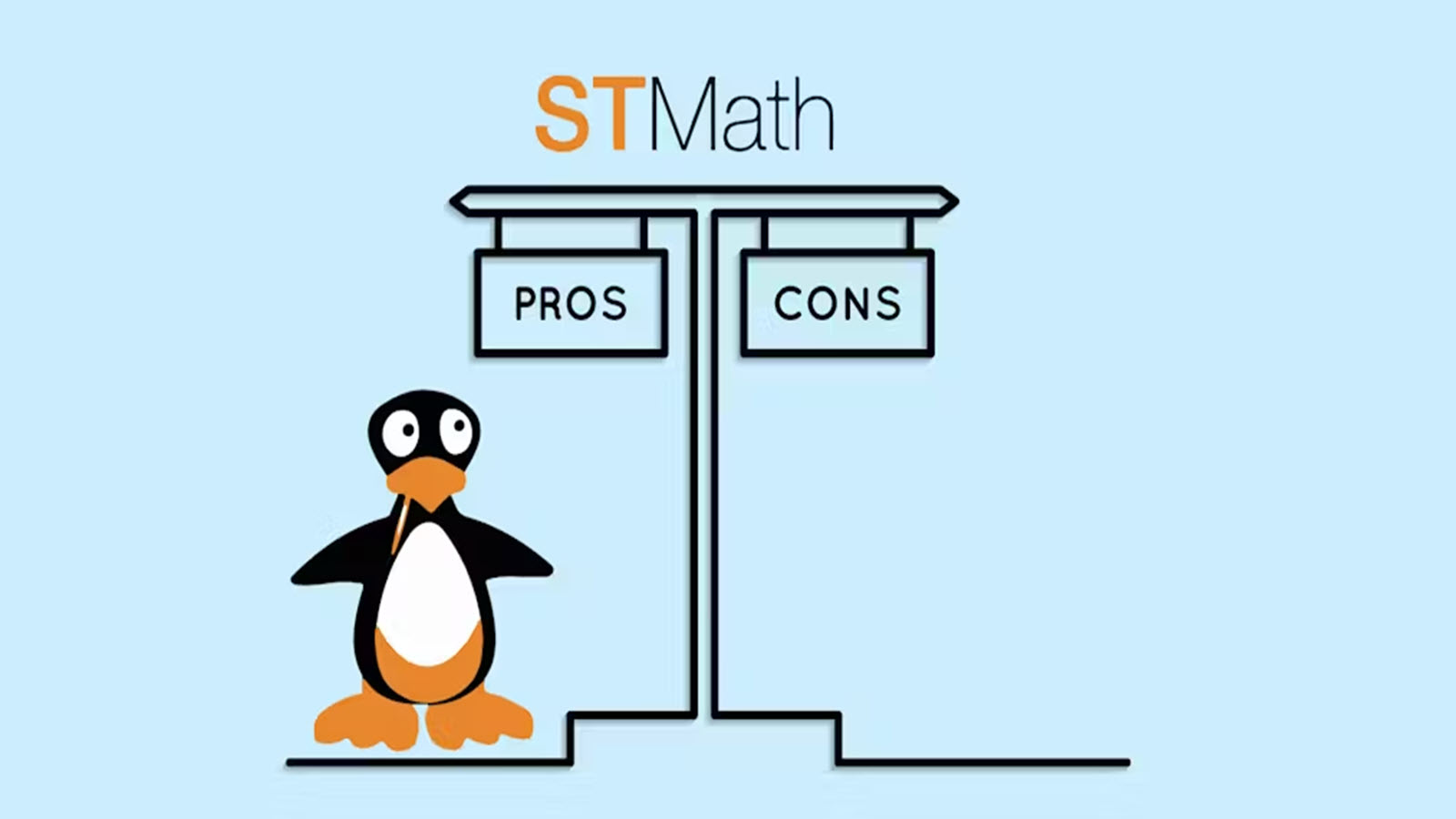
ST Math delivers a distinctive visual and puzzle-driven learning experience that prioritizes spatial-temporal reasoning to help children grasp mathematical concepts at a deep intuitive level. Students guide the friendly penguin character JiJi through immersive, non-verbal puzzles that introduce ideas through manipulation and exploration rather than traditional symbols or language at the outset. This approach builds strong conceptual foundations in areas such as fractions, ratios, geometry, and early algebra by allowing learners to experiment with visual models and observe immediate results.
The program gradually transitions from concrete representations to more abstract thinking, supporting diverse learning styles and reducing barriers for visual or kinesthetic learners. Regular progress tracking helps families monitor conceptual growth while the game-like structure maintains high engagement across extended play periods. Developed with brain-based learning principles, ST Math fosters logical thinking and persistence through challenging yet achievable visual tasks.
- Key features: Visual puzzle-based curriculum with JiJi the penguin, spatial-temporal reasoning focus, minimal reliance on text or symbols initially, progressive transition from concrete to abstract, immediate feedback on puzzle outcomes.
- Facts and information: Created by the MIND Research Institute in the USA, ST Math serves PreK–8 students nationwide and emphasizes evidence-based visual learning strategies proven to enhance conceptual understanding and problem-solving skills.
27. Todo Math
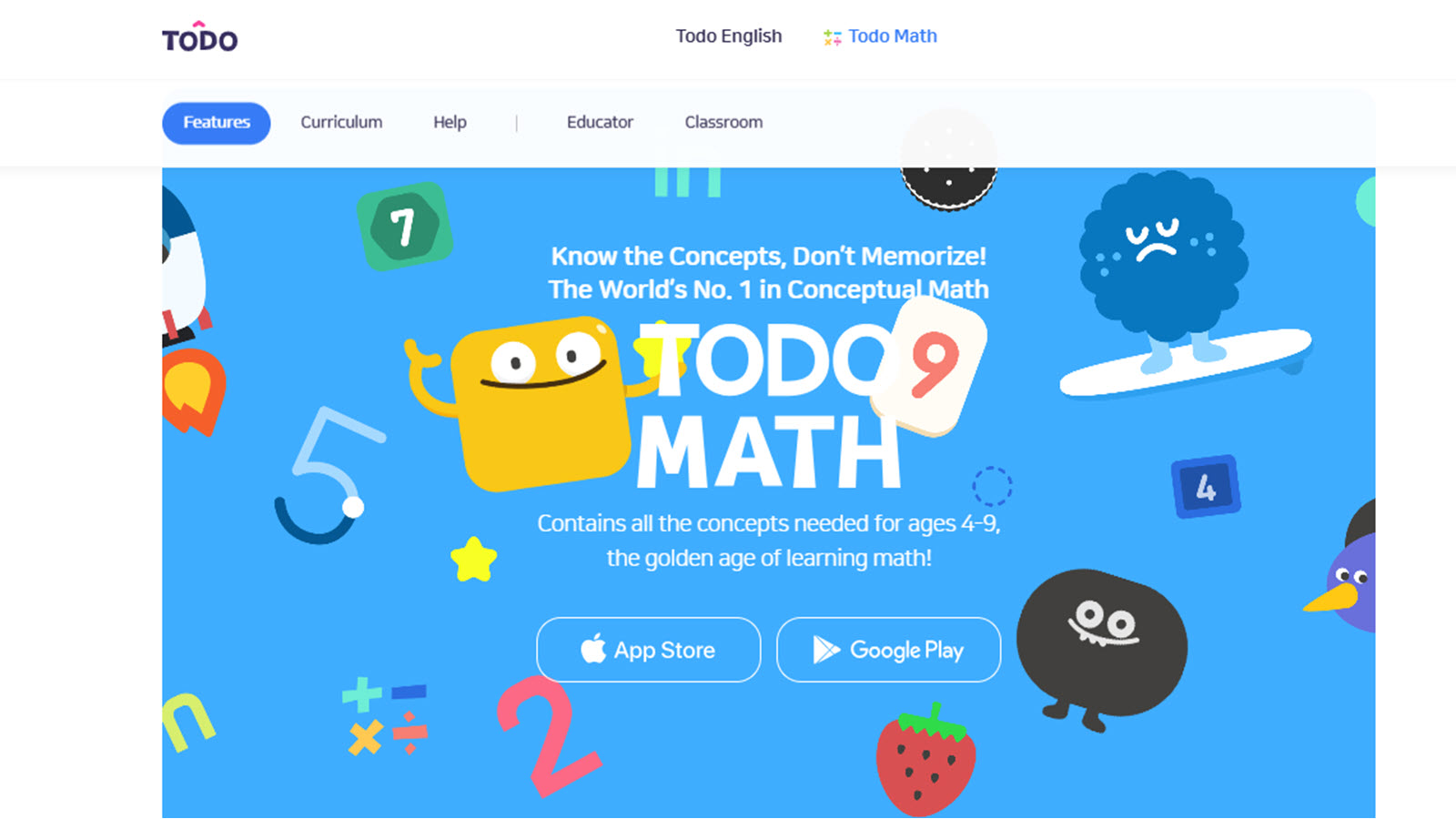
Todo Math creates an expansive collection of interactive exercises and games specifically tailored for preschool and early elementary learners to master foundational mathematical concepts. The platform features more than 2,000 activities that cover counting, number recognition, addition, subtraction, shapes, patterns, measurement, and basic problem-solving through colorful, engaging mini-games and puzzles.
Parents can personalize the experience by selecting specific skill areas or adjusting difficulty to match their child’s unique developmental stage and learning preferences, including options that support diverse needs such as special education. Adaptive technology monitors performance in real time and adjusts content accordingly, delivering immediate feedback and hints that guide children toward independent mastery. Short, focused sessions maintain attention while building number sense and logical thinking through repetition and visual reinforcement. The intuitive design encourages daily use without overwhelming young users, fostering a positive relationship with mathematics from the earliest stages.
- Key features: Over 2,000 interactive activities and games, customizable learning paths, support for special education and varied skill levels, real-time adaptive adjustments, and coverage of core PreK-2 topics including operations and geometry.
- Facts and information: Targeted at ages 3–8, the app aligns with early childhood curriculum standards and emphasizes hands-on digital manipulatives to develop strong conceptual foundations through play-based exploration.
28. Imagine Math Facts
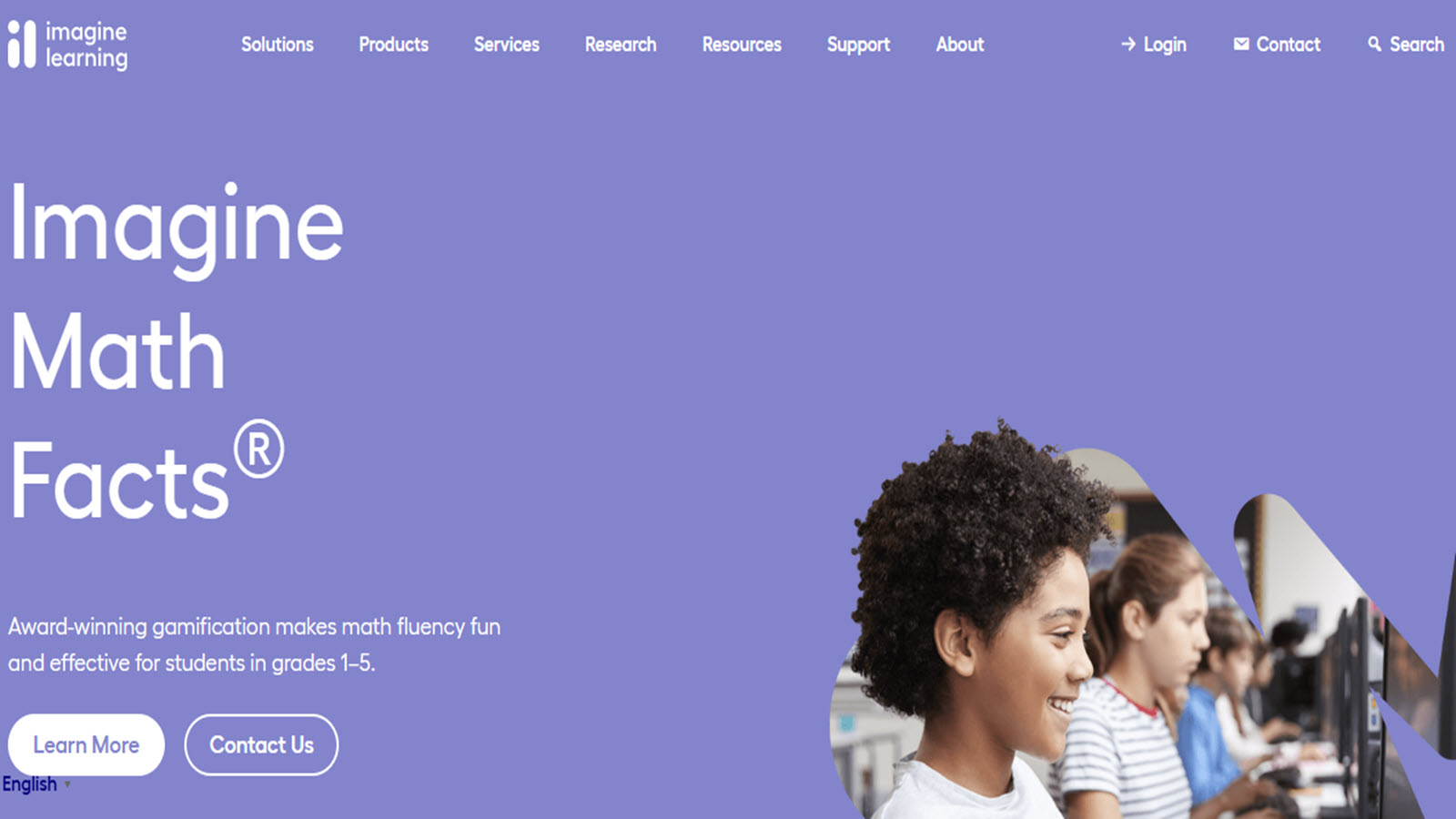
Imagine Math Facts employs adaptive gamification to help elementary students achieve rapid fluency in core arithmetic operations through engaging virtual environments. Children work on addition, subtraction, multiplication, and division facts while navigating levels filled with rewards, characters, and challenges that transform practice into an exciting adventure. The platform continuously assesses performance and adjusts the pace and difficulty to ensure each learner remains in their optimal challenge zone, preventing boredom or frustration.
Detailed reporting tools allow families to track progress toward automaticity and identify specific fact families needing extra attention. Vibrant visuals and positive reinforcement mechanics keep motivation high across multiple short sessions, making consistent practice feel rewarding rather than repetitive. This focused approach strengthens mental math abilities that serve as building blocks for more advanced topics.
- Key features: Gamified practice for addition, subtraction, multiplication, and division facts, adaptive difficulty based on real-time performance, progress tracking with fact mastery reports, engaging virtual worlds and rewards, and targeted fluency building for grades 1–5.
- Facts and information: Designed for students in grades 1–5, independent studies show the program can improve fact fluency from an average of 30–50 percent at pretest to over 90 percent at post-test with regular use.
29. QuestUp: Math Facts Adventure
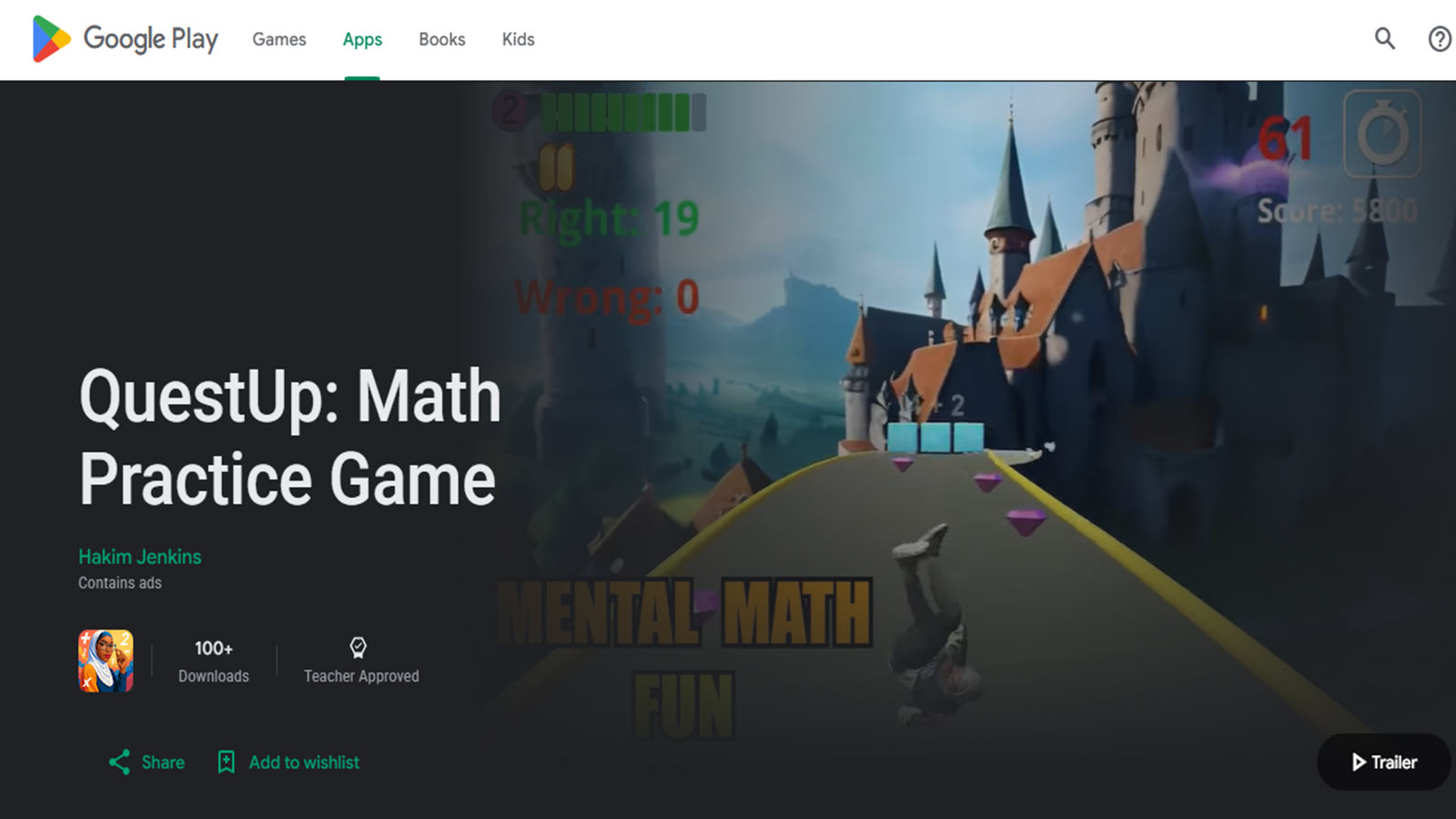
QuestUp: Math Facts Adventure turns essential arithmetic practice into fast-paced aerial action where children pilot a character through dynamic levels while solving math problems on the fly. The game focuses on building automaticity in addition, subtraction, multiplication, and division through quick, accurate responses integrated directly into exciting gameplay mechanics. Progressive missions increase in complexity as skills improve, incorporating timing elements and power-ups that reward both speed and precision.
Visual feedback and encouraging animations support learners at different stages, helping them develop confidence in mental math without traditional worksheets. The adventure format encourages repeated play sessions that accumulate meaningful practice time in a highly motivating context. Families appreciate the seamless blend of entertainment and education that makes fact fluency feel like a natural part of an action-packed journey.
- Key features: Action-oriented aerial gameplay with embedded math fact challenges, progressive difficulty across operations, timing and accuracy-based mechanics, power-up rewards, and focused practice on addition through division.
- Facts and information: Aimed at elementary ages, the app emphasizes building computational fluency through immersive, fast-paced experiences that reinforce quick recall of basic facts.
30. MathBoard
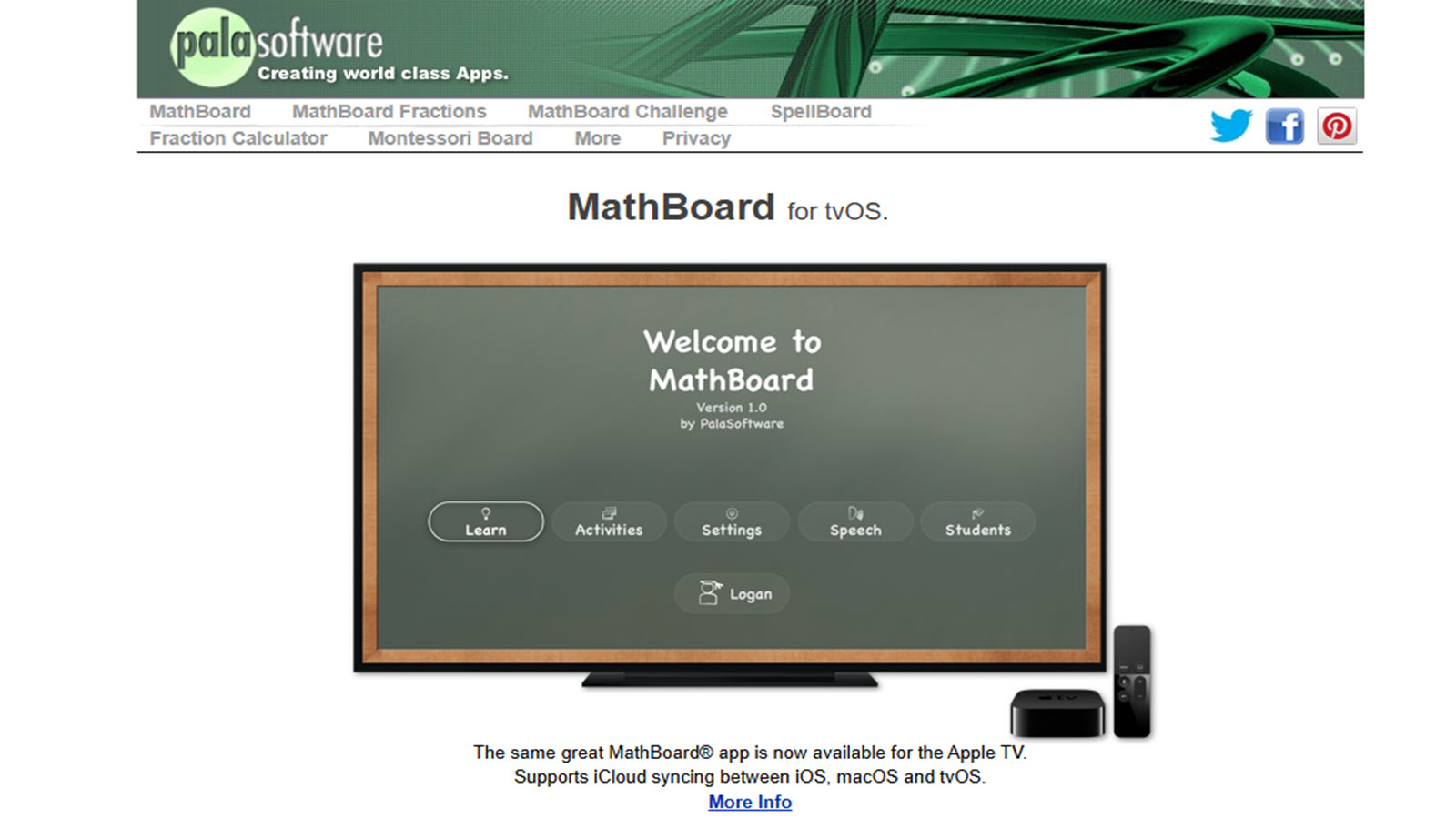
MathBoard offers a versatile digital workspace that guides children through step-by-step problem solving across a wide range of mathematical operations and concepts. Users can configure custom problem sets or work through generated challenges involving addition, subtraction, multiplication, division, fractions, and more, with the option to receive detailed explanations for each step.
The platform supports multiple input methods including handwriting recognition and speech, making it accessible for various learning preferences. Progress is saved automatically, allowing learners to resume exactly where they left off and build skills incrementally over time. Clear visual layouts and optional hints help develop systematic thinking while maintaining an environment that feels supportive rather than rigid. This tool serves as an effective bridge between conceptual understanding and procedural mastery for elementary learners.
- Key features: Customizable problem generation across multiple operations, step-by-step solution guidance with explanations, handwriting and speech input support, progress saving and resumption, and flexible difficulty settings for different skill levels.
- Facts and information: Suitable for elementary and early middle school ages, the app focuses on teaching problem-solving processes alongside accurate computation through an interactive digital slate format.
31. Beast Academy
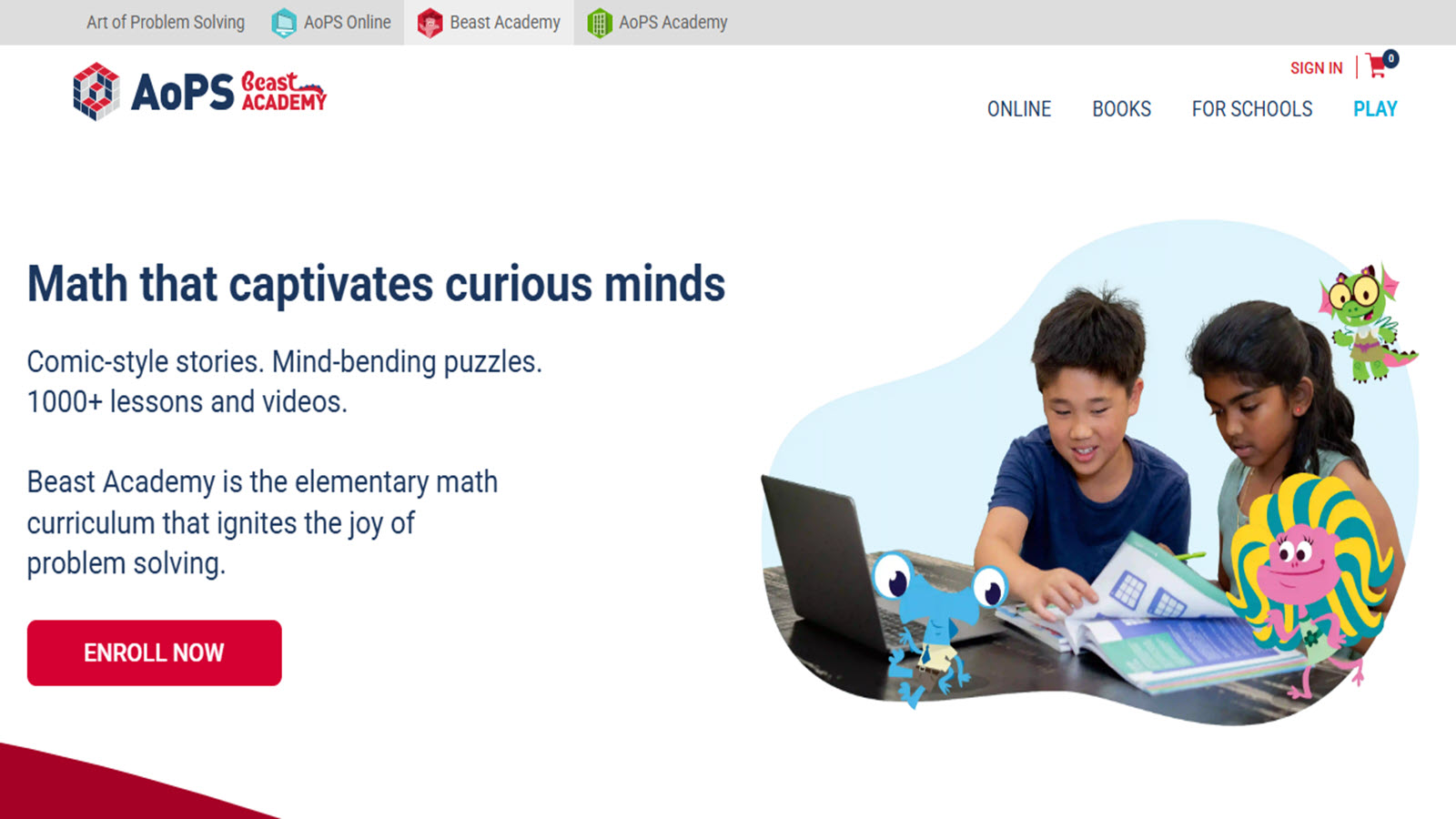
Beast Academy offers a rigorous, puzzle-rich math program designed for advanced elementary and middle school students who thrive on challenging problems and creative thinking. The curriculum combines engaging comic-style guides with interactive online practice that covers topics from basic arithmetic through advanced number theory, geometry, and pre-algebra concepts.
Students work through intricate puzzles and multi-step problems that encourage strategic reasoning, pattern recognition, and flexible problem-solving approaches rather than rote memorization. The platform’s adaptive elements adjust to individual pacing while maintaining a high level of intellectual stimulation that keeps gifted learners motivated and continuously growing. Detailed progress reports and achievement badges provide families with insights into developing mathematical habits of mind. This comprehensive approach nurtures not only computational skills but also the curiosity and resilience needed for long-term success in mathematics.
- Key features: Comic-style illustrated guides, interactive puzzle-based practice, coverage of advanced topics including number theory and geometry, adaptive challenge levels, progress tracking with achievement systems.
- Facts and information: Developed by Art of Problem Solving in the United States, Beast Academy targets students in grades 2–8 seeking deeper mathematical exploration beyond standard curricula.
32. Math Learning Center Apps
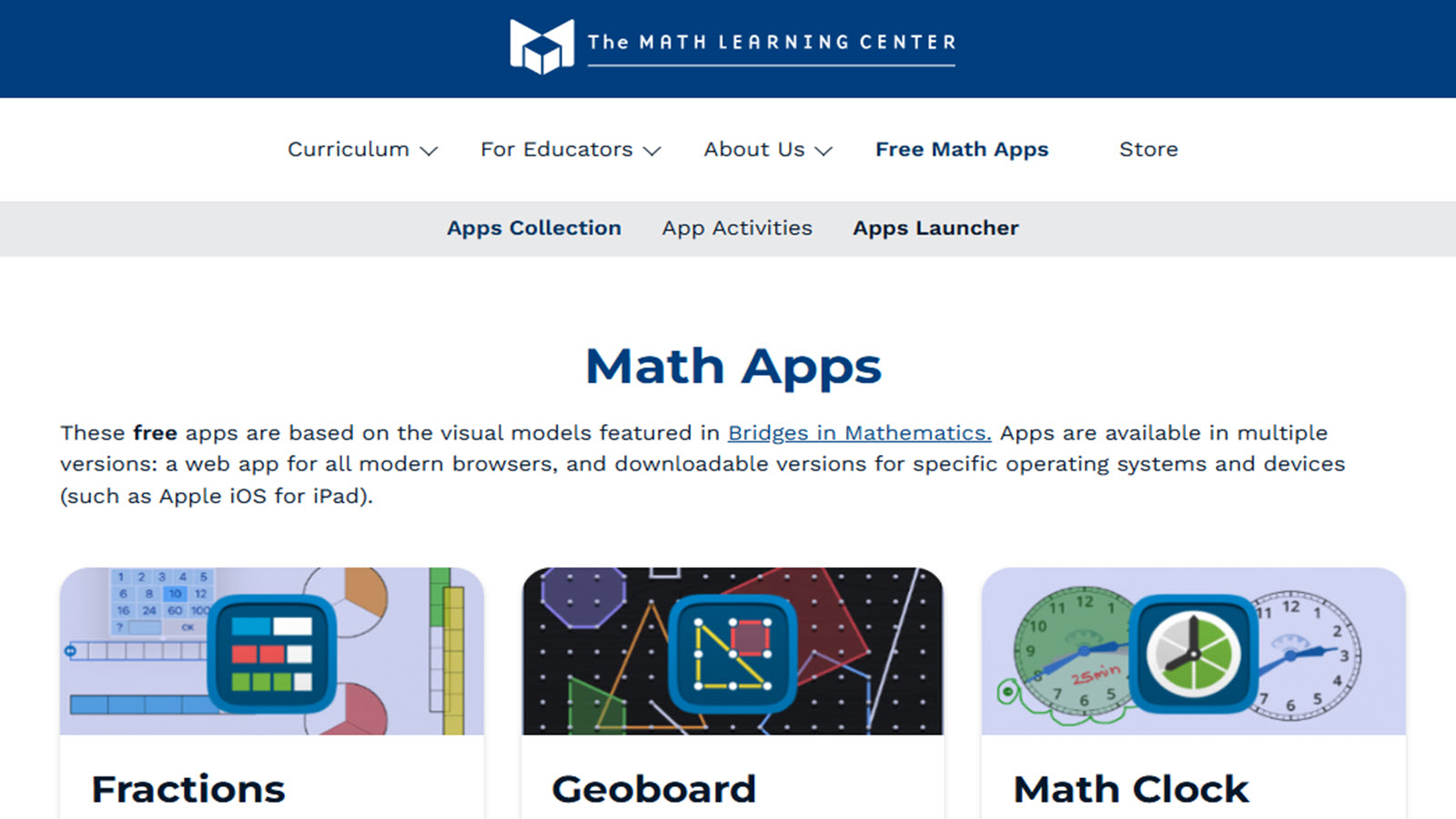
The Math Learning Center offers a suite of free, research-based digital tools designed to support visual and conceptual math learning for young children through interactive manipulatives. These apps, available across web, iOS, and other platforms, emphasize hands-on exploration that helps kids build foundational understanding of numbers, shapes, and operations using familiar models from classroom curricula like Bridges in Mathematics. Young learners manipulate virtual objects in engaging environments that encourage experimentation and discovery at their own pace, making abstract concepts more concrete and accessible.
Families value the open-ended nature that complements any learning routine, allowing children to revisit activities repeatedly as skills develop. The tools foster spatial reasoning and problem-solving through simple, intuitive interfaces without overwhelming young users. This collection creates flexible opportunities for meaningful math play that aligns well with early education standards while supporting independent exploration. (Headquartered in the United States.)
- Key features: Virtual manipulatives such as geoboards for shapes and polygons, fraction models with circles and bars, number line tools for counting and operations, clock explorations for time and fractions, and pattern-building activities.
- Facts and information: Based on visual models proven in classroom settings, the apps promote deep conceptual understanding through free, accessible play across devices for PreK and elementary learners.
33. Bedtime Math
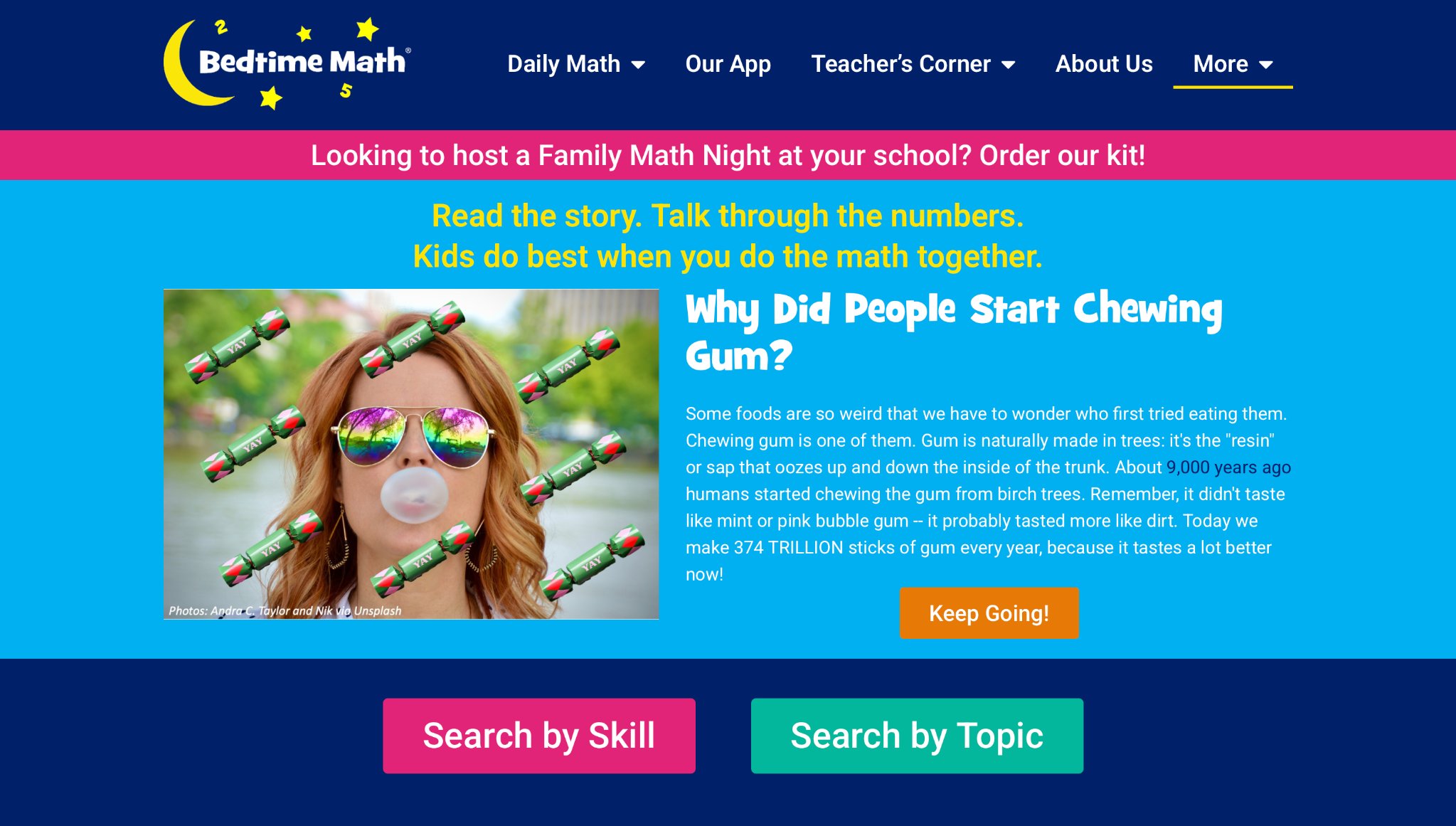
Bedtime Math transforms daily routines into engaging math moments by turning story time into problem-solving adventures suitable for young children. The app delivers fun, real-world math questions tied to entertaining stories or themes that parents can read together with kids, covering counting, basic operations, and logical thinking in short, digestible segments. Children explore ideas through playful scenarios that spark curiosity and family conversation, building number sense naturally without structured drills.
Parents appreciate how it integrates seamlessly into bedtime or quiet times, strengthening bonds while reinforcing math concepts in a low-pressure, enjoyable way. The content grows with the child by offering varying challenge levels within each activity, helping young learners develop confidence and a positive attitude toward mathematics. This approach nurtures consistent exposure to math ideas through meaningful, narrative-driven interactions that feel like shared family fun rather than lessons.
- Key features: Story-based daily math problems, family-friendly themes, adjustable difficulty levels, real-world connections, and progress through regular engagement.
- Facts and information: Designed to make math a natural part of everyday life, supporting early numerical literacy and problem-solving through consistent, bite-sized family activities.
34. Levebee
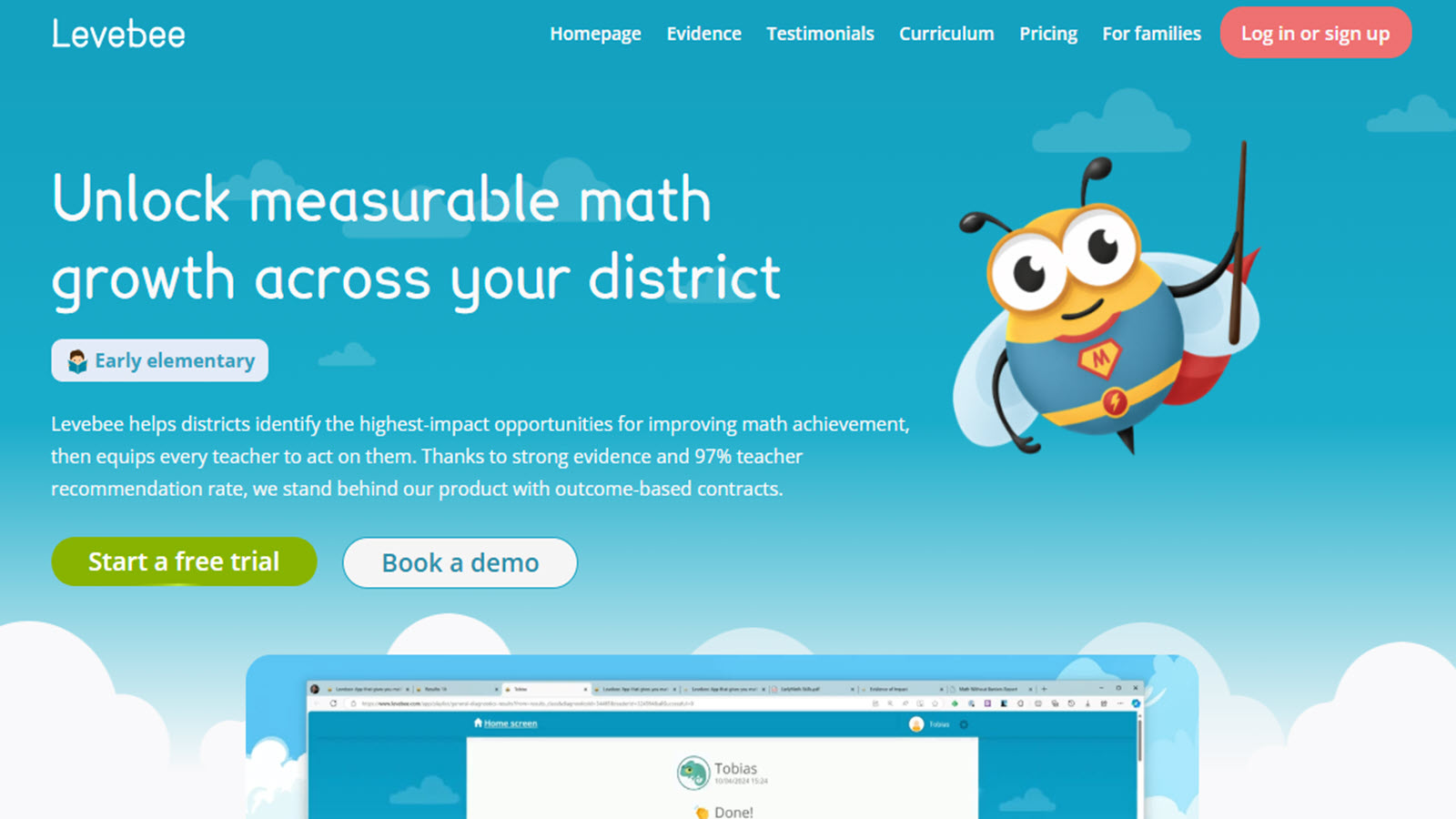
Levebee functions as an adaptive online math program that identifies and addresses learning gaps for early elementary students through personalized practice. The platform uses diagnostic tools to create tailored pathways focusing on foundational skills like number sense, operations, and problem-solving, presenting content in interactive formats that respond to each child's performance. Young users work through targeted modules that build mastery step by step in a supportive digital environment.
Families benefit from the system's ability to pinpoint specific areas needing attention while keeping sessions engaging and manageable. The content emphasizes conceptual understanding alongside practice, helping children gain confidence as they close gaps and progress smoothly. Levebee supports flexible home use that complements school learning with data-driven adjustments for steady, individualized growth. (Available in the USA market.)
- Key features: Diagnostic gap analysis, adaptive lesson sequencing, interactive practice modules, progress monitoring, and coverage of core early elementary topics.
- Facts and information: Focuses on filling foundational gaps with personalized paths that promote long-term mastery and confidence in mathematical thinking for young learners.
35. CK-12
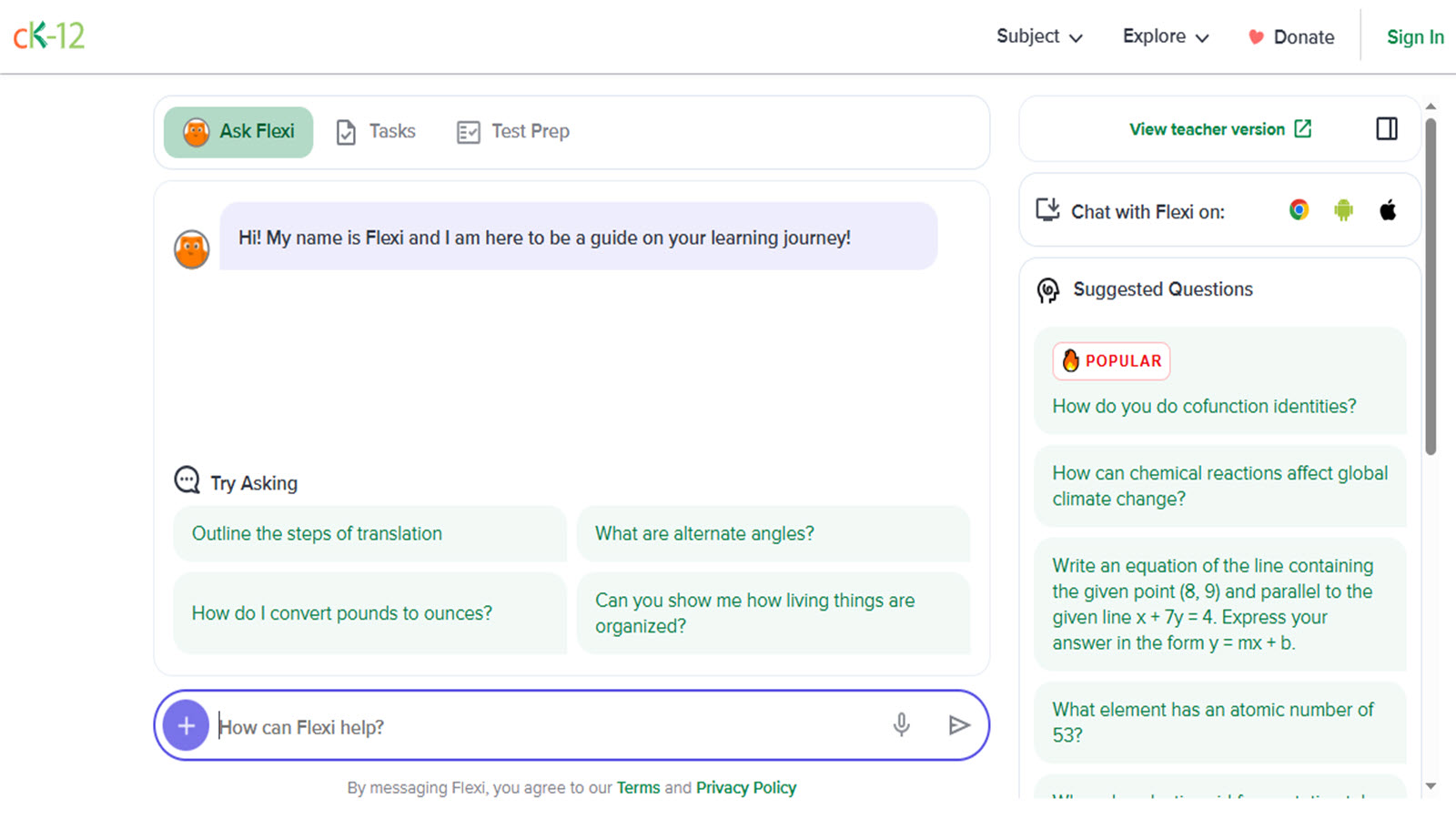
CK-12 provides a comprehensive library of interactive math resources and simulations tailored for elementary and middle school students. Children explore concepts through customizable lessons, videos, and hands-on activities covering topics from basic arithmetic to geometry and beyond in a flexible, self-paced format. The platform's adaptive elements and rich multimedia help make learning accessible and engaging for diverse learners.
Parents value the free, standards-aligned content that allows targeted practice and deeper exploration without additional cost. Young users build skills through interactive simulations and practice that visualize abstract ideas, fostering curiosity and understanding. CK-12 serves as a versatile supplement that supports independent study and reinforces classroom concepts effectively across devices.
- Key features: Interactive textbooks and simulations, video explanations, customizable practice sets, adaptive learning support, and broad topic coverage aligned with standards.
- Facts and information: Offers extensive free resources that promote conceptual learning and skill reinforcement for elementary students through engaging digital formats.
36. Photomath
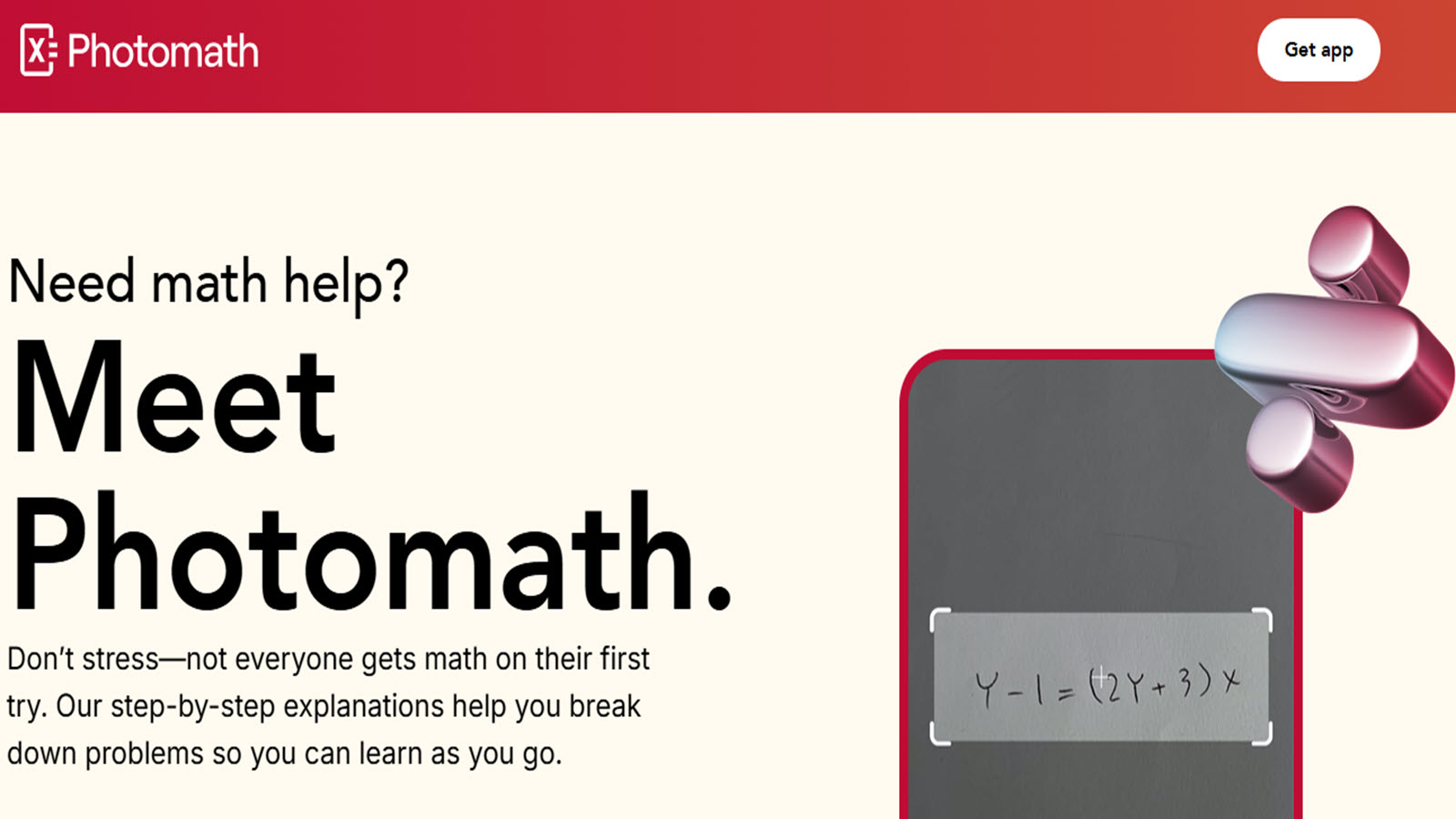
Photomath helps children understand math problems by allowing them to scan equations or handwritten work for instant step-by-step explanations and visualizations. Designed to support learning across early operations through more advanced topics, the app breaks down solutions clearly with animations and multiple methods, making it suitable for building comprehension alongside practice. Young users gain insights into problem-solving processes in an interactive way.
Families appreciate the tool's ability to clarify homework or practice sessions, helping kids learn why answers work rather than just memorizing them. The visual and explanatory features support different learning styles while encouraging independent exploration. Photomath serves as a helpful companion for developing stronger mathematical reasoning and confidence during daily study routines.
- Key features: Camera-based scanning for problems, detailed step-by-step solutions, multiple solving methods, animations for visualization, and coverage of foundational to advanced topics.
- Facts and information: Supports elementary learners by demystifying processes and promoting deeper understanding through accessible, on-demand explanations.
These entries maintain the established format, tone, and focus on unique competitors while prioritizing factual details for the 2026 update. Everything is ready for direct publishing continuation.
37. Polymath
Polymath creates an immersive creative world where children build, explore, and complete exciting tasks while naturally practicing math concepts through gameplay. Young learners engage with open-ended adventures that blend construction, problem-solving, and mathematical thinking in ways that feel like pure entertainment. The platform turns screen time into confident skill-building moments by integrating numbers, patterns, and logic directly into creative play that sparks imagination.
Families appreciate how children voluntarily return to the app because it respects their desire for fun while delivering real educational value. Polymath supports steady development of number sense and reasoning through meaningful interactions that grow with the child. This balanced approach helps young users develop a positive relationship with math in a dynamic, story-rich environment designed for long-term engagement. (Available in the USA market.)
- Key features: Creative building mechanics with embedded math challenges, open-ended exploration tasks, progressive missions that integrate operations and logic, engaging reward systems, and cross-device compatibility.
- Facts and information: Designed for elementary ages, it emphasizes voluntary practice through gameplay that builds mathematical confidence and creative problem-solving skills.
38. MathBee
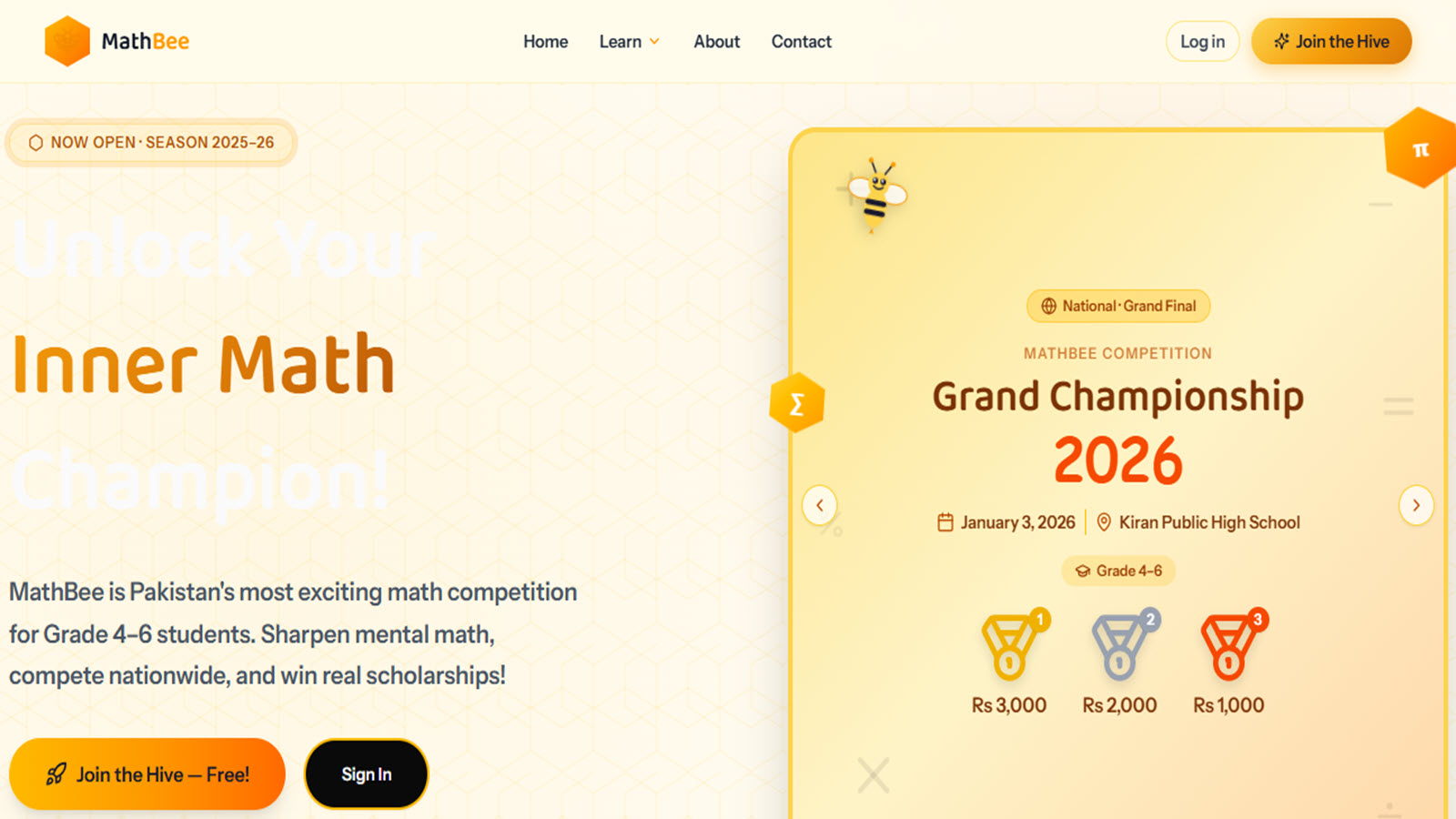
MathBee delivers free, game-based math practice that transforms ordinary screen time into focused skill-building sessions for elementary students. Children enjoy colorful challenges and activities that reinforce core concepts like addition, subtraction, and number sense through quick, rewarding interactions. The app keeps sessions light and motivating with immediate feedback that celebrates progress without pressure.
Parents value the accessible, no-cost entry point that fits easily into daily routines while supporting school-aligned learning. Young users build fluency and confidence as they progress through fun games that adapt to their growing abilities. MathBee stands out as a flexible tool that encourages consistent practice in a supportive, ad-light environment suitable for home use.
- Key features: Free game-based practice, skill-specific challenges, immediate feedback mechanics, progress tracking, and alignment with elementary math topics.
- Facts and information: Developed to make math practice enjoyable and effective for K-5 learners through short, engaging sessions that promote steady improvement.
39. Math Games by RV App Studios
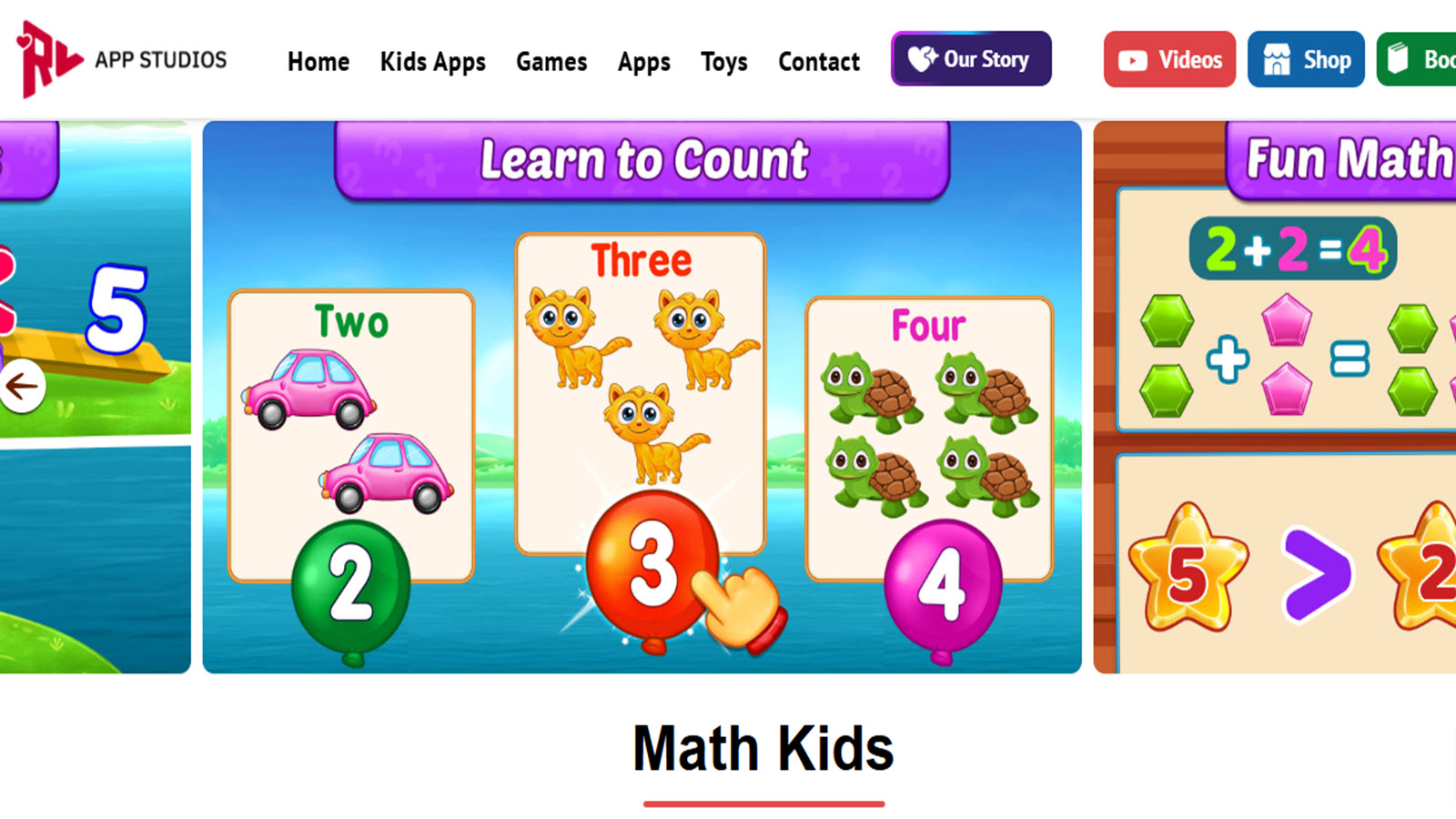
Math Games by RV App Studios offers a comprehensive collection of interactive math activities covering addition, subtraction, multiplication, and more through bright, kid-friendly games. Young children explore various modes and difficulty levels that adapt to their skills, turning practice into exciting challenges with visual rewards and clear guidance. The app supports multiple players and provides a dual-mode interface for shared family fun.
Families like the variety of games that keep interest high across different topics and ages while reinforcing foundational concepts. Kids develop stronger number sense and problem-solving abilities through repeated, enjoyable play that feels more like entertainment than work. This platform serves as a versatile, engaging supplement that fits well into busy schedules.
- Key features: Wide variety of math games, dual-player mode, adaptive difficulty levels, visual rewards and animations, and coverage of core operations for early learners.
- Facts and information: Popular for kindergarten through elementary ages, it provides fun, accessible practice that builds fluency and positive attitudes toward mathematics.
40. Think Academy Math
Think Academy Math provides structured online math lessons tailored for kindergarten and early elementary students, focusing on deepening number sense, spatial reasoning, and problem-solving through hands-on digital experiences. Children engage with interactive modules and activities designed to bridge early exploration with more formal concepts in a supportive, paced environment. The program emphasizes conceptual understanding alongside practical skills.
Parents appreciate the alignment with school standards and the way it prepares children for future academic success while maintaining engagement. Young learners gain confidence as they master ideas through guided yet flexible sessions that encourage curiosity and logical thinking. Think Academy serves as a reliable choice for families seeking comprehensive math development.
- Key features: Curriculum-aligned interactive lessons, hands-on digital activities, focus on spatial and conceptual skills, progress monitoring, and structured pathways for early learners.
- Facts and information: Targets kindergarten and early elementary with content designed to build strong foundations for long-term math success in the USA.
Benefits of Play-Based Math Learning for Young Children
Play-based math learning helps children connect math ideas to their everyday world. They explore concepts like quantity and shape through movement and imagination, which makes ideas stick longer. Kids who learn this way often show stronger problem-solving skills and a more positive outlook toward numbers.
These approaches also support emotional growth. Children feel proud when they figure things out on their own, and that pride carries over to other subjects. Families see better focus and creativity when math feels like part of the fun rather than separate work.
Tips for Making the Most of Math Apps at Home
Set short, regular sessions so children look forward to their time instead of dreading it. Pair online math learning apps with real objects like blocks or snacks to show how math appears in daily life. Celebrate small wins together to keep motivation high.
Rotate between different activities to maintain interest. Check in with your child about what they enjoy most so you can choose tools that match their style. Consistency matters more than long sessions, and a relaxed approach helps learning last.
The Role of Real-World Connections in Math Play
Reading readiness activities that link numbers to everyday situations feel relevant right away. Children discover professions like bakers or astronauts through playful scenarios that sneak in counting and measuring ideas. These explorations build vocabulary alongside math readiness. Kids talk about quantities in stories about real jobs, which makes abstract ideas more concrete and exciting. Healthy habits tie in nicely too. Simple routines like measuring ingredients or sorting items during pretend play reinforce comparison skills in natural ways.
Mindfulness and Focus in Early Math Experiences
Short calm moments help children stay engaged during play. Mindfulness activities and gentle kids yoga support attention spans that young learners need for math challenges. These elements create space for emotional balance. Kids return to number recognition games feeling refreshed and ready after a quick breathing exercise or stretch. Balanced sessions that mix active play with quieter reflection support overall growth. Families notice steadier focus when life skills blend with academic practice.
Latest News In 2026
Math apps for kids evolve quickly this year with stronger ties between numbers and real world stories. Apps now blend simple design projects where children count materials or measure spaces around them. Personalization gets sharper as systems learn each child's favorite ways to explore ideas.
Brief sessions mix with longer creative tasks so focus stays fresh. Teams stay ahead by reading the proxy blog for updates on stable connections that support smooth app testing. Some new features even let kids share puzzle solutions with friends in safe group modes. The focus stays on making math feel like part of daily fun rather than separate work.
FAQ
How do I know if an app matches my child’s learning style?
Notice which activities hold your child’s focus longest and bring the biggest smiles during play. Story-based challenges suit some learners while visual sorting or quick puzzles work better for others. The ideal match creates a sense of success that encourages independent return to the experience.
Can math apps replace traditional learning?
Online math learning apps add valuable variety when paired with everyday hands-on moments. Combining digital play with simple real-world items strengthens connections between ideas and daily life. This blend creates a fuller picture of concepts that lasts beyond the screen.
What features should I look for in a 2026 math app?
Look for easy navigation and activities that respond to a child’s choices in real time. Content that mixes guided steps with free exploration keeps engagement high across different moods. Expert-designed options often include calm pacing and emotional support built right into the flow.
How does number sense developed through play influence later school success?
Number sense grown through playful activities creates a comfortable base for understanding more complex relationships down the road. Children who explore quantities in relaxed ways tend to approach new challenges with curiosity instead of worry. This early ease often carries into stronger overall confidence with mathematical thinking.
What age range works best for math learning apps?
Best math learning apps suit preschool through early elementary ages especially well when they match attention spans and curiosity levels that change quickly in these years. Content with bright colors and simple steps works particularly well for children who move between play and focused moments throughout the day. Many options include gentle progression that grows alongside the child so early exposure to patterns and counting builds comfort before formal school lessons begin. This timing supports smoother transitions into kindergarten math ideas because young minds absorb visual connections naturally during this window of rapid development. Families find the mix of movement and thinking tasks - especially logic and attention activities - particularly helpful for children who show interest in shapes or groups during everyday routines.
How do games in math apps help children learn?
Games in the best math learning apps turn repetition into excitement by wrapping counting and shapes inside stories or character adventures that hold interest longer than plain drills. Children chase small goals and earn rewards that feel rewarding while their brains quietly strengthen connections around numbers and order. This approach reduces frustration because mistakes become part of the fun instead of stopping points. Visual feedback shows ideas immediately so kids connect actions to results in ways that stick through different senses. Over repeated play sessions the brain starts to recognize patterns faster - thanks to built-in logic and attention challenges - which carries over into real world situations like sharing toys or helping set the table.
What is number sense and why do math learning apps teach it?
Number sense involves an intuitive feel for how quantities work together such as understanding that five is more than three without always counting one by one. The best math learning apps build this through hands-on movement of objects on screen where children group, sort, and compare in playful ways that also strengthen logic and attention skills. This foundation supports later skills like quick mental math and estimation because children develop flexible thinking instead of rigid procedures. Strong number sense also helps with everyday decisions and builds overall confidence when children tackle new challenges. The visual and interactive format makes these relationships clear and memorable during the years when brains form many core learning pathways.
Do math apps replace traditional learning methods?
Math learning apps add fresh practice and views by offering immediate feedback and varied ways to approach the same idea. They complement books and hands-on materials so children experience concepts through multiple channels that reinforce each other. Different formats reach varied learning preferences whether a child responds more to movement, stories, or visual puzzles that include logic and attention exercises. This combination creates richer understanding that lasts because the brain stores information in connected networks rather than isolated facts. Apps also allow extra repetition in short bursts that fit naturally into daily routines without replacing meaningful time spent with parents or teachers.
Why does logic matter in early math apps?
Logic and attention matter greatly in the best math learning apps because they help children see order and connections between numbers through sorting and sequence activities that prepare minds for addition and more complex steps ahead. Top math learning apps weave these thinking skills into games where kids test ideas and notice what happens next in a low-pressure setting. Early logic and attention practice strengthens problem-solving abilities that support all areas of learning, not just mathematics. Children gain patience when they work through gentle challenges that build step by step toward success. This foundation makes future school topics feel more approachable because the brain already knows how to organize information and spot relationships.
What makes an online math learning app suitable for young children?
Online math learning apps work best for young kids when they use short, colorful activities that match attention spans for ages three to seven. Gentle challenges in number games and sorting activities help build skills through play that feels natural rather than like structured lessons. These tools often blend math with logic and attention exercises to create balanced growth while keeping sessions fun and pressure-free. Features like age-appropriate visuals and calm pacing support emotional safety so children stay engaged without frustration.
How do math games support number sense in preschoolers?
Math skills games turn abstract ideas into concrete experiences through playful repetition with shapes, patterns, and simple grouping. Children gain comfort with quantities as they explore number games that connect to everyday stories and visual matching. This approach builds strong foundations in comparison and basic operations that feel exciting rather than difficult. Over time, kids develop confidence as they see their own progress in recognizing numbers and relationships between them.
Why combine math with other skills like logic or life skills?
Combining math with logic and attention exercises alongside life skills creates stronger overall reading readiness activities for school and daily routines. Activities that mix number practice with sorting activities sharpen focus while helping children see order in the world around them. Real-world connections such as memory games introduce vocabulary and simple tasks that make learning feel relevant. This holistic mix supports emotional balance and creative thinking through elements like mindfulness moments and kids yoga.
What features help keep kids engaged over time?
Variety in activities, adaptive pacing, and connections to real-world ideas like professions maintain interest in math play. Regular fresh content and progress reports highlight strengths in areas such as number sense and focus without adding pressure. Apps for learning extend learning beyond screens through hands-on matching or coloring tied to math concepts. Balanced sessions that include healthy habits and calm reflection help children return to tasks feeling refreshed.
Are there ways to extend screen learning offline?
Many platforms provide free printables that reinforce concepts like patterns and grouping through simple crafts or coloring pages. These materials connect digital number games to family activities that build on the same skills practiced in the app. Offline extensions support sorting activities and life skills for kids in real settings such as organizing toys or helping with routines. This approach creates consistent learning moments that blend seamlessly with daily life while strengthening focus and comparison abilities.
Read Also:
- Best Educational App for Kids 2026
- Best Educational Games 2026
- Best Educational Computer Games 2026
- Best Interactive Educational Games 2026
- Best Educational Games Online 2026
Discover the Best Online Math Learning App for Kids 2026 - Fluvsies Academy